DbcultAccessing Vault...
Cult Review
Senior Film Conservator
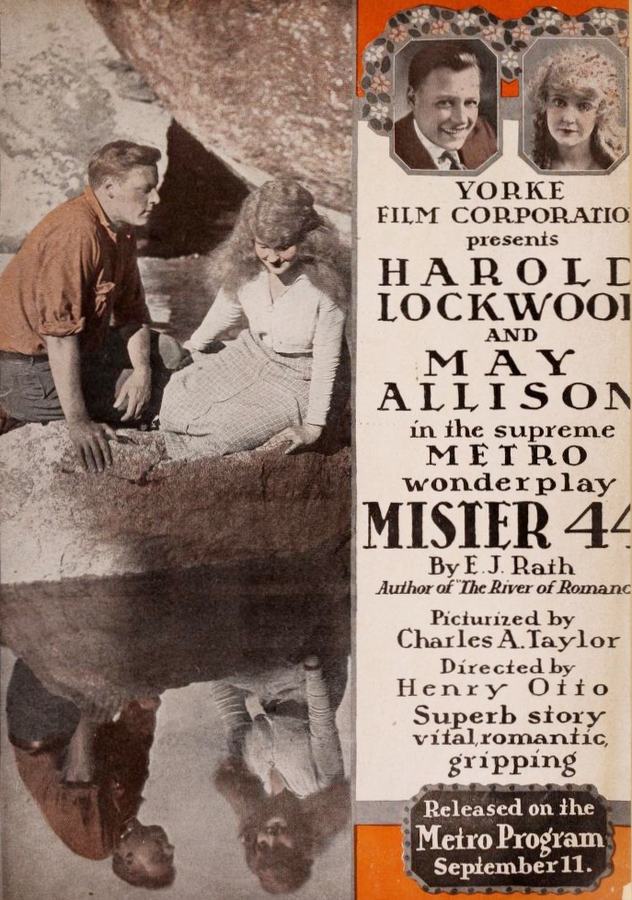
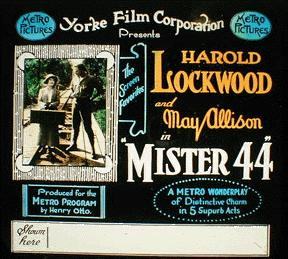
Stepping back into the flickering glow of 1916 cinema, one encounters a narrative tapestry as intricate and resonant as any modern-day drama. Mister 44, a compelling silent film, emerges not merely as a relic of a bygone era but as a poignant exploration of societal strictures, personal aspiration, and the serendipitous nature of love. Directed by Henry Otto, and featuring the luminous May Allison alongside Harold Lockwood, this picture transcends its chronological confines to offer a surprisingly nuanced commentary on the human condition.
At its core, Mister 44 is a Cinderella story, albeit one with a distinctly American twist, rooted in the burgeoning industrial landscape of the early 20th century. Our protagonist, Sadie Hicks, portrayed with remarkable emotional clarity by May Allison, is a cog in the dehumanizing machinery of a shirt factory. Her daily existence is a symphony of mundane tasks and the grating presence of men whose intellectual and physical flabbiness mirrors the stifling environment. It's a world devoid of grandeur, prompting Sadie to conjure an escape through an idealized vision: a man of formidable mind and muscle, epitomized by a '44 chest' – a symbol of robust masculinity and strength far removed from her dreary reality. This yearning, a powerful testament to the human spirit's refusal to be confined, drives her to an act of audacious romanticism. She inscribes a note, a bottled message of the heart, and secretes it within a shirt bound for Arizona. This seemingly innocuous gesture, born of desperation and hope, sets in motion a chain of events that will irrevocably alter her destiny.
The plot, co-written by Henry Otto, E.J. Rath, and Charles A. Taylor, masterfully employs the device of chance. A sudden 'rush order' diverts Sadie's carefully chosen vessel of hope – the shirt – from the arid plains of Arizona to the rugged, pristine wilderness of Canada. Here, it finds its way into the hands of John Stoddard, a wealthy civil engineer played by Harold Lockwood, who embodies Sadie's aspirational ideal. Stoddard is a man who, despite his privileged background, shuns the superficiality of high society, preferring the honest solitude and challenges of the woods. His response to Sadie's note is one of good-natured curiosity and genuine offer of assistance, a stark contrast to the predatory advances of her foreman, Ferguson, which lead to her unceremonious dismissal. This confluence of events – Stoddard's letter arriving precisely when Sadie is at her lowest ebb – imbues the narrative with a sense of kismet, a notion that destiny, however circuitous, is at play.
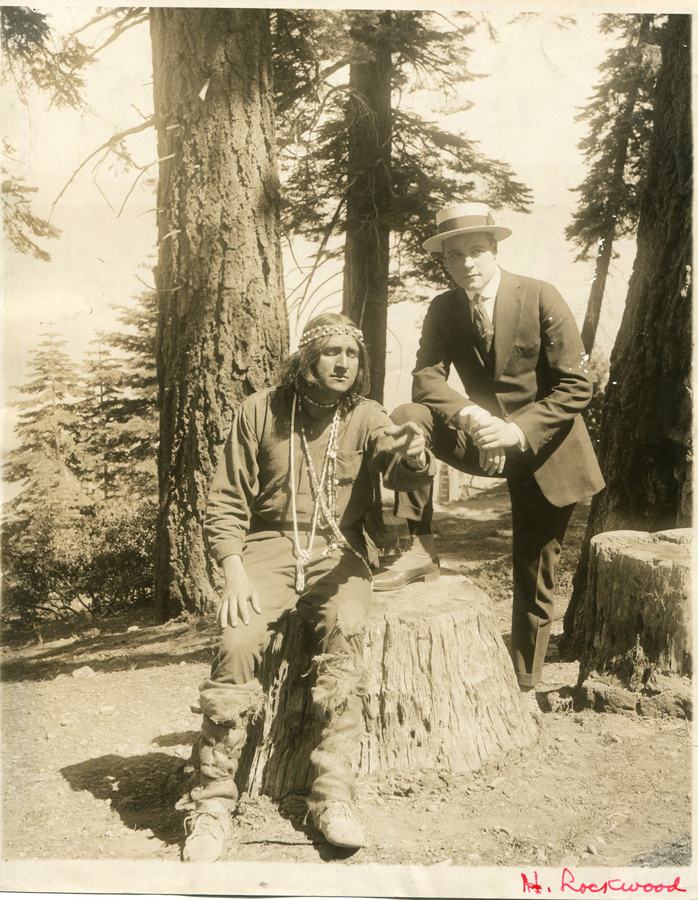
Sadie's impulsive journey to Stoddard's Canadian camp, undertaken with a blend of youthful recklessness and desperate hope, forms the narrative's central turning point. The initial encounter is fraught with the awkwardness of miscommunication and missed opportunities, culminating in a dramatic turn of events. Stoddard, intending to politely send her back, finds their canoe capsized by a sudden storm, stranding them on a deserted island. This segment of the film is particularly potent, leveraging the silent medium's capacity for visual storytelling. Stripped of societal facades and the comforts of civilization, the two protagonists are forced to rely on their innate character. Here, the 'noblest qualities' of both Sadie and Stoddard shine through. The island becomes a crucible, melting away preconceptions and forging an authentic connection. It is in this raw, elemental setting, far from the judgments of society, that their love blossoms, a testament to the idea that true affection transcends superficial differences. This thematic thread, where nature serves as a testing ground for character and a catalyst for genuine emotion, can be seen in other films of the era that explored rugged individualism and the purity of the natural world, perhaps echoing sentiments found in Westerns or adventure stories of the time, though The Bargain (1914) comes to mind for its similar themes of redemption and love found in the wilderness.
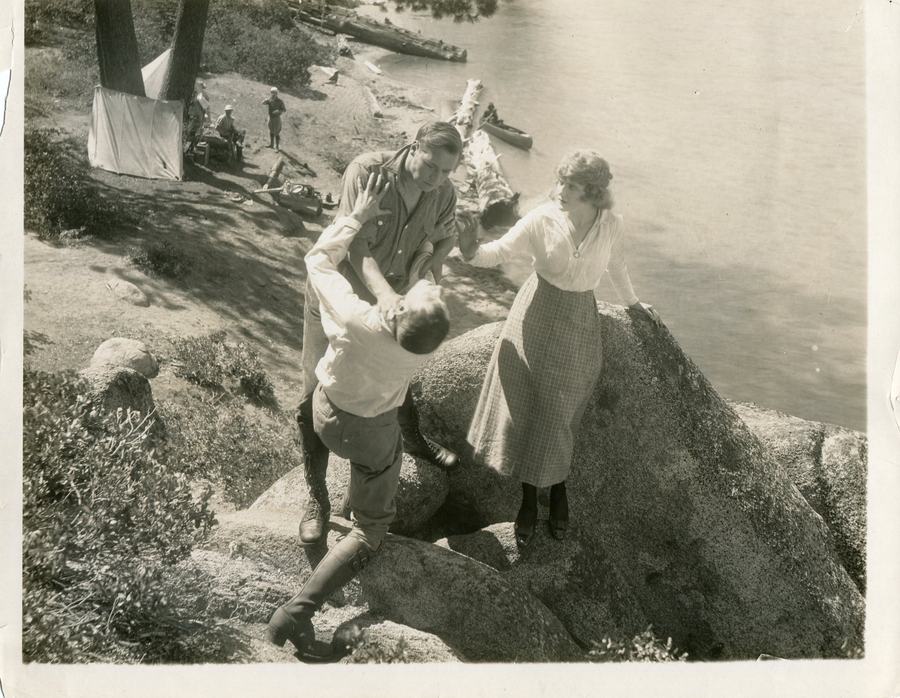
Their idyllic, albeit perilous, interlude on the island is abruptly ended when their flimsy, makeshift raft capsizes again, leading to their rescue by Stoddard's astute Indian guide, Eagle Eye. Their arrival at Stoddard's camp brings them face-to-face with the very societal pressures they had momentarily escaped. Larry Livingston, the brother of Estelle, the woman Mrs. Stoddard has earmarked as a suitable match for her son, is already at the camp, a harbinger of the 'polite society' that threatens to engulf their nascent love. The tension here is palpable, a silent but powerful clash between the authenticity forged in the wilderness and the artifice of social expectation. Sadie, acutely aware of her humble origins and feeling deeply 'diffident,' retreats, hiding in the woods. This moment underscores the profound internal conflict of the working-class protagonist confronting an entrenched class system, a theme explored in various forms across early cinema, from the struggles of the urban poor to the aspirations of those seeking upward mobility. The film, like many of its contemporaries, leverages these social divides to create dramatic friction, often with the intent of ultimately reaffirming the power of love over convention.
It is in her moment of vulnerability that Larry Livingston finds Sadie. His words, delivered with a veneer of concern, are a cruel weapon, designed to sever the bond between Sadie and Stoddard. He argues that her love, however genuine, is a burden, a 'degradation' for Stoddard, and that her duty, if she truly loves him, is to sacrifice her own happiness for his 'station in life.' This scene is a masterful depiction of social manipulation, highlighting the insidious power of class prejudice. Larry represents the rigid adherence to social hierarchy, a worldview that values pedigree and wealth above genuine affection and character. His argument, that love must yield to social appropriateness, is a direct challenge to the film's romantic premise. Sadie, heartbroken but resolute, internalizes this message, believing that she must become 'worthy' of Stoddard before she can ever truly be with him. This decision, though born of external pressure, also showcases her inner strength and determination, refusing to be seen as a mere impediment to Stoddard's social standing.
Driven by Larry's words and her own burgeoning sense of inadequacy in the face of Stoddard's world, Sadie makes a monumental decision. She persuades Eagle Eye to guide her to the nearest railroad station, leaving behind a poignant farewell note for Stoddard. Her subsequent journey to the city and her immersion in work at a restaurant, coupled with her diligent self-study, forms a crucial part of her character arc. This period of self-improvement is not merely about acquiring superficial polish; it's about cultivating her mind and refining her spirit, proving to herself, and perhaps to the world, that worth is not dictated by birth or wealth but by effort and intellect. This theme of self-betterment, often through education or vocational training, resonated strongly in a period where social mobility, though challenging, was an aspirational ideal. Films like The Governor's Lady (1915), while different in plot, similarly explored the transformation of a character from humble beginnings to a position of societal grace, often through immense personal effort.
Meanwhile, Stoddard, devastated by Sadie's departure, embarks on a tireless quest to find her. His refusal to accept Larry's classist rhetoric, and his unwavering belief in the connection they forged on the deserted island, underscores his character's integrity. The prolonged search, a common trope in romantic dramas of the era, builds suspense and reaffirms the depth of his commitment. When he finally discovers her, working diligently in the city, the reunion is not one of mere happenstance but of determined pursuit and profound understanding. He confronts Larry's mistaken counsel, asserting the primacy of their love over societal dictates. The film culminates in a powerful moment of mutual understanding, as they 'clasp hands,' signifying not just a romantic union but a triumph of authentic connection over the artificial barriers of class and prejudice. This resolution, while perhaps idealistic, offered audiences of the time a comforting vision of love prevailing against adversity, a common desire in popular entertainment.
May Allison's portrayal of Sadie Hicks is particularly noteworthy. In an era where exaggerated gestures often defined silent acting, Allison manages to convey a nuanced range of emotions – from the weariness of factory life to the soaring hope of romance, the sting of humiliation, and the quiet determination of self-improvement. Her expressive eyes and subtle body language communicate Sadie's inner world with remarkable clarity. Harold Lockwood, as John Stoddard, projects an image of rugged sincerity and unwavering devotion, making his character a believable foil to the superficiality of his social circle. The chemistry between Allison and Lockwood, a popular screen pairing of the time, is palpable, lending credibility to their whirlwind romance. The supporting cast, including Henry Otto himself, Franklyn Hall, and Lester Cuneo, contribute effectively to the narrative's texture, particularly Larry Livingston's condescending portrayal by Lee Arms, which perfectly embodies the film's class antagonist.
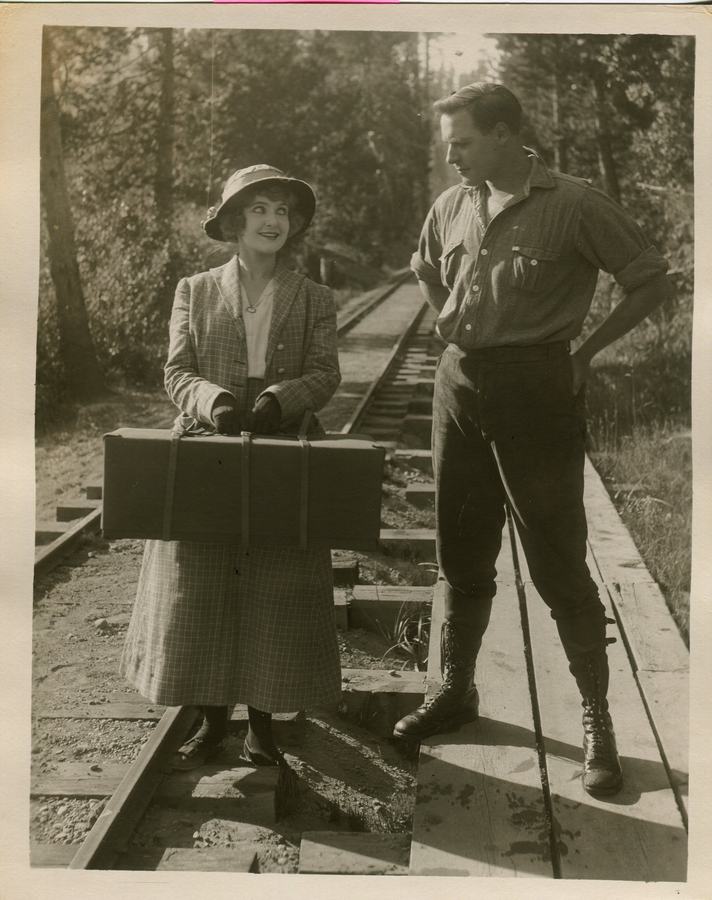
Henry Otto's direction is competent, skillfully navigating the shifts in setting from the oppressive factory to the liberating wilderness and the bustling city. He uses the visual grammar of silent cinema effectively, employing dramatic close-ups to emphasize emotional moments and wide shots to convey the grandeur of the Canadian landscape. The pacing, while characteristic of the era, allows for the emotional beats to resonate, particularly during the island sequence, which is filmed with an eye for both peril and romantic intimacy. The intertitles, crucial to silent storytelling, are well-integrated, clarifying plot points and enhancing emotional impact without feeling overly verbose. The film's aesthetic, while simple by modern standards, effectively transports the audience into its world, demonstrating the burgeoning sophistication of film as a storytelling medium in the mid-1910s.
Beyond the captivating romance, Mister 44 delves into several enduring themes. The most prominent is the clash between social class and genuine character. Sadie's journey is a powerful commentary on the arbitrary nature of social stratification and the inherent dignity of honest labor and aspiration. The film argues for a meritocracy of the heart, where true worth is found not in inherited wealth or social standing but in courage, kindness, and resilience. This theme of overcoming class barriers for love was a popular narrative device in early Hollywood, offering audiences a vicarious escape from their own societal constraints. One might draw parallels to films like The Little Gypsy (1915), which also explored social divides through a romantic lens, or even the more dramatic Zaza (1915) in its exploration of a woman's journey through different social spheres.
Another compelling theme is the transformative power of nature. The Canadian wilderness acts as a purifying force, stripping away the artificiality of society and allowing for true personalities to emerge. The island ordeal is not just a plot device but a metaphorical journey into the self, where Sadie and Stoddard discover each other's true essence unburdened by external judgments. This romanticized view of nature as a source of truth and renewal was a recurring motif in American art and literature of the period, reflecting a yearning for authenticity in an increasingly industrialized world.
The film also subtly touches upon feminine agency. Sadie's initial act of writing the note, her bold decision to travel across the continent, and her subsequent commitment to self-improvement all highlight a nascent sense of female empowerment. While ultimately rescued by Stoddard, her journey is one of active participation and self-determination, challenging the passive roles often assigned to female characters in earlier narratives. She is not merely waiting to be saved; she is actively shaping her destiny, even when misguided by others' counsel.
While Mister 44 might not possess the grand scale of an epic or the experimental flair of avant-garde cinema, its enduring appeal lies in its sincere storytelling and relatable human drama. It captures a snapshot of early 20th-century American aspirations – the belief in upward mobility, the allure of true love, and the quiet dignity of personal struggle. For fans of silent film, it offers a charming example of the romantic drama genre, showcasing the talents of its lead actors and the narrative craftsmanship of its creators. Its themes of class, genuine connection, and the pursuit of self-worth remain timeless, providing a window into the cultural anxieties and romantic ideals of a world on the cusp of profound change.
In an age saturated with cynical narratives, Mister 44 stands as a gentle reminder of cinema's power to inspire hope and celebrate the triumph of the human spirit. It is a film that, despite its century-old vintage, speaks to the perennial desire for connection, recognition, and the belief that love can indeed conquer all, even the most rigid of societal barriers. Its simple yet profound message, delivered through the eloquent silence of its era, continues to resonate, making it a worthy discovery for any cinephile exploring the rich tapestry of early film history.
IMDb —
1917
Community
Log in to comment.