DbcultAccessing Vault...
Cult Review
Senior Film Conservator
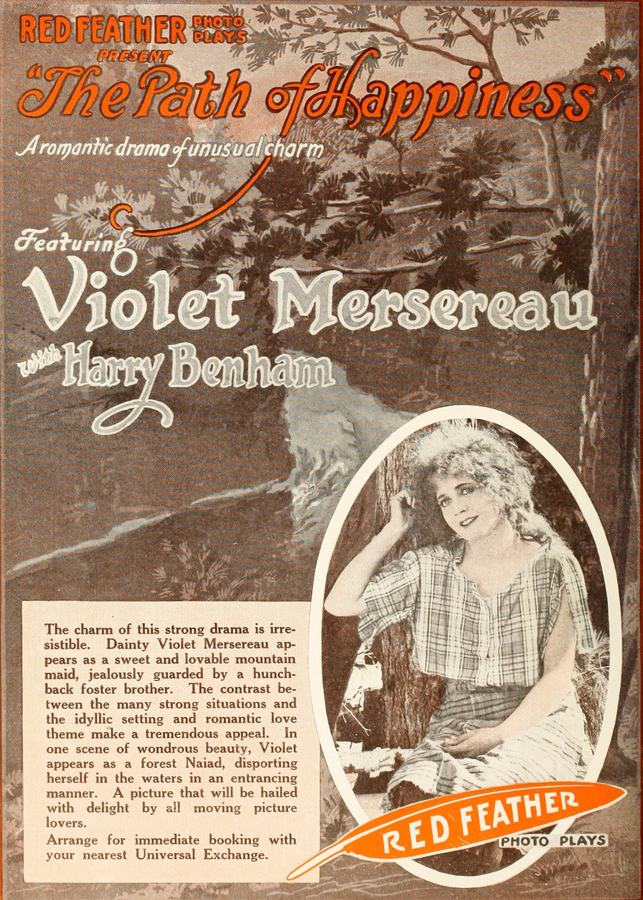
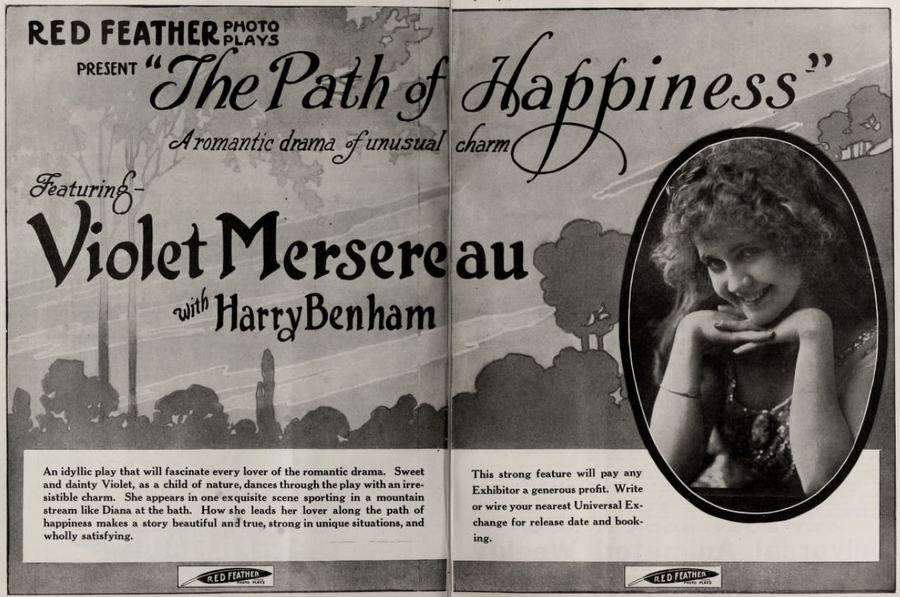
Cinema in 1916 was a medium grappling with its own adolescence, caught between the stagey traditions of the Victorian theater and the burgeoning visual language of the feature film. The Path of Happiness, directed and written with a keen eye for the pastoral-melodramatic by Elaine S. Carrington, stands as a fascinating specimen of this transitional era. It is a film that utilizes the rugged topography of northern New York not merely as a backdrop, but as a psychological weight, a crucible in which the concepts of 'innocence' and 'civilization' are violently agitated.
The film introduces us to Joan, portrayed with a luminous, wide-eyed intensity by Violet Mersereau. Mersereau was a staple of the era, often cast in roles that required a delicate balance of vulnerability and grit. Here, she is the 'Nature Child,' an archetype that resonated deeply with an American public increasingly anxious about the rapid industrialization of the early 20th century. Her existence is one of pure, unmediated sensation until the arrival of Merrill Day, played by Harry Benham, whose presence introduces the first notes of discord into her Edenic reality.
Merrill Day is the quintessential victim of the 'Gilded Age' burnout. His physician’s prescription of 'quiet' is a narrative device we see echoed in many works of the period, such as The Innocence of Ruth. Day represents the exhaustion of the intellect, while Joan represents the vitality of the instinct. When they meet, the friction is immediate. Joan’s initial flight from Merrill is not just a reaction to a stranger, but a visceral rejection of the 'clothed' world he represents.
The inciting incident involving the doll is a masterstroke of symbolic storytelling. The doll is an artifact of the 'other'—a miniature human, perfectly groomed and static, contrasting sharply with Joan’s wild, kinetic self. Her fascination with it is the first crack in her isolation. It represents a yearning for a femininity she has never been taught to perform. When Merrill finds the 'rag garter'—a crude, functional garment—near the doll, the film draws a sharp line between the artisanal necessity of the woods and the mass-produced luxury of the city.
One cannot discuss The Path of Happiness without delving into the character of Grekko, played by Sidney Bracey. Grekko is perhaps the most complex figure in the narrative. His physical deformity—the result of a bear trap—is a heavy-handed but effective metaphor for his spiritual entrapment. He is a man who owes his life to Joan’s family, yet his gratitude has fermented into a toxic, possessive love. He views Merrill not as a benefactor or a teacher, but as a predatory force.
Grekko’s hatred is fueled by a class-based resentment that often bubbled beneath the surface of silent dramas, similar to the tensions found in Sins of Great Cities. To Grekko, Merrill’s literacy and refinement are weapons used to seduce and corrupt. The scene where Merrill teaches Joan to read from a primer is fraught with tension; it is an act of intellectual colonization. As Joan gains the power of language, Grekko loses his hold over her silence.
The cinematography (though uncredited in many archives, likely handled by Universal’s house technicians) captures the Adirondacks with a misty, ethereal quality. The use of natural light filtering through the canopy creates a chiaroscuro effect that mirrors the moral ambiguity of the characters. Unlike the urban grit of Alias Jimmy Valentine, the visuals here are expansive and breathable, emphasizing the smallness of the human drama against the permanence of the trees.
The swimming scene, which triggers Grekko’s violent outburst, is a pivotal moment of voyeurism and vulnerability. It positions Joan as an object of the 'male gaze,' but also as a creature of pure element. Merrill’s refusal to leave is not just stubbornness; it is an assertion of his perceived right to occupy and observe the 'wild.' The resulting physical altercation between the broker and the cripple is a messy, desperate affair, highlighting the physical cost of their ideological clash.
As the film enters its final act, the plot thickens with the classic 'misunderstanding' trope. The presence of Merrill’s sister, Doris Ingraham (Florence Crawford), serves as the catalyst for the climax. Grekko, ever the opportunist of misery, uses their proximity to poison Joan’s mind. The irony is palpable: the man of 'nature' uses the 'deception' of the civilized world to achieve his ends.
The confrontation is staged with a theatrical flair characteristic of the 1910s. When Joan realizes her error—that the woman is a sister, not a rival—the emotional shift is seismic. The 'Path of Happiness' is suddenly blocked by a literal and figurative weapon. The moment Joan steps into the path of Grekko’s bullet is the film’s ultimate statement on love as a transformative, sacrificial force. It is a theme explored with equal fervor in Et Syndens Barn and A Mother's Confession.
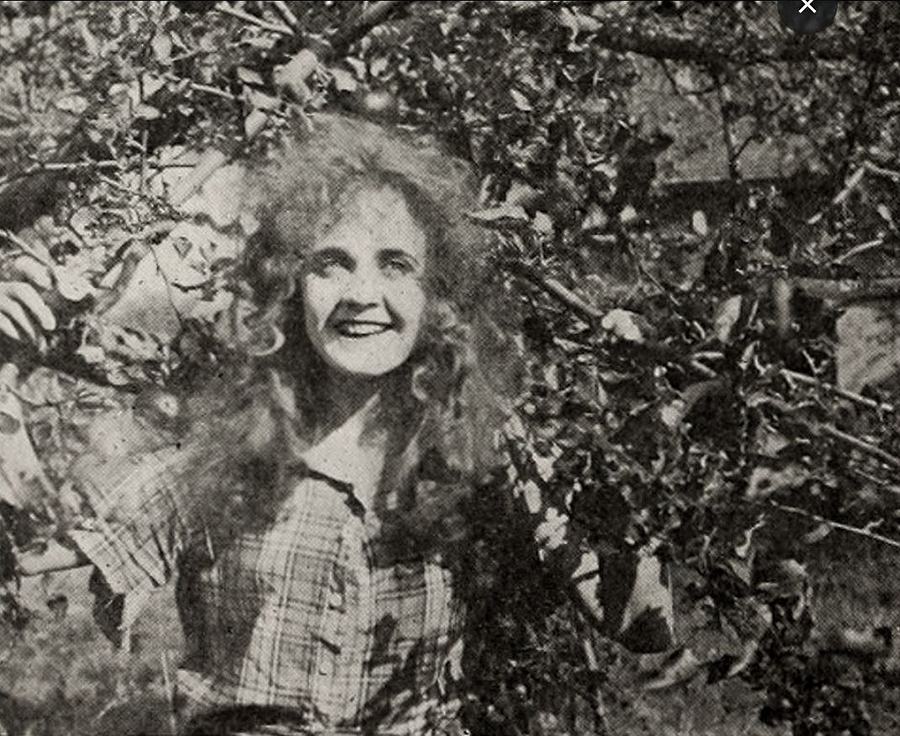
Grekko’s subsequent flight and the 'slight wound' suffered by Joan allow for a tidy, albeit emotionally exhausting, resolution. The film refuses to punish Joan for her wildness; instead, it rewards her for her capacity to bridge the gap between her world and Merrill’s. The final 'perfect understanding' is not just between two lovers, but between two disparate ways of being.
Writing in 1916, Elaine S. Carrington was already showing the narrative chops that would later make her the 'Queen of the Soaps' in the radio era. Her ability to weave domestic melodrama with high-stakes external conflict is evident here. While The Path of Happiness might seem quaint to modern audiences accustomed to the cynical subversions of the 21st century, it remains a vital document of early American storytelling. It grapples with the 'Rest Cure' philosophy of Silas Weir Mitchell and the 'Back to Nature' movements of the era, providing a window into the soul of a nation on the brink of entering the First World War.
Comparing this film to contemporaries like Over Niagara Falls or The Melting Pot, one sees a recurring obsession with the American landscape as a site of moral testing. Whether it is the bridge in The Mystery of St. Martin's Bridge or the forest here, the environment acts as a silent witness to the fallibility of man.
In conclusion, The Path of Happiness is more than a simple romance. It is a cinematic meditation on the scars we carry—Grekko’s physical ones and Merrill’s psychological ones—and the possibility of finding a middle ground where the doll and the rag garter can coexist. Violet Mersereau’s performance remains a high point of the silent screen, a vivid reminder of a time when a single look could convey the weight of an entire world lost and found.
IMDb 4.5
1925
Community
Log in to comment.