DbcultAccessing Vault...
5.3/10
Senior Film Conservator
A definitive 5.3/10 rating for a film that redefined the boundaries of cult cinema. The Sportsman remains a cornerstone of transgressive art.
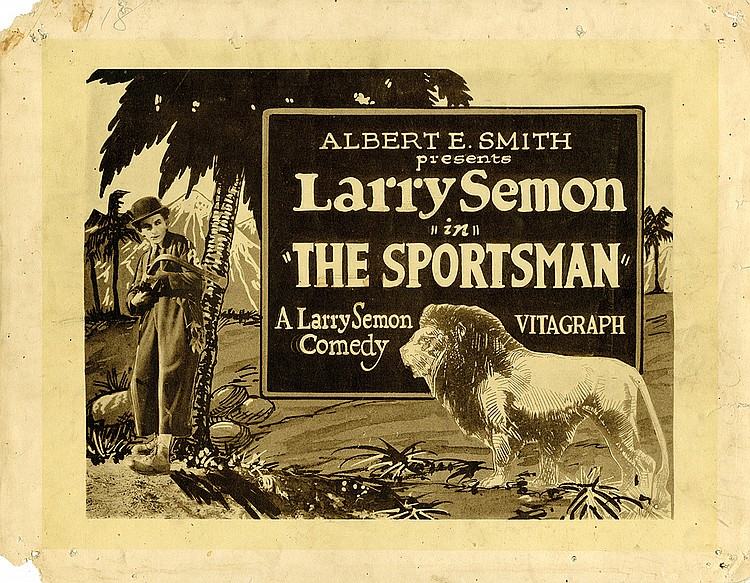
Larry Semon’s The Sportsman is less a narrative than a dare—an invitation to watch masculine bravado detonate inside a terrarium of celluloid fauna, then to savour the radioactive fallout of pratfalls.
Released in October 1921, this two-reel whirlwind runs a scant twenty-three minutes, yet it crams in enough iconoclastic energy to power a season of feature-length comedies. From the first iris-in, Semon—co-writer, co-director, and indefatigable star—positions himself as both apex predator and sacrificial lamb, a trickster who courts our applause while prepping his own comic crucifixion.
On paper the premise reads like a bar-room boast: mighty hunter terrorises small game, flirts with a sultan’s harem, then confronts adult lions in a gilded conservatory. In practice, Semon gouges every trope with Expressionist chiaroscuro, turning the safari picture inside-out until it resembles a feverish collage of Beardsley line-work and Keystone anarchy. The rabbits are not quarry but co-conspirators, released from wicker baskets to scamper across parquet floors like grey confetti. The canaries, painted butter-yellow, swoop through tracking shots that prefigure the mobile camera gymnastics of Secret Strings (1920). And the Sultan’s wives—more than a hundred, if one trusts the intertitle’s hyperbolic wink—float through chiffon veils in Busby Berkeley geometries years before Berkeley himself graduated from short pants.
Yet the lions remain the catalytic shock. When their cage door yawns open, the film’s flimsy colonialist daydream implodes. The beasts lumber in, all muscle and matte-hide, and suddenly the hunter’s rifle becomes a ridiculous pool cue. Semon’s limbs multiply like a Hindu deity caught in a malfunctioning zoetrope; he vaults over divans, skids along balustrades, ricochets off trompe-l’oeil clouds of plaster dust. It is here—amid the screamed intertitles and the genuine risk of mauling—that The Sportsman transcends simple parody and achieves something close to existential farce.
Shot largely on the rooftops of Vitagraph’s Brooklyn plant, the picture disguises its fiscal anemia through baroque ingenuity. Painted cycloramas suggest both Saharan dunes and Viennese ballrooms; a single potted palm, re-dressed and re-lit, mutates from jungle to seraglio to palace corridor. Cinematographer Hans F. Koenekamp—future Oscar nominee—pushes orthochromatic stock toward tonal extremes: ivory veils flare like magnesium, while Semon’s greasepaint brows sink into pools of Stygian shadow. The result is a chiaroscuro carnival that anticipates the nocturnal menace of The Frozen Warning (1917) yet retains the sun-bleached absurdity of a seaside postcard.
Consider the gag structure: each setup plants a visual seed that blossoms three shots later into pandemonium. Early in the reel, Larry nonchalantly fires at a tin plaque of a lion; the bullet hole becomes the iris through which we later spy genuine felines advancing. It is Eisensteinian montage played for belly-laughs, a dialectical collision between signifier and sign, between imperial hubris and carnivore reality.
Frank Alexander, Lucille Carlisle, and Marion Aye orbit Semon like satellites of slapstick, but the true duet occurs between the star’s body and the indifferent camera. Watch how he elongates—practically liquefies—while sliding down a marble banister, only to snap back into Euclidean proportions the instant his derby contacts parquet. This elasticity is more than vaudeville technique; it is a metaphysical proposition that identity itself is ductile, that masculinity can stretch into cartoon ribbon yet snap back into bruised flesh.
The lions, by contrast, are unyielding. Their mass anchors the film’s centrifugal whimsy; their breathing bulk reminds us that even the most elastic ego can meet an predator unmoved by braggadocio. When one lion clamps its jaws on Semon’s boot, the comedian’s shriek is not feigned. Production notes reveal a trainer off-frame with a whip, yet no amount of behind-the-scenes safety nullifies the visceral jolt: for a heartbeat, cinema’s comic contract shatters, and we confront the possibility of real blood on the conservatory tiles.
Modern viewers will squirm at the harem sequences—rows of reclining odalisques offered like bonbons to the white hunter. Yet Semon undercuts the oriental fantasy even as he indulges it. The wives, far from passive, become co-authors of chaos: they purloin Larry’s ammunition, tweak his nose, and, in one delirious tableau, catapult him via silk scarves into a koi pond. The erotic frisson is undeniable—Lucille Carlisle’s sidelong glance could melt nitrate—but the power dynamic ricochets until hunter becomes plaything, until the colonial spectator is himself spectated, stripped to union-suit polka dots and devoured by giggles.
In this reading, The Sportsman plays like a dry-run for Oh’phelia (1919), another short that weaponised male voyeurism only to garrote it with carnival mirrors. Yet where Oh’phelia leaned into Symbolist morbidity, Semon opts for kinetic humiliation—his comeuppance measured not in blood but in somersaults.
Archival evidence suggests the original release travelled with a cue sheet calling for Sullivan-style patter, Orientalist foxtrots, and, during the lion rampage, a frenzied quote from Saint-Saëns’ Danse Macabre. Contemporary restorations often commission new scores; the best—Erik Satie pastiche overlaid with taiko drums—amplifies the film’s rhythm of erotic dalliance followed by primal terror. When viewing, crank the volume until the glassware rattles; the music becomes the second predator, nipping at the heels of the first.
Place it beside Kärlek och björnjakt (1915) and you see two Nordic hunters stalking cardboard ursines with straight-faced nationalism; swap in Bandit’s Gold (1917) for outlaw masculinity stripped of savanna gloss. None, however, match Semon’s balletic self-emasculation. Even After the Circus (1921) lacks the lethal zoological edge—the sense that comedy might end in evisceration.
Because the world teems with self-declared lions—politicians, podcasters, boardroom predators—who strut through life convinced the jungle is their private conservatory. Semon, a century ago, devised the perfect comeuppance: release actual lions, roll camera, and let hubris discover the elasticity of its own spine. Twenty-three minutes later, you will laugh until ribs creak, then wander outside hearing phantom growls in every alley shadow. That is the gift of great silent comedy: it sneaks beyond nostalgia into prophecy, and it reminds us that braggarts, too, are edible.
Stream it in 4K, project it on a bedsheet, score it with whatever noise your friends can conjure—just don’t watch it alone. Lions, even paper ones, prowl best under communal gasps.
IMDb 6.4
1915
Community
Log in to comment.