DbcultAccessing Vault...
Cult Review
Senior Film Conservator
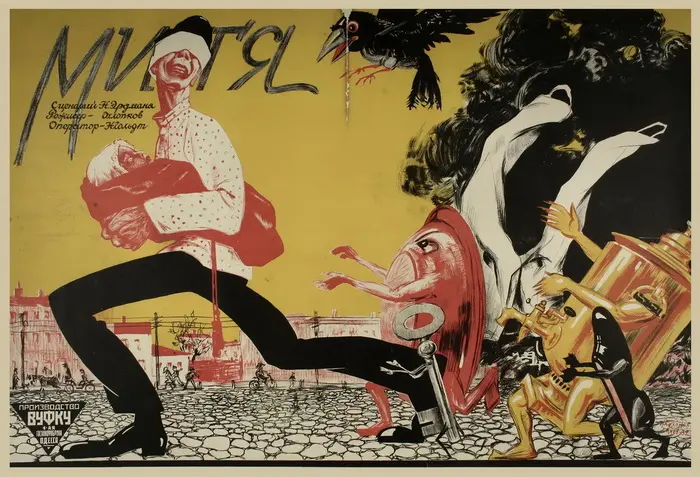
Is Mitya a film that still resonates in the age of digital pitchforks? Short answer: Yes, it is a blistering precursor to modern cancel culture that deserves a spot in your watchlist. This film is for the cinephile who enjoys seeing the darker impulses of humanity dismantled with surgical precision, but it is certainly not for those looking for a comforting or visually lush romantic epic.
Yes, Mitya is worth watching because it remains one of the most effective cinematic takedowns of the 'philistine' mindset ever produced. It captures a specific historical moment—the Soviet NEP era—where the tension between revolutionary ideals and old-world pettiness was at its peak. The film avoids the trap of being a mere propaganda piece by focusing on the universal mechanics of gossip and social exclusion. It is a lean, mean, and deeply cynical piece of work that feels surprisingly modern in its execution.
1) This film works because it refuses to play nice with the audience’s expectations of a noble Soviet hero.
2) This film fails because its secondary characters are often reduced to caricatures that lack the bite of real human malice.
3) You should watch it if you want to see how silent cinema could be just as cynical and sharp-tongued as modern dark comedies.
The brilliance of Mitya lies in its pacing of the social collapse. Unlike the melodrama found in The Silent Master, where secrets are kept for noble reasons, Mitya is about the complete lack of secrets in a small town. The moment Mitya is seen with the infants, the film shifts from a character study into a horror movie where the monster is the collective eye of the community.
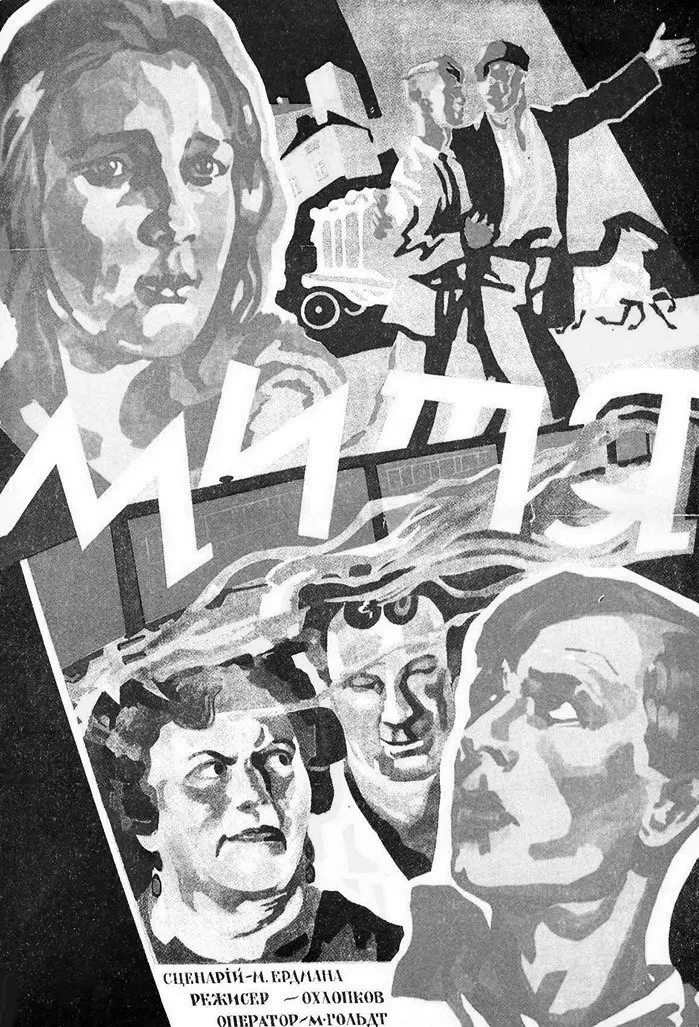
Consider the scene where Mitya arrives at his fiancée's party. The transition from the warmth of the celebration to the cold, stony silence of the guests is handled with a jarring lack of sentimentality. It isn't a slow realization; it is an instant execution of his social standing. This reflects the writing of Nikolay Erdman, who was a master of identifying how quickly a crowd can turn into a mob. The dialogue cards here are sparse because the visual language of the 'stare' does all the heavy lifting.
The film excels at showing the mundane nature of this evil. The townspeople aren't mustache-twirling villains; they are neighbors, shopkeepers, and friends. Their betrayal is rooted in a desire for order and a fear of the 'other.' In this regard, it shares a certain thematic DNA with domestic dramas like The Newlyweds' Neighbors, but it strips away the comedic safety net to reveal something much more sinister.
One cannot discuss Mitya without acknowledging the script by Nikolay Erdman. Erdman, who would later be silenced by the Soviet regime for his satirical plays, brings a level of intellectual ferocity to the screenplay that was rare for 1927. He doesn't just critique the characters; he critiques the entire structure of provincial life. The 'philistinism' mentioned in the plot isn't just a lack of culture; it's a moral rot.
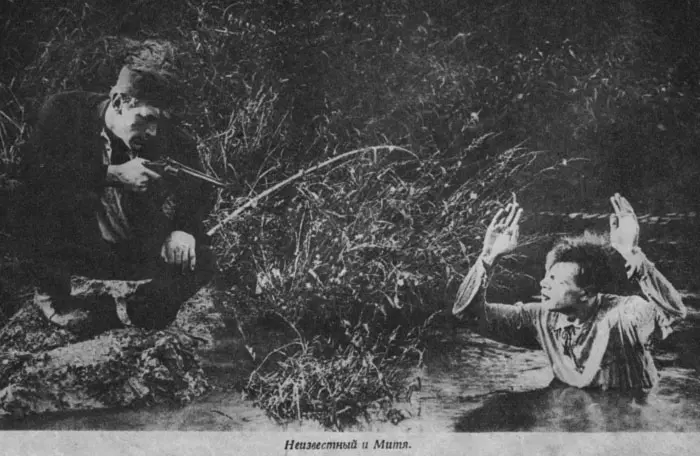
Erdman uses Mitya as a sacrificial lamb to expose the rot. The irony is thick: Mitya is punished for the very thing the state claims to value—communal responsibility and care for the weak. By helping the dying woman, he violates the unspoken rule of the provincial town: mind your own business. The script is built on this paradox, and it drives the film toward its explosive, almost surrealist conclusion.
The dialogue, even in silent form, feels sharp. You can sense the rhythm of Erdman’s wit in the way the townspeople justify their cruelty. They wrap their prejudice in the language of morality, a tactic that hasn't aged a day. It makes the film feel less like a historical artifact and more like a mirror. It is a nasty little film, and that is its greatest strength.
Nikolai Okhlopkov, who both directed and starred in the film, delivers a performance that is remarkably physical. In an era where silent acting often leaned into broad, theatrical gestures, Okhlopkov chooses a path of internal collapse. When Mitya is kicked out of the town, his body seems to physically shrink. He doesn't rail against the heavens; he folds into himself.
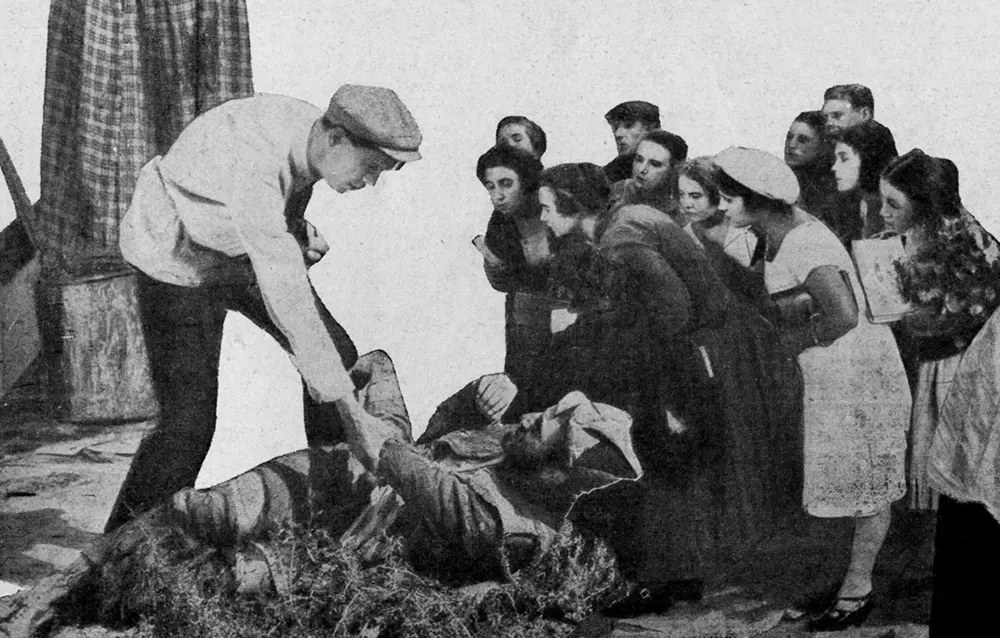
This physicality is most evident in the suicide attempt sequence. The way he interacts with the water—the slow, deliberate movements—suggests a man who has already died inside before he even touches the river. It’s a haunting sequence that stands in stark contrast to the more frantic energy of films like The Third Alarm. Okhlopkov understands that silence is most powerful when it is paired with stillness.
As a director, Okhlopkov uses the camera to create a sense of stifling proximity. The close-ups of the townspeople are intentionally unflattering. Their faces are crowded into the frame, creating a sense of claustrophobia that makes Mitya’s eventual 'resurrection' feel like a genuine release of pressure. He captures the provincial trap by making the town itself feel like a prison without bars.
To fully appreciate Mitya, one must understand the New Economic Policy (NEP) years. It was a time of strange contradictions in the Soviet Union—a temporary return to limited capitalism that created a new class of 'NEP-men' and a resurgence of middle-class values that the revolution was supposed to have eradicated. Mitya is a direct response to this cultural regression.
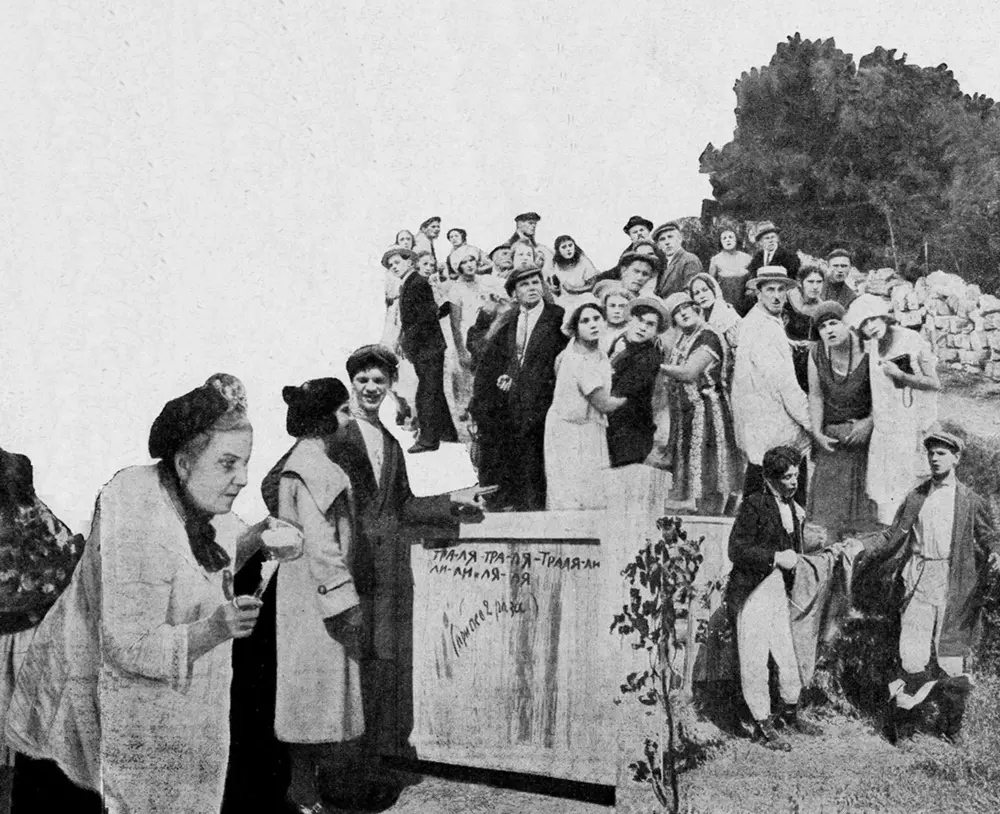
The film portrays the townspeople as being obsessed with status and appearance, much like the characters in The Gaiety Girl, but with a grittier, more desperate edge. They are terrified of anything that might disrupt their fragile sense of respectability. Mitya’s 'scandal' isn't just about a child; it's about the threat of the unknown and the unconventional. He represents a moral purity that they cannot comprehend, so they must destroy it.
The film’s critique of the 'philistine' is brutal. It suggests that the greatest enemy of progress isn't a foreign power or a political rival, but the neighbor who values gossip over truth. This was a dangerous sentiment to express, and it’s why the film feels so vital today. It’s a reminder that social progress is easily undone by the human impulse to conform and exclude.
Technically, Mitya is a masterclass in using shadows and framing to convey isolation. The cinematography doesn't aim for the 'visually stunning' landscapes of high-budget epics; instead, it focuses on the textures of the small town—the dust, the wooden fences, the cramped interiors. These elements ground the satire in a physical reality that makes the characters' cruelty feel more tangible.
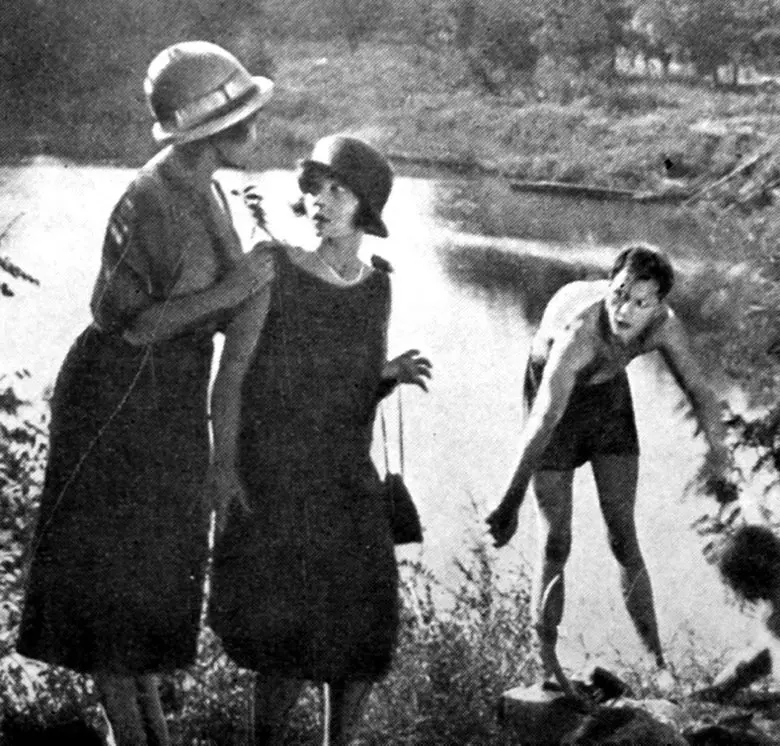
The editing is particularly effective during the funeral sequence. The intercutting between the mournful faces of the hypocritical townspeople and the 'dead' Mitya in the coffin creates a tension that borders on the macabre. When he finally rises, the shock is not just a plot point; it’s a rhythmic explosion. The film breaks its own established pacing to deliver a middle finger to the audience and the characters alike.
While it lacks the budget of something like The Biggest Show on Earth, Mitya uses its limitations to its advantage. Every shot feels intentional, designed to make the viewer feel as trapped as Mitya himself. It’s a claustrophobic experience that pays off in one of the most satisfying endings in silent cinema.
If you are looking for a historical curiosity that feels shockingly relevant to the modern world, then Mitya is an essential watch. It is a film that demands your attention and rewards it with a cynical, clear-eyed view of human nature. It is not a 'fun' movie, but it is a necessary one for anyone interested in the history of social satire.
Pros:
The acting by Nikolai Okhlopkov is masterfully understated. The screenplay by Nikolay Erdman is sharp and uncompromising. The film’s message about social conformism is timeless and deeply impactful.
Cons:
The pacing in the second act drags slightly. Some of the secondary characters are too one-dimensional to be truly threatening. The transition from drama to the satirical ending might be too jarring for some viewers.
Mitya is a jagged, uncomfortable, and ultimately brilliant piece of silent cinema. It doesn't ask for your sympathy; it asks for your outrage. It works. But it’s flawed. The caricatures can be a bit much, but the core of the film—the destruction of a good man by a mediocre crowd—is handled with a ferocity that few films have matched since. It is a vital document of the NEP era and a universal warning against the dangers of the mob mind. Don't go in expecting a masterpiece of beauty; go in expecting a masterpiece of bile. It’s a nasty little film that leaves a lasting mark.

IMDb 6.8
1917
Community
Log in to comment.