DbcultAccessing Vault...
Cult Review
Senior Film Conservator
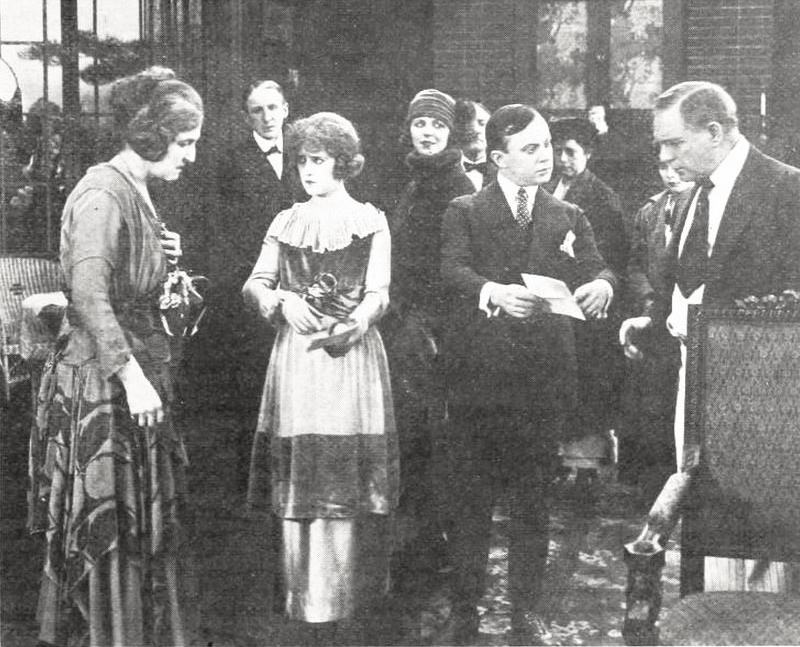
There's an inherent charm, a quiet wisdom, in films that tackle the universal intricacies of human relationships, especially those as foundational as marriage. "How to Be Happy Though Married", despite its seemingly straightforward title and minimalist plot synopsis, promises a profound delve into the very fabric of early marital life. It's a title that, even a century later, still resonates with a delightful, almost cynical, optimism, suggesting that happiness in matrimony isn't an inherent state but an active, continuous pursuit, often fraught with unexpected obstacles. The film posits a scenario familiar to countless couples: the return from the honeymoon, that ethereal period of nascent bliss, only to be plunged back into the swirling currents of daily life and, more specifically, the often-overwhelming embrace of one's social circle. This isn't a grand adventure or a dramatic exposé; it's a microscopic examination of the subtle tremors that can shake the foundation of a new union.
The premise, a couple confronting their friends immediately upon their return, is deceptively simple. Yet, within this simplicity lies a rich vein of potential comedic and dramatic tension. Friends, while typically sources of support and joy, can also be unwitting catalysts for conflict, their well-meaning intentions sometimes veiling a lack of boundaries or an inability to grasp the delicate privacy required by newlyweds. One can easily imagine the scenarios: unsolicited advice, endless social engagements, comparisons to other marriages, or even playful teasing that, to a sensitive, newly-formed unit, feels like an intrusion. The film, therefore, isn't just about 'how to be happy' but 'how to be happy *despite* everything else,' particularly the intricate web of pre-existing relationships that suddenly must accommodate a new, singular entity: the couple.
In an era when dialogue was yet to grace the silver screen, the onus fell heavily upon the performers to convey the full spectrum of human emotion through gesture, expression, and physicality. Elinor Field, as a central figure in "How to Be Happy Though Married", would have been tasked with articulating the subtle shifts in mood and thought that define a young wife navigating her new reality. Her performance would have been critical in humanizing the struggles and triumphs of the newlywed experience. How does one convey the quiet exasperation of a spouse whose domestic space is constantly invaded? Or the loving, yet firm, resolve to protect the sanctity of their new bond? These are the questions that Field's artistry, through her eyes, smiles, and perhaps even a subtle slump of the shoulders, would have answered. She would have had to paint a portrait of a woman caught between the desire to maintain social graces and the burgeoning need to carve out a private world with her husband.
Her portrayal would likely have been a masterclass in nuanced, non-verbal communication, a skill paramount in the silent film era. We can envision her character's journey from perhaps an initial, polite tolerance of the friends' presence, to a growing weariness, and ultimately, a determined effort to establish boundaries. This arc, conveyed purely through visual storytelling, speaks volumes about the sophistication required of actors like Field. It's a testament to the power of silent cinema that such complex emotional narratives could be so effectively communicated, often with greater subtlety than their sound-era counterparts, which sometimes relied too heavily on exposition. One might compare the understated emotional depth required here to the intricate psychological journeys depicted in films like The Soul's Cycle, where internal struggles are externalized through powerful visual metaphor rather than spoken word.
The 'friends' in this narrative are not villains in the conventional sense, but rather a collective force, an almost elemental challenge to the nascent marital unit. They represent the external world, society's expectations, and the pre-existing commitments that inevitably clash with the desire for newlywed solitude. This dynamic offers a fascinating contrast to more overt conflicts seen in films like Burglar by Proxy, where the threat is clear and tangible. Here, the 'threat' is cloaked in affection and familiarity, making it all the more difficult to navigate. The couple cannot simply 'defeat' their friends; they must learn to integrate them, to manage their presence without sacrificing their own burgeoning identity as a married pair. This delicate negotiation is where the film's true genius lies, offering a commentary on the social contract inherent in marriage itself.
The film likely explores various facets of this 'friend-force.' Perhaps some friends are genuinely supportive, while others are unknowingly disruptive, seeking to relive past glories or inject their own marital woes into the new couple's space. The interplay of these personalities would provide ample opportunity for both humor and moments of quiet contemplation. It's a subtle form of societal pressure, a constant hum in the background of their new life together. This theme of external pressures on personal lives can be seen as a lighter parallel to the more intense societal critiques found in dramas such as Diplomacy, where social machinations dictate fates, or even the tragic entanglements of Ludi i strasti, albeit with a far more benign and comedic lens. The challenge for the couple in "How to Be Happy Though Married" is to assert their newfound boundaries without alienating those they care about, a universal tightrope walk.
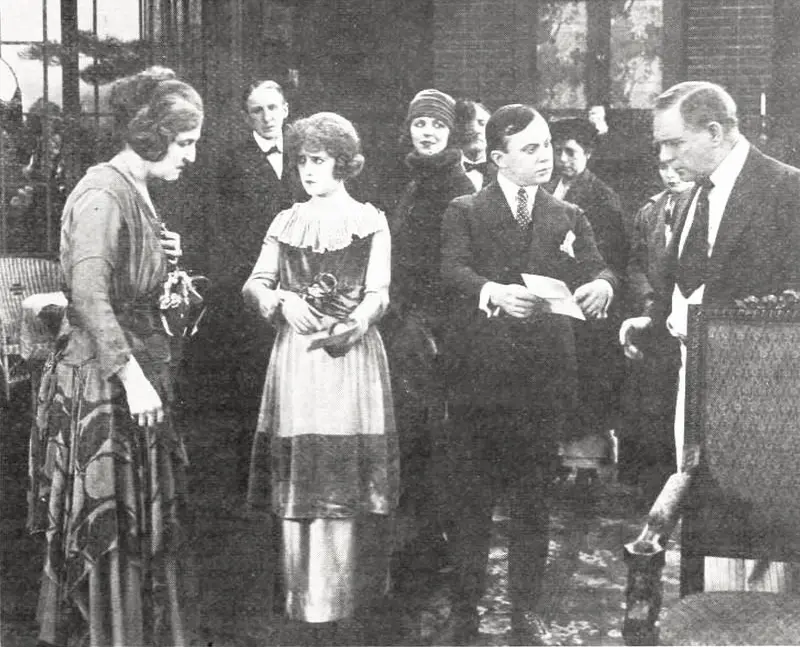
Beyond the immediate comedic potential, "How to Be Happy Though Married" likely delves into deeper thematic territory. The film implicitly asks: What constitutes marital happiness? Is it an isolated bubble, or can it thrive amidst the clamor of external relationships? The struggle to define and defend a private domestic sphere is a timeless one. As the couple navigates the onslaught of their social circle, they are also, in essence, defining their collective identity. Are they still individuals who happen to be married, or have they become a singular unit that must present a united front to the world? This quest for identity within a new partnership, especially under public scrutiny, is a compelling narrative thread.
The film, situated in its historical context, also offers a window into the societal norms and expectations surrounding marriage during its production era. Was the constant presence of friends and family a given, an unavoidable aspect of married life, or was it already a point of contention? The very title suggests a proactive approach to marital happiness, implying that it requires effort and strategy, perhaps even a degree of social maneuvering. This theme of navigating societal expectations within personal relationships resonates with the more dramatic struggles for autonomy seen in films like Mary Moreland or the constrained choices in Poor Karin, albeit in a lighter, more comedic vein. The domestic setting, often idealized, is here presented as a battleground for privacy and personal space, a concept that remains relevant even in our hyper-connected modern world.
Moreover, the film might subtly explore the transition from individual freedom to shared responsibility. The honeymoon, a period of pure coupledom, is sharply contrasted with the return to a world where individual pasts and friendships merge, sometimes awkwardly, into a shared future. The challenges presented by their friends become a crucible for the couple to learn compromise, communication, and mutual support. This formative period, filled with both exasperation and reaffirmation of their bond, is what truly makes the film a compelling study of early marriage, moving beyond mere comedic antics to explore genuine emotional growth. The very act of 'contending' with friends suggests a journey of adaptation and resilience, essential ingredients for any lasting union.
What makes "How to Be Happy Though Married" endure, even as a historical artifact, is its fundamental relatability. The core premise – the challenge of integrating a new partnership into an existing social framework – is timeless. Every couple, at some point, faces the delicate dance of maintaining individual friendships while nurturing their shared identity. The film, through its silent narrative, provides a mirror to these universal experiences, allowing audiences across generations to see reflections of their own lives, their own well-meaning but occasionally overbearing friends, and their own efforts to carve out a happy, harmonious domestic space. It's this universality that elevates the film beyond a mere period piece.
The film's exploration of social boundaries and the sanctity of personal space is perhaps even more pertinent today. In an age of constant digital connection and blurred lines between public and private life, the struggle of the newly married couple to define their own sphere feels remarkably contemporary. The 'friends' of the film could easily be translated into the endless stream of social media notifications, the pressure to document every moment, or the unsolicited advice from online communities. Thus, a seemingly quaint silent film offers a surprisingly prescient commentary on modern challenges to marital bliss. One might even draw a thematic parallel to the subtle comedic observations of human foibles found in The Corner Grocer, where everyday interactions reveal deeper truths about human nature, or the gentle humor of A Tropical Eggs-pedition, where simple premises lead to delightful, insightful outcomes.
Ultimately, "How to Be Happy Though Married" is more than just a slice of life; it's a subtle instruction manual, albeit one delivered with charm and wit rather than didacticism. It suggests that happiness in marriage isn't a passive state to be achieved but an active endeavor, requiring vigilance, communication, and a healthy dose of boundary-setting. The film's message, conveyed through the expressive performances of its cast, particularly Elinor Field, and the nuanced portrayal of its 'friendly' antagonists, remains as fresh and relevant as ever. It reminds us that while love may be the foundation, the architecture of a happy marriage is built brick by brick, often through the careful negotiation of external forces and internal desires. It's a delightful testament to the enduring power of cinema to reflect and illuminate the most intimate aspects of the human condition, proving that even a century ago, the path to marital happiness was, and remains, a beautifully complicated journey.
The film, in its quiet way, underscores the importance of a couple's ability to create their own shared world, distinct yet not entirely separate from their individual pasts. The 'contention' with friends isn't necessarily a battle to be won, but a process of integration and definition. It teaches the couple, and by extension the audience, that true happiness in marriage often blossoms from a secure understanding of one's own space, desires, and the mutual respect required to nurture them. This narrative of self-discovery and relational growth, set against the backdrop of social interaction, offers a subtle but powerful insight into what it truly takes to make a partnership thrive. It is a cinematic experience that leaves one contemplating the delicate art of balancing personal intimacy with the inevitable demands of the world, a challenge as old as marriage itself. The film stands as a charming, insightful artifact, proving that the silent era was anything but silent in its capacity to convey profound human truths.
IMDb 5.3
1930
Community
Log in to comment.