DbcultAccessing Vault...
Cult Review
Senior Film Conservator
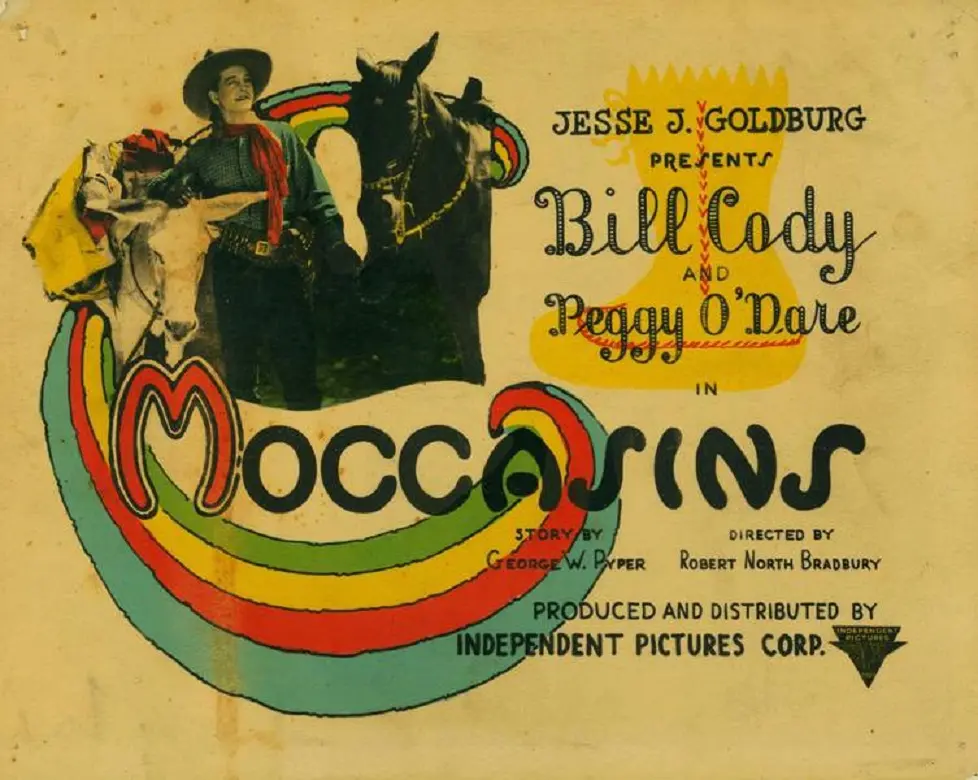
Can a film lost to time still be ‘worth watching’ in the traditional sense? Short answer: yes, but not in the way you might expect. While Moccasins, a silent Western from an era when film preservation was an afterthought, is largely unavailable for direct viewing, its historical context and the inferences we can draw from its title and cast make it a fascinating subject for critical exploration. This film, or rather, the idea of it, is absolutely worth investigating for serious film historians and enthusiasts of the silent era.
This phantom feature is for those who find value in cinematic archaeology, for scholars keen on understanding the evolution of genre, and for anyone who appreciates the profound melancholy of lost art. It is decidedly NOT for casual viewers seeking a popcorn flick, nor for those who demand immediate, tangible narrative gratification. To engage with Moccasins is to engage with absence, to reconstruct meaning from fragments and shadows.
Stepping into the world of *Moccasins* is less like watching a film and more like sifting through the dust of history. The very name conjures images of the American frontier, of pathways trod by Indigenous peoples, of journeys undertaken on foot through vast, untamed landscapes. It’s a title that, even a century later, carries a certain weight, a promise of a story deeply embedded in the soil and struggle of the Old West.
The presence of Bill Cody, a figure synonymous with the Western genre in its nascent stages, further solidifies this expectation. Cody, often overshadowed by his namesake Buffalo Bill, carved out his own niche as a stoic, often heroic cowboy figure. His involvement alone signals a film rooted in the conventions of the genre: perhaps a tale of a lone rider, a conflict with outlaws, or a sensitive portrayal of cross-cultural interactions – though the latter, given the era, would likely be filtered through a lens of prevailing societal biases.
This film works because it stands as a poignant reminder of the fragility of early cinema, prompting vital discussions about preservation and historical interpretation.
This film fails because, quite simply, it is largely inaccessible, leaving its artistic merits and narrative impact to speculative reconstruction rather than direct appraisal.
You should watch it if you are a dedicated film historian, a silent film aficionado, or anyone interested in the meta-narrative of cinematic loss and the enduring power of a film's title and cast to suggest a compelling story.
To critique *Moccasins* is to engage in an act of speculative archaeology. We are not reviewing a film in the traditional sense, but rather its ghost, its historical footprint, and the implications of its existence. This requires a shift in critical perspective, moving from an analysis of specific scenes or performances to a broader consideration of its cultural context and potential significance.
The title itself, ‘Moccasins,’ is a potent signifier. It immediately suggests themes of walking, tracking, belonging, or perhaps displacement. In the context of a silent Western, this could manifest as a pursuit, a journey of self-discovery, or even a symbolic representation of a character’s connection to the land or a different culture. Given the era’s often simplistic and stereotypical portrayals of Indigenous peoples, one must approach such a title with a critical eye, acknowledging the potential for problematic representations while also hoping for a nuanced, if unlikely, exploration.
George W. Pyper, the credited writer, was active in the early 20th century, contributing to numerous short films and features. His work often aligned with the popular genre tropes of the day, suggesting that *Moccasins* likely adhered to a formulaic, yet perhaps effective, narrative structure. The absence of a detailed plot summary, while frustrating, forces us to consider the power of genre expectations. We can infer a story arc, even if the specifics are lost.
Bill Cody’s presence is arguably the most concrete element we have to discuss. As a prolific Western star of the 1920s, Cody cultivated a distinct on-screen persona. He was typically the rugged, morally upright hero, capable of both physical prowess and a quiet, understated emotional depth. His acting style, characteristic of the silent era, would have relied heavily on broad gestures, expressive facial movements, and a physicality that spoke volumes without dialogue.
In *Moccasins*, one can imagine Cody embodying a character whose journey or struggle is central to the plot. Perhaps he plays a frontiersman tracking a villain, or a sympathetic figure caught between two worlds. His ability to convey determination, sorrow, or resolve through his eyes and posture would have been paramount. For instance, in films like The Red Ace, Cody's stoicism often anchored chaotic action sequences, a quality that would undoubtedly have been leveraged here.
The sheer volume of films from this period that are now lost is a tragedy, but it also elevates the remaining fragments to near-sacred status. The 'what ifs' are endless.
It’s a powerful testament to the star system even in its infancy: the actor's name alone could sell a film, and his established persona would dictate much of the audience's expectation regarding character and narrative trajectory. Cody was a reliable presence, and audiences knew what they were getting – a certain brand of Western heroism.
Without specific directorial credits beyond the writer, we must generalize about the filmmaking techniques prevalent during the silent era. Directors of Westerns at this time, such as John Ford in his early works or William S. Hart, often prioritized clear storytelling, sweeping vistas, and dynamic action sequences. Long shots to establish the vastness of the landscape, medium shots for character interaction, and close-ups for emotional impact were standard tools.
Cinematography in silent Westerns was about capturing the grandeur and danger of the frontier. One can envision *Moccasins* utilizing natural light, expansive outdoor locations, and practical effects to convey realism. The use of deep focus to show both foreground action and background scenery, a technique seen in numerous contemporaneous films like The Soul of Kura San, would have been crucial for immersing audiences in the untamed West. The pacing, typical of the era, would likely have been deliberate, building tension through sustained sequences and intertitles.
The editing would have been functional, designed to move the story forward rather than for artistic flair in the modern sense. Cross-cutting for suspense during chase scenes or parallel narratives would have been common. The overall tone would have swung between adventure, drama, and perhaps moments of lightheartedness, all filtered through the moral clarity expected of a Western hero.
Could *Moccasins* have transcended its genre? The title suggests a potential for deeper exploration of Indigenous themes, perhaps even a nascent attempt at cultural understanding, however flawed by early 20th-century perspectives. While many Westerns of the time reduced Native Americans to archetypal 'savages' or 'noble guides,' a film titled 'Moccasins' at least opens the door for a narrative centered around their perspective or their traditional ways.
This is a strong, debatable opinion: I believe that even a flawed attempt at cultural representation in 1920s cinema holds more historical value than a perfectly executed, yet entirely conventional, Western. The courage to even hint at such themes in a commercial feature is notable.
Alternatively, the title could simply refer to a literal journey, a character's arduous trek across the wilderness. Regardless, the film's very name invites a level of thematic introspection beyond a simple 'good guy vs. bad guy' shootout. This is where its enduring fascination lies – in the questions it poses rather than the answers it provides.
The significance of *Moccasins* today is not found in its aesthetic brilliance, which we cannot judge, but in its historical absence. It serves as a stark reminder of the vast quantities of early cinema that have been lost, often due to neglect, the flammability of nitrate film stock, or simply a lack of perceived value at the time. This film, like so many others, is a casualty of time.
Its existence, even as a mere entry in a filmography, highlights the importance of film preservation efforts. Every title, every fragment, every still image contributes to our understanding of cinematic history. To dismiss *Moccasins* because it cannot be viewed is to dismiss a piece of our collective cultural past. It works. But it’s flawed by its very inaccessibility.
Furthermore, analyzing films like *Moccasins* helps us understand the economic and cultural forces shaping the early film industry. The rapid production schedules, the reliance on popular stars like Bill Cody, and the consistent output of genre pictures speak to a burgeoning industry finding its footing. It’s a snapshot of a time when cinema was both mass entertainment and an experimental art form.
To render a verdict on *Moccasins* is to judge a phantom, a whisper from a bygone era. As a tangible cinematic experience, it is effectively non-existent, a void in the historical record. However, as an artifact of cultural history, as a symbol of the vast, unquantifiable losses in early film, and as a springboard for academic exploration, it possesses an undeniable, if melancholic, value. It reminds us that cinema is not just about what we can see, but also about what we have lost, and what those losses teach us about our past.
For the curious and the dedicated, *Moccasins* isn't a film to be watched, but a concept to be pondered. Its true worth lies in its ability to provoke thought, to inspire research, and to underscore the urgency of preserving our cinematic heritage. It's a testament to the enduring power of a title, a cast list, and a fleeting moment in time. Make no mistake: while you can’t truly ‘watch’ *Moccasins*, its story, in a broader sense, is still unfolding.

IMDb 5.9
1928
Community
Log in to comment.