DbcultAccessing Vault...
Cult Review
Senior Film Conservator
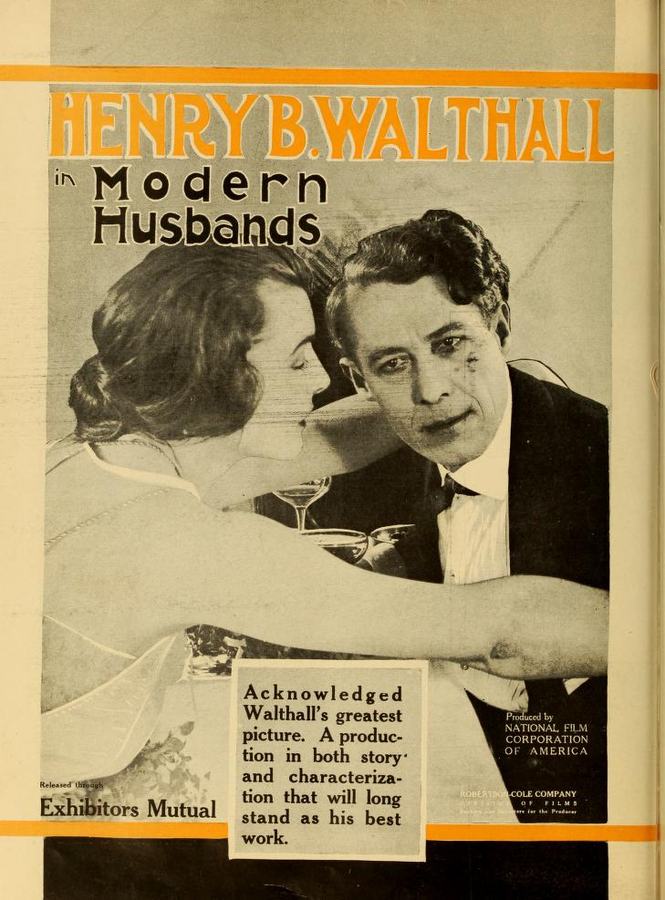
In the annals of early cinematic storytelling, where melodrama often reigned supreme, a film like 'Modern Husbands' (1924) emerges not merely as a relic of a bygone era but as a surprisingly potent and prescient examination of human frailty, societal pressures, and the arduous road to personal redemption. Directed by Lee Royal and featuring a cast that includes Neil Hardin, Melbourne MacDowell, and Olga Grey, this silent drama delves into the intricate tapestry of marital neglect, financial ruin, and the profound resilience of the human spirit. It’s a narrative that, despite its period trappings, resonates with an almost uncomfortable familiarity even today, exploring themes that remain eternally relevant in the complex dance of human relationships.
At the heart of 'Modern Husbands' lies Stephen Duane, portrayed with a compelling blend of arrogance and eventual vulnerability by Neil Hardin. Stephen is introduced as the quintessential Wall Street titan, a man whose identity is inextricably linked to his financial prowess and burgeoning empire. His obsession with the ticker tape and market fluctuations, however, comes at a devastating cost: the profound neglect of his wife, Julia. This initial premise sets the stage for a narrative that critiques the very foundations of material success when pursued at the expense of emotional connection. Stephen's blindness to Julia's burgeoning loneliness is not malicious but rather a byproduct of a society that often conflated a man's worth with his economic output. It’s a classic tragic flaw, one that precipitates a cascade of misfortunes.
The introduction of Bert Brockwell, played with a suitably smarmy menace by Melbourne MacDowell, serves as the narrative's catalyst for catastrophe. Brockwell is not merely a rival; he is an embodiment of moral decay, a predatory figure who preys on vulnerability. Julia, exquisitely portrayed by Olga Grey, is not a femme fatale but a woman adrift, yearning for the affection and attention her husband withholds. Her passive receptiveness to Brockwell's advances, culminating in a forced embrace, becomes the tragic misunderstanding that shatters Stephen's world. His reaction—a swift, condemnatory abandonment—speaks volumes about the societal expectations of marital fidelity and the patriarchal right to judgment prevalent in the era. It's a moment of profound irony: Stephen, the neglectful husband, becomes the self-righteous accuser. This echoes the moral quandaries seen in films like Her Condoned Sin, where societal judgment often falls disproportionately on the female figure, regardless of the circumstances.
The subsequent loss of Stephen's fortune in the capricious market is a stroke of narrative genius, serving as a brutal, yet necessary, equalizer. Stripped of his material wealth, Stephen is forced to confront the hollowness of his previous existence. His refusal of Julia's offer to sell her jewels, while seemingly noble, is tinged with a stubborn pride that prolongs his suffering and further isolates him. This period of self-imposed exile, stretching for a year, is depicted with a raw despair that is palpable, culminating in his contemplation of suicide. It is here that Neil Hardin delivers some of his most poignant work, conveying the depths of Stephen's despondency without a single spoken word. The hazy, almost ethereal vision of Julia discovering his lifeless body acts as a powerful psychological deterrent, a profound moment of self-preservation that pivots his trajectory from despair to a nascent desire for renewal. This dark night of the soul, a common trope in silent cinema, is handled with a delicate touch, emphasizing the internal struggle over outward histrionics.
While Stephen descends into his personal abyss, Julia's arc presents a stark and fascinating counter-narrative. Far from a passive victim, she embodies a burgeoning spirit of female independence, a theme that, though subtly presented, is remarkably progressive for its time. After Stephen's departure, she doesn't wallow; instead, she channels her energy into opening a successful millinery store. This entrepreneurial venture is not merely a means of survival but a testament to her resilience and untapped capabilities. The revelation that she has also had a baby during this period adds another layer of emotional complexity and underscores her quiet strength. Olga Grey's portrayal imbues Julia with an inner fortitude that is both admirable and deeply human, making her a character who defies the stereotypical helpless woman of early cinema. Her journey parallels the themes of self-reliance seen in films like Faith, where characters must forge their own paths in the face of adversity.
Stephen's path to renewal begins with the generosity of his friend, Jonathan Cosgrove, a role filled with earnest sincerity by Henry B. Walthall. Cosgrove offers Stephen not just financial aid but a sanctuary, a chance to rebuild his life. However, the narrative, in a masterful stroke of dramatic irony, ensures that Stephen's past is not easily escaped. The reappearance of Bert Brockwell, now attempting to force himself upon Mrs. Cosgrove (played by Claire Du Brey), brings the film full circle, highlighting Brockwell's consistent villainy and providing Stephen with an opportunity for true heroism, untainted by past mistakes. This confrontation is not just physical; it's a moral reckoning. Stephen's violent expulsion of Brockwell through the window is a cathartic release, a symbolic purging of the corrosive influence that has plagued his life and threatened others.
The subsequent act of self-sacrifice—Stephen allowing Jonathan to believe him guilty to protect Mrs. Cosgrove's reputation—is a pivotal moment in his redemption arc. It demonstrates a profound shift from his earlier self-serving pride to genuine altruism. This theme of protecting a woman's honor, even at great personal cost, was a common yet powerful motif in silent cinema, often seen in dramas like The Woman in the Case (1916). However, 'Modern Husbands' elevates it by placing it within Stephen's journey of moral rebirth, making his sacrifice all the more meaningful. The intricate web of misunderstandings and hidden truths is a hallmark of the era's dramatic storytelling, keeping audiences engrossed in the unfolding revelations.
The final act of 'Modern Husbands' meticulously untangles the threads of deceit. Mrs. Cosgrove, discovering Brockwell's true criminal nature as a forger, is compelled to confess the entire truth to her husband. This revelation is crucial, not only for exonerating Stephen but for restoring trust and rectifying past wrongs. Claire Du Brey's performance here is understated but effective, conveying the burden of her secret and the relief of its release. The film culminates in a carefully arranged meeting between Stephen, Julia, and their son—a profoundly moving scene that bypasses dialogue to convey the full emotional weight of reunion. The silent film's reliance on visual storytelling, gestures, and facial expressions truly shines in these moments, allowing the audience to feel the unspoken joy and reconciliation. The happy ending, while perhaps a concession to audience expectations, feels earned through the characters' arduous journeys and transformations.
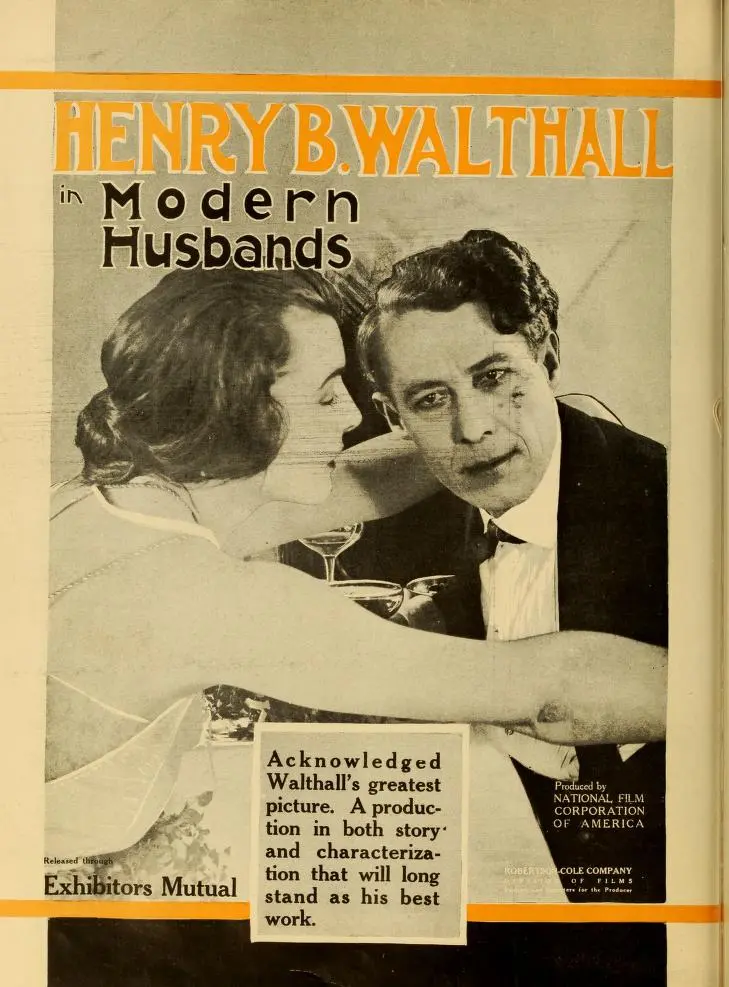
Lee Royal's direction, though perhaps less celebrated than some of his contemporaries, demonstrates a keen understanding of dramatic pacing and character development. The narrative unfolds with a steady hand, building tension and emotional stakes effectively. Royal skillfully uses close-ups to convey inner turmoil and wide shots to establish the social environments, a common technique in silent cinema that he employs with particular efficacy. The visual language is clear, allowing the audience to follow the complex emotional currents without the aid of spoken dialogue. The film's strength lies in its ability to communicate profound human experiences through the expressive power of its actors and the evocative power of its cinematography.
The ensemble cast delivers performances that are both nuanced and powerful. Neil Hardin as Stephen undergoes a remarkable transformation, evolving from a self-absorbed businessman to a man humbled by experience and refined by adversity. His portrayal of despair, resolve, and ultimate redemption is compelling. Olga Grey as Julia is equally impressive, embodying resilience and quiet strength. Her journey from neglected wife to independent entrepreneur and loving mother is a powerful, if understated, feminist statement for the era. Melbourne MacDowell masterfully crafts Brockwell into a truly despicable villain, whose presence consistently raises the stakes. The supporting performances by Claire Du Brey and Henry B. Walthall add depth and credibility to the film's moral landscape, particularly Walthall's portrayal of the loyal, if initially misguided, friend. Their collective efforts bring a genuine humanity to a story that could easily have devolved into mere melodrama.
Thematically, 'Modern Husbands' is a rich tapestry. It critiques the dangers of materialism and the erosion of marital bonds through neglect. It champions female agency and resilience in a period when women were often confined to domestic roles. The film also explores profound questions of reputation, forgiveness, and the possibility of moral redemption after grievous errors. The contrast between Stephen's initial self-righteousness and his later self-sacrificing nobility forms the core of its ethical inquiry. One might draw parallels to the moral complexities explored in The Tempting of Justice, where characters grapple with difficult choices that redefine their moral standing. Moreover, the film's depiction of financial ruin and subsequent struggle for survival resonates with other dramas of the era, such as Other People's Money, highlighting the pervasive anxieties of economic instability.
In conclusion, 'Modern Husbands' stands as more than just a historical curiosity. It is a compelling silent drama that, through its intricate plot and well-drawn characters, offers a timeless reflection on the human condition. It reminds us that true wealth lies not in financial empires but in the strength of character, the resilience of the human spirit, and the enduring power of love and forgiveness. The film's ability to tackle complex societal issues and personal transformations with such grace and emotional depth, even without the benefit of spoken dialogue, is a testament to the artistry of early cinema. For those willing to delve into the rich cinematic heritage of the silent era, 'Modern Husbands' offers a profoundly rewarding experience, proving that some narratives, like some loves, are truly timeless.
IMDb —
1919
Community
Log in to comment.