DbcultAccessing Vault...
6.3/10
Senior Film Conservator
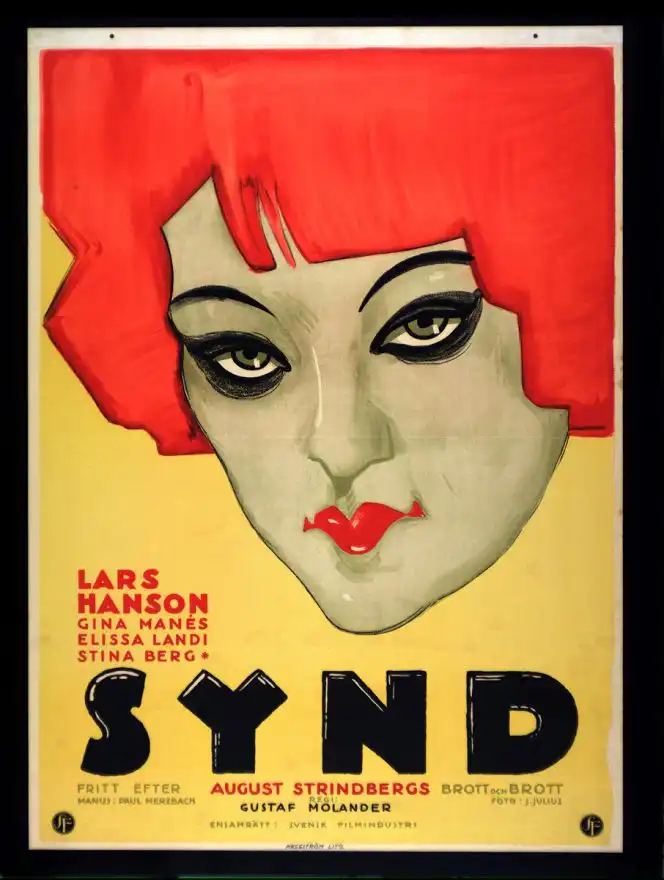
A definitive 6.3/10 rating for a film that redefined the boundaries of cult cinema. Synd remains a cornerstone of transgressive art.
If you are looking for a breezy evening of entertainment, Synd (internationally known as Sin) is absolutely not the film for you. However, for those interested in the evolution of European silent cinema or the works of August Strindberg, it remains a fascinating, if occasionally exhausting, piece of work. It is a film for people who appreciate the heavy shadows of German Expressionism filtered through a Swedish lens. It will likely alienate modern viewers who have little patience for the 'moral agony' subgenre where characters spend eighty minutes weeping over their own internal rot.
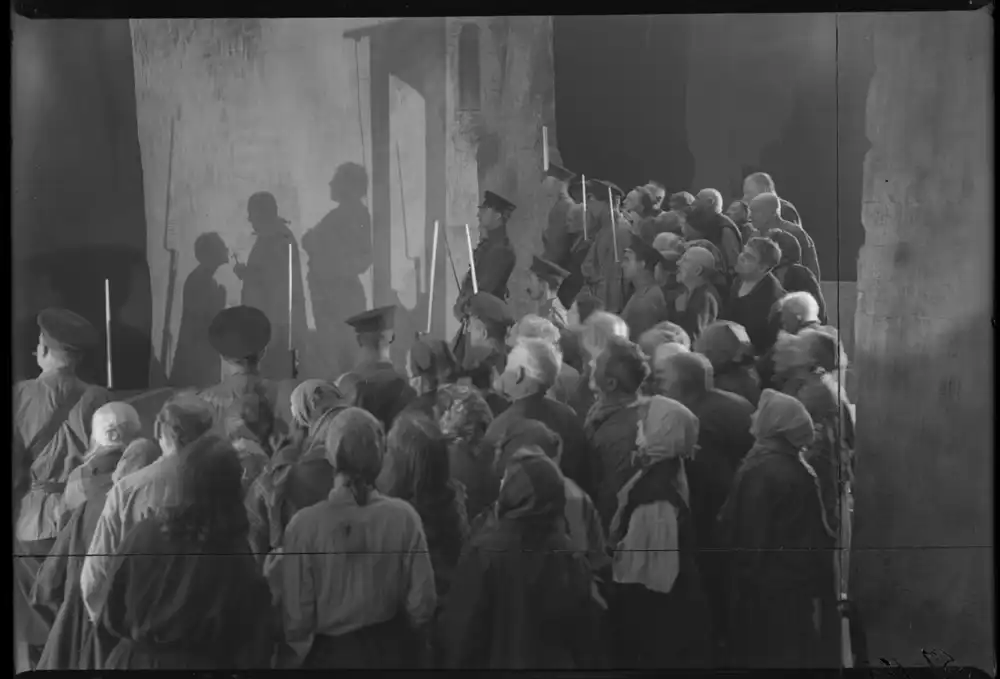
The primary reason to watch Synd today is the lead performance by Lars Hanson. By 1928, Hanson was a seasoned veteran of both Swedish and Hollywood screens, and he brings a specific, twitchy energy to the role of Maurice. There is a scene early in the film, just after his play has premiered, where he sits in a crowded cafe. While everyone around him is cheering, Hanson’s eyes are darting toward the door, already looking for the next thrill. He doesn't play Maurice as a hero; he plays him as a man who is fundamentally uncomfortable in his own skin.
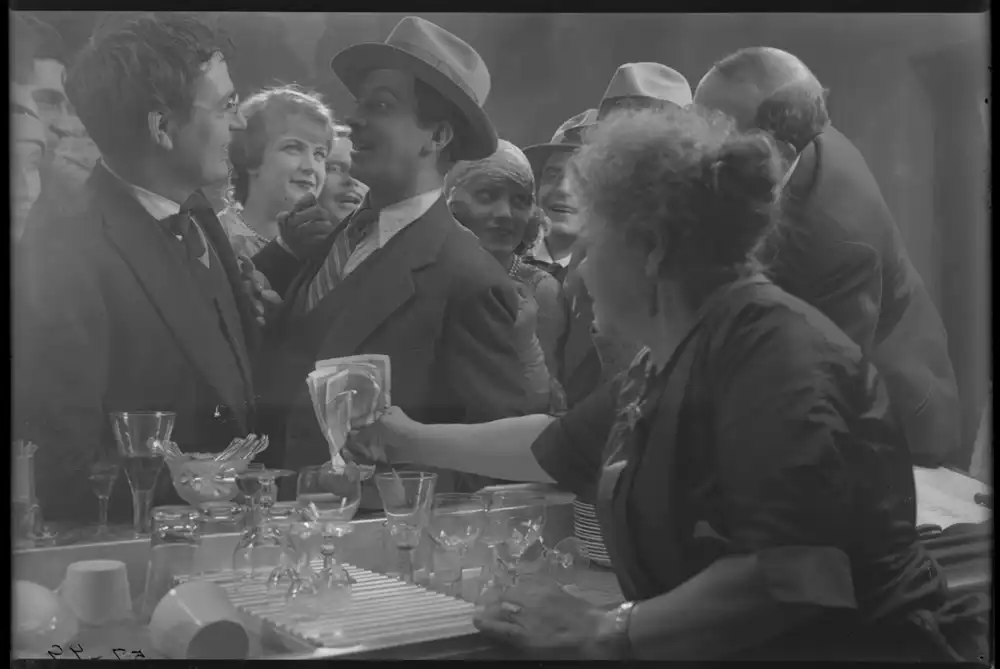
Opposite him, Gina Manès as Henriette provides a necessary jolt of electricity. While many silent film actresses of the era relied on wide-eyed innocence, Manès leans into a sharp, predatory physicality. Watch the way she handles a cigarette or leans across a bistro table; she feels genuinely dangerous in a way that makes Maurice’s immediate abandonment of his family feel plausible, if not excusable. The chemistry between them isn't romantic; it’s a collision of two people who are both addicted to the spotlight.
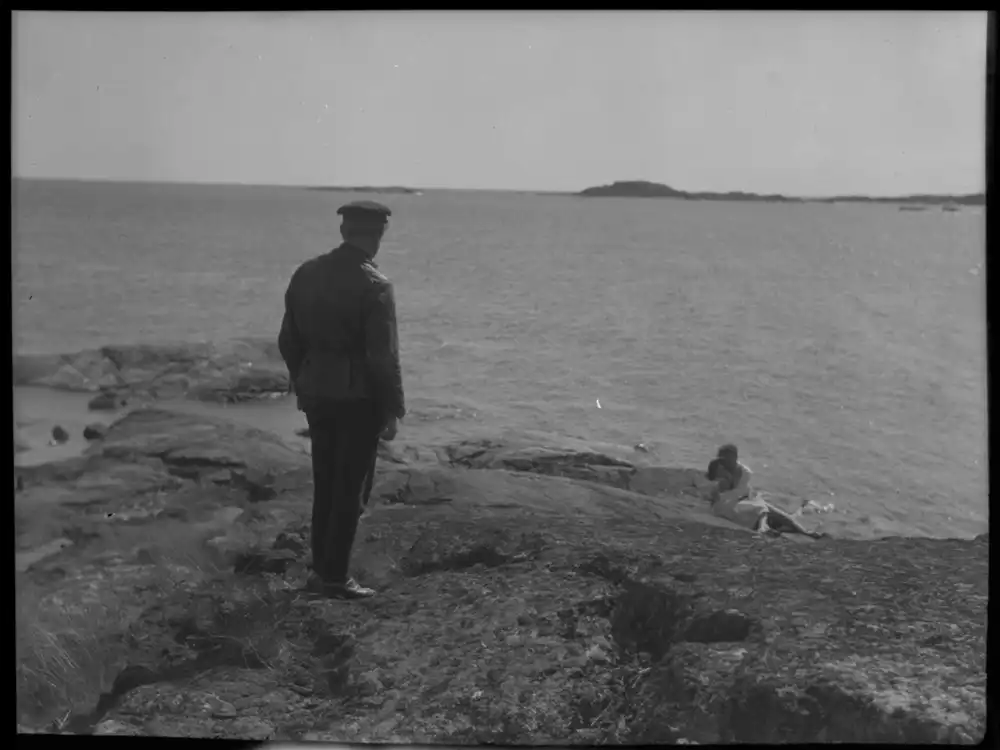
Director Gustaf Molander does an admirable job of recreating Paris on a Swedish studio lot. The lighting choices are particularly effective during the late-night celebration scenes. There is a tactile quality to the sets—the dampness of the cobblestones and the smoky haze of the bars feel real. One specific shot stands out: when Maurice and Henriette are walking through the city at dawn, the long shadows of the buildings seem to hem them in, visually representing the 'trap' Maurice has built for himself long before the plot actually punishes him.
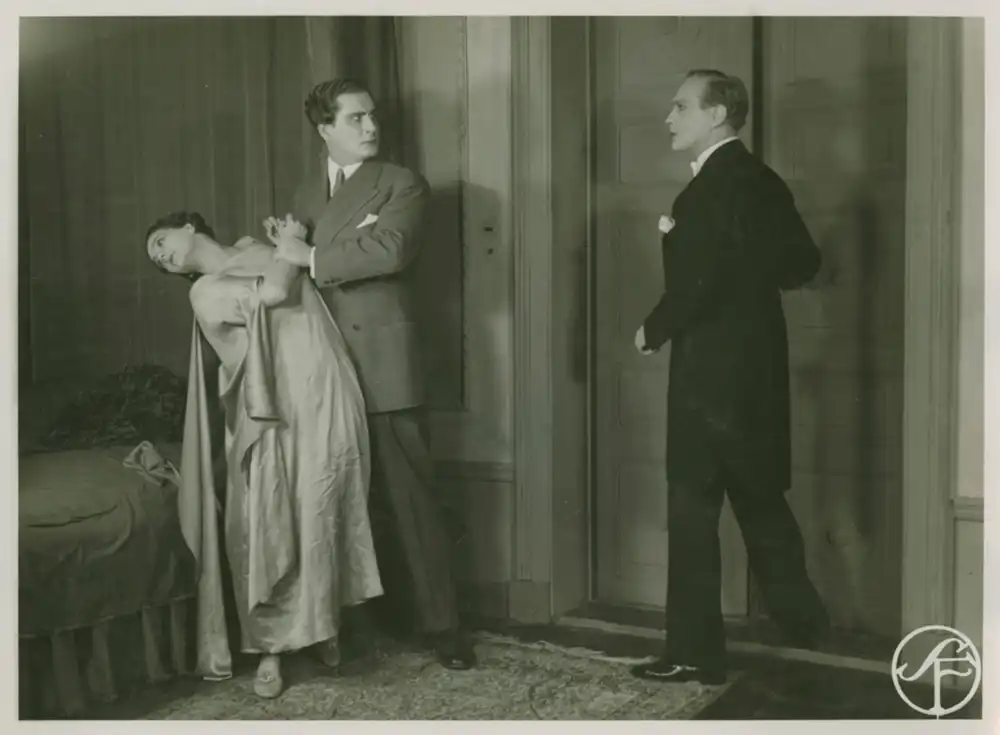
However, the film suffers from a common late-silent era problem: it is occasionally too enamored with its own camera tricks. There are several superimposed sequences meant to represent Maurice’s fractured psyche that go on for about thirty seconds too long. We see his daughter’s face, then a bottle of champagne, then a judge’s gavel—it’s a bit on the nose, even for 1928. Compared to a film like A Fool's Paradise, which manages its melodrama with a bit more narrative variety, Synd can feel like it's stuck in a singular gear of misery.
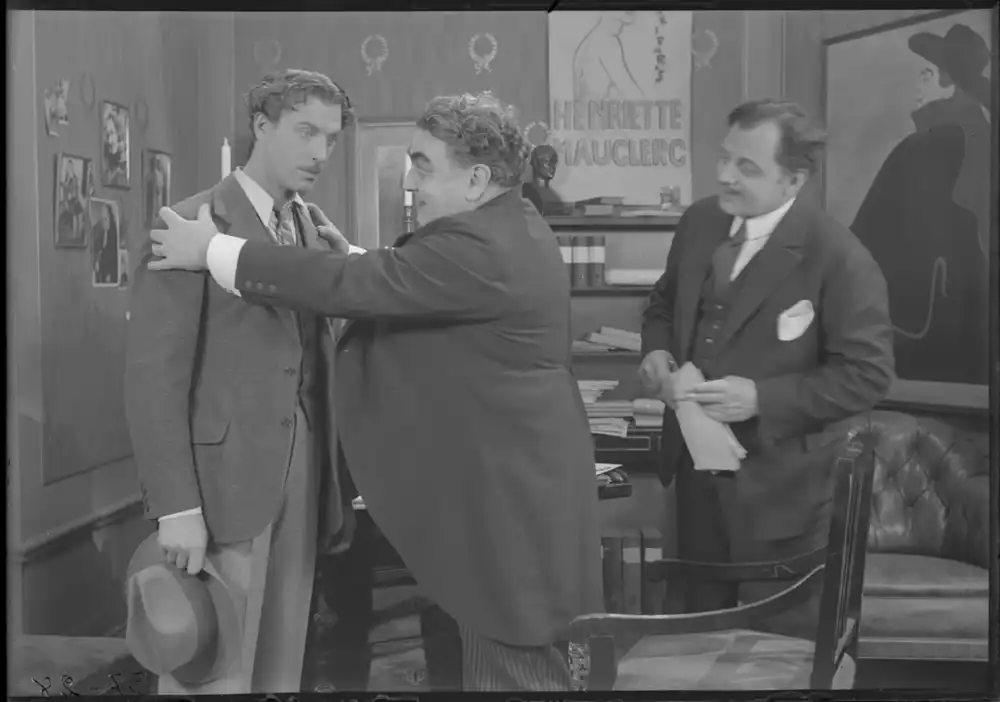
The central conceit of the story—based on Strindberg’s Crime and Crime—is that wishing someone dead is morally equivalent to killing them. This is a tough sell for a modern audience. When the tragedy strikes, the film pivots into a legal and spiritual procedural that drags significantly. The middle section of the film feels padded with long, static shots of characters staring at walls or clutching their heads in despair. The editing rhythm, which is quite brisk during the opening success of the play, slows to a crawl once the 'guilt' phase begins.
There is an awkwardness in how the film handles the supporting cast, particularly the 'good' characters. Maurice’s wife, played by Jenny Broberg, is written with so little agency that she feels more like a prop than a person. Her purpose is simply to look sad in a shawl, which makes the moral stakes feel lopsided. We aren't rooting for Maurice to return to his family because the family life is depicted as incredibly dull; we are just waiting for him to stop being a jerk.
One detail that only someone who sat through the full cut would notice is the recurring motif of the 'bill.' Throughout the film, characters are constantly being presented with checks or debts—at the cafe, at the theatre, and eventually, the metaphorical 'bill' for Maurice’s sins. It’s a clever bit of visual storytelling that anchors the abstract guilt in something mundane. Also, keep an eye on the background extras in the theatre scenes; there’s a strange, unscripted moment where a man in the back of the crowd looks directly into the lens and smirks, momentarily breaking the heavy atmosphere of the scene.
Synd is a beautifully shot, expertly acted piece of gloom. It captures the specific 'Strindbergian' obsession with the thin line between success and damnation. Is it a masterpiece? No. It’s too repetitive in its second half, and the ending feels like a rushed attempt to provide a moral resolution that the rest of the film doesn't quite earn. But for those who want to see Lars Hanson at the height of his powers or want to study how silent film directors used light to tell a story of psychological collapse, it is well worth the ninety minutes. Just don't expect to feel particularly good when the lights come up.
IMDb 5.7
1934
Community
Log in to comment.