DbcultAccessing Vault...
Cult Review
Senior Film Conservator
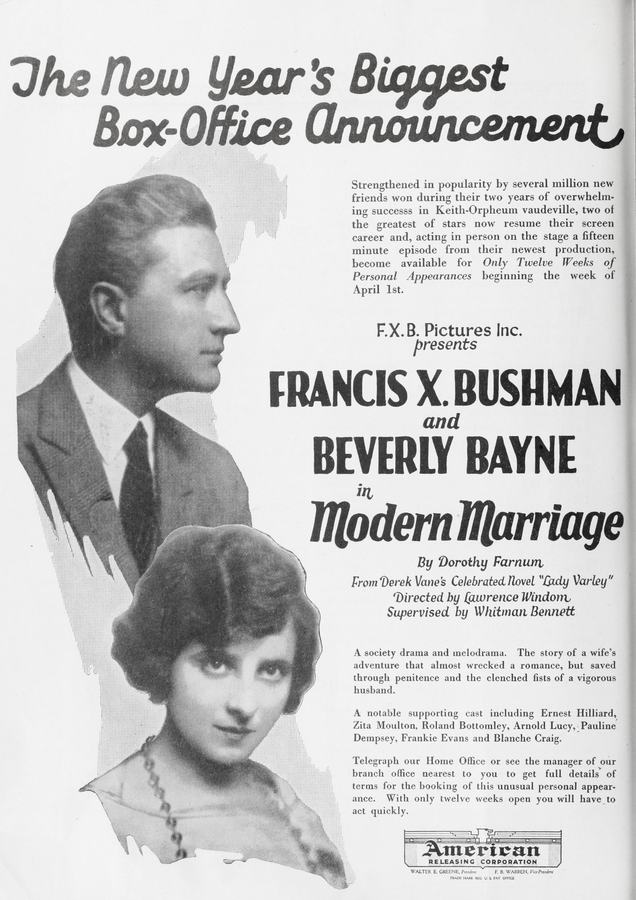
The 1923 silent feature Modern Marriage serves as a fascinating, if somewhat grim, artifact of the early 20th-century cinematic obsession with the erosion of the nuclear family. Directed with a certain claustrophobic intensity, the film navigates the treacherous waters of marital ennui, where the lack of emotional nourishment acts as a catalyst for potential ruin. Unlike the whimsical abstractions found in Dreams of the Rarebit Fiend: Bug Vaudeville, which sought to externalize internal chaos through surrealism, Modern Marriage grounds its turmoil in the cold reality of stone-faced socialites and the heavy velvet curtains of high-society drawing rooms.
Hugh Varley, played with a stolid, almost frustratingly passive demeanor by Ernest Hilliard, embodies the archetypal neglectful patriarch. His character is not a villain in the traditional sense, but rather a vacuum—a man whose professional preoccupations have rendered him a ghost in his own hallways. This void is precisely what drives Denise (Beverly Bayne) into the orbit of Frank Despard. The film captures this transition not as a sudden leap into adultery, but as a slow, agonizing drift toward the only source of warmth available, however artificial and predatory that warmth may be.
The narrative engine of the film is powered by the classic trope of the 'incriminating letters.' In an era where a woman's reputation was her only currency, these papers represent a literal death warrant for Denise’s social standing. This thematic preoccupation with the fragility of honor is a recurring motif in silent melodrama, echoing the high-stakes moral dilemmas seen in The Iron Ring. When Denise infiltrates Despard’s apartment, the cinematography shifts, utilizing shadows to emphasize her vulnerability. The tension here is palpable; we are not just watching a woman commit a burglary, but a soul attempting to claw back its dignity from the clutches of a cad.
The subsequent murder of Despard introduces a noir element that elevates the film beyond mere domestic drama. The irony is thick: Denise flees the scene of a crime she didn't commit, only to seek refuge with Cort Maitland, a character whose duplicity is far more dangerous than Despard’s philandering. The script by Derek Vane and Dorothy Farnum deftly weaves these threads of fate, suggesting that once a character steps outside the bounds of traditional morality, they enter a labyrinth where every turn leads to a new predator.
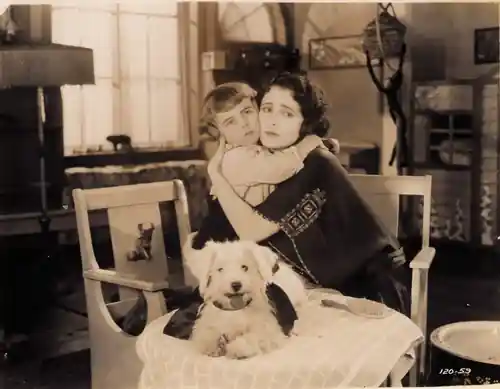
Visually, Modern Marriage benefits from the sophisticated lighting techniques that were becoming standard in the early 1920s. While it may lack the expressionistic fervor of Le baron mystère, it employs a subtle use of depth and framing to isolate Denise within her environment. The apartment of Cort Maitland, in particular, is staged as a gilded cage. The contrast between the bright, vacuous spaces of the Varley home and the dim, threatening corners of the bachelor pads highlights the moral decay lurking beneath the surface of the Gilded Age.
The pacing of the film mirrors the psychological state of its protagonist. It begins with a languid, almost stultifying rhythm, representing the boredom of the Varley marriage, before accelerating into a frantic series of confrontations. This shift in tempo is reminiscent of the structural evolution seen in The White Rider, where the environment itself seems to tighten around the characters as the climax approaches. The editing during the struggle between Hugh and Cort is surprisingly modern, utilizing quick cuts to convey the chaotic nature of the scuffle.
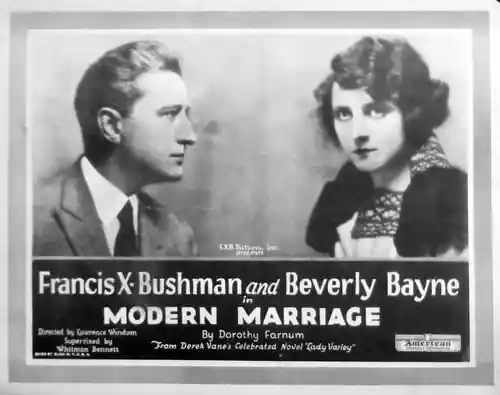
One cannot discuss Modern Marriage without addressing the presence of Francis X. Bushman and Beverly Bayne. As one of the screen's first 'power couples,' their chemistry provides a layer of subtext that contemporary audiences would have immediately recognized. Bayne, as Denise, delivers a performance of quiet desperation. Her eyes, often the focal point of the frame, convey a breadth of emotion that the intertitles can only hope to approximate. She captures the essence of a woman who is simultaneously terrified and resolute, a duality that was also explored with great nuance in Tess of the Storm Country.
Bushman’s role, though perhaps less central than one might expect given his stature, provides the necessary gravitas for the film’s resolution. His transformation from a neglectful husband to a proactive defender is the emotional arc upon which the film’s success hinges. It is a redemption story that mirrors the broader societal hopes of the era—that the traditional masculine virtues could still be summoned to save the family unit from the 'modern' threats of decadence and infidelity, a theme also present in Democracy: The Vision Restored.
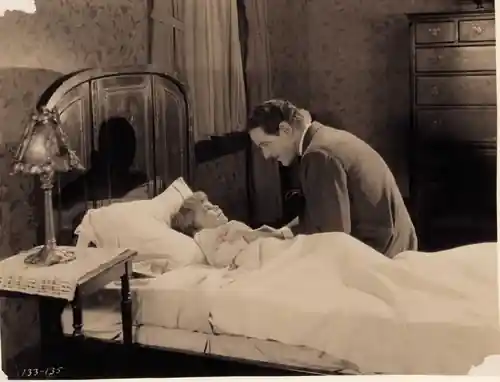
The resolution of the plot—Cort Maitland’s accidental self-inflicted wound and subsequent confession—is a narrative device that feels both convenient and poetically just. In the world of 1920s cinema, justice was often served through the hand of fate rather than the slow grind of the legal system. This 'divine intervention' is a hallmark of the genre, seen in works like Someone Must Pay. Maitland’s confession serves two purposes: it clears Denise of the murder charge and it provides Hugh with the proof of her ultimate fidelity, despite her lapses in judgment.
This climax is handled with a stark, unflinching realism that contrasts with the more theatrical elements of the film’s opening. The death of the antagonist is not a moment of triumph, but one of somber reflection. It forces the Varleys to confront the wreckage of their marriage and the external forces that nearly destroyed them. The film suggests that while the truth can set you free, it often leaves a trail of casualties in its wake, much like the somber conclusions of The City of Failing Light.
The title Modern Marriage is inherently ironic. The film posits that the 'modern' aspects of the union—the independence, the lack of communication, the pursuit of individual pleasure—are precisely what lead to its near-collapse. In this sense, the movie is a conservative cautionary tale wrapped in the trappings of a contemporary thriller. It shares this DNA with Bomben, which also explored the explosive potential of social upheaval. By the final reel, the film advocates for a return to traditional roles, where the husband is the protector and the wife is the heart of the home, albeit a heart that has been tested by fire.
There is also a fascinating subtext regarding class and criminality. The characters move through spaces of immense wealth, yet they are plagued by the same base impulses and violent outcomes as those in the lower-class dramas of the era. The juxtaposition of high-fashion costumes and the gritty reality of a murder investigation provides a tension that keeps the viewer engaged. This blend of elegance and procedural intrigue can be found in other silent mysteries such as The Bruce Partington Plans or the deductive puzzles of Chains of Evidence.
The direction remains focused, avoiding the sprawling, episodic nature that plagued many of its contemporaries. Every scene serves the central conflict, building a sense of momentum that is often absent in silent features of this length. The use of close-ups is particularly effective, allowing the actors to convey the internal psychological states of their characters without relying on broad, pantomimic gestures. This restraint is a sign of a maturing art form, moving away from the stagey traditions of the past and toward a more cinematic language, a transition also evident in Over the Garden Wall.
Furthermore, the screenplay by Dorothy Farnum and Derek Vane displays a keen understanding of suspense. The way information is withheld from both the characters and the audience creates a sense of dread that permeates the second act. We know Denise is innocent of the murder, but we don't know how she will escape the web of lies Maitland has spun. This mastery of the 'innocent person on the run' trope would later become a staple of the thriller genre, but here it is executed with a raw, primal energy that feels entirely grounded in the social anxieties of 1923.
Ultimately, Modern Marriage is more than just a vehicle for its star couple; it is a nuanced exploration of the fragility of the human connection. It acknowledges that neglect is as much a betrayal as infidelity and that redemption is possible only through a radical reassessment of one's priorities. The film stands as a testament to the power of silent cinema to tackle complex adult themes with sophistication and grace. It doesn't shy away from the darker aspects of the human psyche, yet it ultimately offers a message of hope—that even the most fractured unions can be mended if both parties are willing to fight for them.
In comparison to the sweeping social epics like The Conquest of Canaan, Modern Marriage is a more intimate, psychological study. It doesn't seek to change the world; it seeks to understand the quiet tragedies that occur behind closed doors. For fans of the era, it is a must-watch, offering a glimpse into the evolving landscape of 1920s film where the lines between melodrama, mystery, and social commentary were beginning to blur. It captures a moment in time where the old world was clashing with the new, and the 'modern' was something to be both feared and mastered.
As we look back at this piece of cinematic history, we can see the seeds of the modern psychological thriller being sown. The performances of Beverly Bayne and Francis X. Bushman remain compelling, their chemistry transcending the limitations of the silent medium. Like the emotional echoes in Blodets röst, the film reminds us that the human heart is a complex, often contradictory landscape, and that the struggle for love and understanding is a timeless endeavor. Whether viewed as a historical curiosity or a piece of dramatic storytelling, Modern Marriage remains a poignant reminder of the enduring power of the silver screen to reflect our deepest fears and highest aspirations.
IMDb 3.7
1919
Community
Log in to comment.