DbcultAccessing Vault...
7.2/10
Senior Film Conservator
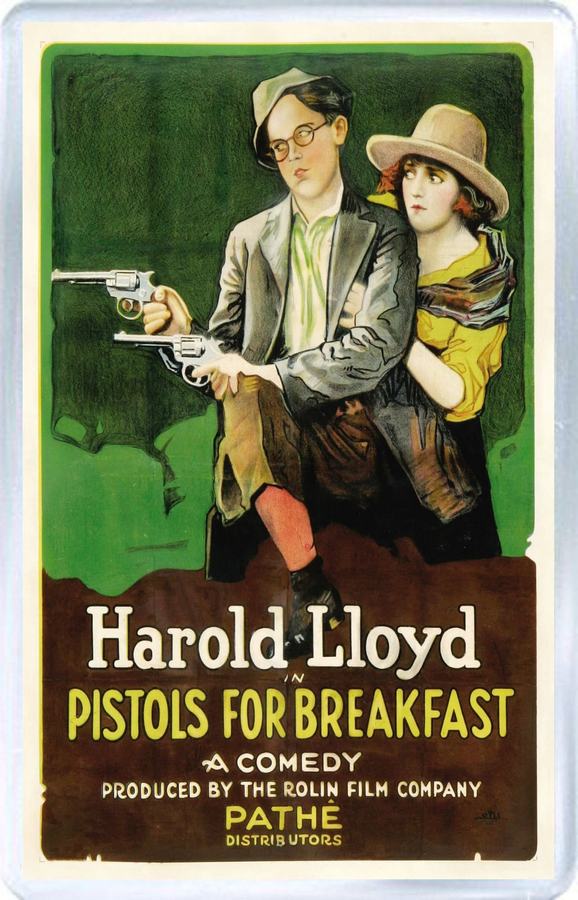
A definitive 7.2/10 rating for a film that redefined the boundaries of cult cinema. Pistols for Breakfast remains a cornerstone of transgressive art.
There’s a unique charm to silent comedies, a kinetic energy that transcends the lack of spoken dialogue, relying instead on the universal language of physical comedy, exaggerated expressions, and meticulously choreographed chaos. Amongst the myriad short films that defined the early cinematic landscape, ’Pistols for Breakfast’ (1917) stands as a vibrant, albeit fleeting, testament to this era’s genius. It’s more than just a relic; it’s a masterclass in how to turn a simple premise into an escalating symphony of comedic tension and frantic escapism.
Imagine, if you will, the early 20th century. The world is changing rapidly, but the simple pleasures — a morning meal, a chat with a friend — remain sacrosanct. This film, directed by the prolific Fred C. Newmeyer, plunges us headfirst into such a scene, only to violently upend it with a stroke of absurdist brilliance. Newmeyer, a name synonymous with many of Harold Lloyd’s early successes, had a knack for orchestrating comedic mayhem, often building from a placid beginning to a breathless chase or a bewildering predicament. His touch here is evident, creating a compact narrative that, despite its brevity, feels remarkably complete and satisfying.
The film opens with a deceptively tranquil scene: a bustling, yet orderly, restaurant. Our protagonist, likely a variation of Harold Lloyd’s early 'Lonesome Luke' character, though less refined than his later 'Glasses Character,' settles down with a friend, often portrayed by the effervescent Bebe Daniels. Their morning ritual is one of comfort and routine, a tableau of everyday life that serves as the perfect canvas for the impending disruption. The performances of Harold Lloyd and Bebe Daniels are, as ever, a delight. Lloyd, even in these formative years, displayed an innate understanding of comedic timing, his expressions capable of conveying a spectrum of emotions from droll amusement to wide-eyed panic. Daniels, with her vivacious energy, provides an excellent foil, her reactions often mirroring the audience's own bewildered amusement.
The true catalyst for the film’s narrative engine arrives in the form of a disgruntled 'regular' patron. This isn't just any regular; this is a man whose morning routine has been so thoroughly ingrained that any deviation is met with extreme, disproportionate aggression. His chosen weapon? A pistol. His grievance? The sanctity of his breakfast, specifically the bacon. It’s a premise so utterly ludicrous, so completely out of left field, that it instantly hooks the viewer. The shift from polite diner chatter to a life-or-death struggle over pork belly is executed with a breathtaking suddenness that exemplifies the best of silent slapstick.
The supporting cast, a veritable who’s who of silent comedy stalwarts, adds layers of texture to this escalating pandemonium. 'Snub' Pollard, known for his gangly frame and often exasperated expressions, likely contributes to the general atmosphere of bewildered fear. Dorothea Wolbert, a mistress of comedic characterizations, and Gus Leonard, with his distinct elderly persona, undoubtedly populate the background, their reactions to the pistol-wielding regular amplifying the absurdity. Imagine the collective gasp, the sudden cessation of cutlery clatter, as a mundane breakfast joint transforms into a scene of potential culinary carnage. This ensemble work is crucial; it’s not just about the leads, but how the entire environment reacts to the bizarre intrusion, making the threat feel more pervasive and the ensuing flight more justified.
What truly elevates 'Pistols for Breakfast' beyond a mere gag is its meticulous build-up and release of tension. The initial disbelief gives way to genuine fear, prompting our heroes, Lloyd and Daniels, to embark on a desperate scramble for safety. This isn't a dignified exit; it’s a frantic dash, a clumsy, comedic flight that sees them navigating tables, dodging bewildered waitstaff, and perhaps even inadvertently causing more chaos in their wake. The physical comedy here would have been paramount, with every stumble, every wide-eyed glance, every near-miss contributing to the humor. It’s a testament to the actors’ physicality and Newmeyer’s direction that such a simple act of fleeing could be imbued with such comedic richness.
Comparing this short to other works of the era, one can see shared DNA. The sudden, disruptive element that throws everyday life into disarray is a common trope. For instance, while vastly different in tone, the unexpected twists and turns in a film like ’The Island of Intrigue’, though a drama, similarly relies on a sudden shift in circumstances to propel its plot. Here, however, the shift is purely comedic, a hyperbolic exaggeration of societal anxieties. The fear of the unknown, or in this case, the fear of a man who takes his bacon *very* seriously, is played for laughs, but it’s rooted in a recognizable human reaction to irrational threats.
The frantic energy of the escape also draws parallels to other comedic chase sequences of the time. Think of the escalating predicaments in films like ’For $5,000 a Year’, where characters find themselves in increasingly absurd situations, desperately trying to outmaneuver fate or their pursuers. While the stakes here are arguably lower – a plate of bacon versus a large sum of money – the intensity of the flight is no less palpable, a testament to the filmmakers’ ability to generate genuine excitement and laughter from simple actions. It's the universal language of panic, rendered in broad, hilarious strokes.
Harold Lloyd, even in these early, less iconic roles, was already honing the persona that would make him one of the 'Big Three' of silent comedy. His ability to portray the 'everyman' caught in extraordinary circumstances was unparalleled. In 'Pistols for Breakfast', we see glimmers of the character who would later cling to clock towers and navigate bustling city streets with a blend of earnestness and sheer luck. His reactions are relatable, his fear palpable, making the audience root for him even as they laugh at his predicament. Bebe Daniels, too, contributes significantly, her energetic presence often injecting a dynamic counterpoint to Lloyd's more grounded (though still frantic) reactions. Her ability to convey both charm and alarm with equal measure makes her an indispensable part of these early comedies.
The film’s brilliance lies in its simplicity and its audacious premise. It doesn't rely on complex narratives or intricate character development. Instead, it thrives on a single, outrageous idea and pushes it to its comedic limits. The juxtaposition of the mundane breakfast setting with the sudden, armed threat creates an instant comedic friction that is timeless. It speaks to the fragility of routine and the unexpected absurdities that can puncture our daily lives at any moment. This kind of humor, born from exaggeration and surprise, resonates even today, proving that a well-executed gag needs no spoken words to land effectively.
One might even draw a thematic parallel, albeit a lighthearted one, to more dramatic works that explore the disruption of peace, such as ’Until They Get Me’. While that film delves into serious themes of pursuit and survival, the underlying mechanism of a sudden, external force upending an individual's life is present in both. In 'Pistols for Breakfast', this disruption is played for pure, unadulterated laughs, a lighthearted exploration of how quickly our carefully constructed routines can crumble under the weight of sheer, unadulterated lunacy. It’s a comedic allegory for the unpredictable nature of existence.
The legacy of such shorts, often overshadowed by the feature-length masterpieces, is nonetheless profound. They were the training ground for cinematic giants, the laboratories where comedic techniques were refined and perfected. 'Pistols for Breakfast', with its tight pacing and focused comedic vision, exemplifies the efficiency and impact these early films could achieve. It’s a snapshot of a particular moment in cinematic history, but its humor feels remarkably fresh, a testament to the universal appeal of well-crafted physical comedy.
Fred C. Newmeyer’s direction here is crisp and economical. He understands that in a short film, every frame counts. There’s no wasted motion, no extraneous shot. The camera is positioned to capture the reactions, the escalating tension, and the frantic escape with maximum comedic effect. He allows the actors to perform, creating space for their physical prowess and expressive faces to tell the story. This directness in storytelling is a hallmark of the era and contributes significantly to the film’s enduring watchability. It’s a lesson in conciseness and impact that many modern filmmakers could still learn from.
The film also serves as a fascinating historical document, offering a glimpse into the everyday life of the period – the diners, the attire, the social interactions – all before the comedic bomb drops. It’s a window into a past that, while different, still resonates with familiar human experiences. The collective gasp of the other diners, their slow realization of the gravity (or absurdity) of the situation, paints a vivid picture of communal reaction, a shared experience of bewilderment that binds them, and us, to the screen.
Moreover, the very title, 'Pistols for Breakfast,' is a stroke of marketing genius, instantly conveying the film's outlandish premise and promising a blend of danger and hilarity. It’s concise, memorable, and perfectly encapsulates the film’s tone. It’s the kind of title that would have drawn audiences into nickelodeons, eager to witness the promised absurdity unfold on screen.
In conclusion, while it may not possess the grand scale of later features, 'Pistols for Breakfast' is a delightful and significant piece of silent film history. It showcases the burgeoning talents of Harold Lloyd and Bebe Daniels, the steady hand of director Fred C. Newmeyer, and the enduring power of a truly silly, yet brilliantly executed, comedic premise. It reminds us that sometimes, the simplest ideas, when handled with expert comedic timing and physical artistry, can yield the most uproarious results. If you ever have the chance to witness this brief, bacon-fueled skirmish, seize it. It’s a joyous, frantic romp that perfectly encapsulates the anarchic spirit of early silent comedy, proving that a good laugh, much like a good breakfast, is worth fighting for – or, in this case, fleeing from.
IMDb 5.5
1928
Community
Log in to comment.