DbcultAccessing Vault...
5.5/10
Senior Film Conservator
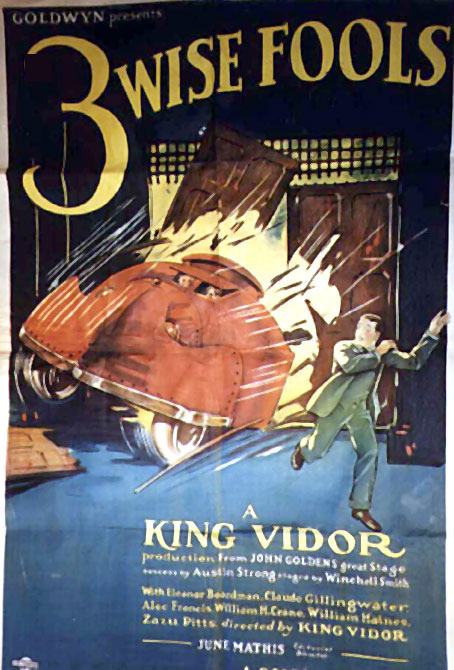
A definitive 5.5/10 rating for a film that redefined the boundaries of cult cinema. Three Wise Fools remains a cornerstone of transgressive art.
When Three Wise Fools first flickered onto the silver screen, its modest budget belied the emotional heft it would ultimately convey. The film opens with a languid tableau of three elderly bachelors sharing a cramped, dimly lit parlor—an environment rendered with a chiaroscuro that feels both intimate and oppressive. Their camaraderie, forged in the crucible of youthful disappointment, is a study in restrained affection, each line on their faces a cartography of long‑forgotten hopes.
William Haines, known for his rakish charm, inhabits Clyde with a sly grin that never quite reaches his eyes. Alec B. Francis, a veteran of silent melodrama, delivers James as a man of measured speech, his cadence echoing the cadence of a metronome that has long since stopped ticking. Claude Gillingwater’s Professor Whitcomb, meanwhile, is a curmudgeonly scholar whose dry wit drips like ink from a fountain pen.
The narrative catalyst arrives in the form of Lily, portrayed by the delightfully eccentric Zasu Pitts. Her entrance—an unannounced knock on the door, a suitcase of tattered clothes, and a single, trembling hand—shatters the equilibrium of the trio’s orderly existence. The screenplay, co‑written by King Vidor and June Mathis, deftly balances sentimentality with a subtle undercurrent of comedy, allowing Lily’s innocence to illuminate the men’s hardened exteriors.
Lily’s backstory is revealed through a series of flashbacks: her mother Eleanor (Eleanor Boardman) was the object of each bachelor’s affection in their younger days, a love triangle that never resolved into romance. Eleanor’s untimely death—implied rather than shown—leaves Lily as the living embodiment of the men’s collective grief. The film never indulges in melodramatic exposition; instead, it relies on visual cues—a faded photograph, a lingering scent of lilac—to convey the weight of the past.
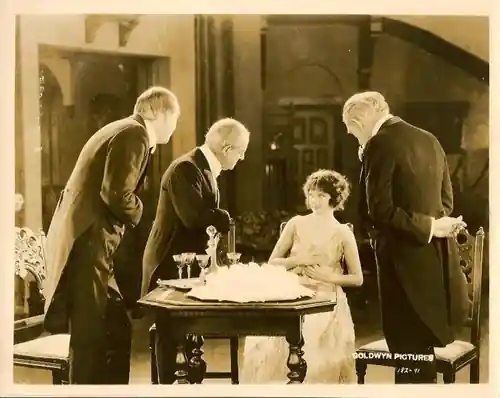
Clyde, the most flamboyant of the trio, initially treats Lily as a curiosity, a project to be managed rather than a child to be cherished. His attempts at paternal discipline—such as the ill‑fated lesson on etiquette involving a teacup and a precariously balanced saucer—provide comic relief while underscoring his inability to navigate emotional intimacy.
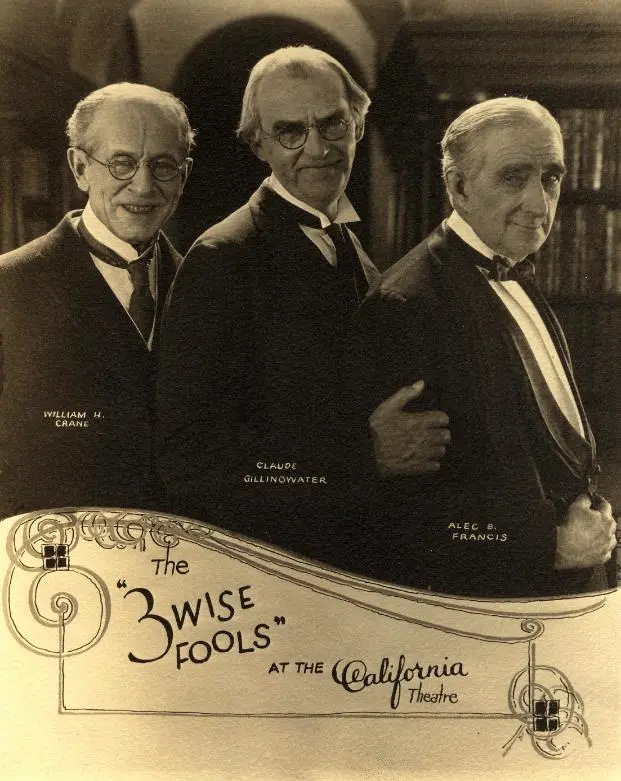
James, the stoic anchor, assumes the role of the reluctant caretaker. His methodical approach to Lily’s education—alphabet cards, arithmetic drills—mirrors his own internal desire for order. Yet, as Lily’s laughter fills the house, James’s rigid façade cracks, revealing a tenderness that he had long suppressed.
Professor Whitcomb, the intellectual cynic, initially dismisses Lily as an inconvenience to his scholarly pursuits. His lectures on philosophy become a backdrop to his gradual realization that the abstract concepts he espouses—justice, duty, love—must be lived, not merely taught. The moment he reads Lily a bedtime story, his voice softens, and the audience witnesses a profound metamorphosis.
Cinematographer James O. Barrett employs a restrained palette, allowing the occasional splash of color—most notably the crimson scarf Lily wears—to punctuate the otherwise monochrome world. The use of shadows is reminiscent of German Expressionism, yet it never overwhelms the narrative; instead, it mirrors the internal darkness each man wrestles with.
The film’s set design is deliberately sparse, a visual metaphor for the emotional void the characters inhabit. When Lily brings a battered doll into the parlor, the camera lingers on the doll’s cracked porcelain face, a visual echo of the men’s own fractured identities.
While Three Wise Fools stands alone in its thematic focus on late‑life parenthood, it shares a kinship with The Foundling, another early twentieth‑century drama that explores the societal ramifications of orphanhood. Both films employ the trope of an adult caretaker stepping into a parental role, yet Three Wise Fools distinguishes itself through its comedic undertones and the layered history among its protagonists.
In terms of narrative structure, the film’s interweaving of past and present recalls the lyrical storytelling of Anna Karenina (1920). The flashback sequences in Three Wise Fools are less opulent but equally effective, using soft focus and dissolve transitions to evoke memory without resorting to melodrama.
William Haines brings a roguish energy that feels ahead of its time, his delivery oscillating between sardonic wit and genuine vulnerability. Alec B. Francis’s performance is a masterclass in restraint; his eyes convey a lifetime of longing, making his occasional smiles all the more impactful.
Claude Gillingwater’s Professor Whitcomb is perhaps the film’s most compelling figure. His ability to shift from pedantic lecturing to heartfelt lullaby singing showcases a range that anticipates the method acting of later decades. Zasu Pitts, often typecast as comic relief, delivers a performance that is both endearing and heartbreaking, embodying the resilience of a child orphaned by circumstance.
At its core, Three Wise Fools interrogates the notion that love is not confined to youth. The three protagonists, once bound by unrequited affection for Eleanor, discover that the act of caring for Lily offers a conduit for absolution. The film suggests that redemption is not a grand gesture but a series of small, consistent acts—preparing a meal, mending a broken toy, staying up late to soothe a fevered brow.
Regret permeates the narrative, yet it is never portrayed as a static weight. Instead, regret becomes a catalyst for change, prompting each man to reevaluate his life choices. The script’s dialogue—often peppered with aphorisms—reinforces this motif: "We cannot rewrite the past, but we can edit the present."
The film’s score, composed by Louis Silvers, employs a modest piano motif that recurs whenever Lily enters a scene, underscoring her role as the emotional nucleus. Ambient sounds—creaking floorboards, the ticking of an old mantel clock—enhance the domestic intimacy, while moments of silence are used strategically to amplify tension, especially during Lily’s solitary bedtime sequences.
King Vidor, though later renowned for epics like The Big Parade, displays a subtle hand in Three Wise Fools. His decision to frame the trio’s interactions within tight, claustrophobic compositions reflects their emotional confinement. Conversely, the occasional wide shot of the garden, where Lily runs freely, symbolizes the possibility of liberation from the past.
Vidor’s pacing is deliberate; scenes linger just long enough to allow the audience to breathe, to feel the weight of each character’s internal struggle. The film’s climax—Lily’s school recital—unfolds in real time, a bold choice that heightens the stakes and showcases the men’s collective anxiety.
Although Three Wise Fools never achieved the box‑office heights of its contemporaries, its exploration of intergenerational bonds resonates in today’s cinematic landscape, where stories like Bobby's Baby and She Loves Me, She Loves Me Not continue to examine unconventional family structures.
The film’s subtle critique of societal expectations—particularly the notion that men must remain emotionally detached—prefigures later works that challenge gender norms. In this respect, Three Wise Fools can be viewed as an early antecedent to modern narratives that celebrate emotional vulnerability in older male protagonists.
Three Wise Fools endures not because of grand spectacle but because of its quiet, unassuming truth: love can blossom at any stage of life, and redemption is often found in the simplest of gestures. Its blend of humor, pathos, and understated visual poetry makes it a compelling study for cinephiles and scholars alike. For those seeking a film that marries classic Hollywood craftsmanship with timeless human themes, this modest gem offers a richly layered experience that rewards repeated viewings.
IMDb 7.5
1937
Community
Log in to comment.