DbcultAccessing Vault...
Cult Review
Senior Film Conservator
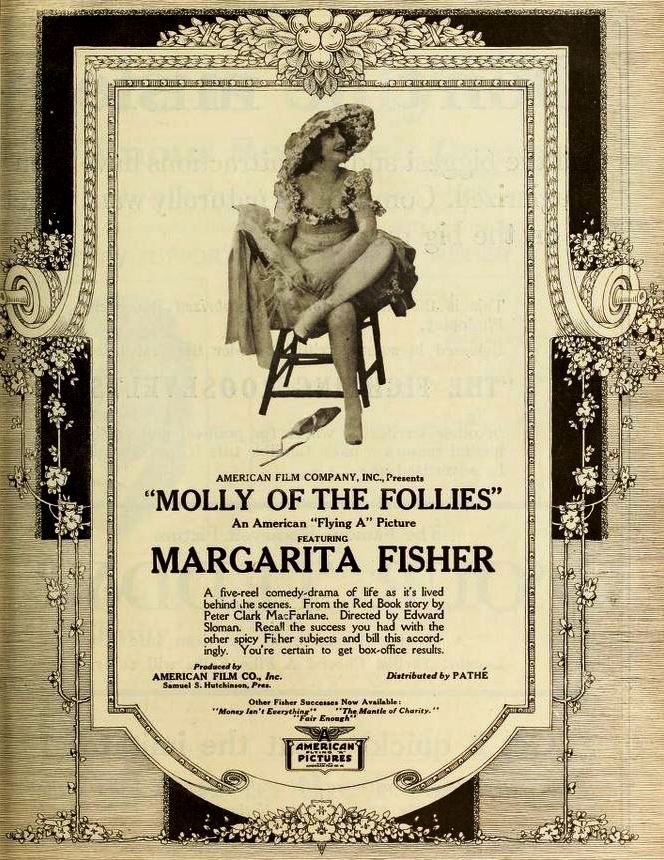
In the pantheon of early American cinema, few settings evoke the raw, unpolished vitality of the working class quite like the Coney Island sideshow. Molly of the Follies (1919) is not merely a romantic comedy; it is a sociological artifact that captures the frantic pulse of an era transitioning from Victorian repression to the unbridled hedonism of the Roaring Twenties. Director Edward Sloman, working from a script by Peter MacFarlane, constructs a world where identity is as fluid as the tides hitting the Brooklyn shore. The film utilizes the boardwalk as a stage for a grander performance of class and desire, where every character is wearing a mask, whether it be the greasepaint of a dancer or the stolen finery of a chauffeur.
Margarita Fischer, an actress of remarkable expressive range, imbues Molly Malone with a sense of agency that was frequently denied to female leads of the period. Unlike the ethereal waifs found in D.W. Griffith’s The Dark Silence, Fischer’s Molly is grounded, physical, and occasionally violent. Her dance is not an act of submission to the male gaze, but a transactional necessity that she navigates with a cynical grace. When her slipper flies into the audience, it is a literal breaking of the 'fourth wall' of the sideshow, a physical intrusion of the performer into the world of the spectator that sets the entire plot in motion.
One of the more jarring and fascinating elements of the film is the character of Kate Malone, played with a delightful deviousness by Lule Warrenton. The 'Mystic Hindu Seeress' is a biting satire of the era's obsession with orientalism and spiritualism—a theme also explored with varying degrees of gravity in The Velvet Hand. However, here it is used to fuel a bizarre domestic rivalry. The competition between mother and daughter for the affections of Joe Holmquist (Jack Mower) provides a layer of psychological tension that elevates the film above standard melodrama.
Joe, 'The Human Submarine,' serves as the hyper-masculine ideal of the boardwalk—a man defined by his physical endurance and his ability to inhabit the depths. The irony, of course, is that while Joe can survive underwater, he is utterly drowned by the emotional machinations of the Malone women. The scene where Molly discovers Joe in a 'forced embrace' with her mother is a masterclass in silent-era blocking. The shadows in the tent elongate the betrayal, making the domestic space feel as claustrophobic as a closet, a visual motif that returns with a vengeance in the film’s final act.
The introduction of Chauncy Ewing (Millard Webb) shifts the narrative from a seaside romance into a critique of social mobility. In the early 20th century, the fear of the 'imposter' was a recurring trope in urban cinema, as seen in works like Lights of New York. Chauncy represents the aspirational dream—wealthy, refined, and seemingly capable of plucking Molly from her 'follies' and depositing her into a life of leisure. The elopement to Aunt Henrietta’s vacant Brooklyn home is a descent into a dreamscape where Molly attempts to 'perform' the role of a lady, much like she performed as a dancer.
The reveal—that Chauncy is merely a chauffeur and the 'burglar' Molly catches is the actual aristocrat—serves as a sharp rebuke to the romanticism of the era. It suggests that the upper class is not a state of being, but a costume that can be donned by anyone with access to the garage keys. This subversion of the 'Prince Charming' trope is surprisingly modern. It echoes the themes of identity and racial/social passing found in more dramatic works like Oscar Micheaux’s Within Our Gates, though here it is played for comedic irony rather than tragic social commentary.
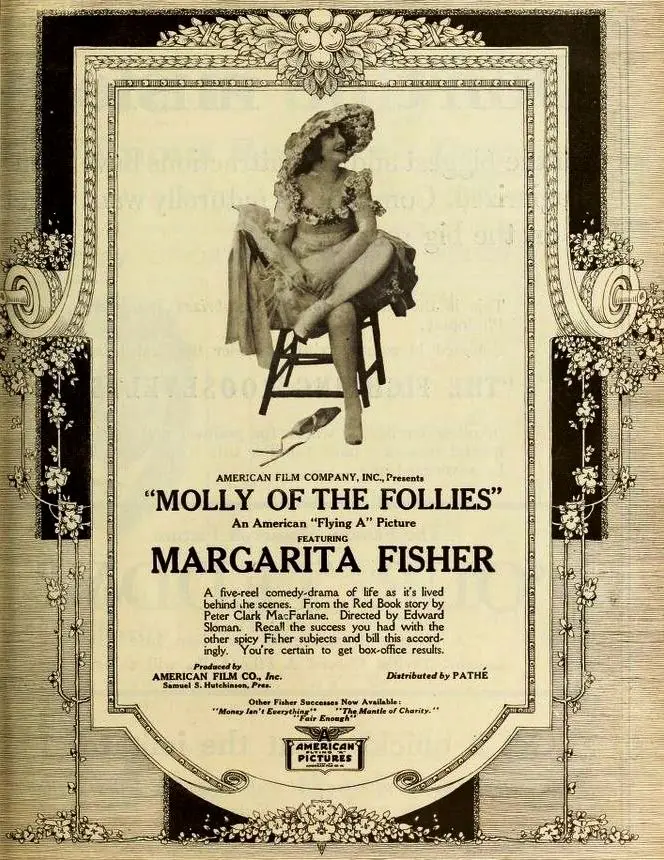
The resolution of Molly of the Follies is perhaps its most radical departure from the 'high art' aspirations of contemporary cinema. Rather than ending with a grand wedding in a cathedral or a tragic sacrifice as seen in The Fifth Commandment, the film concludes with the opening of a delicatessen. This shift from the spectacle of the follies to the domesticity of the deli is a profound statement on the American Dream. It suggests that true happiness is found not in the ephemeral applause of the crowd or the borrowed luxury of a mansion, but in the tangible, fragrant reality of cured meats and community service.
The delicatessen represents a middle ground—a space that is neither the garish sideshow nor the exclusionary upper-class estate. It is a space of labor, but labor that is self-directed and nourishing. When Kate finally relinquishes Joe to Molly, it is an admission that the 'mystic' must give way to the material. The film’s final frames, bathed in a metaphorical warmth, suggest that Molly has finally found a stage where she doesn't have to lose her shoes to get noticed. The rhythmic movement of the dance is replaced by the rhythmic slicing of ham, a choreography of the everyday that feels infinitely more sustainable.
Visually, the film benefits from the cinematography of Gilbert Warrenton, who manages to capture the grit of the boardwalk with a clarity that feels almost documentary-like. The use of location shooting in Coney Island provides a texture that studio sets of the time simply could not replicate. The contrast between the chaotic, light-filled exterior of the park and the shadowy, suspicious interiors of the Brooklyn mansion creates a visual dialectic that mirrors Molly’s internal conflict. While it may not have the epic scale of The Count of Monte Cristo, its intimacy is its greatest strength.
The editing, particularly during the climax in the closet, creates a sense of frantic energy that predates the screwball comedies of the 1930s. The pacing is relentless, moving from the rhythmic opening dance to the slapstick finale with a confidence that speaks to Sloman’s mastery of the medium. Even when compared to international efforts like Neft vä milyonlar sältänätindä, which dealt with the harsh realities of industry, 'Molly' maintains a uniquely American brand of optimistic pragmatism. It acknowledges the deception, the jealousy, and the poverty, but it ultimately chooses to laugh at them over a plate of pickles.
In conclusion, Molly of the Follies is a vibrant, multifaceted gem of the silent era. It eschews the easy morality of films like True Blue in favor of a more nuanced exploration of human frailty and the performance of identity. Margarita Fischer’s performance remains a standout, a whirlwind of energy and emotion that anchors the film’s more absurd plot points. For those interested in the evolution of the American comedy, or for those who simply wish to see a 'Human Submarine' find his true calling behind a deli counter, this film is an essential viewing. It reminds us that while the follies of life are many, the cure is often found in the most unexpected—and delicious—of places.
While it may lack the haunting gravitas of Shadows of Her Pest or the historical weight of El grito de Dolores, its charm lies in its relatability. We are all, in some way, dancing at a sideshow, hoping our slipper hits the right person, and dreaming of the day we can finally quit the act and open our own delicatessen. It is this universal yearning for authenticity in a world of 'Mystic Seeresses' and 'Human Submarines' that makes Molly’s journey so enduringly poignant.
IMDb —
1920
Community
Log in to comment.