DbcultAccessing Vault...
6.6/10
Senior Film Conservator
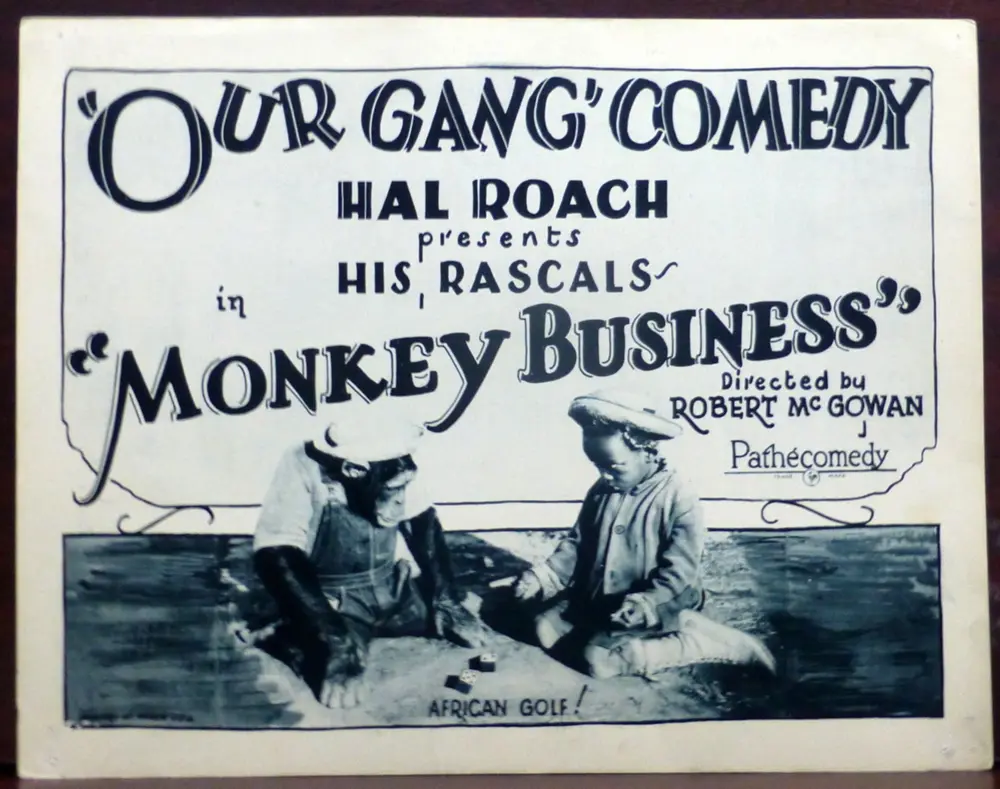
A definitive 6.6/10 rating for a film that redefined the boundaries of cult cinema. Monkey Business remains a cornerstone of transgressive art.
Is Hal Roach's 1926 silent short, Monkey Business, a film worth seeking out nearly a century after its release? Short answer: yes, but with a crucial understanding of its historical context and comedic style. This film is an absolute must-see for devotees of early cinema, particularly those fascinated by the nascent stages of slapstick and the pioneering work of Hal Roach and his 'Our Gang' series. Conversely, viewers accustomed to modern narrative complexity, rapid-fire dialogue, or sophisticated visual effects will likely find its charms elusive, potentially mistaking its simplicity for a lack of depth.
It’s a peculiar little gem, more a historical artifact of comedic ingenuity than a universally engaging narrative, yet its impact on the genre is undeniable. It showcases a raw, unpolished energy that few contemporary films dare to emulate.
This film works because of its audacious commitment to pure, unadulterated chaos, largely driven by the unpredictable animal star and the genuine, unforced performances of its child actors. The chemistry between the 'Our Gang' kids, especially Allen 'Farina' Hoskins, is palpable and forms the emotional core amidst the escalating antics.
This film fails because its narrative, while serving its comedic purpose, is inherently thin. It's a series of escalating gags rather than a cohesive story arc, which can feel disjointed to modern viewers expecting a more structured plot. Moreover, some of the humor, particularly involving the chimp's "pranks," occasionally skirts the line of genuine animal distress, making it a potentially uncomfortable watch for animal lovers.
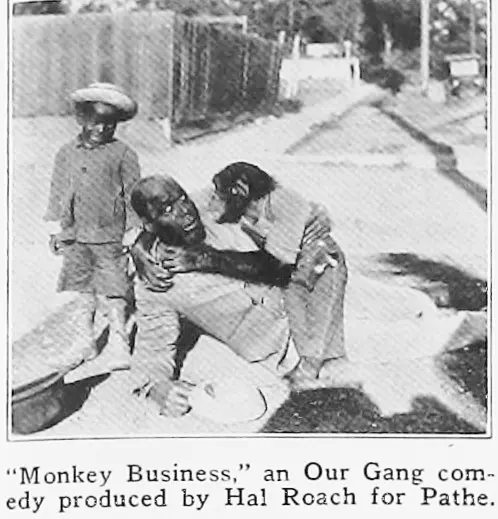
You should watch it if you appreciate the foundational elements of physical comedy, are a fan of silent-era filmmaking, or simply want to witness the raw, often unscripted, energy of child and animal performers before the Hays Code tightened its grip on Hollywood. It’s a snapshot of a different time, a different kind of entertainment.
The 1920s were the golden age of silent slapstick, a period defined by physical humor, exaggerated expressions, and narratives often built around escalating comedic predicaments. Monkey Business fits squarely into this tradition, but with a crucial twist: its primary instigator of chaos isn't a human comedian, but an actual chimpanzee. This choice immediately elevates the film beyond conventional human-driven pratfalls, introducing an element of genuine unpredictability that no amount of human performance could replicate.
The film opens with the chimp's escape, a sequence that masterfully sets the tone. We see the animal’s agility and cunning contrasted with the bumbling, slow-witted zoo keepers. The physical comedy here is direct and effective; the chimp's quick movements and the guards' futile, flailing attempts to recapture it are classic slapstick, yet infused with an organic energy that feels both authentic and genuinely amusing. It's not just a man in a monkey suit; it's a real animal creating real, albeit guided, mayhem.
This foundational element of animal-driven comedy is what gives Monkey Business its unique flavor. It’s not just about what the human characters do; it's about their reactions to the utterly irrational and instinct-driven actions of their simian co-star. This dynamic, I would argue, makes it a more compelling piece of slapstick than many of its purely human-centric contemporaries, as the stakes of unpredictability are inherently higher.
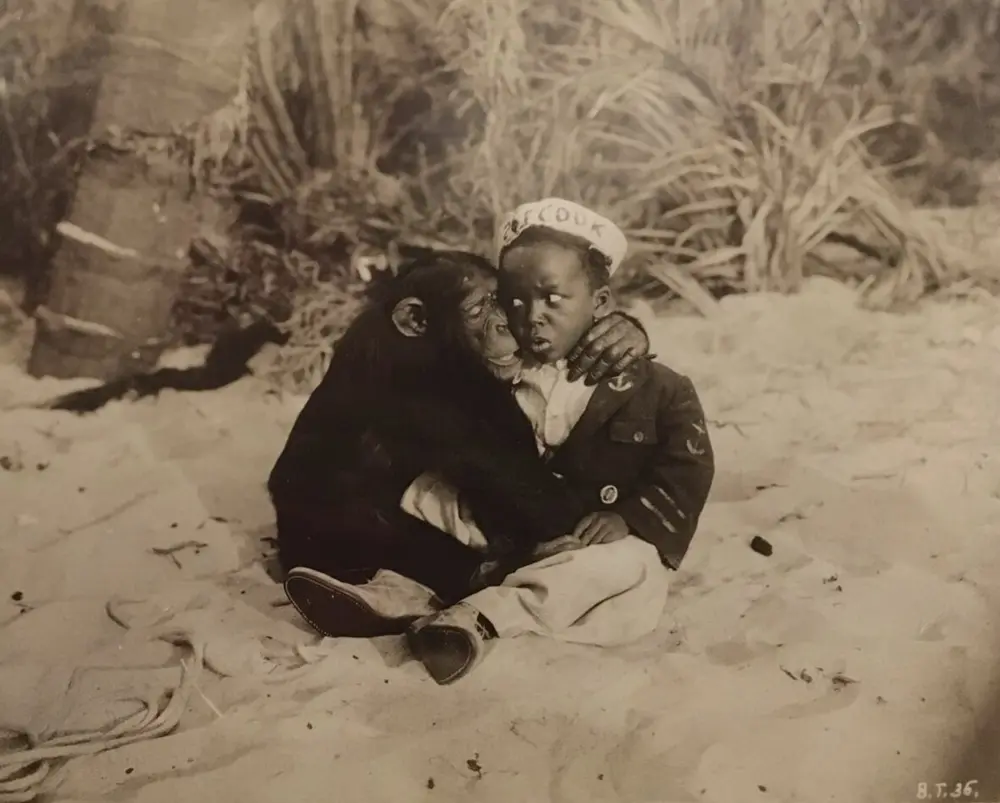
At the heart of many Hal Roach productions, especially the 'Our Gang' series, lies the undeniable charm and authenticity of its child actors. Monkey Business is no exception. Allen 'Farina' Hoskins, in particular, shines with a naturalism that belies his young age. His initial introduction, fleeing a home rife with parental squabbles, immediately establishes a poignant, relatable motivation for his character. Farina’s quiet resilience and expressive eyes convey more emotional depth than many adult actors of the era could manage.
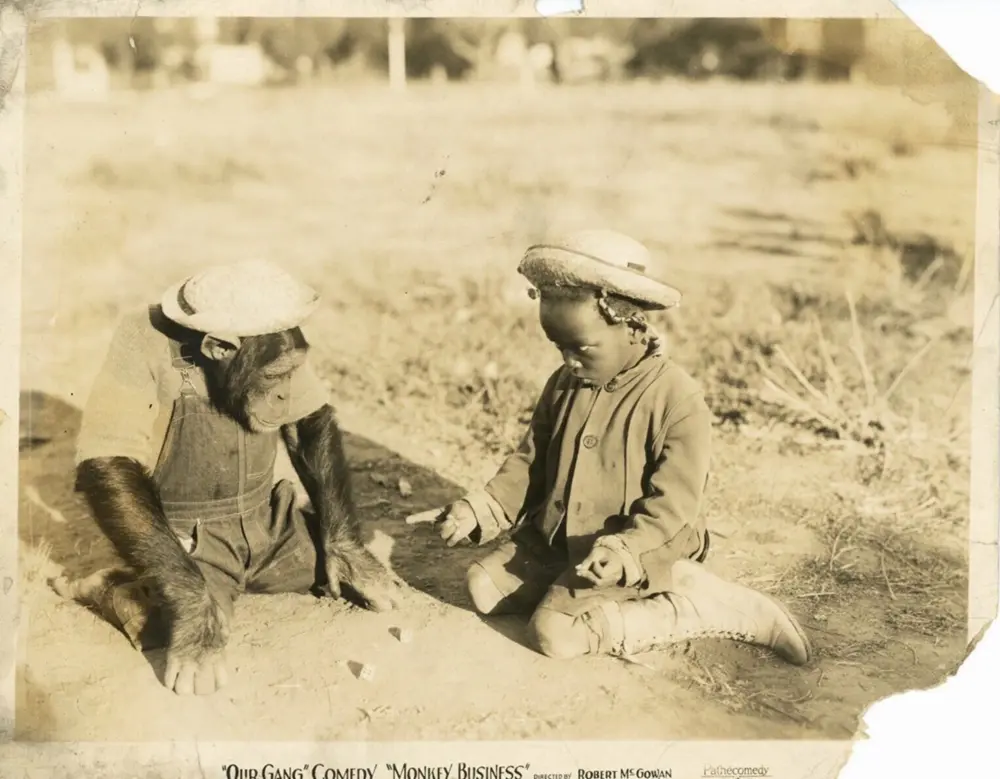
The interaction between Farina and the escaped chimp is a standout moment. It’s a silent, almost tender connection between two runaways, each seeking solace from their respective forms of confinement. This scene grounds the otherwise farcical proceedings, offering a glimpse into the innocent, often profound, world of childhood friendships. The rest of the 'Our Gang' kids, including Mickey Daniels, Mary Kornman, and Joe Cobb, contribute to this sense of community.
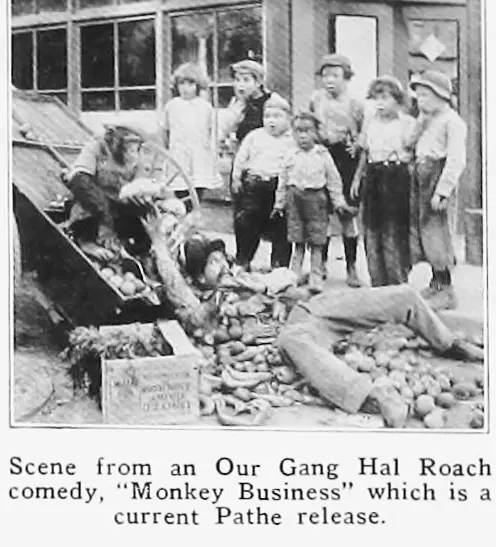
Their collective decision to put on a show to earn money from neighborhood kids is a classic childhood trope, executed with delightful sincerity. The scenes of them setting up their makeshift stage, pooling their meager resources, and rehearsing their acts are genuinely heartwarming. It speaks to a universal truth about childhood enterprise and the boundless optimism of youth, making the film's human element feel incredibly real amidst the impending animal-induced chaos.
The real star of Monkey Business is, without a doubt, the chimpanzee. Its performance is a fascinating blend of trained behavior and inherent animal instinct, making it an utterly captivating presence on screen. The humor derived from its actions isn't merely slapstick; it's the comedy of nature clashing with human attempts at order and domestication. The chimp's “misunderstandings” of human rules are the engine of the film's escalating absurdity.
Consider the pivotal moment when the chimp, tasked with collecting money for the children's show, decides to simply run off with the earnings. This act of pure, instinctual self-interest immediately shatters the children's carefully constructed entrepreneurial dream and propels the plot into its climactic chase sequence. It's a brilliant narrative device, leveraging the animal's natural inclinations for comedic effect, rather than forcing it into entirely human-like actions.
This constant tension between the chimp's wildness and the children's attempts to integrate it into their structured world provides much of the film's comedic backbone. The chimp isn't a sidekick; it's the primary antagonist and protagonist rolled into one mischievous, furry package. Its actions are the catalyst for nearly every major plot development, underscoring the film's unconventional approach to comedic storytelling.
Hal Roach was a master of comedic timing and orchestration, qualities that are on full display in Monkey Business. His direction of silent comedy, particularly with the 'Our Gang' series, often involved building humor through visual gags and physical spectacle, rather than relying on intricate plots or dialogue. Here, Roach's skill in managing multiple moving parts – child actors, an animal star, and a town full of extras – is commendable.
The pacing of the film is quintessential silent-era; it starts with a relatively calm setup, slowly introducing characters and their motivations, before steadily accelerating into a crescendo of escalating chaos. The final chase sequence, spanning multiple locations across the town, is a testament to Roach's ability to choreograph complex physical comedy. We see the chimp darting through streets, climbing buildings, and evading capture, with the 'Our Gang' kids and eventually the local police in hot pursuit.
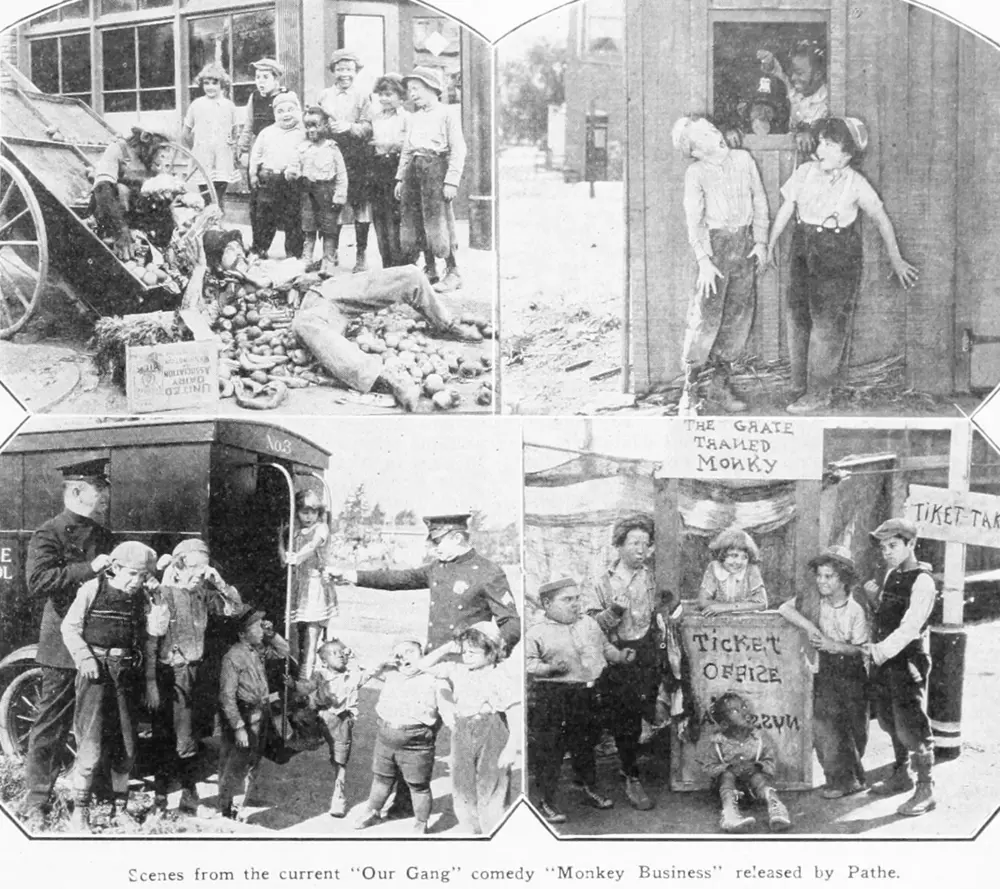
Roach uses clever camera angles and editing to maintain a sense of urgency and humor throughout the chase. He understands that the visual impact is paramount in silent film, and every frame is designed to elicit a laugh or advance the physical action. This sequence, for instance, evokes the frantic energy seen in other early comedies like What Happened to Jones, but with the added layer of an unpredictable animal leading the charge. It's a clinic in how to build comedic momentum without a single spoken word.
Watching Monkey Business today offers more than just laughs; it provides a valuable window into the production values and social context of 1920s American cinema. The film's sets, while simple, are effective in establishing the environment. Farina's home, for example, with its sparse furnishings and the visible tension between his parents, quickly communicates his difficult domestic situation through visual cues alone. There's no need for exposition; the visual storytelling is potent.
The conventions of silent film are also prominently featured: exaggerated facial expressions from the adult actors, clear physical reactions from the children, and the use of intertitles to convey dialogue or plot points. These elements, which might seem quaint to modern eyes, were the sophisticated cinematic language of their time, and Roach uses them expertly to ensure the audience understands the humor and narrative progression.
Beyond the technical aspects, the film reflects certain societal attitudes of the era. The portrayal of childhood, for instance, emphasizes resourcefulness and a degree of independence that might surprise contemporary viewers. The idea of children putting on a show to earn money, while innocent, also subtly touches upon themes of childhood labor and economic realities, though filtered through a comedic lens. It's a fascinating artifact, a testament to how much cinema has evolved, yet also how some fundamental storytelling elements remain timeless.
For those seeking an authentic taste of early 20th-century American comedy, Monkey Business is an essential viewing. Its raw energy and groundbreaking use of animal and child actors offer a unique window into a bygone era of filmmaking. It’s a short, sharp burst of entertainment that doesn’t overstay its welcome, leaving you with a smile and perhaps a newfound appreciation for the foundational elements of physical comedy.
However, it’s not for everyone. If you struggle with the pacing of silent films, or if the idea of animal antics in older cinema makes you uncomfortable, then this might not be your cup of tea. It lacks the narrative sophistication and emotional depth found in some of the later, more acclaimed 'Our Gang' entries, focusing instead on pure, unadulterated, and sometimes repetitive, comedic set pieces.
Ultimately, its worth lies in its historical significance and its ability to still deliver genuine laughs through simple, well-executed gags. It’s a testament to Hal Roach’s comedic genius and the enduring appeal of the 'Our Gang' kids, even when sharing the screen with a mischievous primate. It works. But it’s flawed.
Hal Roach’s Monkey Business is a spirited, if slight, piece of silent comedy that offers a unique blend of child charm and animal-induced anarchy. It stands as a fascinating historical artifact, demonstrating the raw energy and inventive spirit of early Hollywood. While its plot is minimal and some elements may feel dated or even uncomfortable to a contemporary audience, its enduring appeal lies in its audacious concept and the genuine performances of its young cast. It’s a film that demands a certain appreciation for its era, but rewards patient viewers with plenty of smiles and a valuable lesson in the foundations of physical comedy. It’s not a masterpiece, but it’s an entertaining glimpse into a bygone era of cinematic fun. Recommended for film historians and fans of the 'Our Gang' series. Others may find its charms more elusive, but its place in the comedic canon is undeniable.
IMDb 4.7
1930
Community
Log in to comment.