DbcultAccessing Vault...
7.1/10
Senior Film Conservator
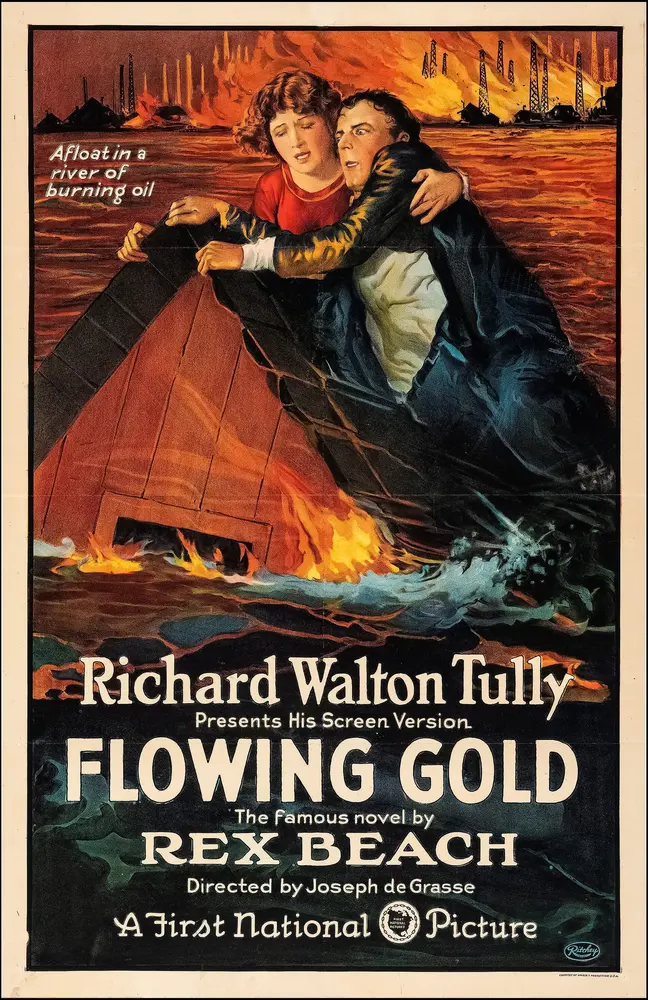
A definitive 7.1/10 rating for a film that redefined the boundaries of cult cinema. Flowing Gold remains a cornerstone of transgressive art.
The silent era was frequently defined by its fascination with the transmutation of landscape—the way a quiet horizon could be shattered by the machinery of progress. In Richard Walton Tully’s 1924 adaptation of the Rex Beach novel, Flowing Gold, this transformation is not merely a backdrop but a visceral character in its own right. The film captures a pivotal moment in the American psyche, where the agrarian dream was being aggressively supplanted by the industrial nightmare-turned-miracle of the oil boom. It is a work of immense scale, balancing the intimate grievances of a soldier of fortune with the macroscopic chaos of a town drunk on the scent of petroleum.
Milton Sills, portraying Calvin Gray, delivers a performance of rugged, simmering intensity that feels remarkably modern. Gray is the quintessential 'soldier of fortune,' a man whose moral compass has been rattled by the systemic failures of the military hierarchy. Unlike the more polished heroes found in contemporary dramas like The Man Who Played God, Gray is a man of action defined by his survival instincts. When he aligns himself with the Briskows, there is an initial sense of predatory opportunism, yet Tully directs Sills with a subtle shift toward altruism that feels earned rather than forced.
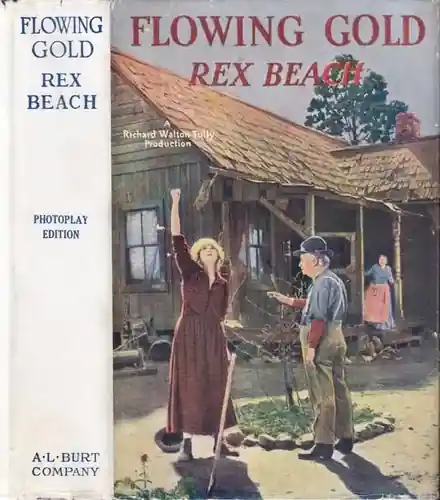
The Briskow family represents the archetypal 'nouveau riche' of the 1920s—a theme explored with varying degrees of cynicism in films such as Paradise Lost. Here, the wealth is not a gift but a burden. The homesteaders, played with a grounded sincerity by Bert Woodruff and Josephine Crowell, are ill-equipped for the vultures that descend upon them. Their sudden affluence is a viscous, black mirage that threatens to drown their family values long before the actual flood arrives in the third act.
Every great silent epic requires a villain whose malice is palpable through the silver nitrate, and Crauford Kent’s Henry Nelson provides exactly that. Nelson is not just a banker; he is a ghost from Gray’s past, representing the institutional corruption that can ruin a man’s reputation with a stroke of a pen. The conflict between Gray and Nelson is a masterclass in tension, mirroring the social stratification seen in Egyenlöség, where the struggle for power is inextricably linked to one's past social standing. Nelson’s attempts to swindle the Briskows are portrayed with a calculated coldness that contrasts sharply with the hot-blooded passion of the oil fields.
"The film’s brilliance lies in its ability to render the invisible visible—the weight of debt, the stench of betrayal, and the terrifying velocity of a world changing overnight."
Anna Q. Nilsson’s entrance as the 'Suicide Blonde' introduces a layer of sophisticated danger that elevates the film beyond a simple western-industrial hybrid. She is the urban rot arriving in the rural paradise, a character who would feel right at home in the decadent world of Lulù. Her attempt to swindle Buddy Briskow is a fascinating subplot that highlights the vulnerability of the younger generation to the allure of the 'big city' persona. However, the film avoids the easy trap of pure misogyny by contrasting her with Allegheny Briskow (Alice Calhoun).
Allegheny is not the typical damsel. Her narrative arc, culminating in her heroic intervention during the climax, provides a refreshing subversion of gender roles for 1924. While Gray is the protector for much of the runtime, it is Allegheny who ultimately navigates the literal and metaphorical fires to save him. This dynamic shift is more sophisticated than the melodramatic tropes found in The Sin of Martha Queed or the more traditional romance of The Bashful Lover.
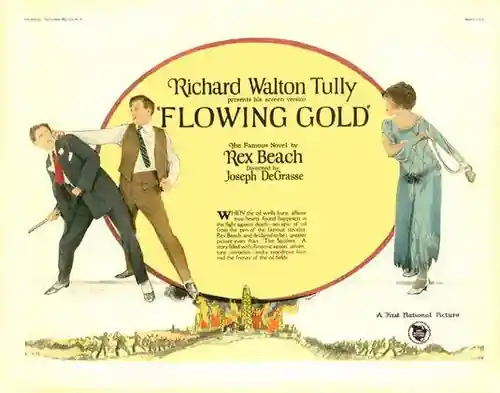
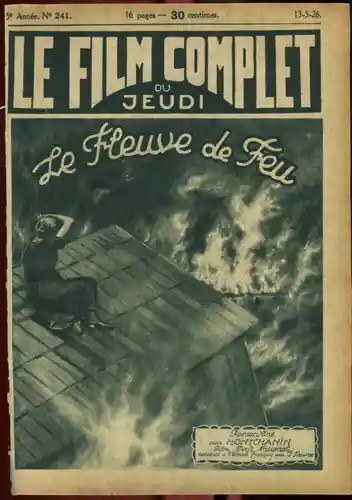
The technical achievements of Flowing Gold deserve a dedicated analysis. The climax—a double catastrophe of a fire-ravaged oil field and a sudden, violent flood—is a sequence of pure cinematic adrenaline. In an era without CGI, the practical effects are staggering. The way the light flickers against the dark, churning water creates a chiaroscuro effect that rivals the expressionistic heights of La montagne infidèle. It is a chaotic, terrifying symphony of destruction that serves as the ultimate crucible for the characters’ redemption.
This sequence also underscores the film's environmental subtext. The earth itself seems to rebel against the extraction of its 'flowing gold,' responding with elemental fury. This thematic resonance is much deeper than the slapstick chaos of Toonerville's Fire Brigade or the lighthearted antics of Back from the Front. Here, the fire is a purifying force, stripping away the greed and the vendettas to leave only the core humanity of the survivors.
When placed alongside other films of the period, Flowing Gold stands out for its gritty realism. While Sands of the Desert utilized exoticism to draw crowds, Tully’s film finds its spectacle in the familiar but amplified American landscape. It shares a certain DNA with the mystery elements of Lucille Love: The Girl of Mystery, yet it grounds its secrets in financial chicanery rather than pulp intrigue. Even the character-driven drama of Lena Rivers feels quaint compared to the high-stakes investment management and military-grade grudges on display here.
The film also benefits from a script by Richard Walton Tully and the legendary Rex Beach, whose understanding of the 'frontier' was unparalleled. They managed to weave a story that feels as expansive as a baseball game in Play Ball with Babe Ruth, yet as claustrophobic as the moral dilemmas in The Devil's Garden. The pacing is relentless, moving from the quiet desperation of a dusty town to the high-society glitz of the newly wealthy with a fluidity that was rare for the time.
Ultimately, Flowing Gold is a testament to the power of silent cinema to communicate complex social shifts through pure visual storytelling. It is not just a movie about oil; it is a movie about the friction between the past and the future. Calvin Gray is a man who finds a new war to fight—one where the weapons are contracts and the casualties are souls. The film’s conclusion, while ostensibly a happy one, leaves the viewer with a lingering sense of the cost of progress. Like the flickering light of a projection lamp, the world of 1924 was one of rapid movement and deep shadows, and Flowing Gold remains one of its most luminous, if oil-stained, artifacts. It avoids the simplistic morality of The Twinkler and instead offers a rich, multi-layered experience that demands to be seen by any serious student of film history.

IMDb —
1918
Community
Log in to comment.