DbcultAccessing Vault...
Cult Review
Senior Film Conservator
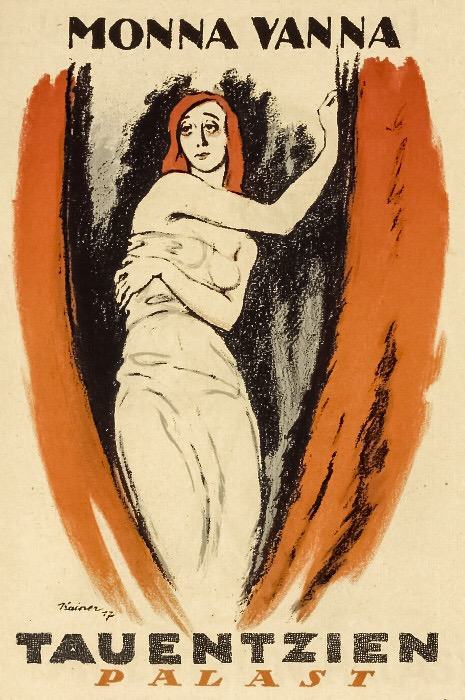
In the annals of early cinema, few narratives resonate with the raw emotional power and intricate character development found in Monna Vanna. This cinematic endeavor transcends its silent film origins, delivering a sweeping historical drama that explores the profound interplay of social strata, the devastating consequences of war, and the enduring strength of the human heart. It is a testament to the era's storytelling prowess, where grand gestures and nuanced expressions conveyed volumes, crafting a viewing experience that remains compelling and deeply affecting even a century later.
The film introduces us to Giannello, a young man whose hands, though skilled in the delicate art of goldsmithing alongside his father, are destined to grasp more than precious metals. His initial encounter with Vanna, a lady of Pisa's highest echelon and daughter of Monna Biancaone, is steeped in a delicate serendipity. A lost ring, a thorny rose bush, a hand offered in assistance—these are the seemingly trivial threads that begin to weave an unbreakable bond between them. The scene, charged with an almost ethereal innocence, immediately establishes the insurmountable social chasm that separates them. Vanna, portrayed with captivating grace by Rita Jolivet, embodies the aristocratic ideal, yet beneath her refined exterior, a nascent empathy for Giannello flickers. Giannello, in turn, is instantly captivated, his world narrowing to the radiant vision of Vanna. This initial spark, however, is not merely a romantic trope; it is the fundamental catalyst for every subsequent twist of fate, a silent promise whispered across the rigid boundaries of their respective stations. The film masterfully communicates this immediate, profound connection without a single spoken word, relying instead on lingering gazes, subtle gestures, and the evocative power of close-ups, a hallmark of effective silent film direction.
The burgeoning, forbidden affection between Giannello and Vanna is swiftly complicated by Vanna's pre-arranged betrothal to Sir Guido Colonna. The societal imperative for such unions is stark, leaving no room for the tender sentiments that have taken root in Vanna's heart, let alone Giannello's. Driven by an overwhelming desire to see Vanna just one more time before her marriage irrevocably seals their separate fates, Giannello scales the palace walls under the cloak of night. This act, born of profound emotional desperation, is tragically misinterpreted. Discovered by the palace retainers, he is branded a thief, his noble intentions obscured by the harsh judgment of a class-conscious society. The ensuing confrontation, where Vanna is compelled to identify him, is agonizing. Her request for him to be returned to his father, while seemingly protective, is a public severing of any perceived connection, a painful affirmation of their disparate worlds. Giannello's subsequent protestations of innocence to his father are met with anger, leading to a pivotal decision: he is to become a soldier. This transformation from a skilled craftsman to a man of war is not merely a change of profession; it is a forced re-forging of identity, a desperate attempt to escape the ignominy and heartbreak of his past. The film here echoes the thematic undercurrents seen in other historical epics like The Napoleonic Epics, where individual destinies are often irrevocably altered by military service and the grander sweep of historical events.
Years pass, and the joyous wedding bells of Vanna and Sir Guido give way to the ominous clang of war. Pisa finds itself under siege by the Florentines, a brutal and protracted conflict that grinds the city's inhabitants into starvation. The film vividly portrays the desperation and suffering within the besieged walls, a powerful commentary on the indiscriminate cruelty of conflict, reminiscent in its stark portrayal of human endurance to films like War Is Hell. It is in this crucible of despair that destiny orchestrates its most dramatic reversal. Pisa, on the brink of collapse, sends an envoy to beg for peace terms from the Florentine general. The man who dictates these terms is none other than Prinzivalle, the formidable commander of the Florentine forces. The revelation, slowly dawning on the audience, that Prinzivalle is the erstwhile Giannello, the goldsmith's son, adds an incredible layer of irony and tension to the narrative. His rise from a disgraced artisan to a powerful military leader is a testament to his resilience and perhaps a subtle critique of the arbitrary nature of social mobility in times of upheaval. His terms, delivered with calculated precision, are audacious: peace and provisions for Pisa, but only if Monna Vanna herself comes to him that very night, bearing the fairest roses from her garden. This demand is a masterstroke of dramatic tension, placing Vanna in an impossible moral quandary. The city's survival hinges on her personal sacrifice, a theme that resonates deeply and elevates the film beyond a mere romance into a profound exploration of duty and selflessness.
Vanna, demonstrating immense courage and an unwavering commitment to her people, accepts Prinzivalle's terms. Her journey to the general's tent is fraught with apprehension, a silent procession towards an unknown fate. The tension within the tent, as Vanna presents herself and the symbolic roses, is palpable. The dialogue, though conveyed through intertitles, crackles with unspoken history. As they converse, the pieces of the past slowly click into place for Vanna, the recognition dawning with poignant clarity: this powerful enemy commander is the boy whose hand she once bound, the artisan whose gaze had held such tender devotion. It is a moment of profound emotional resonance, beautifully acted by Jolivet, whose expressions convey a complex mixture of shock, sorrow, and perhaps a flicker of rekindled connection. Prinzivalle, in a gesture that reveals the depth of his character and his underlying love for Vanna, reveals that Pisa has already received the food supplies. His demand for her presence was not an act of cruelty, but a desperate, perhaps even romantic, attempt to see her again, to perhaps offer her a choice, or simply to gaze upon her face one last time. The roses she offers, initially a symbol of her city's surrender, transform into a gift of gratitude and renewed understanding. However, the fragile peace of this reunion is shattered by Vedio, Prinzivalle's lieutenant, who warns of the Florentines' fury and their intent to arrest their commander for his unauthorized act of mercy. Vanna, witnessing this unexpected turn, pledges Pisa's protection, a testament to her newfound respect and the profound shift in her perception of Prinzivalle.
The promise of sanctuary for Prinzivalle, made in good faith by Vanna, is tragically undermined by the small-minded jealousy and distrust of her husband, Sir Guido. His inability to comprehend Vanna's noble motivations, his immediate leap to suspicion regarding her night with the enemy commander, exposes the fundamental flaws in his character and the hollowness of their marriage. This moment is a powerful commentary on the societal expectations placed upon women, where their virtue could be so easily questioned and their sacrifices so readily misconstrued. Guido's accusations are not merely an injustice to Prinzivalle; they are a profound betrayal of Vanna, shattering any remaining illusions she might have harbored about her marital bond. Prinzivalle is unjustly cast into the dungeons, a grim reversal of fortune for the man who had just saved an entire city. It is here, in the depths of despair, that Vanna's transformation reaches its zenith. The societal ties that once bound her—to her arranged marriage, to the expectations of her noble station—are irrevocably severed by Guido's outrageous words. She recognizes the profound truth: her heart, her will, and her destiny are her own to command. In a powerful act of defiance and self-determination, she joins Prinzivalle in the dungeon, not as a captive, but as a liberator. Her declaration that Guido's words have freed her is a revolutionary statement, a bold assertion of female agency in a world designed to constrain it. The unlocking of the dungeon door is not just a physical act of escape; it is a symbolic shattering of all the chains that had bound her, allowing her to follow her heart and forge a new path with the man who truly understood and respected her. This resonates with the spirit of liberation seen in other films where characters break free from oppressive societal norms, even if the contexts differ, such as in The Vow, albeit with a very different kind of commitment at stake.
The enduring power of Monna Vanna owes much to the masterful craft of silent film. The absence of spoken dialogue necessitates a heightened reliance on visual storytelling, and the film delivers with compelling artistry. Rita Jolivet's portrayal of Vanna is a tour de force of expressive acting. Her face, a canvas of shifting emotions, conveys everything from innocent infatuation to agonizing internal conflict, from resolute determination to profound heartbreak. Every gesture, every tilt of her head, every change in her posture speaks volumes, allowing the audience to intimately connect with her complex emotional journey. Cesare Zocchi, as Giannello/Prinzivalle, matches her intensity, evolving his character from a hopeful, perhaps naive youth to a stern, yet ultimately compassionate, commander. The cinematography of the era, while perhaps lacking the sophisticated camera movements of later periods, effectively uses framing, composition, and lighting to enhance the dramatic impact. The contrast between the opulent palace settings and the grim, stark realities of the siege, for instance, is powerfully rendered. The film's pacing builds tension effectively, particularly during the siege sequences and Vanna's journey to Prinzivalle's tent. The use of intertitles, far from being a mere functional necessity, is woven into the narrative fabric, providing crucial exposition and emotional insight, often with poetic flair. It is a testament to the filmmakers' skill that such a complex and emotionally rich story could be told with such clarity and impact without a single audible word.
At its core, Monna Vanna is a meditation on themes that remain profoundly relevant. The central conflict between personal desire and societal duty is a universal struggle. Vanna's initial suppression of her feelings for Giannello in favor of her betrothal to Guido is a poignant reflection of the constraints placed upon individuals, particularly women, in many historical and cultural contexts. Her ultimate decision to reject Guido's baseless accusations and assert her own agency is a powerful statement on self-liberation and the right to choose one's own path. This theme of a woman's journey towards self-determination is a compelling aspect of the film, showcasing a progressive narrative for its time. Furthermore, the film explores the morally ambiguous nature of war and leadership. Prinzivalle's actions—saving Pisa while ostensibly acting as its enemy—highlight the complexities of loyalty, strategy, and compassion in conflict. His character defies easy categorization, emerging as a figure whose personal history and enduring affection profoundly influence his military decisions. The film also subtly critiques the rigid class structures of its setting, demonstrating how talent and character can emerge from unexpected places, and how superficial social distinctions can lead to profound misunderstandings and injustices. The narrative arc of Giannello, from humble artisan to powerful commander, is a classic tale of overcoming adversity, albeit one fraught with personal sacrifice and moral compromise.
Monna Vanna stands as a compelling example of early cinematic achievement, a film that leverages the unique strengths of the silent era to tell a story of epic scope and intimate emotional depth. Its rich narrative, strong characterizations, and powerful thematic explorations ensure its place as a significant work. The performances, particularly Rita Jolivet's, are a masterclass in non-verbal communication, drawing the audience into a world where expressions and gestures convey the full spectrum of human experience. For enthusiasts of historical drama, silent film, or simply well-crafted storytelling, Monna Vanna offers a rewarding and thought-provoking experience. It reminds us that the fundamental human struggles of love, loss, duty, and the search for personal freedom are timeless, transcending the technological limitations of their cinematic portrayal. The film's conclusion, with Vanna and Giannello embarking on a new, uncertain future together, is not merely a happy ending but a profound affirmation of individual choice and the enduring power of a love forged in the crucible of adversity. It leaves the viewer pondering the true cost of freedom and the courage required to seize it, making Monna Vanna a truly unforgettable piece of cinematic history.
IMDb —
1927
Community
Log in to comment.