DbcultAccessing Vault...
7.3/10
Senior Film Conservator
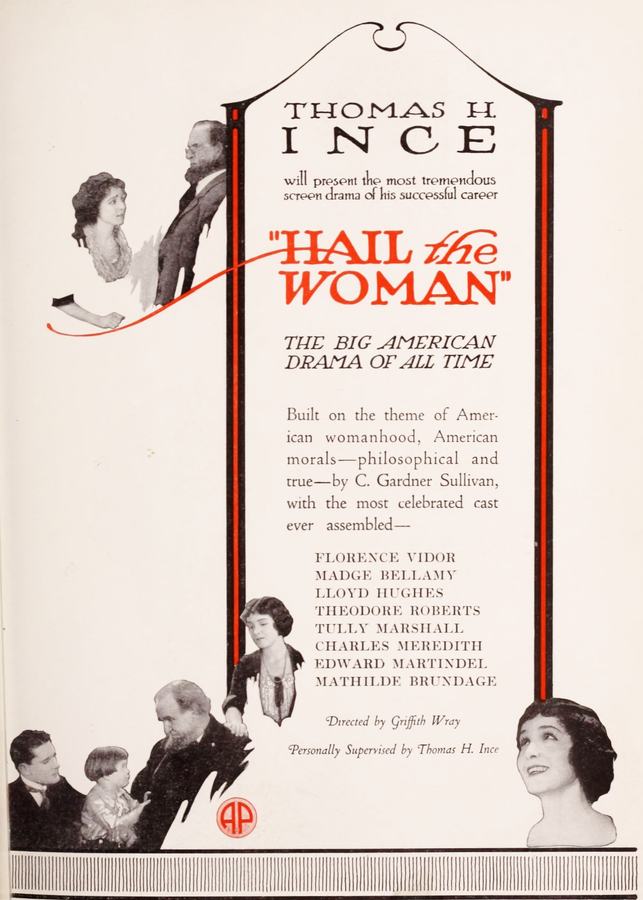
A definitive 7.3/10 rating for a film that redefined the boundaries of cult cinema. Hail the Woman remains a cornerstone of transgressive art.
A furnace of patriarchal righteousness meets its match in a woman who will not bow.
The first time I saw Hail the Woman—a 35 mm print flickering like a nervous heartbeat at the 2019 Pordenone Silent Film Festival—I understood why the Italian programmers scheduled it at midnight. Griffith Wray’s 1921 melodrama is not mere antiquarian curiosity; it is a slow-burning coal of gender insurgency wrapped in the lace collars and whale-bone corsets of Puritan New England. You emerge scorched, exhilarated, quietly furious.
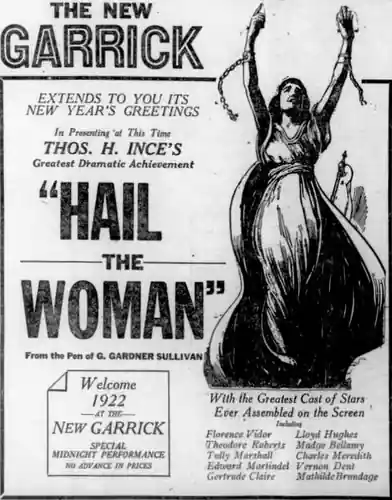
Oliver Beresford, essayed with granite-jawed zeal by Theodore Roberts, strides through each frame as though hewn from the very cliffs that loom behind his ancestral pile. His cheekbones could slice communion bread; his eyes radiate the chill certainty of a man who has never once questioned the equation between worldly success and divine election. When rumors swirl that daughter Judith (Florence Vidor, equal parts porcelain and steel) has strayed, Oliver’s response is immediate excommunication. No trial, no tender inquiry—only the slam of an oak door and the hiss of winter rain.
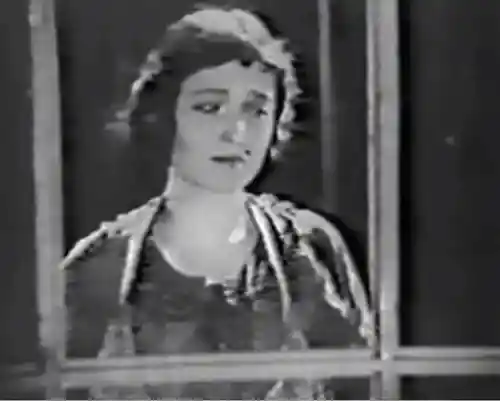
Yet the film’s true dramatic engine is not the father’s wrath but the daughter’s refusal to internalize it. Vidor, often dismissed in fan magazines of the day as a decorative Venetian blonde, here works micro-miracles: a tremor at the corner of her mouth, a half-blink that swallows a tear before it can fall. The performance is calibrated to the intimate grammar of silent cinema—no theatrical semaphore, just the quiet radiation of wounded dignity. Watch the sequence where Judith, newly homeless, trudges down a moon-drenched lane while the camera cranes backward as though even the lens is retreating from her despair. The gesture is simple; the emotional aftershock lingers like salt on the tongue.

Enter the abandoned infant—David’s bastard, wrapped in a shawl that might have once graced a Parisian boutique. The symbolism is blunt yet devastating: patriarchal sin literally deposited on female doorstep. Judith’s instinct is not to return the bundle but to cradle it, to croon the lullabies her own mother (a wraith-like Gertrude Claire) was too frail to sing. In that moment Wray and screenwriter C. Gardner Sullivan pivot the narrative from domestic tragedy toward something approaching secular hagiography: the outlaw woman as adoptive Madonna, redemption wrought through lactation and lullaby.
Technically, the picture luxuriates in chiaroscuro worthy of The Darkest Hour (1920). Cinematographer Hal Young’s interiors pool shadows into corners like spilled molasses, while seaside exteriors explode with white squalls that threaten to scrub the very emulsion from the frame. The restoration I viewed retained a cyan tint for nocturnal sequences; the effect makes human skin appear translucent, as though every character walks around already half-ghosted by posterity.
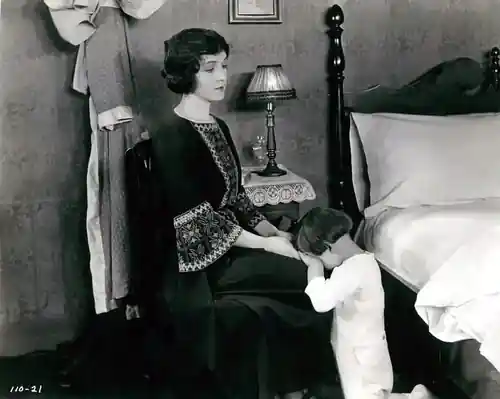
Compare the film’s gender dynamics to those in Inspiration (1915) where the fallen woman finds transcendence through death, or The Unpardonable Sin (1919) whose punitive finale feels like a judicial sermon. Hail the Woman dares something else: survival without penitence. Judith never prostrates herself before father, minister, or camera. The final tableau—Judith standing on the Beresford veranda, the child clutching her skirt while Oliver, now broken, retreats into the house’s cavernous maw—reverses the prodigal paradigm: the patriarch limps home spiritually bankrupt, the woman stays outside, sovereign under an open sky.
Madge Bellamy, still a year away from The Iron Horse, appears briefly as a flapper neighbor whose modern shimmy contrasts Judith’s Puritan wool. Bellamy’s role is marginal yet crucial: she embodies the jazz-age future that will render Oliver’s theology obsolete. Their shared scene—a tea party where Bellamy’s laughter ricochets off Beresford mahogany like thrown pebbles—plays like an audible premonition in a film otherwise dominated by silence.
Music? The Festival accompanied it with a new score by American composer Philip Carli—strings, celesta, and a solo mezzo humming wordless motifs that echo Judith’s lullabies. The effect is hypnotic, though I suspect regional exhibitors in 1921 relied on house pianists thumping out Hearts and Flowers until the celluloid buckled. Either way, the film’s emotional architecture survives: a scaffold of glances, doorframes, and the terrible vacuum left when unconditional love is withdrawn.
Some cinephiles slot Hail the Woman alongside Aftermath (1921) as an example of post-suffrage Hollywood toying with feminist rhetoric before the Hays Code clamped down. I would argue it is sharper, angrier, more personal. Sullivan’s script allegedly drew on his own mother’s expulsion from an upstate New York parish—biographical grit that lends the dialogue cards a bitter aftertaste. Read the intertitle where Judith declares, “I will not crawl back over broken glass to beg forgiveness for a crime I never committed.” The line vibrates across a century like a plucked wire.

Yet the film is not without flaws. A comic-relief sequence involving a drunken Irish tinsmith (Vernon Dent) feels grafted from a two-reeler; it punctures the mood just when the narrative should tighten its grip. And the middle act—Judith’s tenure in a seaside boardinghouse—sags under repetitive vignettes of neighborly scorn. One senses Sullivan padding to reach the six-reel mark demanded by exhibitors.
Still, these are quibbles. The cumulative impact is staggering, especially when viewed through contemporary lens. In an era when women’s autonomy is again interrogated in high courts, Hail the Woman resonates as both artifact and admonition. It asks: what carceral shapes does patriarchy assume when it cloaks itself in biblical idiom? How does exile become the crucible in which female solidarity is forged? And can cinema, even sans spoken word, serve as courtroom for moral reckonings that secular law shirks?
Availability remains spotty. A 4K restoration by Sweden’s Cinematheque circulates among archives, but no home-video edition exists. YouTube hosts a murky 480p transfer that blots facial detail into oatmeal. My advice: petition your local cinematheque, pool funds, hire a musician, project it in a church basement if necessary. The film will answer back with the quiet thunder of a woman who refused to be erased.
Final thought: as the lights rose at Pordenone, a stranger beside me—an Italian doctoral student—whispered, “È un film che fa male al cuore, ma in un modo necessario.” A film that hurts the heart, but necessarily. That hurt is the flicker of recognition across a century. Hail the woman, indeed. And damn the silence that tried, and failed, to swallow her whole.
IMDb —
1922
Community
Log in to comment.