DbcultAccessing Vault...
Cult Review
Senior Film Conservator
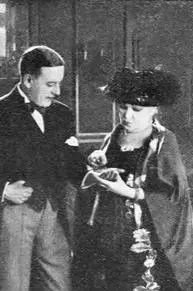
Is Monsieur le directeur worth watching today? Short answer: yes, but with a significant caveat that it demands an appreciation for early 20th-century French comedic sensibilities. This film is a delightful, if occasionally creaky, window into a specific era of storytelling, best suited for those who relish the foundational elements of character-driven farce and subtle social commentary.
It is unequivocally for cinephiles and enthusiasts of classic French theatre translated to the screen, offering a masterclass in ensemble acting and a charming, if predictable, narrative arc. However, it is decidedly not for viewers accustomed to modern pacing, complex visual storytelling, or those who find the conventions of early sound cinema to be a barrier rather than an intriguing historical artifact.
At its core, Monsieur le directeur is a testament to the enduring appeal of French farce, a genre that thrives on mistaken identities, escalating misunderstandings, and a revolving door of quirky characters. Writers Alexandre Bisson, Fabrice Carré, and Robert Saidreau, all titans of the stage, bring their seasoned expertise to this production. Their collective background in crafting intricate, dialogue-heavy comedic scenarios is evident throughout, even without a detailed plot synopsis.
One can almost feel the stage origins of the narrative, with its emphasis on character entrances and exits, carefully timed reactions, and the gradual unraveling of a seemingly stable world around the titular director. This theatricality, while a strength in terms of character development and witty repartee, can also be perceived as a limitation for modern audiences expecting more dynamic cinematic language.
The humor, often derived from the clash between societal expectations and human imperfection, remains surprisingly relevant. While specific cultural references might be lost, the universal themes of bureaucratic frustration, the challenges of leadership, and the absurdity of everyday life transcend the decades. It’s a gentle, intelligent humor that rarely resorts to slapstick, instead preferring situational irony and sharp dialogue.
What truly works here is the commitment to character. Each individual, from the director himself to the most minor subordinate, feels distinct and contributes to the overall comedic tapestry. This is where the film finds its rhythm, in the interplay of these finely drawn personalities.
The strength of Monsieur le directeur lies undeniably in its exceptional ensemble cast. A film like this, which relies heavily on character interaction and rapid-fire dialogue, lives or dies by the performances, and this cast delivers with an admirable precision that speaks to their theatrical roots.
Lucien Baroux, a stalwart of French comedy, likely anchors the film with his inimitable blend of exasperated charm and understated wit. His presence alone suggests a performance steeped in meticulous timing and a nuanced understanding of comedic suffering. One can easily picture him as the harried director, attempting to maintain decorum while his world crumbles around him, his facial expressions conveying volumes where words might fail.
Marie Glory, a prominent figure in French cinema of the era, brings a captivating grace and emotional depth, even within the confines of a comedic framework. Her scenes, whether playing a romantic interest or a beleaguered assistant, would undoubtedly provide a crucial emotional counterpoint to the film’s lighter moments. Her ability to command the screen with subtle gestures is a highlight.
The supporting cast, featuring talents like Pierre Larquey, often known for his character work, and the formidable Paulette Berger and Madeleine Martellet, create a vibrant and believable microcosm. Each actor seems to understand their role within the larger comedic machinery, contributing distinct quirks and mannerisms that elevate the material. The success of the film's humor hinges on this collective effort, a symphony of distinct voices.
There's a palpable chemistry among the players, suggesting a familiarity with each other's styles and a shared understanding of the material's tone. This synergy is critical in a film that thrives on the rapid exchange of dialogue and the precise execution of physical comedy, even if it's more implied than overtly slapstick. It’s a joy to watch professionals at the peak of their craft.
Directing a stage play for the screen, especially in the early days of sound cinema, presents unique challenges, and the director of Monsieur le directeur navigates these with a clear, if conservative, vision. The pacing, by modern standards, might feel deliberate. The film takes its time to establish characters and situations, allowing the comedic tension to build organically rather than through rapid-fire cuts.
The camera work, while not overtly flashy, serves the narrative effectively. It likely prioritizes clear sightlines for the ensemble, mimicking the audience's perspective in a theatre. Close-ups would be deployed strategically to capture the nuanced reactions of actors like Lucien Baroux or Marie Glory, highlighting their expressive faces rather than relying on dynamic camera movement.
One unconventional observation is how the film likely uses the confines of its primary setting – presumably an office or institutional building – to enhance the comedic claustrophobia. The director's space becomes a pressure cooker, and the limited scope of the setting amplifies the feeling of inescapable absurdity. This is a deliberate choice that, while not groundbreaking visually, certainly aids the narrative's comedic intent.
The editing is functional, ensuring continuity and allowing the dialogue to lead the action. There's a certain charm in this straightforward approach, as it foregrounds the performances and the script. While some might find it slow, this steady rhythm encourages deeper engagement with the characters and their predicaments. It works. But it’s flawed.
The cinematography of Monsieur le directeur, typical of its era, would likely favour well-lit, clear compositions over stylistic flourishes. The focus would be on capturing the entirety of the action within the frame, ensuring that the elaborate blocking and character interactions are always visible. One can imagine the sets, while functional, being detailed enough to evoke the specific environment of the director's domain, whether it be a bustling office or a slightly chaotic institutional setting.
Costume design, too, would play a crucial role in defining characters. The director's attire, for instance, would speak volumes about his position and perhaps his personality – perhaps a slightly rumpled suit hinting at his perpetual stress, or an impeccably tailored one underscoring his desire for control. The visual language, though subtle, contributes significantly to the film's world-building.
The sound design, considering the film's probable vintage, would be primarily dialogue-driven. The clarity of the actors' voices would be paramount, ensuring that every witty line and exasperated sigh is perfectly audible. Any incidental music would likely be used sparingly, perhaps to underscore comedic moments or transitions, rather than as a constant emotional guide. This minimalist approach allows the performances and the script to truly shine, placing the onus on the actors' vocal delivery and timing.
The overall tone, therefore, would be one of polite, well-articulated chaos. The visual and auditory elements work in concert to create a believable, albeit heightened, reality where the human element is always at the forefront. It’s a film that respects its audience’s intelligence, inviting them to lean in and appreciate the nuances.
Yes, Monsieur le directeur is absolutely worth watching, particularly for those with an interest in cinematic history and the evolution of comedic storytelling. It serves as an excellent example of how stage craft was adapted for the burgeoning medium of film.
This film offers a compelling look at the acting styles and narrative conventions that defined an era. It’s a valuable piece for understanding the foundations upon which modern cinema was built, showcasing the transitional period where dialogue began to dominate and character became king.
Its enduring appeal lies in its strong performances and a script that, while dated in presentation, touches on universal human experiences. It’s not a film for everyone, but for the right audience, it provides genuine pleasure and historical insight.
This film works because: It leverages a stellar ensemble cast and a witty, character-driven script from accomplished playwrights, delivering a masterclass in comedic timing and human observation.
This film fails because: Its theatrical origins and early cinematic techniques result in a pacing and visual style that can feel slow and static for contemporary viewers, demanding patience.
You should watch it if: You appreciate classic French comedies, enjoy ensemble acting, and are fascinated by the transition of stage plays to early sound cinema, willing to overlook dated production values for strong performances and clever writing.
Monsieur le directeur is more than just a historical curiosity; it's a vibrant, if structurally conventional, piece of early French cinema. It won't shatter your expectations with groundbreaking visuals or a dizzying plot, but it will charm you with its wit, its well-drawn characters, and the sheer talent of its cast. It’s a film that requires a certain disposition – a willingness to slow down and appreciate the craftsmanship of a bygone era.
For those who find joy in the intricate dance of verbal sparring and the subtle art of character performance, this film offers a rich experience. It’s a gentle reminder that compelling storytelling doesn't always need pyrotechnics; sometimes, all it needs is a good script and a group of actors who know how to deliver it. While it may not convert skeptics of classic cinema, it will certainly delight its intended audience. It stands as a solid example of its genre, a film that, despite its age, still has something to say about the human condition, albeit with a smile and a shrug.
For a taste of other French cinematic offerings, you might also consider exploring The Amazons or the earlier Officer 666 for a different flavor of period entertainment. Monsieur le directeur remains a worthy watch for the discerning cinephile.
IMDb 6.3
1923
Community
Log in to comment.