DbcultAccessing Vault...
7.2/10
Senior Film Conservator
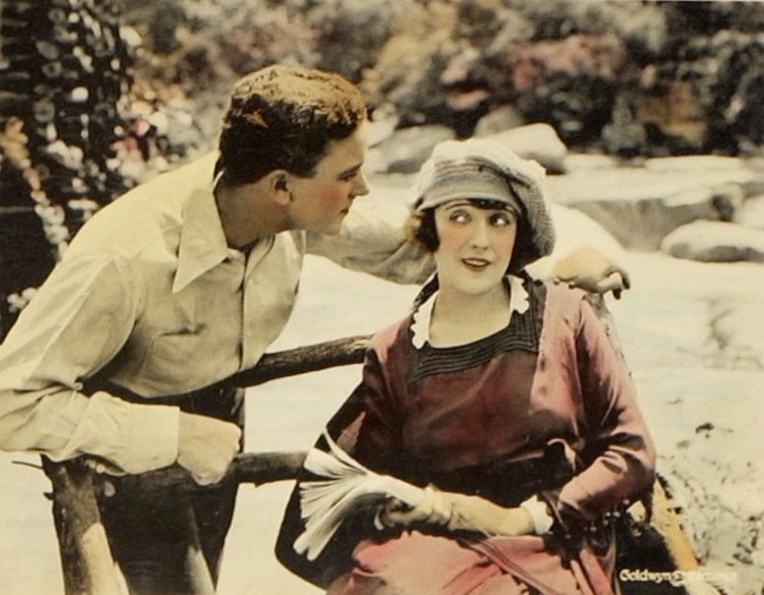
A definitive 7.2/10 rating for a film that redefined the boundaries of cult cinema. Back to the Woods remains a cornerstone of transgressive art.
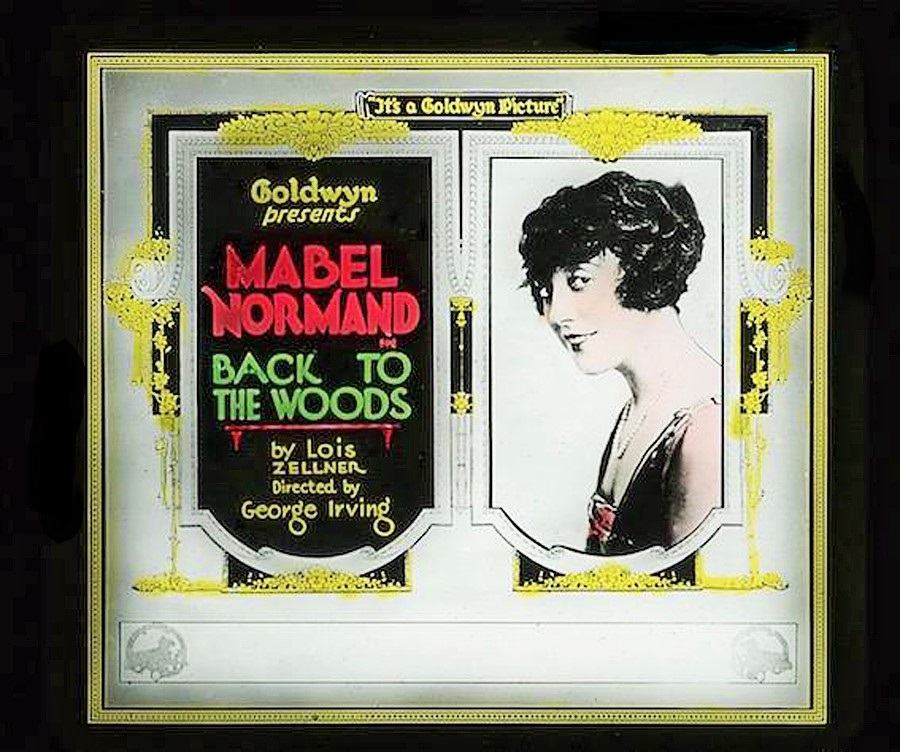
In the annals of early cinema, where narratives often veered into the melodramatic or the purely slapstick, there occasionally emerged a picture that, despite its era's limitations, dared to explore more intricate human dynamics. J. Clarkson Miller's ‘Back to the Woods’ (1918) stands as one such fascinating artifact, a silent film that, beneath its seemingly straightforward romantic comedy premise, weaves a tale rich with themes of identity, societal expectation, and the often-perilous pursuit of authenticity. Starring the incandescent Mabel Normand, a true titan of the silent screen, this film invites us to a world where a lumber heiress trades her opulence for the perceived grit of a logging village, all in a quixotic search for ‘a real man.’ It's a premise that, even a century later, retains a certain resonance, prompting us to ponder the very nature of genuine connection in a world rife with artifice.
The film introduces us to Stephanie Trent, a character of considerable agency and independent spirit, a woman who refuses to be confined by the gilded cage of her Eastern lumber king father’s wealth. Her decision to journey to Trentsville, a village bearing her family’s name, under the guise of a schoolteacher, is not merely a whimsical lark but a deliberate sociological experiment. She seeks not a man defined by his lineage or financial standing, but one forged in the crucible of honest labor and unvarnished character. This quest immediately sets Stephanie apart from many of her cinematic contemporaries, who were often depicted as passive objects of affection or damsels in distress. Here, we witness a protagonist actively shaping her destiny, albeit through a rather unconventional, and perhaps naive, methodology.
Her arrival in Trentsville swiftly leads her to Jimmy Raymond, portrayed by Herbert Rawlinson, a figure who mirrors Stephanie’s own penchant for disguise. Jimmy, a novelist by trade, has embedded himself within the community, adopting the persona of a local denizen, ostensibly to gather authentic material for his next literary endeavor. The stage is thus impeccably set for a romantic entanglement founded on mutual deception, a delicious irony that underpins much of the film’s charm and eventual dramatic tension. Both characters are, in essence, performing, meticulously crafting identities to suit their respective agendas, yet simultaneously yearning for something beyond the superficiality of their chosen roles. This duality imbues their initial interactions with an electric undercurrent, a palpable sense of two strong wills, both disguised, circling each other with a blend of curiosity and suspicion.
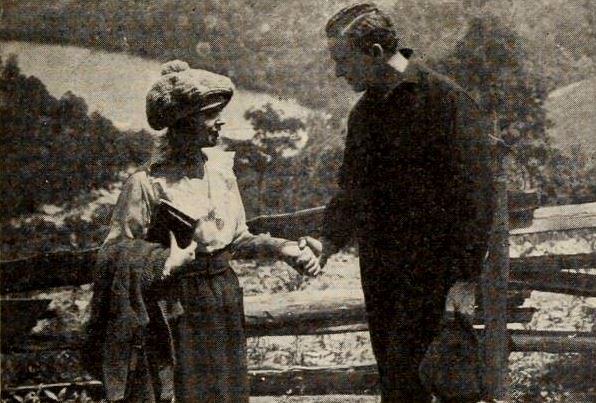
The narrative takes a sharp, almost jarring turn when Stephanie, believing she has uncovered a plot against Jimmy, visits his cabin. What transpires next is a scene that, by modern sensibilities, is deeply troubling, yet within the context of early silent film, serves as a pivotal, if problematic, plot device. Jimmy, rather than accepting her warning, feigns an intent to assault her, a shocking maneuver designed, as he later explains, to observe her ‘reactions’ for his novel. Mabel Normand’s performance here is critical; her terror, her near-desperate attempt to hurl herself from the window, must convey the genuine horror of the situation, even as the audience is eventually meant to understand it as a calculated, albeit cruel, experiment. This moment is a stark reminder of the ethical ambiguities often explored, sometimes clumsily, in early narratives, where character motivations could be stretched to the breaking point for dramatic effect. It also highlights the precarious position of women in narratives of the era, even those as ostensibly strong as Stephanie. One might draw a parallel to the moral quandaries presented in films like Treason (1918), where characters often grapple with difficult choices under duress, though perhaps with less overt manipulation.
Stephanie’s reaction to this betrayal is swift and decisive. In a striking display of her formidable will, she orchestrates Jimmy’s kidnapping, holding him captive in a nearby cabin. This act of retaliation, while extreme, is entirely consistent with her character’s refusal to be trifled with, her demand for respect and authenticity. It’s a moment that could easily descend into farce, yet the film manages to maintain a certain dramatic weight, largely due to the underlying emotional currents. However, fate, or perhaps the screenplay, has other plans. When Jimmy, in a desperate bid for freedom, is shot during an escape attempt, Stephanie’s resolve softens. Her initial fury gives way to a profound sense of remorse and an unexpected surge of compassion, leading her to nurse him back to health. This sequence is crucial, marking the transition from animosity to a nascent understanding, a recognition of shared vulnerability that transcends their earlier games of pretense. It's in these quiet moments of care that the true characters, stripped of their disguises, begin to emerge, laying the groundwork for a more authentic connection.
The film’s climax unfolds not in the rustic woods, but in the more formal, adversarial setting of a city hearing. Stephanie’s father, enraged by the potential scandal and perhaps the content of Jimmy’s now-completed novel, files an injunction to prevent its publication. This legal battle serves as a public arena where the private dramas of Stephanie and Jimmy are laid bare, forcing them to confront the consequences of their actions and deceptions. It is here, amidst the legal wrangling and societal judgment, that their relationship finds its unexpected resolution. Stephanie, having witnessed Jimmy’s vulnerability, his artistic ambition, and perhaps even a genuine remorse beneath his earlier callousness, consents to his proposal of marriage. This ending, while seemingly conventional for a romantic comedy, is imbued with a deeper significance given the circuitous, often fraught, journey these two characters have undertaken. It suggests a love forged not out of romantic ideals, but through a crucible of deception, confrontation, and ultimately, mutual understanding.
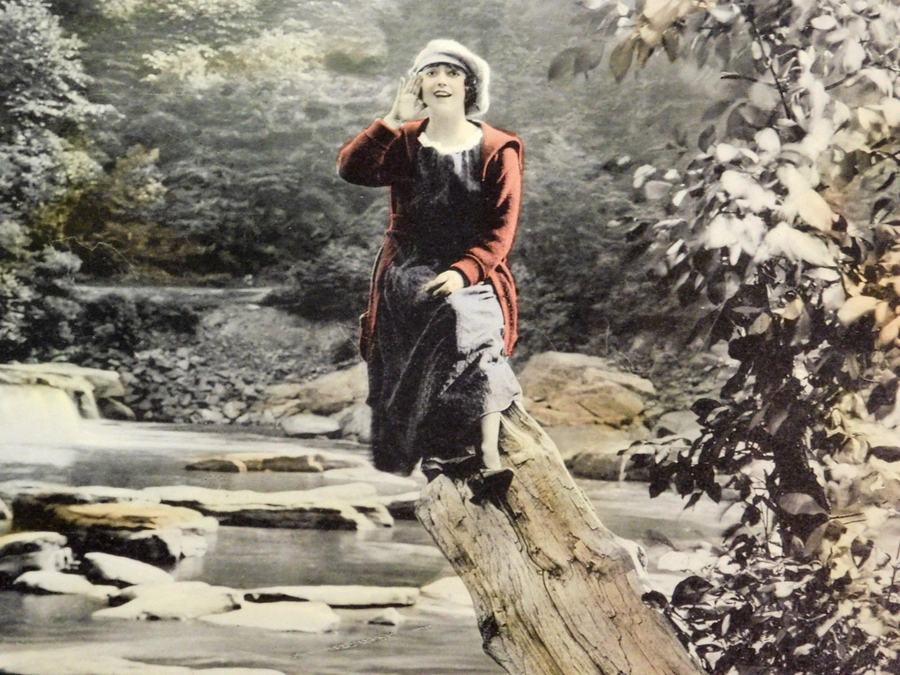
Mabel Normand, as Stephanie Trent, delivers a performance that is both nuanced and powerful, a testament to her enduring talent as a silent film star. Her ability to convey a wide range of emotions—from independent resolve to terror, from righteous indignation to tender compassion—without the aid of spoken dialogue is truly remarkable. Normand’s expressive face and dynamic physicality carry the narrative’s emotional weight, making Stephanie a relatable, if at times perplexing, protagonist. She embodies the spirit of a modern woman, pushing against the confines of her era’s expectations, a trait that can be observed in other strong female leads of the period, though perhaps less overtly rebellious than some, such as the titular character in Runaway Romany (1917). Herbert Rawlinson, as Jimmy Raymond, skillfully navigates the complexities of his character, portraying both the detached, manipulative artist and the vulnerable man capable of eliciting sympathy. His performance ensures that Jimmy is not merely a villain, but a flawed individual whose motivations, however misguided, stem from a place of artistic ambition.
The supporting cast, including T. Henderson Murray as Stephanie’s father, Arthur Housman, and James Laffey, contribute effectively to the film’s atmosphere and narrative progression. In silent cinema, the art of acting relied heavily on exaggerated gestures, facial expressions, and precise body language to communicate internal states and plot points. The performances in ‘Back to the Woods’ exemplify this craft, allowing the audience to follow the intricate emotional shifts without the benefit of spoken words. The direction, though uncredited in the provided information, effectively orchestrates these performances, ensuring that the visual storytelling remains clear and compelling. The use of intertitles, a crucial element of silent film, guides the audience through the narrative, providing dialogue and exposition where necessary, often with a flair that complements the dramatic tone. The cinematography, while perhaps not groundbreaking for its time, efficiently captures the contrasting settings of the opulent Eastern estate and the rugged logging village, visually reinforcing the themes of class and authenticity.
At its core, ‘Back to the Woods’ is a trenchant exploration of identity. Both Stephanie and Jimmy operate under false pretenses, creating personas that serve their individual quests. Stephanie seeks to shed the burden of her wealth and find a ‘real man,’ while Jimmy dons the garb of a local to unearth ‘real stories.’ This mutual deception creates a fascinating dynamic, blurring the lines between who they are and who they pretend to be. The film implicitly asks: can genuine connection flourish when built upon a foundation of artifice? The narrative suggests that while initial attraction might stem from these constructed identities, true understanding and affection only emerge when the masks begin to slip, often under duress. This thematic thread of hidden identities and eventual revelation is a common trope in literature and cinema, perhaps seen in different contexts in films like The Ticket of Leave Man, where characters live double lives, or even Le nabab, which might explore the complexities of social climbing and concealed pasts.
Another potent theme is the tension between artistic ambition and ethical boundaries. Jimmy Raymond’s willingness to manipulate Stephanie’s emotions for the sake of his novel raises serious questions about the artist’s responsibility. Is the pursuit of ‘truth’ in art justification for inflicting emotional distress? The film, while ultimately granting Jimmy a romantic resolution, doesn't entirely shy away from the problematic nature of his methods. It invites the audience to consider the fine line between observation and exploitation, a dilemma that continues to be debated in creative circles even today. This particular aspect sets the film apart, lending it a certain intellectual weight beyond its romantic trappings. It’s a bold choice for a silent film, often expected to deliver uncomplicated moral lessons.
Released in 1918, ‘Back to the Woods’ arrived during a pivotal period in cinematic history. The industry was rapidly maturing, moving beyond nickelodeons and short subjects towards longer, more complex feature films. World War I was nearing its end, and society was on the cusp of significant change. Films of this era often reflected a growing interest in social realism, psychological depth, and the evolving role of women. Stephanie Trent’s character, with her independence and proactive quest, can be seen as a reflection of the ‘New Woman’ archetype emerging during this period. While not as overtly political as some films tackling social issues, ‘Back to the Woods’ subtly challenges conventional notions of romance and gender roles. It’s not a grand epic like The Shooting of Dan McGrew (1915) but a more intimate drama, focusing on character interaction and internal conflict.
The film’s enduring appeal lies in its ability to transcend its period, offering a narrative that, despite its archaic presentation (to modern eyes), delves into timeless human experiences. The chemistry between Normand and Rawlinson, though conveyed through the stylized acting of the silent era, is palpable. The screenplay by J. Clarkson Miller, with its clever setup and unexpected twists, demonstrates a sophisticated understanding of dramatic structure, even if some plot points feel contrived by today’s standards. It’s a testament to the storytelling prowess of early Hollywood that such intricate narratives could be communicated effectively without spoken dialogue, relying instead on visual cues, compelling performances, and well-placed intertitles. The film, in its own way, contributes to the rich tapestry of early American cinema, showcasing the diverse range of stories being told and the talents of its nascent stars.
Comparing ‘Back to the Woods’ to other films of its time helps contextualize its unique blend of romance and psychological drama. While some films focused on stark social commentary, like The Hungry Heart (1917), or grand adventures as seen in The Man from Painted Post (1917), ‘Back to the Woods’ carves out its niche by exploring the intricacies of human relationships through a veil of deception and discovery. It doesn't possess the epic scope of some features, nor the overt moralizing of others, but instead offers a more intimate, character-driven exploration of love and identity. The film's willingness to present a morally ambiguous male lead and a highly assertive female protagonist makes it a surprisingly modern viewing experience, defying simplistic categorization. It’s a film that, despite its age, continues to provoke thought about the nature of love, truth, and the masks we wear in our pursuit of both.
‘Back to the Woods’ (1918) is more than just a relic of a bygone cinematic era; it is a compelling and thought-provoking romantic drama that holds up surprisingly well, especially for those with an appreciation for silent film artistry. Mabel Normand’s electrifying performance anchors the film, imbuing Stephanie Trent with a depth and spirit that transcends the limitations of the medium. The film’s exploration of identity, ethical artistic practice, and the convoluted path to genuine connection makes it a rich subject for analysis. While some of its plot devices might feel dated or even uncomfortable by today’s standards, it offers a fascinating glimpse into the storytelling conventions and societal anxieties of its time. For enthusiasts of early cinema, or anyone curious about the foundational narratives that shaped the medium, ‘Back to the Woods’ is an absolute must-see. It’s a testament to the enduring power of compelling characters and intricate plots, proving that even a century ago, filmmakers were adept at crafting stories that resonate with universal truths about the human heart. It is a delightful, if at times unsettling, journey into the complexities of love and self-discovery, beautifully rendered in the silent language of the silver screen, solidifying its place as a minor classic that deserves renewed attention and appreciation.
IMDb 6.7
1935
Community
Log in to comment.