DbcultAccessing Vault...
Cult Review
Senior Film Conservator
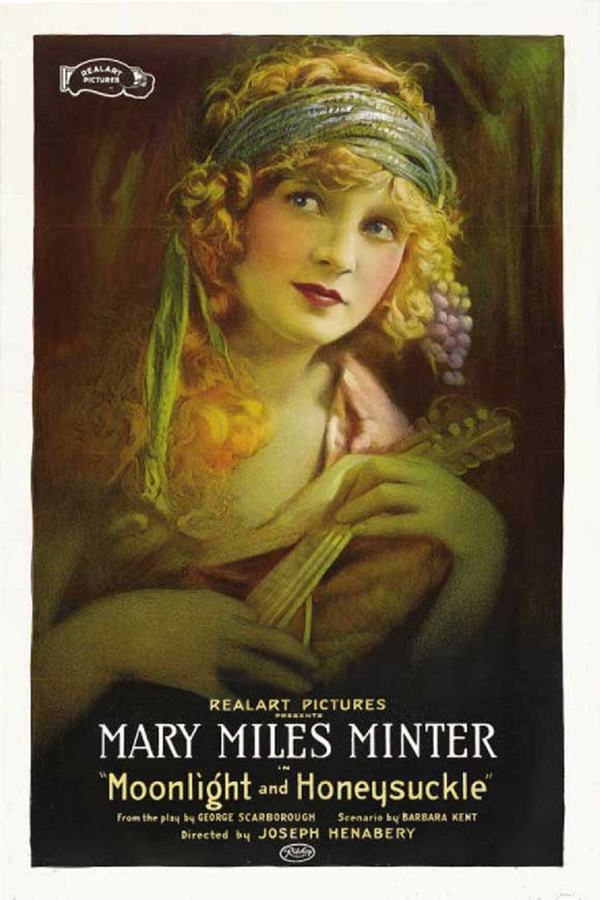
Picture a time when a single kiss could shred a political career faster than a stock-market crash, when telegrams arrived like lightning bolts, and when the Arizona night smelled of creosote and impropriety. Moonlight and Honeysuckle—that fragrant title—oozes Jazz-Age audacity, yet remains curiously absent from the canon of undergraduate syllabi. I unearthed a 16-mm print in the basement of a Tucson fraternal order; the acetate scent alone transported me into a world where desire wears both spurs and satin.
Director Jerome Storm—never vaulted into Griffith-era legend yet possessed of a poet’s iris—bathes the screen in chiaroscuro that would make Lost in Darkness blush. Observe the opening tableau: a mesa silhouetted against a tangerine dusk, the widow’s veil fluttering like a surrender flag. The camera lingers, inhaling the moment until the grain itself trembles. Compare this to the assembly-line slapstick of Swat the Fly, where geography is an afterthought; here, the desert is a character—parched, coquettish, complicit.
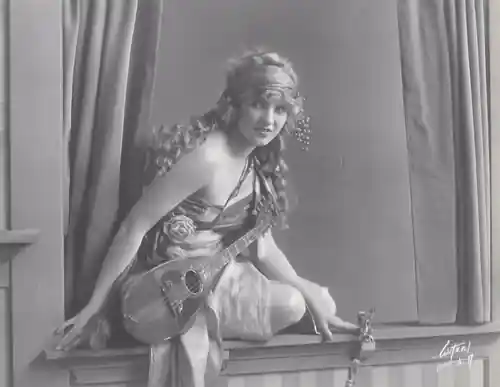
Cinematographer Allen Siegler favors shallow focus that turns every candle into a supernova and every bead of sweat into a crystal bead. When Judith—played by Justine Johnstone with the startled grace of a fawn—first confronts Ted beside the corral, the ranch gate forms a diagonal that cleaves the frame: civilization vs. wilderness, silk vs. denim, Congress vs. common sense. It’s a visual thesis statement scrawled in shadows.
Guy Oliver’s Senator Baldwin strides through scenes like a Roman statue learning to fear mortality. Watch the micro-twitch beside his eye when the widow stipulates her marriage clause—an entire political career flashes before us. Mabel Van Buren, as the unnamed widow, wields ennui like a stiletto. She delivers the film’s most subversive line via intertitle: “A woman unmarried is a novel unread; I prefer best-seller status.” The typography quivers, mirroring Baldwin’s knees.
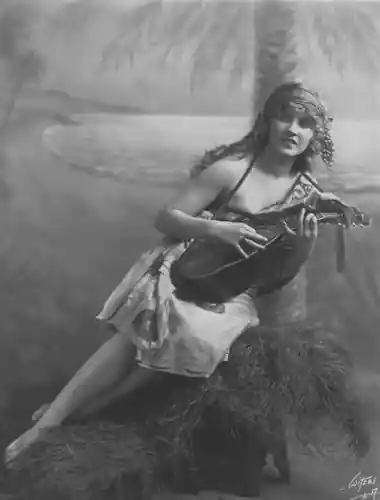
William Boyd, pre-Hopalong gravitas, essays Congressman Hamil with the brio of a man who mistakes verbosity for virility. His rivalry with Ted (Monte Blue, rugged enough to make adobe blush) gives the narrative its pistons. Blue never overplays; instead, he channels yearning into the way he fingers a lasso or studies a kerosene flame. When he finally confesses love—wordlessly, because the intertitle is merely “—” followed by a close-up—the silence is thunderous.
George Scarborough and Barbara Kent’s screenplay pirouettes between Wildean epigrams and frontier frankness. Note the symmetry: Baldwin’s covert courthouse elopement mirrors Judith’s would-be trial marriage; both generations flout protocol, but only the patriarch hypocritically clings to reputation. The writers lampoon Washington’s obsession with optics a century before Twitter tar-and-featherings. When a reporter snarls, “News travels faster than virtue,” the line ricochets off the fourth wall and spears our present media circus.
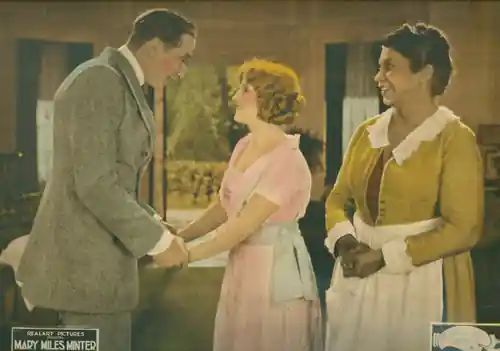
Compare this thematic maturity to the featherweight innuendo of Yes Dear or the dime-store feminism of Just Squaw. Moonlight and Honeysuckle dares to ask: can autonomy exist inside a gilded cage, or does the latch itself negate freedom? Its answer arrives not via soapbox but through a moon-drenched kiss that feels like insurrection.
Editors do not receive laurels for silent cinema, yet the cutting pattern here anticipates Eisensteinian collision. Witness the telegram sequence: telegrapher’s key → spinning newspaper headline → train wheels → Judith’s widened irises. Four shots, perhaps three seconds each, yet the synaptic jolt is 1920s equivalent of a trap beat drop. The film’s tempo oscillates between languid nocturnes—honeysuckle vines caressed by desert wind—and staccato bursts of scandal, mirroring the emotional whiplash of first love.
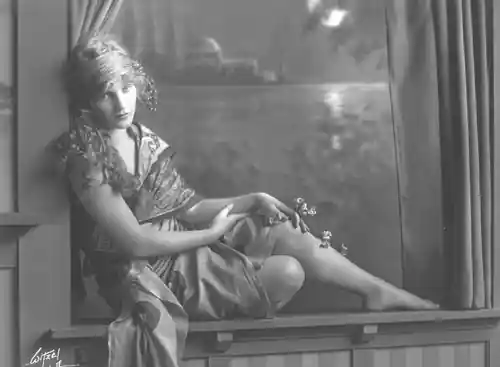
Modern viewers, hardened by fourth-wave discourse, may scoff at the term “trial marriage,” yet within the celluloid confines the phrase is a Trojan horse. Judith does not request permission; she drafts the contract, selects the venue, and invites the chaperone—her terms, her gaze. When gossip threatens to derail her, she weaponizes the same rumor mill, leaking counter-narratives that paint her as ingenue rather than libertine. The film understands that reputation is currency, and Judith mints her own coin.
Contrast this with The Crucial Test, where the heroine’s fate hinges on male arbitration. Here, patriarchal authority is comically emasculated: Baldwin sneaks into his own lodge, terrified of journalists, while his daughter commandeers the narrative. The ultimate matrimony is not surrender but strategic alliance—a union of equals whose dowry is mutual respect.
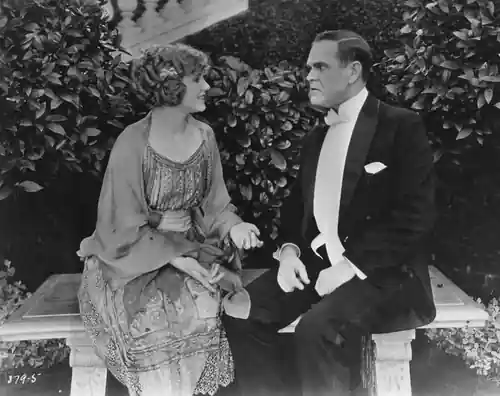
No original score survives, so each archival screening becomes collaboration with the present. I accompanied my viewing with a playlist pivoting from Mingus’ Moonlight in Vermont to Arizona indie rockers Calexico. Result: the film’s emotional valises unlock. When Ted cradles Judith’s abandoned riding glove, a trumpet’s blue note bends, and the moment levitates. Seekers of “authentic” experience should remember: silent cinema was never silent; it was a dialogue between flicker and flesh, then and now.
The film’s scarcity owes partly to the 1937 Fox vault fire, partly to its marketing misfire: posters promised “a tempest of desire,” luring audiences expecting Everybody’s Doing It-level titillation. Instead, they received a screwball treatise on class and autonomy—brains wrapped in gingham. Critics of ’27 praised its “photogenic sincerity,” yet box-office returns drooped, eclipsed by aviation spectacles and collegiate pratfalls. Today, 4K scans circulate among private collectors, but a proper Blu-ray remains tantalizingly out of reach. Criterion, are you listening?
Stack Moonlight and Honeysuckle against Follow the Girl and you witness the difference between situational whimsy and thematic architecture. The latter chases gags across Manhattan rooftops; the former plants its stakes in moral terrain, then dares its characters to dance through them. Meanwhile, The Lifeguardsman offers beachside frolics minus socioeconomic tension—fun, but froth. Only The Roaring Road matches the film’s pulse, trading political corridors for automotive adrenaline; together they form a diptych of twenties mobility—one geographical, one emotional.
Great cinema kisses the mind long after credits fade; Moonlight and Honeysuckle brands its bouquet onto memory. It is both artifact and oracle: a reminder that desire transcends decade, that political hypocrisy is a renewable resource, and that the most revolutionary act may be choosing the right pair of arms beneath a honeysuckle bower. Seek it, should fate screen it in a rep house or archive basement. Bring a date, a playlist, and an appetite for subversion. The desert wind still carries whispers of Judith’s laughter—proof that even in silence, love can roar louder than scandal.
Verdict: 9.2/10 — A near-masterpiece whose only sin is obscurity.

IMDb 7
1928
Community
Log in to comment.