DbcultAccessing Vault...
7.2/10
Senior Film Conservator
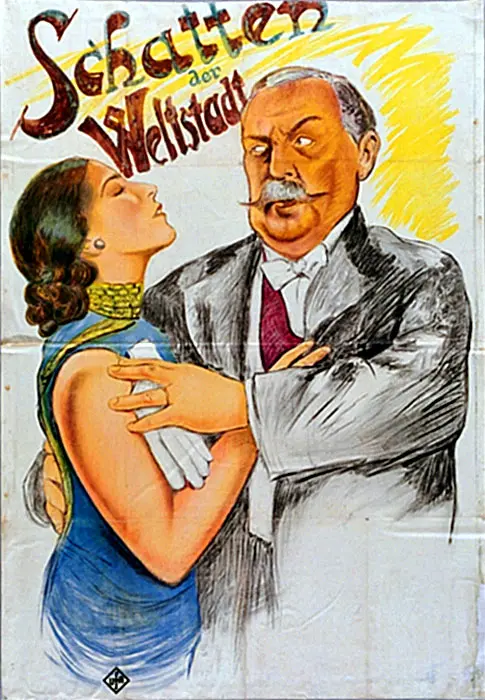
A definitive 7.2/10 rating for a film that redefined the boundaries of cult cinema. Schatten der Weltstadt remains a cornerstone of transgressive art.
Is Schatten der Weltstadt worth your time in the modern era? Short answer: Yes, but only if you are willing to look past its technical age to find its sharp social teeth. This film is for the student of the Weimar era and the lover of early crime drama; it is not for the casual viewer seeking easy escapism.
The film is a grime-streaked postcard from a city about to explode. It doesn't just show Berlin; it indicts it. It is ugly. Yet, in that ugliness, there is a profound sense of truth that many of its contemporaries lacked.
1) This film works because it refuses to sanitize the urban experience, opting for a claustrophobic realism that predates the American noir movement by two decades.
2) This film fails because the narrative structure is occasionally sacrificed for the sake of episodic moralizing, leading to a disjointed second act.
3) You should watch it if you want to see a raw, unfiltered look at 1920s Berlin that avoids the romanticized tropes found in later Hollywood interpretations.
Willi Wolff’s direction in Schatten der Weltstadt is obsessed with the concept of the 'Weltstadt' or 'World City.' In 1925, Berlin was a hub of radical thought and staggering inequality. The film captures this by utilizing the camera as a voyeur. We aren't just watching a story; we are peeking through the curtains of a society that is rapidly losing its moral compass. In one specific scene, the transition from a lavish ballroom to a damp, lightless alleyway is handled with such jarring precision that it makes the viewer feel the physical weight of the city's class divide.
This isn't the sanitized Berlin of later musicals. This is a city of sweat and desperation. The pacing reflects this. It is frantic when it needs to be, mirroring the chaotic energy of the streets, but it grinds to a halt in the moments of personal tragedy. This rhythmic inconsistency might frustrate some, but I argue it is a deliberate choice. It mimics the heartbeat of a city that never sleeps and never cares. It is a predecessor to films like Our Alley, which also sought to find the humanity within the urban sprawl.
Ellen Richter, who was often the muse and partner of Wolff, delivers a performance that is uncharacteristically grounded for the silent era. While many actors of the time relied on grand gestures and wild eyes, Richter understands the power of stillness. Her face becomes a canvas for the city's anxieties. In the final act, when her character is confronted with the ultimate betrayal, she doesn't scream. She simply stares into the camera, her eyes reflecting the cold lights of the Berlin skyline. It is haunting.
Alfred Gerasch provides a necessary counterpoint. His performance is more theatrical, representing the old world that is being swallowed by the new. The chemistry between the two is not one of romance, but of mutual survival. They are two ghosts haunting the same machine. Comparing this to the more stylized performances in The Woman from Nowhere, one can see a shift toward a more psychological approach to acting that would eventually define the next decade of cinema.
The cinematography in Schatten der Weltstadt is where the film truly earns its place in the canon. The use of 'Chiaroscuro' lighting—the sharp contrast between light and dark—is not just an aesthetic choice; it is a narrative one. The shadows are characters in themselves. They hide the villains and swallow the victims. One particular moment involving a chase through a construction site uses the skeletal frames of the buildings to create a visual prison, a technique that would be perfected years later in American noir.
The set design, handled with a keen eye for industrial decay, makes the city feel permanent and the humans feel transitory. The use of actual location shooting in Berlin adds a layer of authenticity that studio-bound films of the time, such as Hansel and Gretel, simply could not replicate. You can almost smell the coal smoke and the cheap gin. It is a sensory experience that transcends the limitations of silent film.
Yes, Schatten der Weltstadt is worth watching if you are a fan of historical cinema or the origins of the thriller genre. It offers a unique window into the soul of pre-war Germany. It is a challenging watch due to its age and occasionally slow pacing, but the visual rewards are immense. If you enjoy films that treat their setting as a living character, this is a must-see. However, if you prefer fast-paced action or clear-cut heroes, you may find it tedious.
Pros:
- Visually stunning use of light and shadow.
- A rare, unvarnished look at Weimar-era social issues.
- Strong, nuanced lead performance by Ellen Richter.
- Authentic location shooting that captures the spirit of the time.
Cons:
- The plot can feel fragmented and episodic.
- Some secondary performances are overly theatrical.
- The moralizing tone in the script can feel dated to modern ears.
One of the most striking things about Schatten der Weltstadt is its lack of a traditional 'hero.' Everyone in this film is compromised. In an era where many films, like Heroes All, were still pushing clear-cut moral agendas, Wolff’s film is refreshingly cynical. It suggests that in the 'World City,' the only way to stay clean is to stay out of the light. This level of nihilism is surprising for 1925 and makes the film feel much younger than it actually is. It is a brave stance to take, especially when the audience of the time was looking for escapism.
When placed alongside other films of the period, Schatten der Weltstadt stands out for its grit. While The Leap of Despair focuses on individual tragedy, Wolff focuses on systemic rot. It shares more DNA with the 'Street Films' of the late 20s than the high-fantasy of something like The Adventures of Ruth. It is a film that demands to be taken seriously, even when its plot occasionally veers into the absurd.
"The city does not have shadows; the city is the shadow." - This sentiment echoes throughout every frame of Wolff's work.
Schatten der Weltstadt is a flawed but fascinating artifact. It is a film that dares to look into the abyss of the modern city and doesn't blink. While the narrative gears occasionally grind, the visual engine is firing on all cylinders. It is a vital link in the chain of cinema history, connecting the ghosts of expressionism to the hard-boiled reality of noir. It isn't always easy to watch, but it is impossible to ignore. If you want to understand where the dark heart of cinema comes from, start here.
IMDb 5.5
1911
Community
Log in to comment.