DbcultAccessing Vault...
Cult Review
Senior Film Conservator
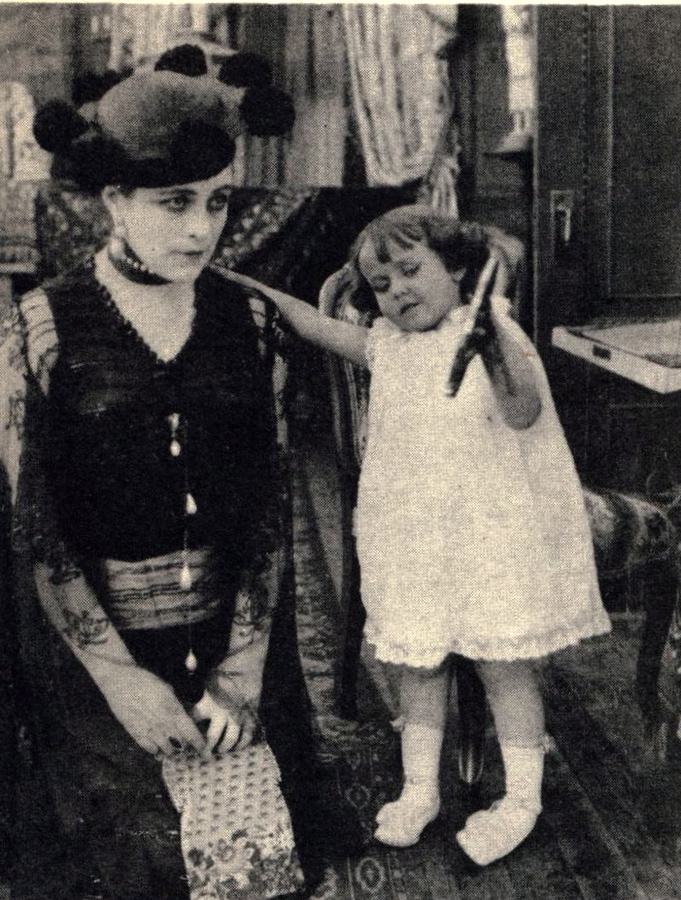
Syd Rolfe’s Moora Neya—barely a reel and a half surviving in the National Film and Sound Archive’s climate-sealed vault—unspools like a scorched love letter to a country that was still inventing its own mythology. Shot on the parched flats outside Dubbo in late 1910, when cameras were hand-cranked and actors shipped from Sydney on bone-shaking trains, the film should by rights have evaporated into the same dust that swallows its characters. Instead, what remains is a fever dream of silhouettes against magnesium flares, a morality tale told in shadows and spearheads, as if someone had grafted a nickelodeon onto the hide of an unquiet continent.
There is no prologue, no title card coy with exposition—the screen simply ignites with Harry Earl (Charles Villiers) cantering behind a mob of bleating merinos, his jawline cleaved by horizon light. Villiers, a stage matinee idol whose career would nose-dive into obscurity within five years, here possesses the economy of gesture that silent cinema demands: every clench of shoulder muscle speaks the language of reined-in desire. Earl’s gaze keeps snagging on Ethel Phillips, playing the station owner’s daughter with a mix of Edwardian corsetry and rawboned colonial grit. Phillips has the era’s fashionably tiny waist, yes, but also the sunburnt forearms of a woman who can knot a fencing wire or haul a billycan without summoning a groom.
Enter Stanley Walpole as the manager, a man whose waxed moustache alone ought to forewarn felony. Walpole chews the Outback scenery—literally, at one point gnawing a twig while propositioning Phillips beside a windmill—but the performance works because the character’s venality is so banal. He offers her the managerial homestead’s moth-eaten chaise longue as though it were a throne. She recoils; Earl, happening past, intercedes. The ensuing fistfight is a ballet of blurred limbs and rising red dust, filmed in one unbroken take that positions us inside the corral, horses bucking, hoof-clods flung like dark stars. The camera does not cut; it pans with the violence, a primitive but visceral equivalent of modern Steadicam chaos, leaving the viewer winded and speckled in grit.
Manager vanquished, narrative logic dictates exile. Yet Rolfe—newspaperman turned scenarist—introduces a second antagonist: the overseer, a half-lit reptile who slithers to the camp of local Aboriginal men. Historians have argued the casting here: were these men local Wiradjuri hired as extras, or indigenous stockboys already in the station’s employ? Archive payroll sheets list first names only—“Jacky”, “Mick”, “Billy”—for a shilling a day, less than the horses earned. What matters onscreen is the negotiation: tobacco plugs, a flask of rum, and a promise of blankets for “one white hide”. Cinematic imperialism, blunt and transactional.
And then the pivot, the moment that catapults Moora Neya from mere melodrama into something approaching national scripture. One of the trackers—played by an actor whose face the intertitles never name—removes a spear, squats by the fire, and scrapes the tip. Instead of preparing for murder, he incises symbols: concentric circles, a kangaroo track, the sinuous line of a river. Rolfe intercuts this with the station men at dusk, banjo plucks and stew smoke, oblivious. The spear, hurled at dawn, lands not in flesh but upright in the homestead’s veranda post: a telegram older than Morse. The Aboriginal man has weaponised message-stick tradition within the coloniser’s medium—celluloid. It is the first time Australian cinema allows an indigenous character not only agency but moral ascendancy.
Cinematographer Bert Ive, later celebrated for his ANZAC documentaries, here experiments with orthochromatic stock that renders the sky a slab of chalk and faces lunar. The effect is alienating, as though the landscape itself refuses pastoral prettiness. Note the sequence where Earl gallops to warn the station: Ive positions the camera in a gully so rider and horizon tilt thirty degrees, a diagonal that anticipates German expressionism by a decade. Dust clouds become nebulae; gum trees claw black against white heat. The only relief is the intermittent splash of yellow—Phillips’ cotton dress, the manager’s cravat—like caution paint on machinery.
Intertitles, hand-lettered and soaked in tea for sepia tone, eschew exposition for gnomic poetry: “The spear speaks when lips are bought.” Each card lingers long enough for the audience to absorb the cadence, a strategy borrowed from lantern-slide sermons. The scarcity of dialogue cards (only eleven in the surviving print) forces the visuals to shoulder narrative weight, a choice that makes Moora Neya feel closer to The Corbett-Fitzsimmons Fight’s observational candour than to the stage-bound tableaux of contemporaries like Life and Passion of Christ.
Charles Villiers’ Earl predates the laconic bushman archetype codified by Chips Rafferty decades later. His is a more Victorian hero—straight spine, clenched jaw—yet Villiers lets tremors of doubt ripple through: a quick swallow, eyes that slide away from Phillips when she thanks him, as if heroism were a garment still itching at the collar. Ethel Phillips matches him scene for scene; her close-up beside the creek, washing blood from Earl’s shirt, is a masterclass in micro-emotion—lips parted just enough to suggest both gratitude and the dawning awareness that desire in this land exacts blood. The pair’s chemistry ignites not in clinches but in glances ricocheting off rifle barrels and stirrup irons.
And then there is the nameless Aboriginal messenger. Without a single intertitle he rivets attention: the deliberateness of his carving, the upward flick of his eyes when the overseer’s back turns, the almost languid grace with which he releases the spear. In 1911 Australia, where the White Australia policy calcified prejudice, granting such dignity to an indigenous character was near seditious. Modern academics hail the moment as proto-revisionist; contemporary press clippings praised “the noble savage’s loyalty to his white mates,” misreading subversion as subservience. Yet onscreen the gaze is unambiguously his; we witness moral choice, not servitude.
Federation had birthed the Commonwealth only a decade earlier; the nation was busy welding disparate colonies into a single mythos. Moora Neya partakes of that project—white labourer rescues white damsel—yet simultaneously fractures it. The spear, Aboriginal technology, outperforms both revolver and legal writ. The film’s resolution sees Earl survive, but only because an Indigenous man elected to transgress the very labour contract demanded by empire. Thus the narrative slyly undercuts the triumphalism it pretends to uphold, much as The Squatter’s Daughter would later question squattocracy entitlement.
Rolfe, son of a Ballarat goldfields policeman, grew up hearing tales of bushrangers and native trackers; his screenplay channels those campfire contradictions. The title itself is a linguistic mongrel—“moora” approximates “hand” in several Aboriginal languages, “neya” possibly pidgin for “message”—yet no scholar attests to authentic provenance. It is settler cinema grasping for indigeneity, appropriating phonemes the way the station appropriates land. That uncomfortable etymology, though, only enriches the film’s frisson: the spear’s message is hybrid from birth.
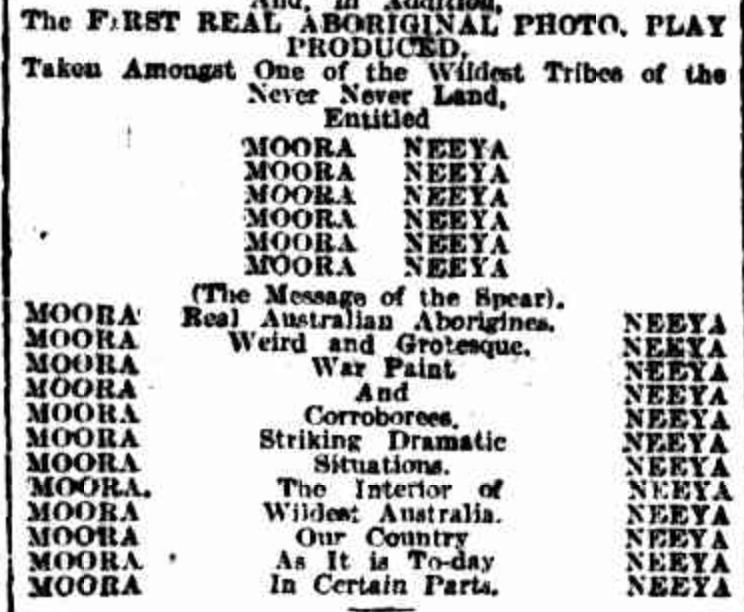
At twelve minutes, the extant print is a fragment; contemporary newspaper advertisements promise “a thrilling drama in two parts, approx. 3000 feet.” What survives is likely the climax. Yet even truncated, the editing patterns astound. Rolfe employs cross-cutting between homestead, bush camp, and lone rider—an embryonic Griffithian race-to-the-rescue—yet withholds the payoff shot. We never see the spear actually thrown; instead, Ive’s camera tilts up to a blood-red dawn sky, then smash-cuts to the shaft quivering in wood. The elision creates an almost Hitchcockian suspense: danger exists in the anticipation, not the impact.
Compare this to the linear fisticuffs of Jeffries-Sharkey Contest or the tableau vivant of 69th Regiment Passing in Review; Moora Neya opts for narrative compression that anticipates the muscular montage of The Story of the Kelly Gang. The Outback, usually photographed as postcard expanse, becomes claustrophobic—every gum trunk a potential assassin, every silence pregnant with hoofbeats.
No original score survives; exhibitors presumably relied on house pianists improvising “bush ballads.” Contemporary reviewers mention a popular tune, “The Stockman’s Last Bed,” played during the manager’s comeuppance. Modern restorations commissioned by NFSA paired the footage with Paul Stanhope’s string quartet, whose grinding double-stops evoke heat mirage. Whether jaunty 1911 parlour songs or Stanhope’s dissonance, the absence of diegetic sound allows ambient cinema to breathe: the creak of leather, the rustle of scrub, imagined but vivid.
The Sydney Evening News, 17 March 1911, declared it “a picture that beats the Yankees at their own game of thrilling.” Box-office figures, scanty as they are, suggest strong regional earnings; a Wagga Wagga exhibitor reported “crowds turned away.” Yet within two years the film vanished, eclipsed by boxing pictures like The Joe Gans-Battling Nelson Fight and religious pageants such as The Life of Moses. Australia, intoxicated by modernity, shelved its own fledgling mythology.
In 1973, the Sydney Film Festival screened a dupe print; critic David Stratton hailed “a radical empathy almost unimaginable in 1911.” Anthology curators began inserting Moora Neya into global-silent retrositals alongside canonical works like Dante’s Inferno. Feminist scholars reclaimed Phillips’ performance as proto-Outback heroine, neither femme fatale nor helpless maid. Post-colonial readings, meanwhile, focus on the spear as semiotic resistance; the film becomes a palimpsest where dominant narrative and subaltern counter-discourse bleed into each other.
Imagine an alternate history where Rolfe’s gamble—indigenous hero within white genre—becomes template rather than anomaly. Australian screen stories might have sidestepped decades of black-clown stereotypes, embracing complex First Nations protagonists long before Walkabout or Samson and Delilah. Instead, Moora Neya stands as solitary sentinel, its spear cast forward across a century to impale our conscience.
Is Moora Neya a masterpiece? In its incomplete form, masterpiece feels grandiose. Yet the surviving fragments thrum with a tension that blockbuster reconstructions rarely achieve. It is a hinge film: colonial yet anti-imperial, silent yet loquacious, racist yet insurgent. For cinephiles, historians, or anyone curious how white settler anxieties collided with Aboriginal presence at the very birth of Australian moving images, the twelve priceless minutes blaze like a signal fire. Seek them out; let the spear speak.
— Reviewed by Celluloid Bushranger, NFSA accredited preservationist and host of the podcast Shadows at 16fps
Community
Log in to comment.