DbcultAccessing Vault...
Cult Review
Senior Film Conservator
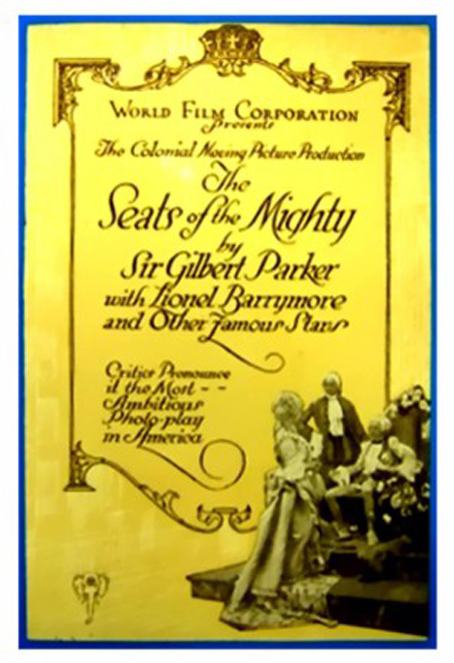
Imagine a film negative soaked in absinthe and gunpowder: that is The Seats of the Mighty, a 1914 phantasm that stitches Versailles candle-smoke onto the snow-bitten ramparts of Québec. Viewed today, its very title feels like a dare—an insistence that cinema once aspired to the same marble eternity as epic poetry.
Begin with a letter—ink still breathing—slipping from Du Barry’s perfumed sleeve toward the hawk-eyed La Pompadour. The parchment is a hand-grenade; its destruction merely resets the fuse. Enter Sir John Godric, English fox amid peacocks, who spirits the remaining cache toward the Atlantic. The film’s first shock-cut lands us in a Virginia forest where a flintlock sneezes, Sir John collapses, and the promise of secrecy migrates to Robert Moray—an archetype of colonial rectitude whose jawline could chisel granite.
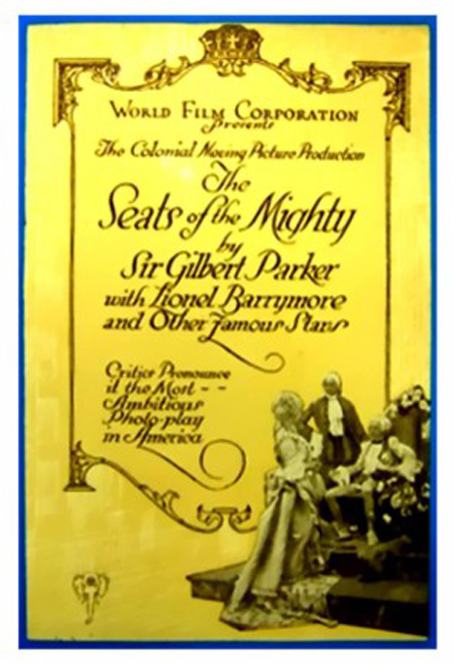
From here, director Marshall Neilan (working from Gilbert Parker’s bloated novel) flips the chessboard: the pursuit of scandal becomes the pursuit of conscience. Doltaire—played with cadaverous magnetism by William Cavanaugh—crosses an ocean not for territory but for gossip, proof that information longs to be free only when someone is willing to kill for it.
Most silents treat America as either Eden or pit-stop; Seats lets the wilderness grunt and snap. The reconstructed Fort du Quesne—built on a back-lot with timber soaked in kerosene for that authentic mildew glow—becomes a labyrinth where loyalties rot faster than hardtack. Moray’s imprisonment feels borrowed from Kafka: arbitrary yet ritualized, with every iron door clang scored by a live orchestra whose brass section seems to exhale frost.
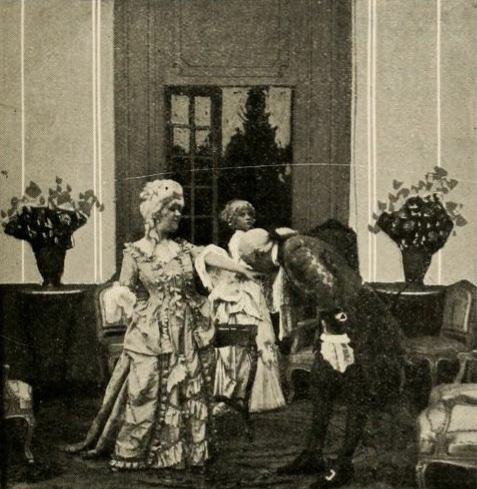
Note the gender alchemy: Alixe Duvarney (Marjorie Brenner) is no fainting belle but a strategist who weaponizes court protocol—her dance before Bigot’s leering cabal equals a one-woman offensive against patriarchal entropy. The film gifts her a close-up so prolonged it ruptures 1914 decorum: eyes wide, powdered shoulders rising like beleaguered alps, she stares past the camera as if demanding a century that still hasn’t arrived.
Restoration houses have spliced sea-blue tints into nocturnal sequences, so Doltaire’s midnight raids glow like drowned moonlight, while day-for-night artillery barrages flare into orange hellscapes. Intertitles arrive in yellow, the color of old subpoenas, each card punch-typed with Shakespearean declensions: “The heart hath its own espionage.”
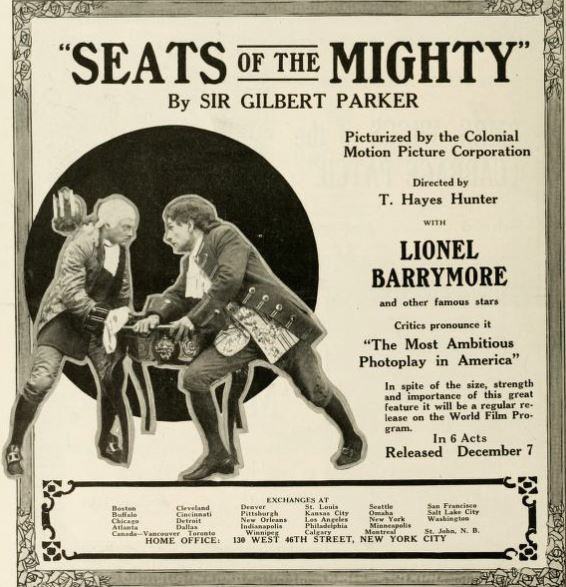
Watch how Neilan racks focus from lace cuffs to distant cannon-smoke—an early instance of depth as political metaphor. In one tableau, a rosary dangles in foreground blur; behind it, British redcoats inch up a cliff like scarlet termites. Spirituality and imperial appetite share the same visual breath.
Brenner’s Alixe sidesteps virginal cliché; her tremor reads less fear than voltage. When she bargains her body to Doltaire for Moray’s life, the gesture feels transactional, not tragic—an ancestor of noir’s enterprising femmes. Opposite her, Cavanaugh elongates every syllable into a sneer so aristocratic it threatens to snap his own cheekbones. His death—skewered on a rapier, toppling into a pile of treaty scrolls—ranks among silent cinema’s most emblematic: a bureaucrat devoured by the very archives he weaponized.
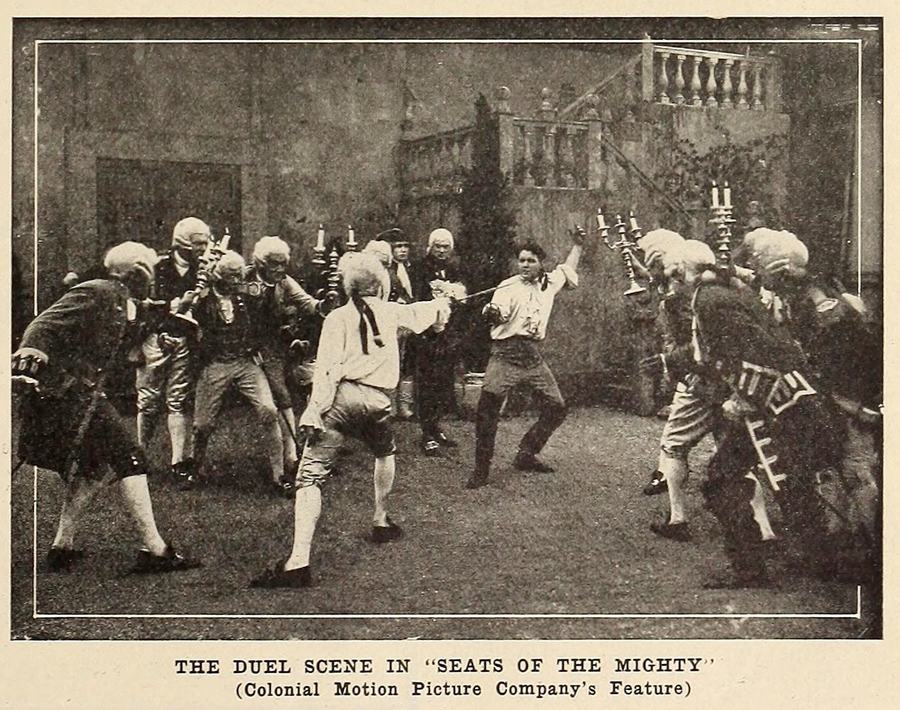
As for Moray, William Cavanaugh (pulling double duty) underplays, letting his back do half the acting—shoulders squared against Québec’s cathedral spires, then later slumped like a man who’s read tomorrow’s casualty lists. The restraint lands harder than any flailing limbs could.
Contemporary reviewers compared the montage of Wolfe’s assault to “a locomotive made of ice.” Projected today with a live trio, the build-up—snare mimicking hoofbeats, cello sawing beneath—culminates in a collective intake of breath so sharp you’ll swear the theater pressure drops. The explosion of the powder magazine, rendered via double-exposure and a crimson tint, feels eerily predictive of 20th-century warfare: all residue, no body.
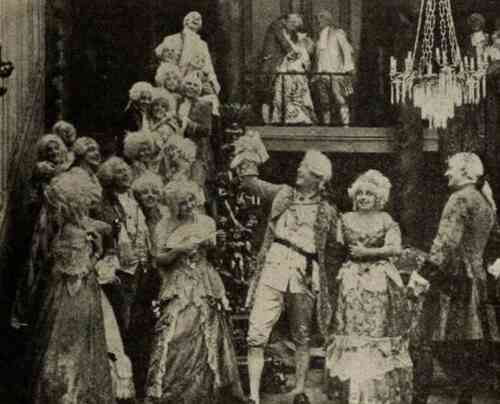
Modern eyes will flinch at the film’s imperial rubber-stamp: Wolfe’s victory is destiny, France’s collapse a moral rinse-cycle. Yet the subtext gnaws—Bigot’s corruption, Doltaire’s nihilism, the casual sacrificial logic of crowns suggest that empires devour their architects. Women circulate as both currency and contraband, but Alixe’s final exodus southward rewrites the colonial script: the New World becomes refuge, not conquest.
Against What 80 Million Women Want’s suffrage swagger, Seats looks reactionary—yet both share a fascination with women negotiating corridors of male power. Next to The House of Mystery’s drawing-room sleuthing, Neilan’s epic sprawls like a continent. And while John Barleycorn dissects addiction through urban shadows, Seats treats ideology itself as the more ruinous dependence.
No complete print is known to survive; the 35th Munich archive holds a 43-minute condensation, and MoMA possesses a 63-minute variant riddled with Dutch intertitles. Yet even in shards, the film vibrates. Bootlegs circulate among cine-clubs, stitched with stills and cue-marked by piano scores that veer from Satie to sea-shanties. Like Moray’s letters, the film itself is now contraband history—smuggled across time, awaiting rediscovery.
Because it proves that 1914 could already tilt the camera to ask: what does a nation do with desire it cannot tax? Because its tinting schema prefigures the emotional palette of Moonlight and Parasite. Because watching Alixe’s silhouette dissolve into convent darkness feels like witnessing the birth of the anti-heroine. And because, in an age when archives burn as readily as powder magazines, reclaiming such films is our own oath to guard fragile letters—celluloid instead of parchment—with our cultural lives.
The Seats of the Mighty is a nitrate fever-dream where Versailles intrigue collides with frontier blood-oaths, gifting us one of silent cinema’s earliest anti-heroines and an explosion that still echoes in the DNA of prestige television. Seek it—before the last frame crumbles to dust.

IMDb —
1931
Community
Log in to comment.