DbcultAccessing Vault...
7/10
Senior Film Conservator
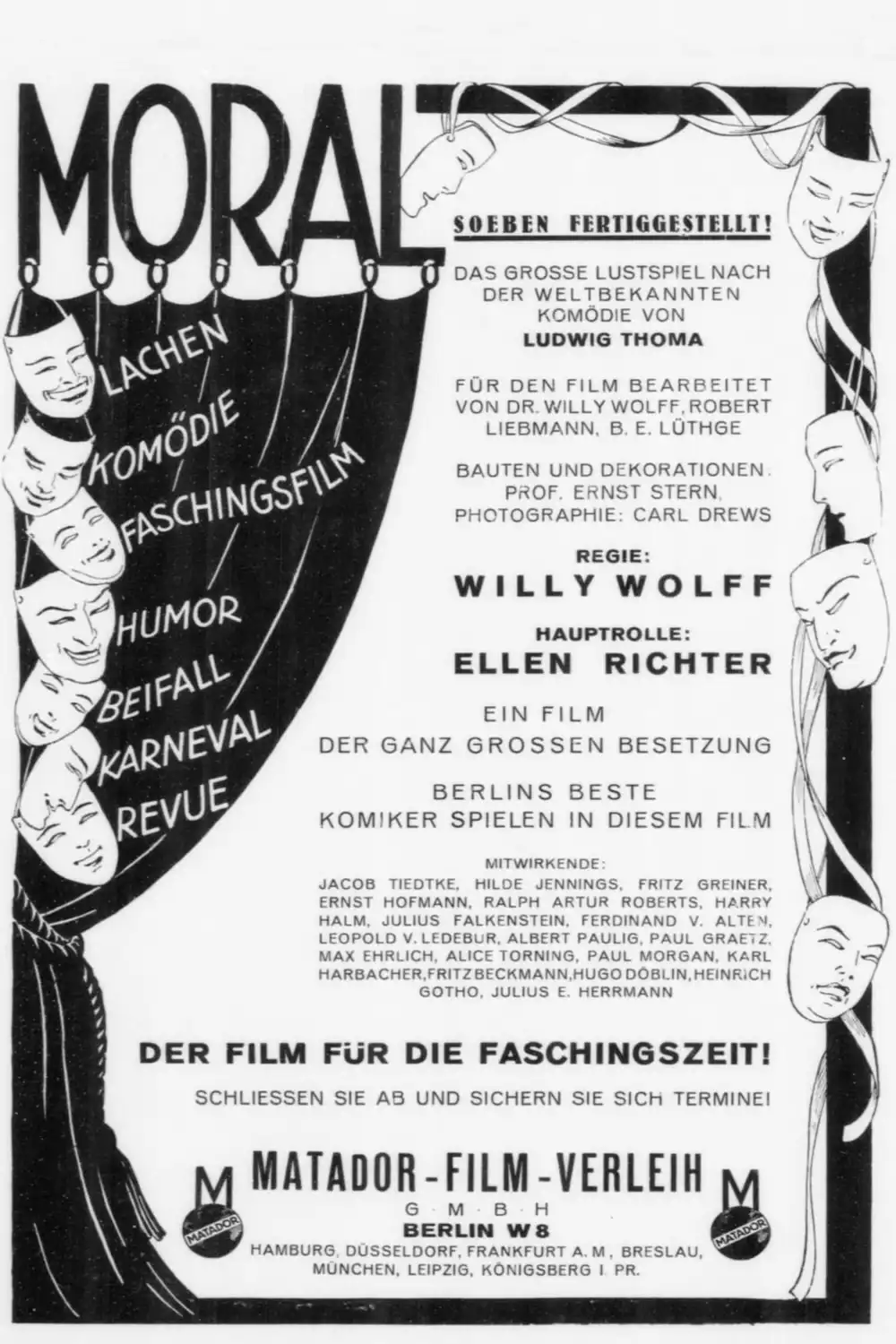
A definitive 7/10 rating for a film that redefined the boundaries of cult cinema. Moral remains a cornerstone of transgressive art.
"Moral," this little silent film from way back, is one of those unexpected watches. If you're someone who usually skips anything without dialogue, you'll probably find it a slog. But if you have even a passing interest in early cinema, or just a soft spot for social satire that hasn't aged too badly, it's actually got some genuine laughs and a surprising bite. It's definitely not for everyone, but for a certain kind of film enthusiast, it's absolutely worth digging up.
The premise is simple enough: an entertainer, dressed in what I assume was considered rather risqué for the time, gets condemned by the local morality committee in Emilsberg. Her response? To turn the tables by secretly filming them when they come to confront her in private. This is where the film really shines, or at least, where its intentions become crystal clear.
The initial scenes, establishing the "scandal," are a bit of a mixed bag. The stage performance itself is fairly tame by modern standards, of course, but you can feel the film trying to sell the idea that this is outrageous. The close-ups on the shocked faces in the audience are a little too on-the-nose, almost winking at us. It's hard to tell if this is a genuine attempt at portraying moral outrage or already part of the satire.
Then we meet the committee. And oh boy, are they a collection. Ernst Hofmann, as the main target, carries himself with this puffed-up self-importance that's almost painful to watch. His expressions are a masterclass in silent film overacting, but in a way that perfectly serves the caricature. There's a scene where he's adjusting his spectacles, peering around the entertainer's lavish apartment, and you can practically hear his internal monologue about depravity. It's great.
The contrast between the "scandalous" entertainer, who seems quite composed and intelligent, and the bumbling, hypocritical committee is the engine of the film. The entertainer, played by Hilde Jennings, has this quiet confidence. She doesn't have to do much; her presence alone often undercuts the committee's bluster. Her costumes, too, are interesting. They're clearly designed to be provocative but in a very elegant, almost understated way for the era, making the committee's reactions seem even more absurd.
The actual "filming" sequence is the highlight. It's a bit clunky, as you'd expect from the technology of the time, but the tension builds nicely. The committee members, thinking they're in a private setting, start to reveal their true colors. One guy keeps trying to flirt, another is clearly more interested in the free drinks than the moral crusade. The director really leans into the visual comedy here. There's a shot of one committee member trying to sneak a piece of cake while pretending to be indignant, and it just lands perfectly.
The visual gags are really the backbone here. There’s a beautiful moment when one of the committee members, trying to look stern, accidentally knocks over a small decorative vase, and the quick glance he gives to see if anyone noticed is just perfect. It’s these tiny, almost throwaway moments that really make you feel like the director, Willi Wolff, understood the assignment. He wasn’t just trying to tell a story; he was trying to make you feel the absurdity of these men.
Where the film occasionally falters is in its pacing. Some of the scenes with the committee deliberating feel a little drawn out. You get the point pretty quickly – they're hypocrites – and then the film just keeps circling it for a few more minutes. It’s not terrible, but you can feel the energy dip a bit before the next comedic beat. There's a particular sequence of cross-cutting between the committee's stern pronouncements and the entertainer's sly preparations that goes on just a touch too long. The payoff is good, but getting there feels like a slight test of patience.
Another thing that stuck with me was the way the film uses interiors. The entertainer's apartment is all plush velvet and soft lighting, suggesting a certain kind of bohemian luxury. Then you cut to the committee's meeting room, which is stark, functional, almost Puritanical in its plainness. It’s a simple visual contrast, but it hammers home the clash of values without a single intertitle needing to spell it out. The costumes, too, play into this. The men in their stiff collars and dark suits, almost indistinguishable from each other, versus Jennings’ character who often wears flowing, lighter fabrics that seem to move with her. It’s not just about modesty; it’s about freedom versus constraint.
The film's humor, for the most part, holds up. It’s not laugh-out-loud slapstick, but more of a knowing chuckle. The kind of humor that makes you lean forward slightly, appreciating the cleverness of the setup. The biggest challenge for a modern viewer, honestly, isn't the lack of sound, but sometimes the sheer earnestness of the moral outrage being depicted. It takes a moment to adjust to a time when a stage act could genuinely ignite such public fury. You almost have to put yourself in the mindset of the 1920s audience to fully grasp the stakes, even if the film itself is clearly satirizing them.
The ending, where the footage is revealed, is satisfying, if a little predictable. It’s not a grand, revolutionary statement, but more of a gentle, knowing nod. The crowd scenes at the reveal are interesting; they don't feel entirely natural. It's like the extras were told "look shocked/amused" and then just did that for a minute straight. There's a slight artificiality to it that pulls you out just a tiny bit. The committee members squirm, the public titters, and the entertainer gets her quiet victory. It avoids becoming too preachy or too dramatic, which I actually appreciated. It keeps the tone consistent, maintaining that slightly arch, satirical distance rather than suddenly shifting into a grand moral triumph. It’s less about a revolution and more about a quiet, well-deserved comeuppance.
But overall, "Moral" manages to poke fun at hypocrisy with a surprising amount of charm. It’s a snapshot of a particular time and a particular kind of social commentary. You won't find deep philosophical insights here, and the technical aspects are, well, of their time. But for a quick trip back to an era where a little bit of leg showing could cause a town-wide scandal, and where cinema was just figuring out how to lampoon the establishment, it's a solid, often very funny watch. It's a reminder that some things, like self-important busybodies, never really change.
IMDb —
1918
Community
Log in to comment.