DbcultAccessing Vault...
3/10
Senior Film Conservator
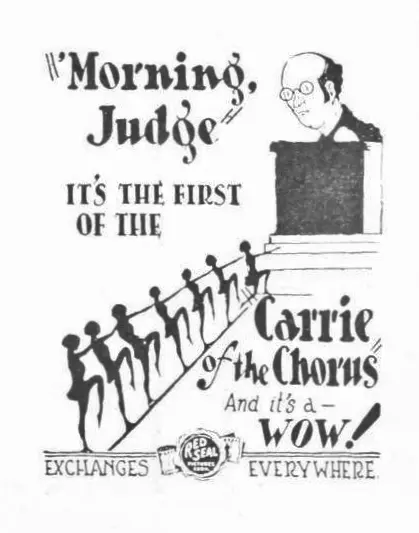
A definitive 3/10 rating for a film that redefined the boundaries of cult cinema. 'Morning, Judge remains a cornerstone of transgressive art.
Is 'Morning, Judge' a film worth dusting off today? For cinephiles, historians of early cinema, and those with a keen interest in the evolution of comedic sensibilities, the answer is a resounding 'yes,' albeit with a significant asterisk. However, if your cinematic palate demands modern pacing, complex narratives, or universally relatable humor, this early gem might test your patience.
This film is tailored for viewers who appreciate the historical context of moviemaking, the subtle nuances of silent-era acting, and a glimpse into the social anxieties of a bygone era. It is decidedly not for audiences seeking a fast-paced, laugh-out-loud comedy that adheres to contemporary storytelling conventions, nor for those who find the technical limitations of early film too distracting.
'Morning, Judge' emerges from a period when cinema was still finding its voice, often grappling with societal norms and burgeoning moral codes. The premise, centered around an 'indecent hula dance,' immediately transports us to an era where public performance, especially by women, was under intense scrutiny. It’s a fascinating cultural artifact, revealing more about the anxieties of its time than about the dance itself.
The film’s simple narrative acts as a window into the prevailing attitudes towards entertainment and morality in the early 20th century. What constituted 'indecent' then is often quaint now, creating an interesting, if unintentional, layer of meta-commentary for the modern viewer.
The true charm of 'Morning, Judge' lies not just in its humor, but in its accidental role as a cultural time capsule, preserving a snapshot of societal prudishness.
The tension between the free-spirited chorus girls and the rigid small-town justice system forms the comedic backbone. It’s a classic fish-out-of-water scenario, amplified by the stark contrast between urban performativity and rural conservatism.
Short answer: yes, but with a specific lens. This film offers a unique historical perspective that transcends its simple plot. It's a testament to the power of early character acting and the foundational elements of screen comedy.
This film works because of its historical significance and the surprisingly enduring charm of its lead, Peggy Shaw. Her performance as Carrie provides a focal point of charisma and subtle rebellion against the era's restrictive social codes. It’s a compelling example of how a strong central performance can elevate even the most straightforward of narratives.
This film fails because its pacing can feel sluggish to a modern audience, and its humor, while historically interesting, often relies on tropes that have long since been refined or discarded. The narrative lacks the intricate layering that later comedic films would develop, making it a test of patience for those unaccustomed to the rhythms of early cinema.
You should watch it if you have a genuine interest in the evolution of film comedy, appreciate the art of silent acting, or enjoy exploring social history through the lens of popular entertainment. It’s a valuable piece for understanding cinematic origins.
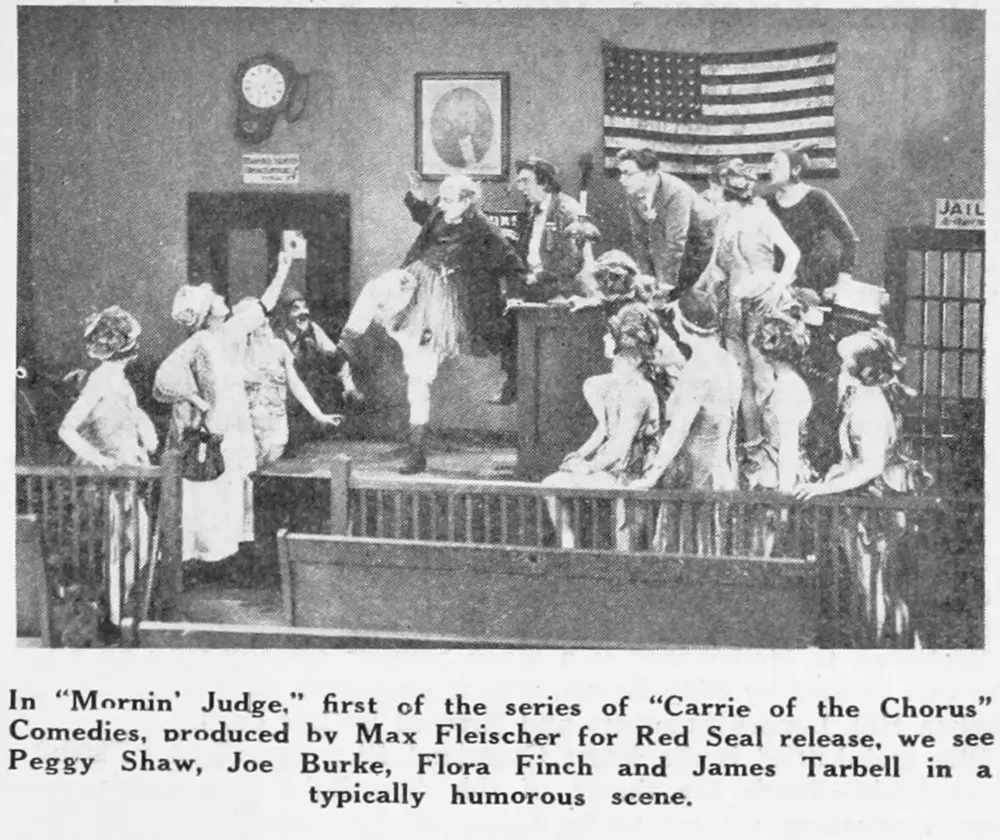
Peggy Shaw, as Carrie, is undoubtedly the film’s magnetic center. Her portrayal is a masterclass in silent-era charm, using expressive glances, a playful smirk, and subtle body language to convey a character far more complex than the script might suggest. When she engages with the judge, her eyes sparkle with an almost conspiratorial wit, suggesting an intelligence that goes beyond mere flirtation.
Shaw manages to imbue Carrie with a delightful blend of innocence and cunning. There's a particular moment in the courtroom where, instead of overtly pleading, she simply holds the judge's gaze, allowing a small, knowing smile to spread across her face. This silent interaction speaks volumes, effectively selling the film's central premise without a single intertitle card.
In contrast, the supporting cast, including J.E. Poole as the judge, often lean into broader caricature. Poole's judge is a figure of stern, almost comically rigid, authority, whose eventual thawing is played for broad laughs rather than nuanced character development. This contrast highlights Shaw's ability to transcend the more simplistic acting styles common at the time.
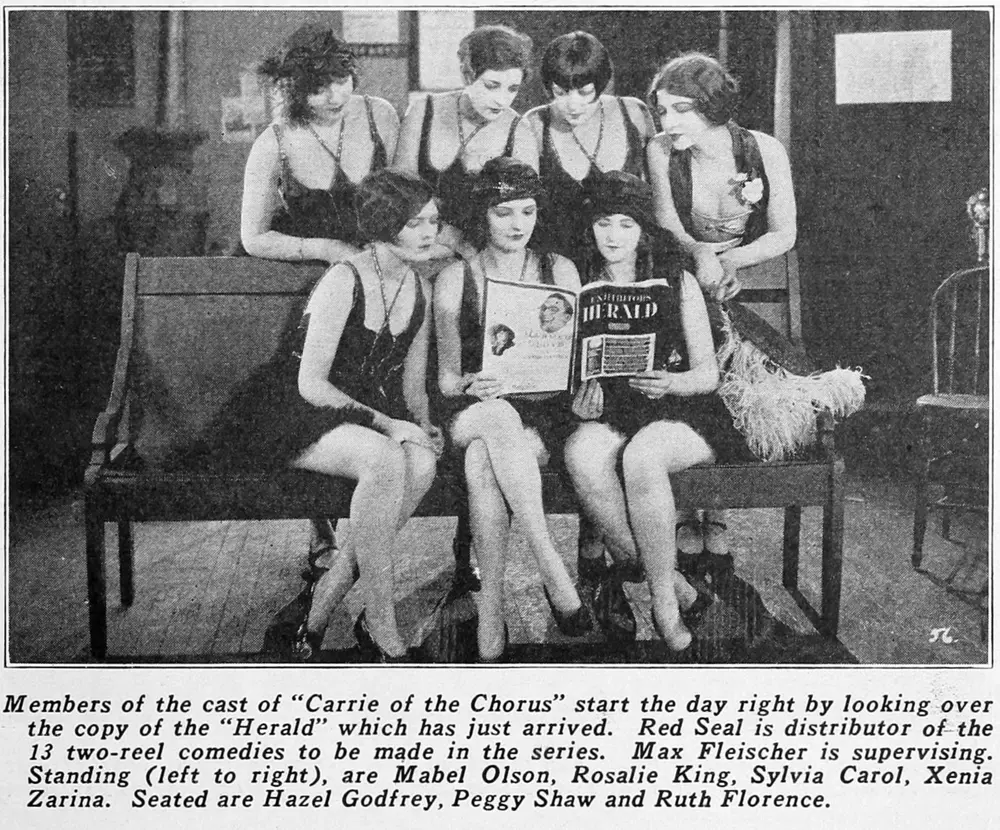
The chorus girls, while serving their plot function, are largely indistinguishable, acting more as a collective unit to emphasize Carrie's leadership. Their synchronized reactions to their predicament, though brief, add to the comedic effect of their 'unruly' presence in a conservative setting.
Flora Finch, a known comedic actress of the era, makes an appearance, though her role is relatively minor. Even in a small capacity, her distinctive, often eccentric, screen presence is noticeable, adding a touch of familiar character acting for those versed in silent film history.
The direction in 'Morning, Judge' is straightforward, typical of its period. Scenes are often framed in static, medium shots, allowing the actors' performances to dictate the energy. There's a noticeable lack of rapid-fire editing or elaborate camera movements that would become staples of later cinema. This simplicity, however, forces the viewer to focus intently on the expressions and actions within the frame.
The pacing, by modern standards, is undeniably slow. The narrative unfolds deliberately, with moments that might feel prolonged. For instance, the initial arrest scene, while setting up the conflict, takes its time to establish the girls' predicament and the sternness of the local law enforcement. This unhurried approach can be challenging for contemporary audiences accustomed to faster cuts and more dynamic storytelling.
One could argue that the slow pace is not a flaw, but a feature, inviting a meditative viewing experience that allows for deeper appreciation of the period's cinematic language.
However, this deliberate pacing also allows certain comedic beats to land with greater impact. The gradual transformation of the judge, from a stern figure to one susceptible to Carrie's charms, is a slow burn that benefits from the extended screen time dedicated to their interactions. It's a testament to the idea that sometimes, less frenetic action can lead to more impactful character moments.
Comparing it to more frantic comedies of the era, such as some of the early Keystone productions, 'Morning, Judge' feels more like a gentle drawing-room comedy translated to the screen, focusing on character interaction over physical gags. This places it closer in spirit to films like Are Parents People? in its reliance on social situations for humor.
The cinematography in 'Morning, Judge' is functional rather than flashy. Lighting is generally even, aiming for clarity over dramatic effect. There are few, if any, experimental shots or complex compositions. The camera acts mostly as a static observer, capturing the scene as if it were a stage play. This is not a criticism, but an observation of the prevalent style of the time.
Close-ups are used sparingly, primarily to emphasize key emotional reactions, particularly from Carrie or the judge. When a close-up does occur, it serves to punctuate a moment of realization or charm, drawing the viewer into the character's internal world, however briefly depicted.
The tone of the film is overwhelmingly lighthearted and comedic, despite the initial premise of an arrest. There's never a genuine sense of threat or severe consequence. The 'indecency' of the hula is played for laughs, a contrivance to set up the central conflict rather than a serious moral condemnation. This keeps the film breezy and accessible.
It's a film that winks at its audience, inviting them to chuckle at the absurdity of the situation and the predictable, yet satisfying, outcome. The humor is largely situational and character-driven, relying on the clash of personalities and the subversion of expectations regarding authority.
Frankly, the 'indecent' hula itself is so tame by modern standards that its scandalous nature becomes the film's most amusing, and perhaps most dated, aspect. This incongruity inadvertently highlights the dramatic shift in societal perceptions of modesty and performance over the past century. It makes the film a fascinating study in historical context, even if the humor itself doesn't always translate.
I'd argue that 'Morning, Judge' isn't just a simple comedy; it's a subtle, almost accidental, commentary on the performative nature of justice itself. The judge isn't swayed by legal argument, but by a performance – Carrie's charm – suggesting that even in the courtroom, optics and personality can trump strict adherence to the law. This makes it far more interesting than a mere 'damsel in distress' narrative.
Furthermore, one could contend that the film, despite its brevity and simplicity, possesses a proto-feminist undercurrent. Carrie, a woman, uses her intelligence and agency, albeit through charm, to navigate and ultimately outwit a patriarchal system. She isn't a victim; she's a strategist. It's subtle, but it's there.
It works. But it’s flawed. The film's greatest strength, Peggy Shaw, is also its biggest distraction from the often-thin plot. Without her, it might be entirely forgettable, a mere historical footnote. With her, it's a minor, charming curiosity.
'Morning, Judge' is more than just a forgotten film; it's a delightful, if dated, piece of cinematic history. It offers a clear window into the comedic sensibilities and social anxieties of the early 20th century, anchored by a truly engaging performance from Peggy Shaw. While its slow pace and simplistic humor might test the patience of some, its value as a historical artifact and a testament to early character acting is undeniable.
It’s a film that rewards a specific kind of viewer – one willing to engage with its historical context and appreciate its foundational role in the evolution of cinema. It won't be everyone's cup of tea, but for those who find joy in uncovering the roots of film, 'Morning, Judge' offers a charming, albeit brief, encounter with a bygone era of screen entertainment. Give it a watch if you're prepared to adjust your expectations and savor a piece of film history.
IMDb 6.2
1917
Community
Log in to comment.