DbcultAccessing Vault...
Cult Review
Senior Film Conservator
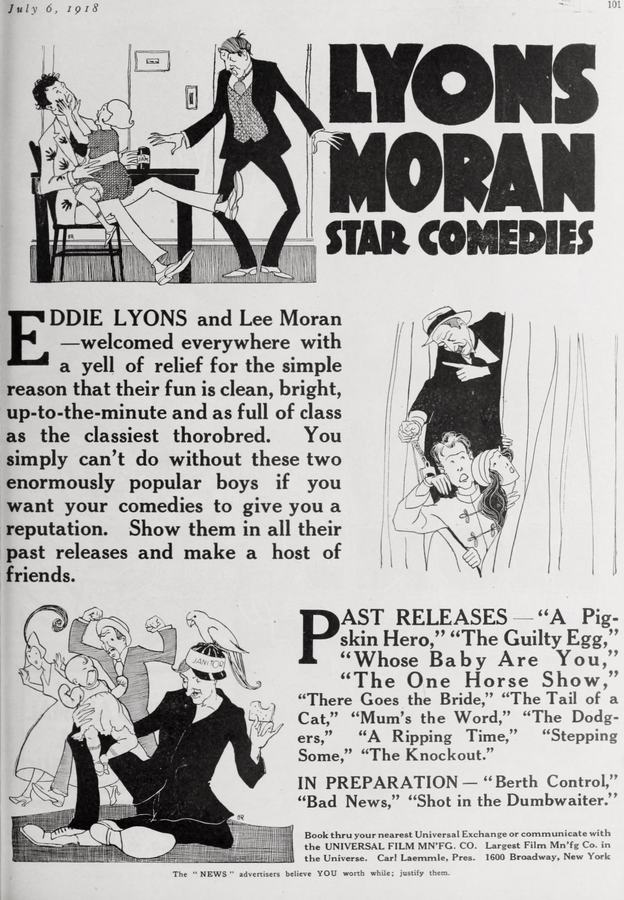
Ah, the silent era! A veritable goldmine of cinematic ingenuity, where expressive gestures and exaggerated pantomime conveyed narratives with a unique charm. Among the myriad offerings from this foundational period, a delightful little gem emerges: the 1915 film 'Berth Control'. This particular picture, a product of the prolific Universal Film Manufacturing Company, stands as a testament to the enduring appeal of slapstick, mistaken identity, and the sheer comedic prowess of its principal players. It's a film that, despite its century-old vintage, still manages to elicit chuckles and nods of appreciation for its clever, albeit uncomplicated, premise. For those accustomed to the intricate psychological thrillers of today, like perhaps Spellbound, the unadulterated simplicity of 'Berth Control' might seem almost quaint, yet it holds a profound mirror to the very origins of cinematic comedy, demonstrating that the universal language of laughter requires no dialogue, only well-timed antics and relatable predicaments.
The narrative thrust of 'Berth Control' begins, as many good comedies do, with a joyous occasion quickly descending into delightful disarray. We are introduced to Eddie, played with characteristic verve by Eddie Lyons, and his radiant, if somewhat beleaguered, bride, portrayed by the graceful Gladys Tennyson. Their initial challenge? Escaping the enthusiastic, perhaps even aggressive, hazing ritual traditionally inflicted upon newlyweds by their merry band of wedding guests. This opening sequence, while brief, immediately sets a tone of playful chaos, a precursor to the larger comedic storm brewing just over the horizon. One can almost feel the frantic energy as the couple attempts to slip away, their joy tinged with the slight exasperation of those attempting to maintain decorum amidst spirited revelry. It's a universal moment, easily understood even without spoken words, a testament to the craft of early silent film acting.
However, their brief respite is shattered by the arrival of Lee, the local law enforcement officer, brilliantly embodied by Lee Moran. Moran, a veteran of countless shorts and a co-writer on this very project, brings a particular brand of bumbling authority to his role. Lee isn't malicious; he's simply, well, a bit slow on the uptake, a classic comedic archetype. His motivation stems from a seemingly legitimate, though ultimately fraudulent, telegram. This wire, a cruel prank orchestrated by Eddie's 'friends,' announces a tantalizing $1,000 reward for the capture of Eddie, falsely labeling him a dangerous criminal. The sheer absurdity of the premise — a newlywed groom mistaken for a hardened felon — is where the film truly begins to flex its comedic muscles. It’s a trope that, while simple, provides an inexhaustible wellspring of gags, much like the exaggerated misunderstandings that drive other period comedies such as The Midnight Patrol, which often capitalized on the inherent humor of law enforcement's often-flawed pursuit of justice.
Lee, with his unwavering commitment to duty (and perhaps the allure of that thousand-dollar reward), swiftly locates Eddie on a quiet trail. In a move that epitomizes the film's farcical spirit, he handcuffs himself to the bewildered groom. This physical bond creates an immediate visual gag, forcing the two characters into an unwilling, often awkward, proximity that fuels much of the subsequent humor. The image of the earnest, slightly oafish detective tethered to the increasingly exasperated groom is a masterclass in silent comedy staging. The ensuing sequence sees Lee, in a moment of misplaced trust or perhaps sheer dimwittedness, temporarily release Eddie so the latter can send a telegram to his friends, presumably to clarify the egregious misunderstanding. This decision, predictably, backfires. Eddie, caught between the urgency of his situation and the logistical challenges of early 20th-century communication, misses his train. The plot, like a runaway locomotive, gains momentum, propelling our protagonist into ever more ludicrous circumstances.
The next major beat involves Eddie's frantic dash by taxi to the local jail. His destination isn't arbitrary; it's where Lee, having grown impatient or perhaps just following his own peculiar brand of deductive reasoning, has taken Eddie's bride as a substitute prisoner. This twist is pure comedic gold: the innocent bride, Gladys Tennyson, becomes collateral damage in a prank gone awry, embodying the often-unintended consequences of such elaborate jests. The absurdity of the situation peaks when Eddie arrives, only to find himself locked up alongside his wife. Their honeymoon suite, as it were, has been replaced by a communal cell, a truly memorable start to married life. The scene with them incarcerated together, no doubt exchanging exasperated glances, offers a quiet moment of character-driven humor amidst the broader slapstick. This kind of domestic chaos, albeit exaggerated, resonates even today, making the characters surprisingly relatable despite the outlandish premise. It's a delightful contrast to the more serious, often melodramatic narratives of the era, such as The Door Between or The Man Who Couldn't Beat God, which explored darker human experiences.
The resolution arrives, as it must, in the form of another telegram. This one, however, is genuine, dispatched by the practical jokers themselves, finally clarifying the misunderstanding and securing the couple's release. The film concludes with their freedom, presumably allowing them to finally embark on their much-delayed and undoubtedly unconventional honeymoon. It's a neat, satisfying wrap-up to a whirlwind of a plot, leaving the audience with a smile and a renewed appreciation for the innocent, yet potent, humor of the silent screen. This kind of narrative arc, where misunderstandings escalate to extreme levels before a simple truth restores order, is a staple of comedic writing, from early shorts to contemporary sitcoms.
The success of 'Berth Control' hinges almost entirely on the robust performances of its lead actors, particularly Eddie Lyons and Lee Moran. Both were seasoned professionals in the burgeoning film industry, adept at the highly physical and expressive acting style demanded by silent cinema. Eddie Lyons, who also served as one of the film's writers, injects Eddie with a frantic, almost manic energy. His exasperation is palpable, his attempts to reason with the bumbling detective both earnest and ultimately futile, contributing significantly to the film's comedic momentum. He is the audience's anchor in the escalating madness, reacting to each new absurdity with a heightened sense of bewilderment that is immensely entertaining.
Lee Moran, another credited writer alongside Leslie T. Peacocke, crafts a wonderfully memorable character in the hick detective, Lee. Moran's portrayal is a masterclass in understated buffoonery. He's not outright stupid, but rather possesses a single-minded, literal interpretation of his duties that blinds him to the obvious truth. His physical comedy, from the awkward handcuffing to his resolute, if misguided, actions, is meticulously timed. He embodies the classic 'straight man' gone wrong, an unwitting antagonist whose earnestness only amplifies the comedic effect. The dynamic between Lyons' frantic energy and Moran's stolid, oblivious determination is the engine that drives the film's humor, a classic comedic pairing that transcends the decades.
Gladys Tennyson, as the bride, provides a necessary grounding presence. While her role is less overtly comedic, her reactions to the unfolding pandemonium offer a relatable counterpoint to the male leads' antics. Her bewildered resignation in the jail cell is particularly effective, eliciting empathy while still contributing to the overall comedic tone. Edith Roberts also appears, though her specific role details in the surviving prints are less prominent, typical of ensemble casting in short films where the focus remains heavily on the primary comedic duo. The direction, likely a collaborative effort given Lyons and Moran's dual roles, is brisk and efficient, never lingering too long on any one gag but instead propelling the narrative forward with a consistent, energetic pace. This efficiency is crucial for a short film, ensuring that the comedic beats land quickly and effectively, preventing any lag that might diminish the overall impact.
'Berth Control' fits squarely within the tradition of early 20th-century farce, a genre characterized by exaggerated situations, mistaken identities, and rapid-fire comedic timing. It's a style of humor that relies less on character depth and more on the sheer absurdity of the circumstances, often pushing logic to its breaking point for the sake of a laugh. This film, like many of its contemporaries, leverages the visual storytelling capabilities of silent cinema to maximum effect. The physical gags, the exaggerated expressions, and the swift pacing are all hallmarks of a genre that was rapidly evolving and finding its voice. In this sense, it shares a lineage with other comedies of misunderstanding, where miscommunication and circumstance drive the plot, a theme also seen in films like Billy's Fortune, which often played on the misadventures of its protagonists through a series of escalating comedic errors.
What makes 'Berth Control' particularly charming is its focus on the 'practical joke gone wrong' trope. This narrative device, while simple, provides a relatable entry point for the audience. Who hasn't experienced or witnessed a prank that spiraled beyond its initial intent? The film exaggerates this to a delightful degree, turning a harmless jest into a full-blown legal entanglement. It’s a testament to the writers' understanding of human nature and the inherent humor in our collective foibles. The film doesn't delve into deep societal commentary, nor does it strive for the dramatic tension found in works like A Fool There Was, but rather revels in the pure, unadulterated joy of comedic escapism.
The choice of setting, a somewhat rural or small-town environment, further enhances the comedic effect. The 'hick detective' archetype, as embodied by Lee Moran, plays on prevailing stereotypes of rural simplicity versus urban sophistication, a common comedic contrast in the era. This allows for a certain naiveté in the character's actions to be believable within the film's own internal logic, making his earnest mistakes all the more amusing. The film's brief runtime, typical for a silent short, ensures that the humor never overstays its welcome, delivering its punchlines with admirable efficiency. Each gag builds upon the last, creating a cumulative effect that leaves the viewer thoroughly entertained. It's a brisk, energetic ride from start to finish.
Considering the technological limitations of 1915, the film's production values are commendable. The outdoor sequences feel authentic, and the interior sets, though simple, serve their purpose effectively. The editing is crisp, maintaining a steady rhythm that supports the comedic timing. The intertitles, which served as the dialogue and narrative exposition for silent films, are well-placed and concise, guiding the audience through the plot without bogging down the visual humor. This careful balance between visual storytelling and textual explanation is a hallmark of well-crafted silent cinema, ensuring accessibility for all viewers. The film also provides a fascinating glimpse into the social mores and communication methods of the time, from telegrams as primary long-distance communication to the accepted rituals of weddings. It's a time capsule, wrapped in laughter.
In an age where cinematic experiences are often defined by spectacle and intricate narratives, revisiting a film like 'Berth Control' serves as a refreshing reminder of the enduring power of simple, well-executed comedy. It's a testament to the foundational talents of actors like Eddie Lyons and Lee Moran, who not only performed but also contributed significantly to the creative direction and writing of their projects. Their ability to craft compelling and hilarious stories without the aid of spoken dialogue speaks volumes about their understanding of visual storytelling and human nature. This film, though a minor entry in the grand tapestry of film history, exemplifies the ingenuity and vibrancy of the silent era, proving that laughter is indeed timeless.
For modern audiences, 'Berth Control' offers more than just historical curiosity; it provides genuine amusement. It's a charming escapade, a lighthearted journey into a world where a simple prank can lead to handcuffs, missed trains, and an unexpected jail cell honeymoon. It reminds us that sometimes, the most complex human emotions can be conveyed through a raised eyebrow or a frantic dash, and that the universal language of humor needs no translation. Much like the journey depicted in Station Content, which explores the human experience through movement and place, 'Berth Control' traces a journey of comedic misadventure. It is, ultimately, a delightful piece of cinematic history, perfectly encapsulating the spirit of early film comedy. It's a film that, despite its age, still holds its own, proving that a good laugh, much like true love, can conquer all, even the most elaborate of practical jokes.
IMDb 3.6
1928
Community
Log in to comment.