DbcultAccessing Vault...
Cult Review
Senior Film Conservator
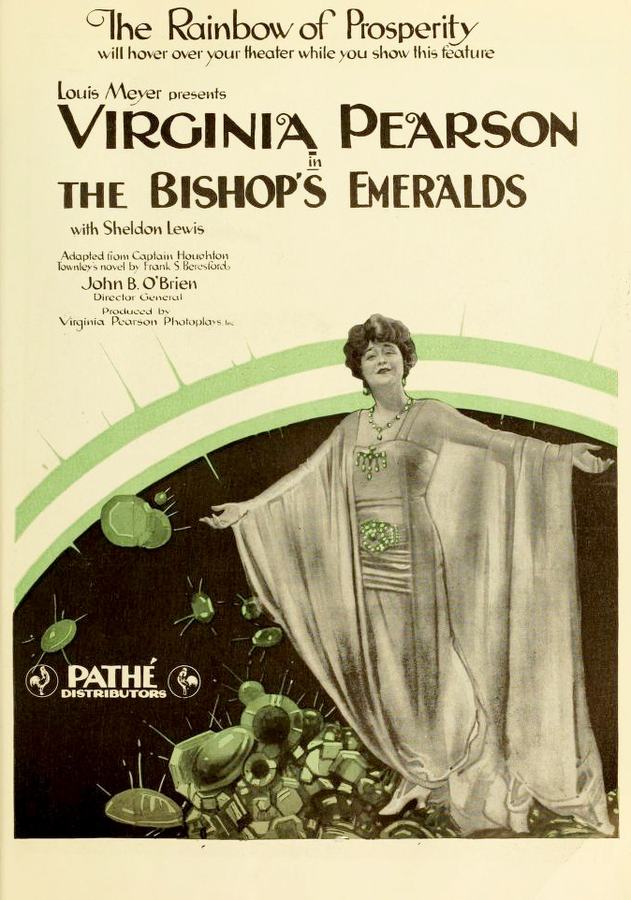
In the annals of cinematic history, certain films emerge not merely as entertainment, but as incisive social commentaries, peering beneath the polished surfaces of polite society to expose the intricate dance of deception and desire that often defines human interaction. Frank S. Beresford and Houghton Townley’s ‘The Bishop's Emeralds’ stands as a compelling testament to this tradition, a narrative tapestry woven with threads of forbidden love, familial secrets, and the relentless pressures of maintaining appearances in a world obsessed with status. This isn’t simply a romance; it’s a psychological drama cloaked in period finery, a meticulous dissection of how deeply buried truths can resurface with devastating consequences, threatening to unravel the very fabric of carefully constructed lives.
At its heart lies the seemingly idyllic romance between Mabel Bannister and Jack Cardew. Mabel, portrayed with an intriguing blend of vulnerability and quiet resilience by Lucy Fox, is an enigma – her charm undeniable, yet her background shrouded in a mystery that immediately raises the hackles of the established elite. Jack Cardew, brought to life by Frank Kingsley, is the quintessential earnest young man, caught between the dictates of his heart and the formidable expectations of his lineage. He is the son of Lord John Cardew, the esteemed Bishop of Ripley, a figure of moral authority whose very presence commands reverence. This initial setup is deceptively simple, for the film swiftly pivots from a sweet courtship to a tense standoff, revealing the societal chasms that separate the lovers and the dark currents flowing beneath the surface of both their families. Lady Hester, Jack’s stepmother, played with a nuanced pragmatism by Virginia Pearson, initially approves of the match, perhaps seeing an opportunity or merely recognizing the genuine affection between the two. However, the Bishop, depicted with a commanding yet subtly troubled gravitas by Robert Broderick, remains unconvinced, his objections rooted in the nebulous origins of Mabel’s family. He demands more than mere affection; he demands pedigree, transparency, and a lineage that aligns with his own unimpeachable standing.
The ensuing dinner at Ripley Manor serves as the narrative’s pivotal crucible, a meticulously staged event designed to bridge the chasm between the Bannisters and the Cardews. It is here that the film truly begins to shine, transitioning from a romantic drama into a suspenseful exploration of hidden identities and moral compromises. The very air in the grand manor becomes thick with unspoken anxieties, each polite smile potentially masking a desperate fear of exposure. The writers, Beresford and Townley, demonstrate a remarkable ability to craft a scenario where every character, regardless of their apparent station, harbors a secret, a past transgression, or a vulnerability that could shatter their carefully curated existence. This intricate web of deceit is what elevates ‘The Bishop's Emeralds’ beyond a conventional melodrama, transforming it into a compelling study of human nature under duress. The titular emeralds themselves, one might surmise, are not just jewels but symbolic representations of the hidden treasures and profound burdens that each family carries, perhaps acquired through means best left unexamined.
The theme of appearances versus reality is not merely a backdrop; it is the very engine driving the plot. The Bishop, a paragon of virtue, insists on knowing Mabel’s background, yet it soon becomes clear that his own family, and perhaps even his own past, may not withstand such scrutiny. Richard Bannister, Mabel’s father, portrayed with a compelling mixture of weariness and hidden resolve by Sheldon Lewis, bears the visible weight of his secrets, his every glance hinting at a narrative far more complex than that of a simple patriarch. His daughter, Mabel, is thus caught in a predicament not of her own making, her love for Jack inadvertently opening a Pandora’s Box that threatens to engulf both families. This exploration of what lies beneath the societal veneer finds resonance in other films of its era, particularly those concerned with the moral compromises made for social standing. One might draw a parallel to Society for Sale, where characters are often depicted bartering their integrity for a place in the sun, or even God's Crucible, which often explored the difficult moral choices individuals face when their personal desires clash with stringent societal or religious doctrines. The pressure to conform, to maintain an untarnished reputation, can lead even the most upright individuals down paths of pretense and concealment.
The performances are critical to sustaining this intricate narrative. Lucy Fox imbues Mabel with a quiet dignity, her eyes betraying the inner turmoil of a woman whose love is sincere but whose familial ties are a source of profound complication. Frank Kingsley’s Jack is suitably earnest, his youthful idealism a stark contrast to the cynicism and hidden agendas of the older generation. Robert Broderick’s Bishop Cardew is a masterclass in controlled authority; his initial disapproval of Mabel is not merely snobbery but a reflection of a deeper, perhaps subconscious, fear that his own carefully constructed world might be vulnerable. Virginia Pearson’s Lady Hester is a fascinating character, her approval of Mabel hinting at a more worldly perspective, possibly even a willingness to overlook certain indiscretions if the match proves advantageous. The supporting cast, including Marcia Harris and Walter Newman, contributes to the oppressive atmosphere, each character playing their part in the delicate dance of polite society, where every gesture and word carries a double meaning. The power of silent film acting, relying heavily on exaggerated expressions and body language, is fully utilized here to convey the unspoken tension and emotional depth required for such a story.
The narrative’s tension is exquisitely maintained through the unveiling of secrets. What begins as a Bishop’s concern over lineage quickly escalates into a full-blown crisis as truths about both the Bannister and Cardew families begin to leak. These are not trivial secrets; they are the kind that can destroy reputations, dismantle fortunes, and irrevocably alter the course of lives. The film masterfully uses the dinner as a pressure cooker, where the threat of exposure looms over every interaction. This narrative device, where past transgressions haunt the present, is a timeless one, explored in various forms across cinematic history. One cannot help but think of the lingering shadow of the past in films like Forget-Me-Not, where memories and old connections refuse to stay buried, or even The Man Who Forgot, where identity itself is shaped or reshaped by what is remembered or conveniently suppressed. The power of these hidden narratives to dictate present circumstances is a profound and unsettling aspect of human experience, and ‘The Bishop's Emeralds’ captures this with chilling precision.
The exploration of class and social mobility is also central to the film’s thematic concerns. Mabel’s entry into the aristocratic world of the Cardews is fraught with peril. The Bishop’s initial objections are not merely personal but representative of a deeply entrenched societal prejudice against those whose origins are not impeccably documented. In an era where one’s place in society was often determined by birth rather than merit, the struggle to transcend one’s station or to marry across social divides was a formidable challenge. This societal rigidity echoes themes found in other period dramas, where the constraints of class often dictate fate. While not a direct comparison in plot, the underlying pressures of social climbing and the moral compromises it entails can be felt in films like Society for Sale, where characters often navigate a treacherous landscape of ambition and deceit to secure their place. The film subtly critiques this rigid class structure, suggesting that true character and love should transcend such arbitrary boundaries, even as it acknowledges the immense difficulty of doing so.
The dramatic tension of the dinner scene is further amplified by the possibility of the 'emeralds' themselves being a point of contention or a symbol of the secrets. Whether they are stolen, inherited under dubious circumstances, or simply a MacGuffin, their presence adds a layer of material intrigue to the emotional and social drama. This kind of symbolic object, laden with narrative weight, is a classic trope, often used to tie together disparate plot threads or to represent the very thing characters are fighting for or against. The film's title itself, 'The Bishop's Emeralds,' suggests that these jewels are not merely adornments but central to the conflict, perhaps even the root cause of the familial secrets. This focus on material wealth and its connection to moral standing is a recurring motif in cinematic history, highlighting how possessions can become both a source of power and a burden of guilt.
The central romance between Mabel and Jack, though threatened by the unfolding drama, provides the emotional core, a beacon of genuine affection amidst the surrounding artifice. Their love story, a testament to the idea that love can blossom even in the most inhospitable social soil, faces formidable odds. This struggle against external forces for the sake of love is a timeless narrative, paralleled in films such as He Fell in Love with His Wife, where unexpected connections challenge preconceived notions of partnership, or The Girl of My Dreams, where idealized romance confronts the harsh realities of life. Even the passionate, often tumultuous love depicted in Dockan eller Glödande kärlek, demonstrates the profound power of emotional connection to defy societal expectations. Mabel and Jack's bond, while perhaps less overtly dramatic, is equally potent in its defiance of the societal strictures imposed upon them.
The writers, Frank S. Beresford and Houghton Townley, deserve commendation for their intricate plotting and character development. They construct a narrative that keeps the audience guessing, slowly peeling back layers of deception to reveal the complex motivations and vulnerabilities beneath. The pacing, crucial for a silent film, must have been meticulously crafted to ensure that the dramatic reveals landed with maximum impact, relying on visual cues and intertitles to convey the escalating tension. The direction, too, would have played a vital role in capturing the opulent settings of Ripley Manor and contrasting them with the emotional turmoil simmering within its walls. The use of close-ups to emphasize a character's internal struggle or a wide shot to highlight their isolation within a grand setting would have been essential tools in conveying the film's rich subtext. The film also shares thematic ground with In the Bishop's Carriage, not just in its titular reference to a 'Bishop' but in its potential exploration of the moral ambiguities and hidden lives that can exist within or alongside institutions of perceived uprightness. Both films, in their own ways, likely delve into the idea that even those associated with morality can have a complex, perhaps even compromised, personal history.
Ultimately, ‘The Bishop's Emeralds’ is more than a period piece; it is a timeless exploration of identity, family, and the enduring human quest for truth, even when that truth is inconvenient or painful. Its themes of societal pressure, hidden pasts, and the enduring power of love resonate deeply, transcending the specific historical context. The film serves as a stark reminder that beneath the glittering façade of polite society, a complex and often contradictory tapestry of human desires, fears, and secrets constantly unfolds. It compels us to question what we see, to look beyond the surface, and to consider the profound impact that the past can have on the present. This narrative, crafted with such meticulous detail, ensures that the film's legacy endures, inviting new generations to ponder the intricate dance between authenticity and artifice. It's a compelling piece of cinema that, even decades later, continues to engage and provoke, proving that some stories, like precious emeralds, only gain in luster with time.

IMDb 6.2
1926
Community
Log in to comment.