DbcultAccessing Vault...
6.1/10
Senior Film Conservator
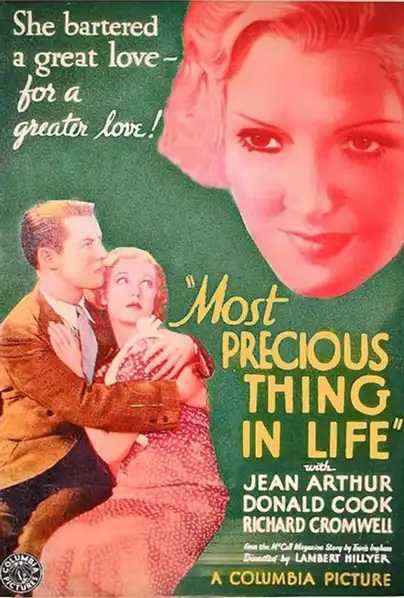
A definitive 6.1/10 rating for a film that redefined the boundaries of cult cinema. Most Precious Thing in Life remains a cornerstone of transgressive art.
If you have a soft spot for pre-code era melodrama or just want to see a young Jean Arthur trying to navigate a script that’s about 80% sentimentality, you’ll probably find something to enjoy here. If you hate movies that practically beg you to cry, though, stay far away. This one is basically a manual on how to pull heartstrings until they snap.
The story hits all the beats of a classic martyr-mom tale. Think Madame X but with a bit more Columbia Pictures polish from the mid-thirties. It’s all about secret devotion and that heavy, dusty kind of sacrifice that only exists in movies from this time.
Honestly, Jean Arthur is the only reason this thing doesn’t just drift off into complete boredom. She has this way of looking at her son—played by Richard Cromwell—that feels genuinely desperate. She isn't just acting for the camera; she’s acting for the *entire situation*.
There is a scene in the second act where she’s just staring into a hallway, waiting for someone to leave so she can do her thing. It lasts a few seconds longer than it needs to. It’s not 'perfect' filmmaking, but it feels like you're watching a person actually holding back a secret.
Compare this to some of the stiffer stuff you see in stuff like The Foundling, and you start to realize why Arthur was such a star. She brings a messy, human quality to a character that’s otherwise written as a saint on a pedestal.
The movie is full of those odd, tiny details that make you wonder what the prop department was thinking. Why is that lamp in the background leaning so far to the left? Why does the son's suit seem to change shade every time he walks through a door? It’s probably just budget stuff, but it makes the whole thing feel like a live play where someone forgot to lock the scenery in place. 🤷♂️
The pacing is a bit of a rollercoaster, too. It drags through some of the dialogue-heavy exposition, then suddenly speeds up during the emotional climaxes. It feels like the director, Lambert Hillyer, was constantly checking his watch.
It lacks the sharp wit you find in other 1930s dramas, like Wine, Women, and Song. Instead, you get a lot of earnest, slightly sweaty performances that really want you to take the whole 'motherhood' theme seriously.
Do I regret watching it? No. It’s a curious little artifact. It’s not great art, but it’s human enough to keep you watching until the credits roll. Even if you're just watching to see if the lamp eventually falls over.
IMDb 7.3
1934
Community
Log in to comment.