DbcultAccessing Vault...
Cult Review
Senior Film Conservator
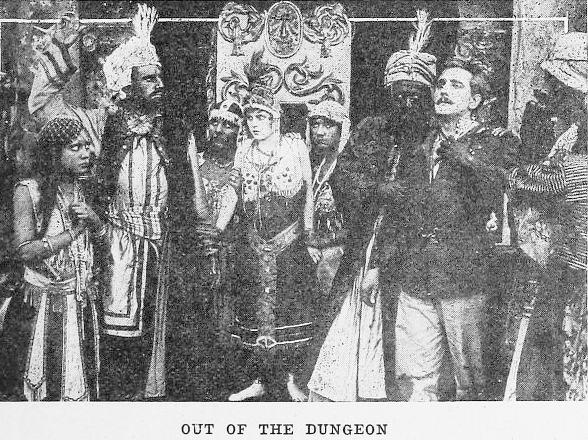
Step back into the nascent days of cinematic storytelling, to an era where flickering images and impassioned intertitles held audiences spellbound. Among the myriad narratives spun during this fertile period, The Heart of Tara emerges as a compelling artifact, a silent epic that, even today, resonates with the raw power of human emotion and the intricate dance of fate. This isn't merely a film; it's a meticulously woven tapestry of historical context, colonial tension, forbidden romance, and a vengeance so profound it spans decades, casting a long, ominous shadow over the lives of its protagonists. As a critic, I find myself drawn not just to the plot's machinations, but to the very essence of its construction, a testament to the evocative capacity of early cinema.
The narrative thrust of The Heart of Tara is immediately captivating, plunging us into the heart of British colonial India. Captain Delmar, a man seasoned by time and experience, returns to Tower Post after a twenty-year hiatus. His commission is weighty: a covert investigation into the disappearance of significant jewels, an indemnity owed to the English crown. But this official duty is merely the surface ripple of a much deeper, darker current. His arrival, a seemingly innocuous administrative action, ignites a dormant inferno within Rajah Selim, an Indian prince whose opulent exterior belies a soul consumed by a two-decade-old hatred. This isn't a casual dislike; it's a festering wound, a personal vendetta born of a love lost and a pride deeply wounded. The film masterfully sets up this clash, not through dialogue, but through the visual language of silent film: the Rajah's brooding gaze, the subtle tension in the air, the stark contrast between the ordered British post and the labyrinthine secrets of the palace.
The true genesis of this animosity lies in a past shrouded in tragedy and deception. As a young officer, Delmar had won the heart of Tara, a favorite of the Rajah's harem. Their love, a dangerous liaison across cultural and social divides, was genuine. Delmar, called back to England, had vowed to return and marry her. But fate, or rather, the Rajah's malevolent hand, intervened. Upon his return, Delmar discovered Tara's lifeless body, adorned with magnificent jewels. He, and by extension the audience, is led to believe she was murdered by 'Hindoo slaves' for her treasures. This pivotal misdirection, a testament to Selim's cunning, is the catalyst for Delmar's subsequent heartbreak and departure. He leaves India a broken man, eventually marrying an Englishwoman and fathering a daughter, Dorothy, who now accompanies him on his return. This backstory, revealed through flashbacks or compelling intertitles, is the emotional core of the film, providing a profound motivation for the Rajah's escalating psychosis. It is a narrative technique that speaks volumes about the enduring power of memory and the corrosive nature of unaddressed trauma. The Rajah's act of violence wasn't just murder; it was an act of possessive rage, a perverse claim over a woman's heart he could not win, and a calculated strike against a perceived rival. The jewels, initially a supposed motive for murder, become a symbolic link to the past, a macabre memento of his crime, and, ironically, the very objects the British now seek.
With Delmar's return, the Rajah's long-simmering desire for retribution ignites anew. His revenge is not a swift, brutal strike, but a meticulously planned, psychologically torturous game. He feigns hospitality, granting Delmar and Dorothy the customary audience, even assigning his own court servants to the young English girl. Among these is Sahan, a cunning spy, the linchpin of the Rajah's insidious plot. The film cleverly introduces a secret passage, a hidden conduit from the palace to Delmar's library at the Post. This architectural detail is not merely a plot device; it's a physical manifestation of the Rajah's pervasive influence, his ability to penetrate the seemingly secure British domain. Through this clandestine route, Sahan transmits messages, ultimately cutting the telephone wires, isolating Delmar and Dorothy. The plan: abduct them, burn their bungalow to ashes, and thereby create the illusion of their fiery demise. This calculated deception speaks to the Rajah's deep understanding of colonial paranoia and his ability to exploit it. It's a psychological warfare, designed to inflict maximum emotional pain, echoing the pain he believes Delmar inflicted upon him.
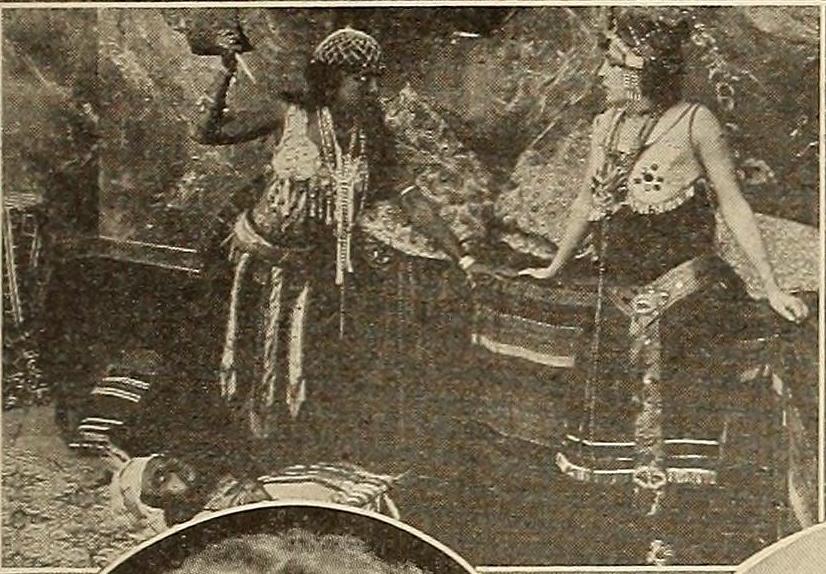
The execution of the plot is swift and brutal. Lieutenant Grey, Dorothy's fiancé, dispatched to a nearby post by the wary Captain Delmar, returns to find the bungalow a smoldering ruin. The Rajah's deception holds; Grey, heartbroken, believes his beloved and her father have perished. Meanwhile, Delmar and Dorothy are ensnared in the Rajah's clutches. The villain's true intent is revealed: Delmar is destined for a cell, while Dorothy is to become the Rajah's personal captive. The scene of Dorothy's near descent into madness as her father is dragged away is a powerful moment, conveying the sheer terror and despair of her situation. It is here that Soma, the Rajah's current favorite, enters the narrative as a figure of unexpected compassion. Soma, who has never truly won the Rajah's heart, which remains fixated on the ghost of Tara, recognizes the horrific fate awaiting Dorothy. Her inability to directly intervene highlights the oppressive power dynamics within the harem, yet her silent empathy foreshadows her eventual, pivotal role.
A twist of fate, however, momentarily disrupts the Rajah's cruel designs. Dorothy, overwhelmed by the ordeal, loses her mind. This unexpected development, rather than facilitating the Rajah's plans, places her beyond his earthly desires, her condition tapping into his superstitious beliefs. This moment provides a brief reprieve, a testament to the unpredictable currents of human psychology and cultural belief systems. Simultaneously, Lieutenant Grey, his suspicions aroused by the unusual circumstances, discovers the secret passage. This discovery is a crucial turning point, transforming a heartbroken fiancé into a determined rescuer. His journey through the hidden passage, a literal descent into the heart of the enemy's lair, is fraught with tension. He finds Dorothy and Soma, and Dorothy, upon seeing her beloved, miraculously regains her sanity. This scene is a potent symbol of love's redemptive power, a beacon of hope in the suffocating darkness of the palace.
Soma, now a guardian angel to Dorothy, urges Grey to seek help. His daring escape through the secret passage to summon cavalry from a neighboring post sets the stage for the film's climactic confrontation. While Grey races against time, the Rajah, discovering Dorothy's recovery, proceeds with his most perverse act of revenge. He brings forth the very jewels that once adorned Tara, meticulously placing them upon Dorothy, parading her before Delmar as a 'harem favorite.' It is a moment of chilling psychological cruelty, designed to break Delmar's spirit by forcing him to witness his daughter's degradation, a grotesque mirror of his past trauma. The Rajah's order to starve his royal lions, intended for a gruesome spectacle involving Delmar, further underscores his depravity. Soma, unable to bear witness to this escalating horror, secretes herself in Dorothy's room, armed with a knife, planning to assassinate the Rajah. Her act, though ultimately unsuccessful due to her lack of strength, is a powerful statement of resistance and compassion, transforming her from a passive victim to an active agent of defiance.
The narrative hurtles towards its explosive conclusion as Lieutenant Grey arrives with his cavalry company. Denied admittance, a fierce battle ensues, a chaotic clash between colonial might and princely defiance. In the ensuing melee, Captain Delmar is freed. He rushes to save Dorothy, arriving just as Soma's brave but weak arm fails to deliver the killing blow to the Rajah. The dramatic rescue is a testament to heroism and timely intervention. In the aftermath, a crucial discovery is made: Dorothy is found still adorned with the very jewels the English government has been seeking. This revelation neatly ties together the disparate threads of the plot—the lost jewels, Tara's murder, and the Rajah's intricate revenge—exposing the full extent of his villainy and the truth behind Tara's death. The resolution offers a sense of justice, not just for the living, but for the ghost of Tara, whose tragic fate is finally understood. The film, in its silent grandeur, thus concludes with the triumph of good over evil, the unraveling of a complex mystery, and the restoration of order, albeit an order achieved through significant personal cost and harrowing experience.
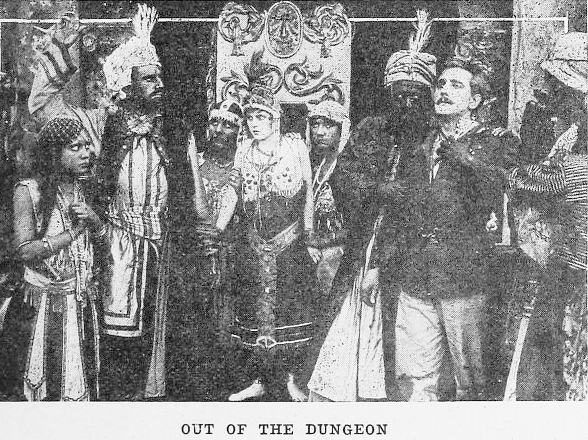
Beyond its thrilling plot, The Heart of Tara is rich with thematic resonance. The pervasive theme of revenge is explored in its most chilling form, demonstrating how an unaddressed grievance can consume a soul and distort reality. Rajah Selim is not merely a villain; he is a tragic figure, chained to the past, unable to move beyond the perceived slight of two decades prior. His obsession with Tara, even after her death, and his perverse desire to recreate her image in Dorothy, speaks to a profound psychological disturbance that transcends simple villainy. This exploration of enduring obsession finds a thematic parallel in films like Chained to the Past, which similarly delves into the inescapable grip of historical events on present lives.
The film also subtly critiques colonial power dynamics. Captain Delmar's position as a British officer in India, investigating a case of missing indemnity jewels, immediately places him within a framework of imperial authority. The Rajah's actions, while heinous, can be seen, in part, as a distorted response to this encroaching power, a desperate attempt to assert agency in a world where his sovereignty is diminished. The clash between the Rajah's traditional, often brutal, methods and the British sense of justice forms a compelling backdrop. This echoes the broader conflicts of colonial narratives, much like the themes of authority and rebellion explored in The Mutiny of the Bounty, albeit from a different perspective.
The characters, despite the limitations of silent film acting, are remarkably well-defined. Captain Delmar embodies the stoic, duty-bound Englishman, haunted by a past heartbreak. His gradual realization of the deeper machinations at play is conveyed through subtle expressions and gestures. Dorothy, the innocent ingenue, represents purity and vulnerability, much like the archetypal protagonist in Snow White (1916), facing a malevolent force. Lieutenant Grey is the quintessential heroic lover, driven by loyalty and courage. But perhaps the most intriguing character is Soma, the Rajah's current favorite. Her journey from passive observer to active participant, her quiet empathy transforming into a desperate act of defiance, adds a layer of moral complexity to the narrative. Her actions highlight the possibility of humanity even within the most oppressive environments. Her tragic attempt to stop the Rajah, though physically unsuccessful, is a moral victory, underscoring the film's nuanced portrayal of good and evil.
For a silent film, The Heart of Tara would have relied heavily on visual storytelling. The opulent sets of the Rajah's palace, contrasting with the more functional aesthetics of the British Post, would have been key in establishing atmosphere. Costumes, particularly Tara's and Dorothy's adornment with the jewels, would have carried significant symbolic weight. The use of intertitles would have been crucial for conveying the intricate backstory and the characters' inner thoughts, especially the Rajah's twisted motivations. The melodrama inherent in silent film acting, characterized by exaggerated gestures and facial expressions, would have effectively communicated the intense emotions of love, hatred, fear, and despair that drive the plot. The film's reliance on mystery and suspense, particularly around the missing jewels and the secret passage, aligns it with other popular thrillers of the era, such as The Secret of the Old Cabinet, which also utilized hidden architectural elements for dramatic effect, and The Million Dollar Mystery, which similarly centered on a valuable, sought-after treasure.
The film's exploration of a dangerous liaison and its tragic consequences also brings to mind the dramatic tension often found in tales of forbidden love, resonating perhaps with the undertones of films like The Scarlet Woman, where societal norms and personal desires often clash with devastating results. The deliberate faking of Delmar and Dorothy's deaths, creating a scenario where characters are believed to be lost, draws a clear parallel to the narrative devices seen in films like The Man Who Disappeared, where absence and presumed demise drive much of the plot's tension.
In conclusion, The Heart of Tara transcends its status as a historical curiosity, offering a rich and complex narrative that speaks to universal human experiences. Its masterful blend of mystery, romance, and gripping suspense, set against the evocative backdrop of colonial India, demonstrates the sophisticated storytelling capabilities of early cinema. The film's enduring power lies in its ability to craft compelling characters, explore profound themes of love, loss, and the destructive nature of obsession, and ultimately deliver a satisfying, albeit hard-won, resolution. It reminds us that even in the silence of flickering images, the heart of human drama beats with an undeniable, vibrant rhythm. It is a film that, despite its age, continues to resonate, proving that true artistry and compelling narrative are timeless, transcending the technological advancements that have shaped the cinematic landscape over the past century. For those willing to engage with its silent language, it offers a profound journey into the depths of human passion and vengeance.

IMDb 6
1916
Community
Log in to comment.