DbcultAccessing Vault...
6.4/10
Senior Film Conservator
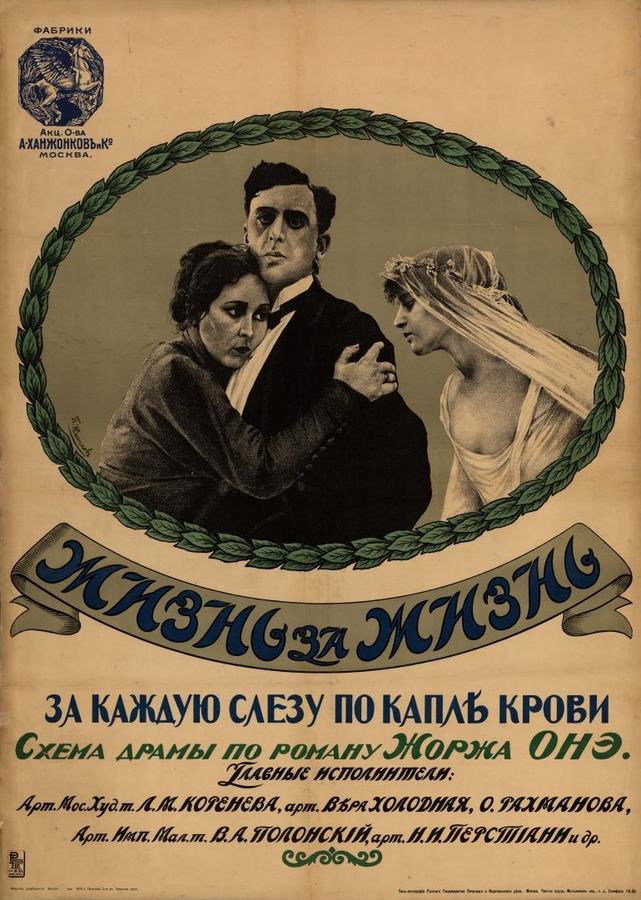
A definitive 6.4/10 rating for a film that redefined the boundaries of cult cinema. Her Sister's Rival remains a cornerstone of transgressive art.
Stepping back into the flickering shadows of early 20th-century Russian cinema, one encounters a fascinating, often melancholic, landscape of human emotion. Among the many cinematic gems of this era, Yevgeny Bauer’s 1914 masterpiece, 'Her Sister's Rival' (or Her Sister's Rival), stands as a testament to the enduring power of silent film to dissect the intricate anatomy of the human heart. It is a narrative steeped in the conventions of its time – the societal strictures, the financial imperatives, and the ever-present shadow of unfulfilled desires – yet it resonates with a timeless quality that speaks to universal themes of love, sacrifice, and the often-bitter taste of compromise.
The film unfurls within the opulent, yet emotionally constrained, world of Mrs. Khromova, portrayed with a quiet gravitas by Olga Rakhmanova. Her household is a microcosm of the era's social dynamics, populated by her biological daughter, Musya, and her adopted daughter, Nata. Musya, often depicted as the more traditional, perhaps less outwardly vivacious, sister, stands in subtle contrast to Nata, a character imbued with a luminous charm that captivated not only the fictional men on screen but undoubtedly the audiences of the time. This dichotomy, while seemingly simple, forms the bedrock upon which the film's tragic narrative is meticulously constructed. The early scenes skillfully establish the familial warmth, albeit one tinged with the unspoken undercurrents of expectation and position.
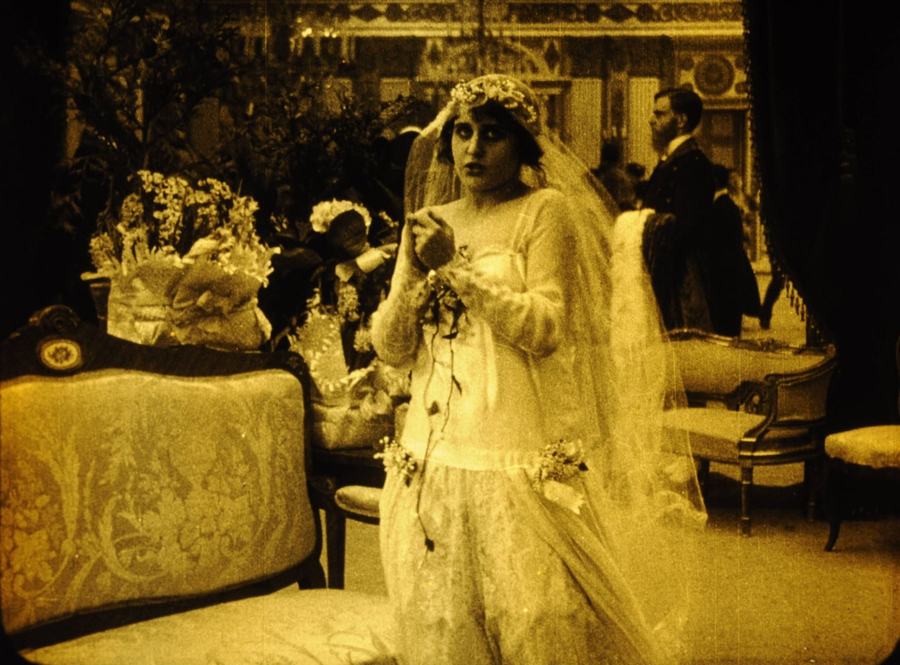
The initial romantic entanglement revolves around Nata, whose ethereal beauty has ensnared the affections of the earnest merchant Zhurov, played by Ivane Perestiani. Zhurov represents stability, genuine affection, and a clear path to a comfortable future. His love for Nata is palpable, unpretentious, and deeply sincere, a stark contrast to the tumultuous emotional landscape that is soon to engulf the household. Nata, however, remains tantalizingly non-committal, her heart perhaps sensing a different destiny, or merely hesitant to commit to a love that, while safe, might lack the thrilling spark of a grand passion. This early ambiguity is crucial, setting the stage for the dramatic entrance of the catalyst that will shatter the fragile equilibrium: Prince Bartinsky.
Vitold Polonsky, with his inherent charisma and air of aristocratic ennui, embodies Prince Bartinsky with a captivating blend of charm and moral ambiguity. He is introduced as Zhurov's friend, a seemingly innocuous detail that quickly morphs into the central irony of the plot. The prince, though undeniably dashing, carries the heavy burden of enormous debts, a common plight for the Russian aristocracy of the period. His financial predicament is not merely a plot device; it is a fundamental driver of his character's choices, forcing him into a corner where love must yield to pragmatism, and genuine affection is traded for economic survival. This theme of financial pressure dictating romantic destiny is not unique to this film; one might draw parallels to the silent film Shoes, which, while focusing on a different social stratum, similarly explores how economic hardship can twist and distort personal aspirations and relationships, particularly for women.
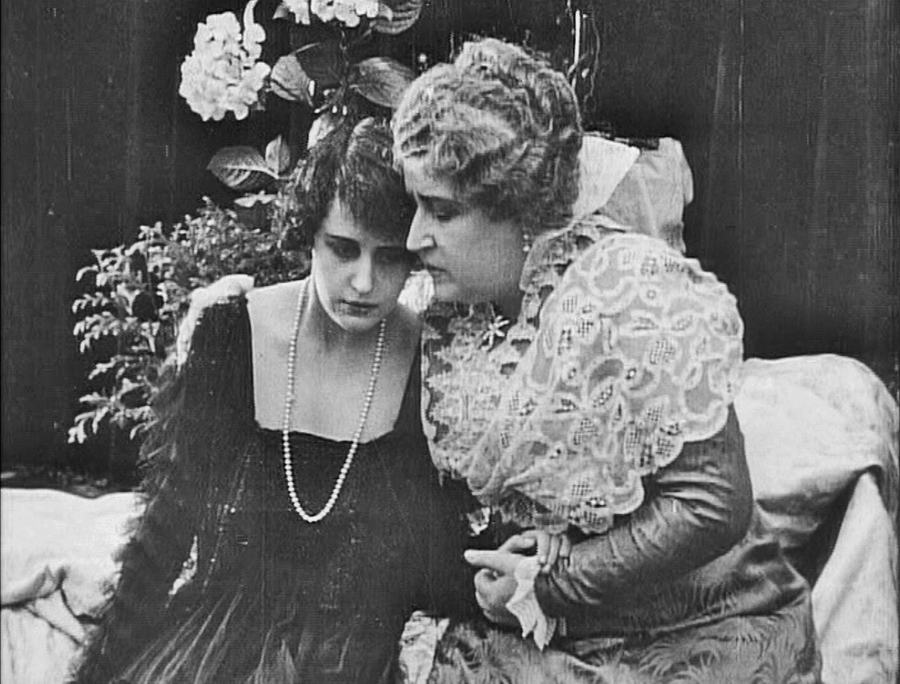
The prince's arrival ignites a spark in both Musya and Nata. Lidiya Koreneva as Musya and the legendary Vera Kholodnaya as Nata deliver performances that are both nuanced and powerful, conveying a spectrum of emotions through subtle gestures and expressive eyes, the hallmark of silent cinema acting. It is Nata, however, who captures the prince's heart, a mutual attraction that is undeniable and intensely felt. Yet, the cruel hand of circumstance intervenes. Bartinsky, trapped by his overwhelming debts, makes a choice that is as pragmatic as it is devastating: he will marry Musya for her dowry. This decision, born of desperation, is a stark reminder of how societal expectations and financial constraints could crush individual desires in that era. The prince then, with a chilling calculation, allows Nata to marry Zhurov, believing this arrangement will salvage both their futures, albeit at the cost of their true affections.
Mrs. Khromova, throughout this unfolding drama, remains a figure of quiet apprehension. Her unease is a constant, subtle counterpoint to the surface-level arrangements being made. She understands, with the wisdom of experience, that marriage is unlikely to transform the self-indulgent prince into a responsible husband. Her fears are not born of malice, but of a deep understanding of human nature and the inherent difficulty of altering ingrained character traits. This maternal concern adds a layer of poignant realism to the narrative, grounding the romantic melodrama in a palpable sense of impending doom. It elevates the film beyond a simple love triangle, imbuing it with a sense of tragic inevitability that echoes the fatalistic strains often found in Russian literature.
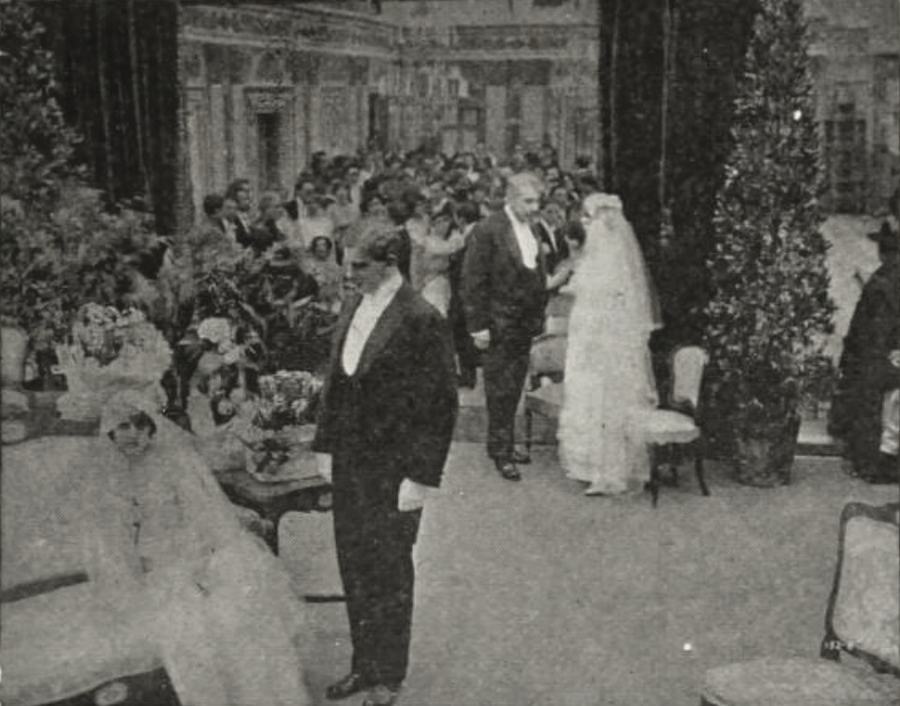
Yevgeny Bauer, a director renowned for his innovative use of mise-en-scène and psychological depth, crafts a narrative that is both visually stunning and emotionally resonant. His direction, here, as with many of his works, transcends the theatricality often associated with early cinema, pushing towards a more cinematic language. The film’s pacing is deliberate, allowing the audience to absorb the emotional weight of each decision and interaction. The close-ups on the faces of Lidiya Koreneva, Vera Kholodnaya, and Vitold Polonsky are particularly effective, conveying inner turmoil, suppressed longing, and calculated resolve without the need for spoken dialogue. This reliance on visual storytelling and the expressive capabilities of his actors is a hallmark of Bauer's genius, distinguishing him from many of his contemporaries.
The screenplay, adapted by Bauer himself from Georges Ohnet’s work, skillfully navigates the complex emotional currents. It avoids simplistic villainy, instead presenting characters who are products of their circumstances, driven by a mix of love, duty, and self-preservation. Even Prince Bartinsky, for all his moral failings, is not a caricature; his desperation is palpable, making his choices understandable, if not forgivable. This nuanced portrayal of character is what gives 'Her Sister's Rival' its lasting impact. It doesn't preach; it observes, allowing the audience to grapple with the difficult ethical dilemmas presented.
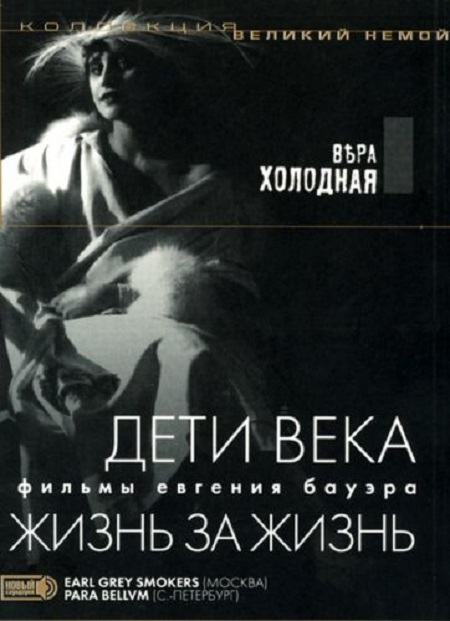
The performances are, without question, the pulsating heart of this film. Vera Kholodnaya, in particular, radiates a melancholic beauty that perfectly suits her character's tragic arc. Her ability to convey profound sorrow and resignation with a mere tilt of the head or a lingering gaze is extraordinary. She was, after all, one of the most celebrated stars of Russian silent cinema, and her performance here solidifies her legendary status. Vitold Polonsky, as the conflicted prince, manages to maintain a certain sympathetic quality even as his character makes morally dubious decisions. His portrayal captures the internal struggle between his desires and his dire financial reality, making him a complex figure rather than a mere antagonist. Lidiya Koreneva, as Musya, effectively conveys the quiet dignity and perhaps hidden vulnerability of a woman whose love is accepted out of convenience rather than genuine passion. Her understated performance is a powerful counterpoint to Kholodnaya’s more outwardly expressive Nata. Ivane Perestiani’s Zhurov is the embodiment of steadfast devotion, a figure whose genuine goodness offers a stark contrast to the aristocratic machinations, reminiscent in a way of the dependable but often overlooked figures in other period dramas where social status dictates romantic outcomes, perhaps even a subtle echo of the earnestness seen in a film like A Gentleman from Mississippi, though in a vastly different narrative context.
Beyond the personal tragedy, 'Her Sister's Rival' serves as a fascinating social document. It illuminates the rigid class structures of pre-revolutionary Russia, where wealth and lineage often trumped personal happiness. The prince's desperate need for a dowry is not an isolated incident but a reflection of a crumbling aristocratic class struggling to maintain its facade amidst changing economic realities. The film subtly critiques a society where women, particularly, were often pawns in economic and social games, their destinies dictated by the financial needs and ambitions of men. This theme of women navigating a patriarchal society with limited agency can be seen in various forms across different cultures and eras of cinema, from the domestic struggles in Skottet, where dramatic choices are forced upon characters, to the more adventurous but still constrained female roles in films like Betty in Search of a Thrill, highlighting the diverse ways women sought agency or were denied it.
The ending, steeped in Mrs. Khromova's foreboding, leaves the audience with a profound sense of melancholy. There is no triumphant resolution, no easy catharsis. Instead, there is the lingering question of whether true happiness can ever be built on a foundation of deception and forced compromise. The film's refusal to offer a saccharine conclusion is precisely what gives it its power and realism. It suggests that some choices, once made, cast long, inescapable shadows, and that the consequences of prioritizing material gain over genuine affection are often dire and far-reaching. This kind of nuanced, bittersweet storytelling is a hallmark of the period's more sophisticated dramas, contrasting sharply with the often simpler moralities of more overtly adventure-driven narratives like The Three Musketeers (1914), which often presented clear heroes and villains.
For modern audiences, 'Her Sister's Rival' offers a unique window into the cinematic artistry of a bygone era. It challenges contemporary perceptions of silent film as merely primitive or simplistic. Bauer's mastery of visual storytelling, coupled with the extraordinary performances of his cast, demonstrates the profound emotional depth and narrative sophistication that early cinema was capable of achieving. The film's restoration and availability are crucial for preserving this vital part of film history, allowing new generations to appreciate its subtle artistry and enduring themes.
In conclusion, 'Her Sister's Rival' is far more than a historical curiosity; it is a meticulously crafted drama that delves into the complexities of human relationships under the unforgiving gaze of societal expectation and financial pressure. It is a testament to the fact that even without spoken words, the screen can convey the deepest pangs of the human soul, the agonizing choices forced upon individuals, and the quiet despair of lives lived in compromise. It invites contemplation on the nature of love, duty, and the true cost of 'pragmatic' decisions, leaving an indelible mark on the viewer's consciousness long after the final frame fades. Its narrative echoes the profound emotional weight found in other significant dramas of the period, demonstrating a shared human experience across borders and cultural specificities, much like the universal themes explored in films such as Dante's Inferno, which, despite its epic scope, also delves into personal torment and moral consequence. For those seeking to understand the roots of cinematic narrative and the timeless power of human drama, this film is an essential viewing experience.
IMDb —
1923
Community
Log in to comment.