DbcultAccessing Vault...
5.5/10
Senior Film Conservator
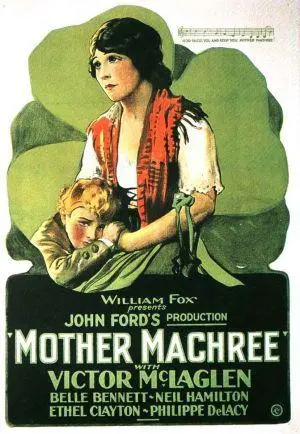
A definitive 5.5/10 rating for a film that redefined the boundaries of cult cinema. Mother Machree remains a cornerstone of transgressive art.
Is Mother Machree, a silent film from 1928, worth watching today? Short answer: yes, but with significant caveats that demand a particular kind of viewer. This film is a potent time capsule of early Hollywood melodrama, rich in emotionality and historical context, yet undeniably challenging for modern sensibilities.
It is for the cinephile, the historian, and anyone with a profound appreciation for the foundational narratives of cinema. It is emphatically not for those seeking fast-paced action, complex dialogue, or subtle character arcs typical of contemporary storytelling.
Mother Machree plunges its audience into a world where sentiment reigns supreme, where every gesture, every intertitle, is designed to tug at the heartstrings. It’s a film that demands empathy, built around the archetypal figure of the sacrificing mother, Ellen McHugh.
Her journey, from an impoverished Irish immigrant to a carnival performer and then a housekeeper, is a testament to the era's fascination with virtuous suffering. The narrative, while simple, is effective in establishing her plight and the impossible choices she faces.
This film works because of its raw emotional core, anchored by Constance Howard’s deeply felt performance as Ellen, which transcends the limitations of silent cinema to communicate universal maternal love. It fails because its pacing is often glacial, and its melodramatic flourishes, while potent for 1928, can feel overwrought and simplistic to a modern audience. You should watch it if you are a student of film history, a fan of silent-era acting, or someone who can appreciate a story told with earnest, unadulterated sentiment, unburdened by contemporary cynicism.
The story's central conflict—Ellen’s forced separation from her son Brian for his own perceived good—is a narrative device as old as storytelling itself. Yet, in Mother Machree, it’s imbued with a specific cultural resonance, reflecting societal pressures and the strictures of class in early 20th-century America.
The film’s portrayal of the ‘disreputable’ carnival life versus the ‘respectable’ school environment highlights a stark moral dichotomy that felt very real at the time. This moralizing tone, while a product of its era, forms the very backbone of the film’s emotional appeal.
The success of any silent film hinges almost entirely on the expressiveness of its cast, and Mother Machree is no exception. Constance Howard as Ellen McHugh delivers a performance that is both physically demanding and emotionally resonant.
Her portrayal of Ellen is a masterclass in silent acting, relying on exaggerated gestures, poignant facial expressions, and a palpable sense of inner turmoil. When Ellen makes the agonizing decision to give up Brian, Howard’s face conveys a world of pain, a silent scream that is utterly convincing without a single spoken word.
One particularly striking moment comes when Ellen, working in the carnival, secretly watches Brian from afar. Howard’s subtle shift from weary resignation to a flicker of maternal pride, quickly replaced by sorrow, speaks volumes about the depth of her sacrifice. It’s a moment that, despite the film's age, still resonates with genuine pathos.
The supporting cast, while less central, contributes to the film's emotional landscape. John MacSweeney as the young Brian and Neil Hamilton as the adult Brian portray the son with a blend of youthful innocence and later, a more conflicted maturity. Their reactions to Ellen’s hidden presence, particularly in later scenes, are crucial in conveying the unspoken bonds that persist.
A fleeting appearance by a very young John Wayne, then still Marion Morrison, offers a curious footnote for film historians, though his contribution to the film's narrative or emotional core is minimal. His presence is more a curiosity for those tracing the careers of legends than a critical component of the film itself.
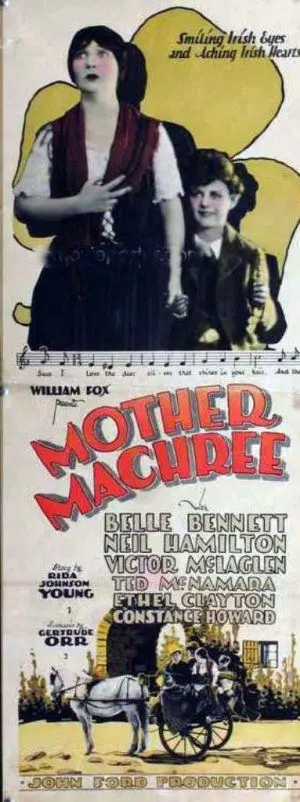
The visual language of Mother Machree is firmly rooted in the conventions of late silent cinema. The direction, while not attributed to a single prominent name in the provided context, effectively orchestrates the emotional beats of the story through careful framing and scene composition.
Close-ups are utilized to emphasize the raw emotion on characters' faces, particularly Ellen's. This technique, common in the era, allows the audience to connect directly with the characters' internal struggles, compensating for the lack of audible dialogue.
The cinematography, while not groundbreaking by today's standards, serves the narrative diligently. There are moments of effective visual storytelling, such as the stark contrast between the vibrant, chaotic world of the carnival and the sterile, imposing architecture of the school. These visual cues reinforce the class distinctions and moral judgments inherent in the plot.
However, the visual style can also feel somewhat static, with many scenes relying on standard medium shots and stage-like blocking. Compared to the dynamic camera work emerging in films like F.W. Murnau's Der Hund von Baskerville or even some of the more ambitious American productions of the late 20s, Mother Machree often feels a step behind in its visual innovation.
The use of intertitles, while necessary, sometimes feels a little heavy-handed, spelling out emotions and plot points that a more nuanced visual approach might have conveyed with greater subtlety. This isn't a flaw unique to Mother Machree but is a common characteristic of many films from the period, reflecting the developing language of cinema.
The pacing of Mother Machree is perhaps its greatest hurdle for contemporary viewers. Silent films, by their nature, often unfold at a deliberate, almost languid pace, allowing for extended emotional beats and detailed pantomime. This film adheres to that tradition with unwavering commitment.
Scenes tend to linger, allowing emotions to fully register before moving on. While this can be effective in building empathy, it can also lead to stretches that feel slow, particularly when the narrative momentum wanes.
The film's tone is overtly sentimental, bordering on the saccharine. Every setback, every sacrifice, is amplified for maximum emotional impact. While this was a hallmark of popular melodramas of the era, a modern audience accustomed to more nuanced emotional landscapes might find it somewhat cloying.
There's a lack of irony or detachment, a complete immersion in the earnestness of the story. This unvarnished sincerity is both the film's charm and its potential stumbling block. It works. But it’s flawed.
The narrative’s reliance on coincidence and contrivance, particularly in the later stages with Edith and Brian's romance, further emphasizes its melodramatic leanings. While these plot devices were accepted conventions, they can strain credulity for viewers expecting greater realism.
Yes, for specific audiences. It offers a valuable glimpse into silent cinema's emotional power and storytelling techniques. It’s a strong example of maternal melodrama. However, its deliberate pacing and overt sentimentality require patience. It is best for film historians and silent film enthusiasts. It is not for casual viewers seeking modern entertainment.
Mother Machree is more than just a relic; it's a foundational text in the canon of cinematic melodrama. It offers a powerful, albeit unvarnished, look at maternal love and societal struggle through the lens of early Hollywood. While its deliberate pace and overt sentimentality may deter some, its emotional core, brought to life by Constance Howard’s magnificent performance, remains undeniably impactful.
For those willing to adjust their expectations and immerse themselves in the unique rhythms of silent film, Mother Machree offers a rewarding, if challenging, experience. It’s a testament to the enduring power of simple, human stories, even when told without a single spoken word. It might not be a film for everyone, but for those it resonates with, its emotional echoes linger long after the final fade to black.
IMDb 8
1936
Community
Log in to comment.