DbcultAccessing Vault...
Cult Review
Senior Film Conservator
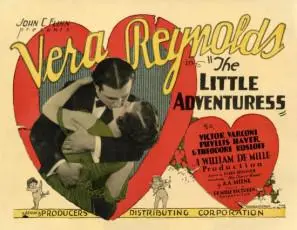
Is The Little Adventuress worth your time in the modern era? Short answer: No, unless you are a dedicated scholar of silent-era social comedies or a completist of A.A. Milne’s early screenwriting efforts.
This film is specifically for those who enjoy the stage-bound aesthetics of the late 1920s and the irony of 'Pooh' creator Milne writing about marital infidelity. It is emphatically not for viewers seeking high-octane action or the visual experimentation found in the German Expressionism of the same period.
1) This film works because it utilizes a confined setting to heighten the awkwardness of its central conflict, turning a simple ranch into a pressure cooker of social embarrassment.
2) This film fails because the lead male character, Leonard, is written with such a lack of backbone that his eventual reconciliation feels unearned and frustrating.
3) You should watch it if you want to see how silent cinema handled 'sophisticated' adult themes before the Hays Code tightened its grip on domestic storytelling.
The Little Adventuress is a film that breathes the air of the 1920s theater. Written by Clara Beranger and A.A. Milne, it carries the DNA of a drawing-room comedy, even when it wanders into the dusty terrain of a California ranch. The story begins with a betrayal that feels remarkably modern in its pettiness. Leonard Stoddard doesn't leave his wife because of a grand passion; he leaves because he wants 'sympathy.' He is a character defined by his need for external validation, a trait that Robert Ober plays with a certain soggy desperation.
Contrast this with the introduction of Helen Davis, played by Phyllis Haver. Helen is the 'artist,' a role that in 1927 often served as shorthand for a woman with questionable morals or, at the very least, a lack of traditional domestic impulses. When they agree to run away, it isn't presented as a triumph of love, but as a flight from reality. This distinguishes it from other films of the era like Exit the Vamp, which handled similar themes with a bit more bite.
The film’s narrative engine really starts humming once the second couple enters the fray. Victoria, played by Vera Reynolds, responds to her husband’s desertion not with a breakdown, but with a calculated counter-move. Her alliance with Antonio Russo (Theodore Kosloff) is a fascinating piece of character work. Russo is an actor, and Kosloff plays him with a flourish that borders on the grotesque, reminding the audience that Victoria’s 'affair' is just as much a performance as Leonard’s 'escape.'
The coincidence of all four parties ending up at George La Fuente’s ranch is the kind of plot contrivance that requires a massive suspension of disbelief. However, once they are there, the film finds its footing. Victor Varconi, as La Fuente, provides the only grounded presence in the movie. He is the wealthy bachelor who sees through the nonsense. His ranch is not a sanctuary; it’s a courtroom. The dinner scene is the film's centerpiece. Watching Victoria and Leonard pretend to be strangers while sharing a table is a masterclass in silent reaction shots. It works. But it’s flawed.
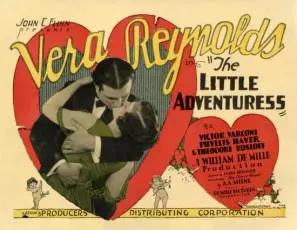
Vera Reynolds carries the emotional weight of the film. While the men are busy posturing or catching colds, Reynolds conveys a sense of mounting exhaustion with the entire concept of marriage. There is a specific moment during the dinner where she catches Leonard looking at her—not with love, but with a pathetic sort of ownership—and her micro-expression of disgust is more effective than any title card could be. It’s a performance that stands up well against the work seen in Young Mrs. Winthrop.
Theodore Kosloff, however, is an acquired taste. As the actor Antonio Russo, his gestures are broad, even for 1927. He represents the 'old school' of silent acting that was already beginning to look dated by the time this film was released. Every time he is on screen, the film feels like it’s trying to be a different movie—perhaps something closer to the melodrama of The Man from Hell's River.
The pacing of The Little Adventuress is uneven. The first act moves with a frantic energy as the characters make their impulsive decisions, but the middle section at the ranch drags. There are too many scenes of characters staring out of windows or pacing in their rooms. The cinematography is functional but lacks the poetic depth found in European imports like Die Flucht in die Nacht.
One surprising visual element is the use of shadows during the late-night confrontations at the ranch. The director uses the architecture of the house to separate the characters, often placing them in different planes of focus to emphasize their emotional distance. It’s a subtle touch in a film that otherwise relies on very literal storytelling.
Is The Little Adventuress a good movie for a modern audience?
Strictly speaking, no. The film is a product of its time, and its resolution—where Victoria is forced to choose between a husband who abandoned her and a rancher who 'demands' her love—is difficult to swallow by contemporary standards. It lacks the charm of The Rag Man or the intensity of Ferragus. However, as a historical document of how A.A. Milne’s wit translated to the silent screen, it has undeniable academic value.
The Little Adventuress is a minor work that manages to be both fascinating and deeply annoying. It’s a film where the women are far more interesting than the men they are fighting over. Victor Varconi is excellent, but he can't save a script that ultimately decides that a husband's head cold is enough of a reason for a wife to forgive five years of neglect and a blatant attempt at desertion. If you’ve already seen the major works of the era like The Jay Bird or Mile-a-Minute Romeo, then by all means, give this a look. Otherwise, it’s a skip. It’s a relic, plain and simple. It doesn't sparkle; it just sits there, reminding us that even in the golden age of Hollywood, they didn't always get the ending right.
IMDb 5.4
1936
Community
Log in to comment.