DbcultAccessing Vault...
Cult Review
Senior Film Conservator
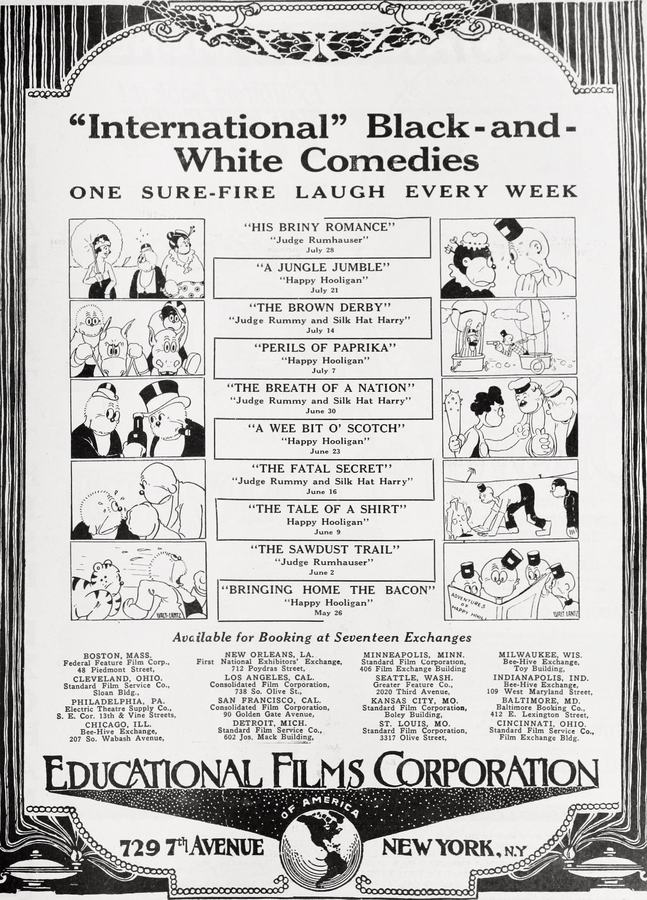
The year 1916 occupies a peculiar, almost liminal space in the history of the moving image. While the titan of the industry were busy refining the grammar of the feature-length drama—think of the heavy, atmospheric weight found in The Turn of the Road—a different kind of revolution was brewing in the inkwells of New York. A Wee Bit o' Scotch, a brief but incandescent flash of animated brilliance, represents the intersection of newspaper syndication and the cinematic avant-garde. It is a work that demands our attention not merely as a historical curiosity, but as a masterclass in the economy of visual storytelling.
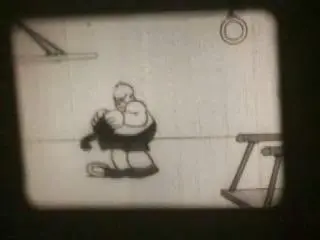
Gregory La Cava, a name later synonymous with the sophisticated screwball comedies of the 1930s, displays here an early, visceral understanding of timing. In A Wee Bit o' Scotch, the animation isn't just a gimmick; it is a fluid extension of the character's psyche. Unlike the rigid, almost photographic realism sought by some of his contemporaries in films like The Eternal Sappho, La Cava embraces the elasticity of the medium. The Happy Hooligan, with his iconic tin-can hat and tattered coat, moves with a staccato grace that prefigures the rubber-hose style that would later dominate the industry.
The collaboration with Frederick Opper is pivotal. Opper, the progenitor of the Happy Hooligan strip, provided a narrative shorthand that the American public already craved. However, translating the static panels of a comic strip into a three-minute short required a radical rethinking of spatial logic. Louis De Lorme’s contribution to the writing ensures that the gags aren't just isolated incidents but a cascading series of cause-and-effect mishaps. There is a certain nihilistic beauty in how the Hooligan’s attempts to engage with the Scottish theme—symbolized by the bagpipes—inevitably lead to his own physical undoing. It is a precursor to the slapstick violence that would later be refined by the likes of Keaton, yet it retains a raw, unpolished energy that feels remarkably modern.
To watch A Wee Bit o' Scotch today is to confront the social anxieties of the early 20th century. The "Scotch" elements are, by modern standards, reductive, yet they serve a specific function in the film’s internal logic. In an era where films like Yankee Doodle in Berlin were using broad national stereotypes to navigate wartime tensions, La Cava’s work uses them as a playground for physical comedy. The kilt is not just a garment; it is a prop that complicates movement. The bagpipes are not just an instrument; they are a sonic weapon that disrupts the peace of the frame.
The Hooligan himself is a fascinating figure—a hobo, an outcast, a man perpetually on the periphery of polite society. In this specific short, his attempts to navigate the "Highland" setting highlight his status as the eternal outsider. While dramas like The Ragged Princess sought to find the nobility in poverty, A Wee Bit o' Scotch finds the hilarity in it. There is no sentimentality here; only the relentless, rhythmic pummelling of a man who refuses to give up, no matter how many times the world (or a disgruntled Scotsman) knocks him down.
One must appreciate the sheer labor involved in creating these few minutes of footage. In 1916, there were no digital shortcuts. Every frame was a hand-inked testament to the artist's patience. When we compare the visual density of this short to the sprawling, epic scale of The Spiders - Episode 1: The Golden Sea, the achievement becomes even more pronounced. Fritz Lang had the luxury of sets and actors; La Cava had to conjure an entire world out of a blank sheet of paper. The "Golden Sea" of Lang’s imagination is vast, but the ink-black void of the Hooligan’s world is equally evocative.
The use of negative space in A Wee Bit o' Scotch is particularly striking. La Cava understands that what is *not* drawn is just as important as what is. The background is often minimal, forcing the viewer to focus entirely on the kinetic energy of the characters. This minimalism creates a dreamlike, almost surreal atmosphere that stands in stark contrast to the grounded realism of The Gun Fighter. While William S. Hart was defining the rugged aesthetics of the Western, La Cava was exploring the limitless boundaries of the imagination.
It is instructive to place A Wee Bit o' Scotch alongside its contemporary feature-length peers. Consider the brooding intensity of The Mysterious Mr. Browning or the psychological depth of Kreutzer Sonata. These films sought to elevate cinema to the level of high literature or grand theater. In contrast, La Cava’s short embraces the medium's inherent vulgarity—in the classical sense of the word. It is art for the masses, yet executed with a level of craftsmanship that rivals the most prestigious productions of the day.
Even when compared to European imports like Mysteriet paa Duncan Slot, the American animation style of this period feels uniquely aggressive. There is a "get-up-and-go" spirit in the Hooligan’s movements that reflects the industrial boom of the United States. While European cinema was often looking backward, grappling with the ghosts of the past—as seen in the documentary-adjacent The Battle and Fall of Przemysl—American animation was hurtling toward a future of pure, unadulterated spectacle.
Why does A Wee Bit o' Scotch endure? Perhaps it is because the Happy Hooligan represents a fundamental truth about the human condition. We are all, at various times, the Hooligan—trying our best to fit into a world that seems designed to trip us up. Whether he is dealing with the "Scotch" tropes here or the double identities found in John Needham's Double, the core conflict remains the same: the struggle for dignity in an undignified world.
The film also serves as a vital link in the career of Gregory La Cava. One can see the seeds of his later genius in the way he handles the ensemble of characters—even if those characters are made of ink and paint. The same rhythmic dialogue that would define his 1930s hits is present here in the visual "dialogue" between the characters. The way the Hooligan reacts to the Scotsman’s ire is a precursor to the witty banter between Cary Grant and his co-stars. It is a reminder that the fundamentals of comedy—timing, reaction, and escalation—are universal across all mediums.
Furthermore, the film’s brevity is its greatest strength. In an age of bloated runtimes and unnecessary sequels, there is something refreshing about a story that can be told in the time it takes to boil an egg. It is a concentrated dose of creativity, like a secret found in The Secret of the Old Cabinet. It doesn't overstay its welcome; it arrives, wreaks havoc, and departs, leaving the audience breathless and wanting more. It is the cinematic equivalent of a perfectly executed joke.
In the grand scheme of 1916 cinema, A Wee Bit o' Scotch might seem like a minor footnote compared to the high-stakes drama of The Eternal Temptress or the legal thrills of The Murdoch Trial. However, to dismiss it as such would be a grave error. It is a work of pure, unalloyed joy, crafted by artists who were discovering the rules of a new language even as they were speaking it. It possesses a chaotic, punk-rock energy that is often missing from the more polished productions of the era.
The film is a testament to the power of the gag. In the hands of a lesser director, the Scottish setting would be a mere backdrop. In La Cava’s hands, it is a dynamic participant in the comedy. The way the bagpipes are integrated into the physical comedy is nothing short of brilliant. It is a reminder that in the world of animation, anything is possible. You can be a hobo in the Highlands one minute and a hero the next—though, in the Hooligan’s case, the "hero" part is usually short-lived.
Ultimately, A Wee Bit o' Scotch is a celebration of the underdog. It doesn't matter that the Hooligan fails; what matters is the spectacular, inventive way in which he fails. It is a film that rewards multiple viewings, as each frame is packed with tiny details and secondary actions that might be missed on a first pass. Like the intricate plot of The Robber, there is more here than meets the eye. It is a small masterpiece of the silent era, a flickering reminder of a time when the world was new, the ink was wet, and anything was possible on the silver screen.
Reviewer's Note: This film represents a crucial piece of the La Cava puzzle. To understand the sophisticated director of 'My Man Godfrey,' one must first understand the man who made a kilt-wearing hobo dance for our amusement in 1916. It is a journey from the ridiculous to the sublime, and it begins with a wee bit of Scotch.
IMDb —
1924
Community
Log in to comment.