DbcultAccessing Vault...
Cult Review
Senior Film Conservator
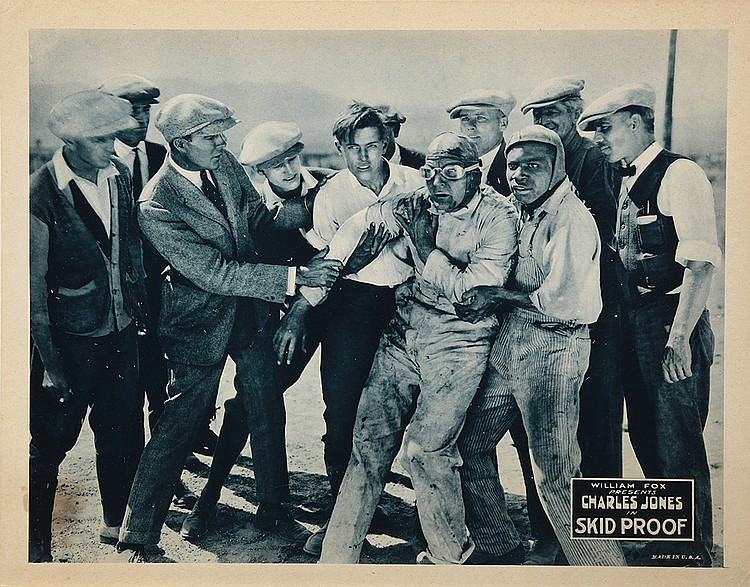
Stepping back into the nascent days of cinema, one encounters productions that, despite their technological limitations, often brim with an unbridled enthusiasm for storytelling. Skid Proof, a 1923 release, is precisely such a film, a vibrant tableau reflecting the era's fascination with speed, heroism, and the burgeoning glamour of Hollywood. It's a narrative that, while ostensibly simple, weaves together threads of ambition, treachery, and an endearing romance, delivering a quintessential early cinematic experience that still resonates with a certain charming earnestness today.
At its core, Skid Proof plunges us into the high-stakes world of early 20th-century motor racing, a domain of daredevils and mechanical marvels. Our protagonist, Jack Darwin, portrayed with a compelling blend of grit and nascent charm by Claude Payton, is introduced as a champion driver, a veritable titan of the track. His prowess is undeniable, his reputation preceding him, making him a prime candidate for a grueling transcontinental race. This grand spectacle isn't merely a test of speed; it's an endurance challenge, a cross-country odyssey that captures the public imagination and promises immense prestige to its victor. The film, even in its silent form, manages to convey the visceral thrill of these early races, the dust, the speed, the mechanical ballet of man and machine pushing limits.
However, the narrative takes a sharp, unexpected turn, injecting a potent dose of melodrama and villainy. Darwin's lead is cruelly snatched away not by superior driving, but by an act of unprecedented foul play: a competitor, displaying a shocking disregard for sportsmanship and human life, shoots him from an airplane. This audacious aerial assault is a narrative flourish that elevates Skid Proof beyond a mere sports drama, transforming it into a pulpy adventure. It’s a moment that, while perhaps straining credulity, perfectly encapsulates the inventive, often exaggerated storytelling prevalent in the silent era. The sheer audacity of this plot device is commendable, a testament to writers Harvey Gates and Byron Morgan's willingness to push boundaries and entertain their audience with spectacular, if outlandish, twists. One might even draw a thematic parallel to the dramatic stakes found in other period pieces focused on grand endeavors, though perhaps without the aerial assassination, such as the legal and personal battles depicted in The Caillaux Case, where betrayal takes a different, but equally impactful, form.
The abrupt end to his racing career forces Jack Darwin into an unexpected pivot. The film transitions seamlessly, or perhaps with a charming bluntness typical of the era, from the dusty racetracks to the burgeoning, glittering world of motion pictures. Darwin, the fallen racing hero, finds a new stage for his charisma and daring spirit: the silver screen. This transformation into a film star is a fascinating commentary on the public's appetite for heroes, real or imagined, and the burgeoning power of Hollywood to create and immortalize them. Claude Payton handles this transition with adeptness, allowing Darwin to retain his inherent heroic qualities while adapting to the performative demands of acting. This segment of the film provides a delightful glimpse into early filmmaking, perhaps even offering a meta-commentary on the industry itself, a theme explored with different nuances in films like An Eskimotion Picture, which playfully critiques the very medium it inhabits.
It is within this glamorous, yet often superficial, new world that Darwin encounters Nadine, an actress portrayed by the luminous Julia Brown. Brown imbues Nadine with a vulnerability and charm that immediately endears her to both Darwin and the audience. Their romance blossoms amidst the artificiality of the studio sets, a genuine connection forming in a landscape of manufactured emotions. However, true love's course is rarely smooth in cinema, and Nadine finds herself ensnared by a nefarious scoundrel, a classic antagonist whose intentions are anything but honorable. This introduces the traditional damsel-in-distress trope, but Skid Proof handles it with a refreshing directness. Darwin, ever the hero, cannot stand idly by. His intervention to save Nadine from a forced or ill-advised marriage is not just a romantic gesture; it's a reaffirmation of his heroic character, demonstrating that his courage extends beyond the racetrack.
The film benefits from a robust supporting cast, each actor contributing to the rich tapestry of the narrative. Earl Metcalfe, likely cast as the dastardly competitor or the scoundrel vying for Nadine's hand, would have embodied the villain with the necessary theatricality for the silent screen. Laura Anson, Jacqueline Gadsdon, Harry Tracy, Buck Jones, Verne Winter, Fred Eric, and Peggy Shaw round out the ensemble, each playing their part in building the world around Jack and Nadine. While specific roles for each are not detailed in the plot synopsis, their collective presence would have been crucial in establishing the social milieu of both the racing circuit and early Hollywood. The collaborative effort of such a cast, under the direction of an uncredited but undoubtedly influential hand, is what brings a silent film to life, relying heavily on exaggerated gestures, facial expressions, and physical comedy or drama to convey emotion and plot.
The screenplay, penned by Harvey Gates and Byron Morgan, is a masterclass in early cinematic pacing. They understood the need for constant forward momentum, for dramatic peaks and valleys that held the audience's attention without the aid of dialogue. Their narrative structure, moving from intense action to romantic entanglement and then back to a climactic race, demonstrates a keen understanding of popular entertainment. The blend of genres – sports drama, romance, and even a touch of action-thriller with the airplane incident – ensures that the film never stagnates. This versatility in storytelling is a hallmark of the era, where filmmakers were still experimenting with what the medium could achieve. One can observe a similar ambition in narrative scope in films like God's Country and the Law, which also attempts to blend adventure with moralistic themes, though perhaps with a different setting and focus.
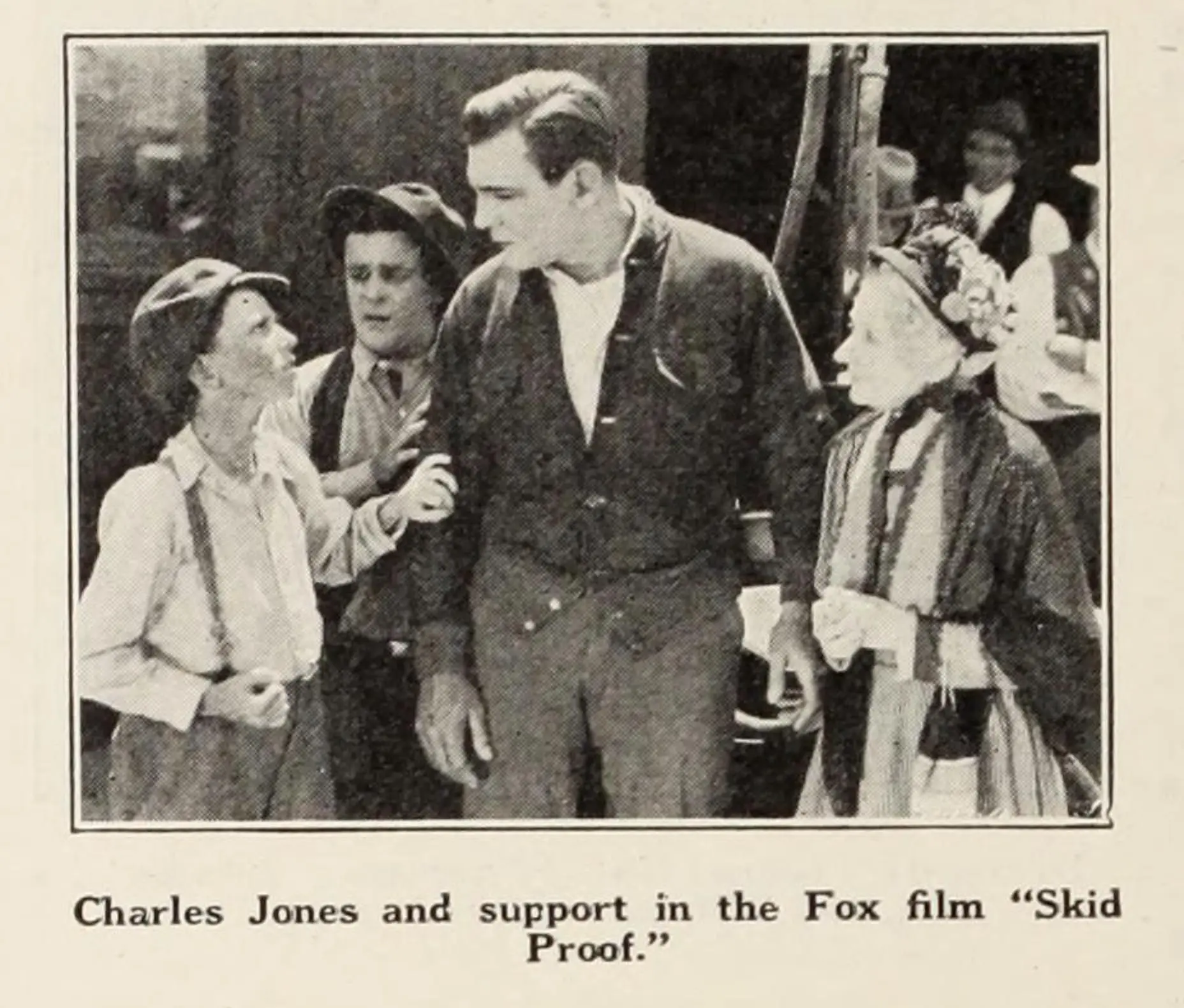
The narrative arc of Skid Proof culminates in a triumphant return to the racetrack, a full-circle moment for Jack Darwin. This final race is not merely about physical victory; it’s a symbolic contest for redemption, for the reclaiming of his identity, and ultimately, for love. Having saved Nadine from her predicament, Darwin now enters another race, presumably one free from aerial sabotage and malicious intent. The stakes are higher than ever, as his victory signifies not only the first prize but also the ultimate prize: Nadine's enduring affection and commitment. This intertwining of professional success and personal fulfillment is a potent cinematic trope, one that resonates deeply with audiences who root for the hero to achieve both his ambitions and his heart's desire.
The final moments of the film, with Darwin winning both the race and Nadine, provide a profoundly satisfying conclusion. It's a classic Hollywood ending, a testament to perseverance, integrity, and the power of love to conquer all obstacles. The visual storytelling of silent cinema would have been crucial here, with close-ups of Darwin's determined face, Nadine's anxious anticipation, and the thrilling shots of the cars speeding towards the finish line, all culminating in a joyous embrace. This kind of unambiguous triumph was a staple of the era, offering audiences a clear moral compass and the comfort of a happy resolution. Compare this straightforward pursuit of happiness to the more nuanced, sometimes tragic, explorations of love and fate found in foreign films of the period, such as El beso de la muerte, where romantic outcomes might be tinged with greater melancholy.
Beyond the thrilling plot, Skid Proof explores several enduring themes. It champions resilience in the face of adversity, highlighting Darwin's ability to adapt and thrive even after a devastating setback. It celebrates the power of true love to overcome societal pressures and villainous machinations. Furthermore, it subtly comments on the allure and transformative power of celebrity, both on the racetrack and in the nascent film industry. The film, in its own way, is a reflection of the American spirit of the Roaring Twenties: a period of innovation, daring, and a relentless pursuit of success, both personal and professional. The transition of Darwin from a sports hero to a movie star is particularly prescient, foretelling the symbiotic relationship between sports, entertainment, and public persona that would only grow stronger throughout the century.
While Skid Proof may not be as widely remembered as some other silent classics, its narrative ingenuity and robust characterizations make it a valuable artifact of its time. It represents a period when filmmakers were still defining the language of cinema, experimenting with what could be shown and how stories could be told without spoken dialogue. The film's blend of genres, its audacious plot twists, and its heartwarming romance would have made it a popular draw for audiences of the era. It stands as a testament to the creative energy of writers like Harvey Gates and Byron Morgan, and the compelling performances of actors like Claude Payton and Julia Brown.
In an age where cinematic spectacle often relies on complex special effects and intricate narratives, there's a certain refreshing charm in the straightforward, yet emotionally resonant, storytelling of Skid Proof. It reminds us that at its heart, cinema is about compelling characters facing extraordinary challenges, and ultimately, finding their way to triumph. Its legacy lies not just in its individual merits but in its contribution to the evolving tapestry of early Hollywood, a vibrant era of boundless imagination. The film, much like a daring race car, navigates its twists and turns with confidence, ultimately crossing the finish line with both style and substance. It's a delightful journey back to a time when film was still a young art form, full of boundless potential and captivating stories, much like the adventurous spirit found in The Wolf and His Mate, though their settings and specific conflicts are vastly different. The enduring appeal of such narratives lies in their universal themes of struggle and success, regardless of the specific historical context.
The influence of such early works often goes uncredited in modern discourse, yet they laid the groundwork for countless narratives that followed. The blend of action, romance, and a touch of the extraordinary in Skid Proof can be seen as a precursor to many genre films. The concept of a hero overcoming a severe setback to achieve a greater victory is a timeless one, and this film delivers it with an almost poetic simplicity characteristic of its time. It’s a snapshot of a particular moment in film history, a silent roar from the past that continues to speak volumes about human ambition and the pursuit of happiness. The sheer inventiveness required to convey such a complex series of events—from a transcontinental race to an aerial assassination, then to a Hollywood career and a final, redemptive race—all without spoken dialogue, is truly remarkable. This demanded not only skilled actors but also brilliant visual storytelling and editing, elements that were still being perfected. The film's ability to maintain narrative coherence and emotional impact across such disparate settings is a testament to the foundational talents of its creators.
Ultimately, Skid Proof is more than just a historical curiosity; it is a vibrant piece of cinematic history that offers both entertainment and insight. It showcases the dramatic flair and narrative ambition of the silent era, proving that even without sound, a film could deliver high-octane action, heartwarming romance, and compelling character development. It invites us to appreciate the artistry of a bygone era, reminding us that the foundations of modern storytelling were built on such daring and imaginative ventures. For enthusiasts of early American cinema, or anyone interested in the evolution of popular narrative, Skid Proof is a compelling watch, a journey through the thrilling, often wild, landscape of 1920s entertainment. It’s a film that, despite its age, still possesses a certain kinetic energy, a testament to the enduring power of a well-told story, much like the timeless tales found in Ali Baba, albeit with vastly different cultural backdrops and narrative structures.
The visual language of Skid Proof, relying on intertitles, expressive performances, and dynamic camera work (for its time), transports viewers to an era fascinated by technological progress and romantic ideals. The cars themselves become characters, extensions of the drivers' wills, especially in the climactic races. The dramatic shift from the open road to the enclosed, artificial world of a film studio offers a fascinating contrast, highlighting Jack Darwin's adaptability. Julia Brown's portrayal of Nadine, while constrained by the conventions of silent film acting, would undoubtedly have conveyed a strong sense of her inner life and charm, making her a compelling romantic interest. The film stands as a vibrant example of how early Hollywood crafted compelling dramas that resonated with audiences, blending aspirational themes with thrilling action sequences. It’s a testament to the era's ingenuity, creating immersive experiences that laid the groundwork for the cinematic spectacles we enjoy today.
IMDb 5.7
1934
Community
Log in to comment.