DbcultAccessing Vault...
Cult Review
Senior Film Conservator
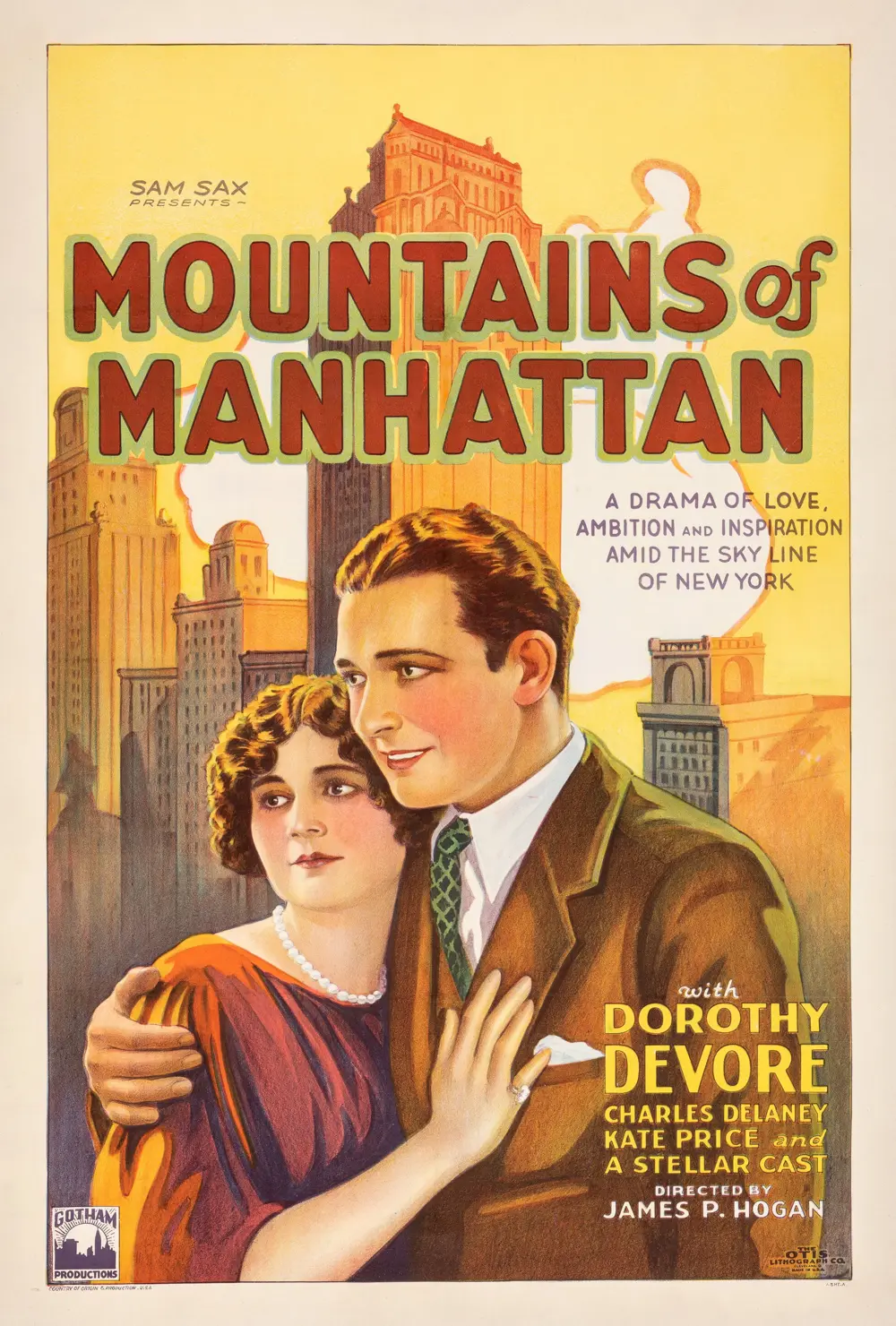
Is Mountains of Manhattan worth your time in the modern era? Short answer: Yes, but only if you have a deep-seated fascination with the industrial birth of the American city. This film is for the architectural historian and the silent-film purist; it is certainly not for those who require the breakneck pacing of a contemporary thriller.
Director James P. Hogan delivers a work that feels less like a polished studio product and more like a captured moment in time. It is a film that breathes the dust of 1927 Manhattan. While the romantic tropes may feel weathered, the visual representation of the 'mountains' of steel remains remarkably potent even a century later.
Mountains of Manhattan is worth watching because it provides a visceral, non-CGI look at the construction of the New York skyline. It serves as a historical document as much as a drama. If you enjoy seeing the raw mechanics of early 20th-century labor, this is a must-see. However, if you struggle with the exaggerated pantomime of silent-era acting, you may find the emotional beats difficult to connect with.
1) This film works because it captures the terrifying height and physical risk of ironwork with a sincerity that modern green screens cannot replicate.
2) This film fails because the middle act gets bogged down in a repetitive romantic misunderstanding that halts the narrative momentum.
3) You should watch it if you want to see the literal skeleton of New York City through a lens that treats steel like a living character.
James P. Hogan was not a director known for subtlety, and in Mountains of Manhattan, his heavy-handedness actually serves the material well. The film focuses on the sheer scale of the skyscrapers, treating the buildings as the true protagonists. Hogan uses low-angle shots to emphasize the looming presence of the girders, making the human actors look like ants scurrying across a giant's ribs.
The pacing is deliberate, perhaps too much so for some. We see the process of riveting, the tossing of hot metal, and the precarious balance of the workers. These sequences are far more engaging than the domestic scenes. When the camera is on the ground, the film feels like many other dramas of its time, such as Broadway Rose, but when it climbs the heights, it finds its own voice.
Hogan avoids the typical soft-focus glamour of the late 20s. He opts for a high-contrast look that highlights the sweat on Charles Delaney’s brow and the grease on the machinery. This gives the film a proto-realist quality that was quite rare for 1927. It feels less like a dream and more like a shift at a construction site.
Dorothy Devore is the heart of the film’s social commentary. Known primarily for her comedic timing, she pivots here into a role that requires a blend of arrogance and vulnerability. Her character's initial disdain for the 'lower' world of labor is played with a sharp, almost biting edge. It’s a performance that doesn’t ask for the audience's immediate sympathy.
Charles Delaney, on the other hand, provides the necessary grounding. He represents the 'Mountains'—unmovable, strong, and utilitarian. The chemistry between the two is functional, if not electric. They represent two different versions of New York that are forced to occupy the same vertical space. Delaney’s physical presence is his greatest asset here; he looks like he belongs on a beam.
The supporting cast, including Robert Homans and Kate Price, provide the necessary 'neighborhood' flavor. Price, in particular, adds a layer of warmth that prevents the film from becoming too cold and industrial. Her performance reminds us that beneath the steel are the people who actually make the city live. This ensemble dynamic is similar to the character-driven work seen in The Heart of a Police Officer.
The cinematography is the standout element of this production. In an era where cameras were often static and bulky, the crew managed to capture angles that feel daring. There is a specific scene involving a crane shot that follows a bucket of rivets upward. It creates a sense of vertigo that is genuinely impressive for the time.
The use of natural light is also commendable. The way the sun hits the metallic surfaces of the half-finished buildings creates a harsh, brilliant aesthetic. It contrasts sharply with the dimly lit, smoke-filled interiors of the workers' bars and the soft, artificial lighting of the debutante balls. This visual dichotomy tells the story of class better than the intertitles ever could.
Compared to the more stylized visuals of The Red Circle, Mountains of Manhattan is almost documentary-like. It doesn't rely on shadows to create mystery; it uses light to expose the hard reality of the work. The camera doesn't shy away from the height. It embraces the fear. It makes you feel the wind at the top of the world.
If there is a significant flaw, it is the script's reliance on tired melodrama in the second act. The plot involves a misunderstanding regarding a lost piece of jewelry that feels entirely out of place in a movie about skyscraper construction. It’s a narrative crutch that slows the film down. We want to be back on the beams, not in a parlor discussing lost trinkets.
The transition between the industrial action and the social drama is often jarring. One moment we are witnessing a life-threatening accident on the 40th floor, and the next we are watching a polite tea service. This friction was common in films like The Unguarded Hour, but here it feels particularly obstructive because the industrial scenes are so much more compelling.
However, the final act redeems these lulls. The tension ramps up as a storm hits the city, and the structural integrity of the 'mountain' is put to the test. This climax brings the romantic and industrial threads together in a way that is satisfying, even if it is predictable. It’s a movie that smells like ozone and hot iron. It works. But it’s flawed.
Pros:
The film offers a rare look at 1920s construction techniques. Dorothy Devore delivers a surprisingly nuanced performance. The cinematography captures a sense of scale that few films of the era attempted. It avoids the typical 'happy ending' fluff by acknowledging the physical toll of labor.
Cons:
The romantic subplot is thin and predictable. The intertitles are sometimes overly flowery and distract from the grit. The pacing in the middle hour is sluggish. It lacks the thematic depth found in contemporary films like Youth and Adventure.
Mountains of Manhattan is a fascinating industrial artifact that happens to have a romance attached to it. While it doesn't reach the narrative heights of the era's greatest masterpieces, its commitment to capturing the physical reality of New York's expansion is commendable. It is a film of iron and ego, of heights and heartbreaks. It is a solid, three-star experience that rewards the patient viewer with some of the most iconic imagery of the late silent period.
If you can look past the dated social conventions, you will find a movie that respects the sweat of the worker. It doesn't just show you the city; it shows you how the city was forged. It’s a rough climb, but the view from the top is worth it. It’s not perfect, but it’s real.
IMDb —
1919
Community
Log in to comment.