DbcultAccessing Vault...
6.7/10
Senior Film Conservator
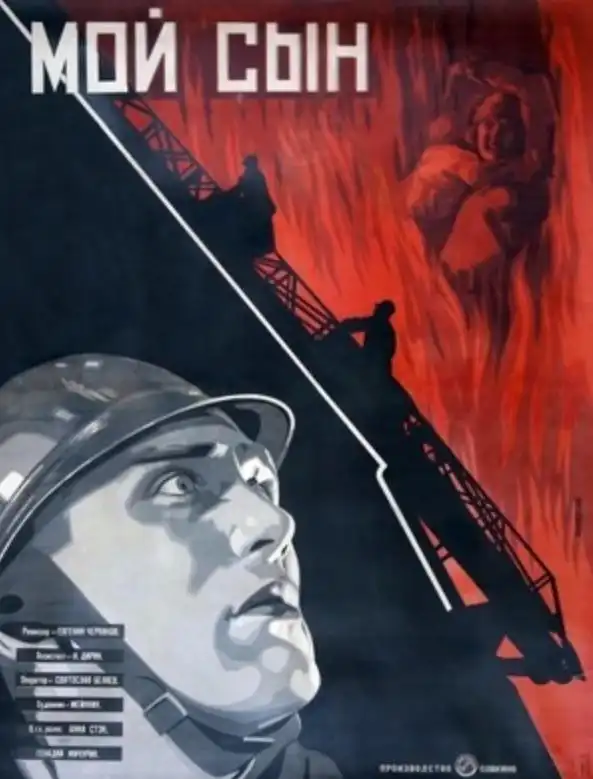
A definitive 6.7/10 rating for a film that redefined the boundaries of cult cinema. Moy syn remains a cornerstone of transgressive art.
“Moy syn” (My Son), this 1928 Soviet silent drama, is one of those films that feels more like a historical document than something you’d casually throw on for a Friday night. If you’re into early Soviet cinema, particularly its take on shifting social values and the worker's struggle, then yes, it's absolutely worth seeing for its ambition and some genuinely striking performances. But if you’re hoping for a brisk, universally engaging narrative without a deep dive into the specific anxieties of its era, you'll probably find it a bit of a slog, maybe even outright frustrating in its didactic moments.
The film opens with Andrei, our main guy, a worker, in some kind of casual courtship with Olga. It’s all very understated, almost like they’re just going through the motions. Lyudmila Semyonova as Olga has this quiet, almost resigned sadness about her from the jump. You don't get grand declarations of love, just a sense of two people who are... together. The intertitles do a lot of heavy lifting here, setting up the expectation of a family, almost a duty, rather than a passionate romance.
Andrei, played by Fyodor Nikitin, has a face that really works for silent film. He’s got that brooding intensity, but it’s often hard to tell if he’s genuinely conflicted or just a bit lost. There's a scene early on where he's looking at Olga, and the camera just holds on him. He doesn't quite meet her gaze. It’s a small thing, but it immediately tells you where his head is at – not really in it.
Then, of course, the baby arrives. And this is where the film really starts to lean into its social commentary. Olga is left holding the literal baby, and the contrast between her struggling, isolated life and Andrei's continued engagement with his work and comrades is stark. There are these quick cuts between Olga alone in a cramped room with the infant and Andrei at a bustling factory or political meeting. It’s effective, but also a bit blunt. The message is hammered home.
Anna Sten shows up as Tanya, the "new woman" and Andrei's eventual love interest. She's got this modern, almost defiant energy. Her scenes with Andrei feel lighter, more intellectual, less burdened by the unspoken weight that hung between him and Olga. There's a moment where they're talking, or rather, gesturing, and Tanya just smiles this knowing, slightly challenging smile. It's a stark contrast to Olga's perpetual melancholy. The chemistry isn't exactly electric, but you can see why Andrei is drawn to the idea of her. She represents a different path, away from the old-world obligation.
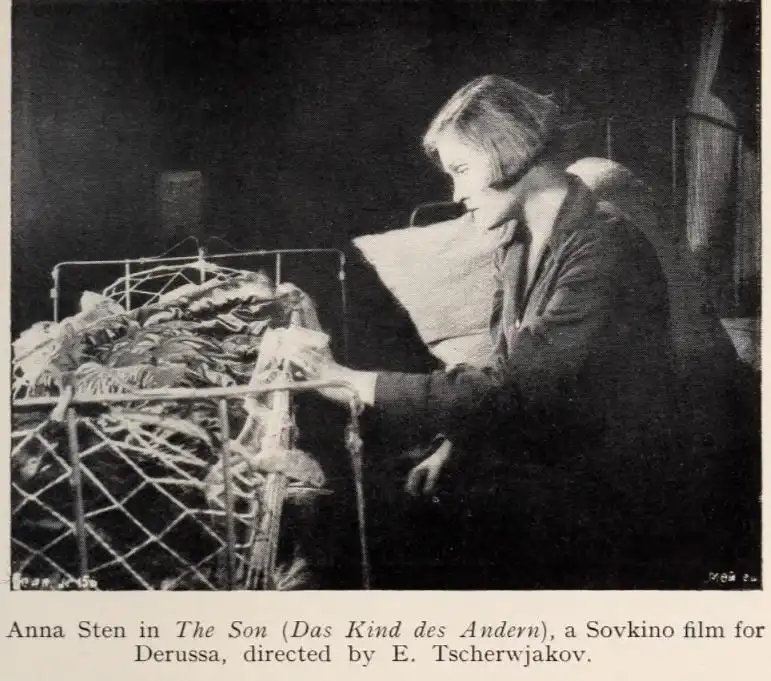
The pacing can be a real challenge. Some scenes linger far too long on a single emotional beat, especially those with Olga looking mournful. You get it, she’s sad, she’s abandoned, she’s suffering. But after the third or fourth extended shot of her looking out a window, you start to feel the drag. It's almost like the film is trying to make you feel her suffering through sheer duration, but it just ends up making you impatient.
Then there are these weird little background details. In one of the factory scenes, there's an extra whose movements are just slightly out of sync with everyone else, almost like they missed a cue. It pulls you out of the moment for a second. Or a costume choice for one of the supporting characters, a hat that looks a little too new, a little too stiff for the setting. Tiny things, but they catch your eye.
The film really picks up when it focuses on the internal struggle, or at least the external manifestations of it. Andrei's attempts to ignore his past, to embrace this new future with Tanya, feel genuine in their awkwardness. He's not a villain, not exactly, but he's certainly not a hero either. He’s a product of his time, trying to navigate conflicting pressures. When he finally has to confront his responsibility, it's not a grand, tearful reunion. It’s more like a slow, dawning realization, punctuated by the silent, judging gaze of his comrades. That's where the film truly works. The quiet pressure of the collective, not melodrama.
The ending is... well, it’s a Soviet film from the 20s. It’s not going to be a happy-ever-after individualistic resolution. It leans heavily into the idea of collective responsibility and the "correct" path. But even there, there’s a flicker of something more human. The very last shot, or one close to it, of Andrei looking at his son, isn't about triumph. It's about a heavy, perhaps necessary, acceptance. It feels a bit abrupt, like they ran out of film or just decided the point had been made. You almost want to see what happens next, how this new, socially conscious fatherhood plays out. But it just cuts.
It's a fascinating watch if you can get past the sometimes heavy-handed messaging and the pacing. It’s a snapshot of a society wrestling with what it means to be modern, what family means, and how individual desires fit into a grander social project. Just don't expect a smooth ride.
IMDb 6.8
1934
Community
Log in to comment.