DbcultAccessing Vault...
Cult Review
Senior Film Conservator
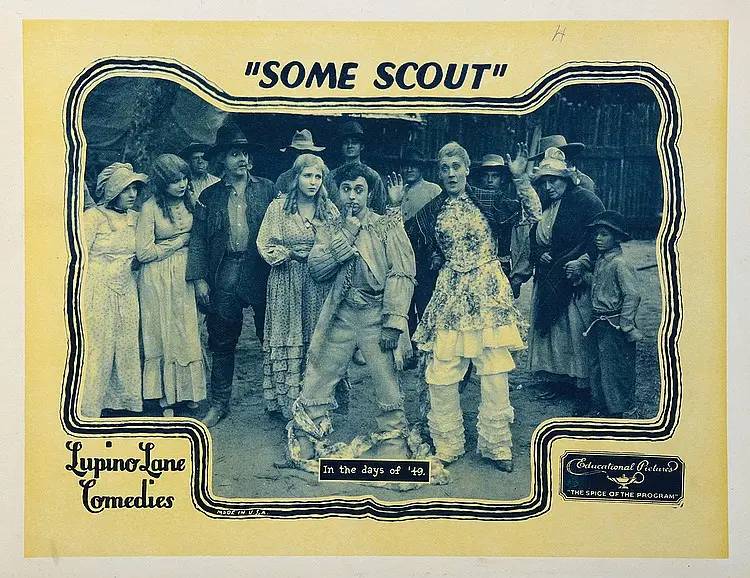
Is Some Scout, a relic from the silent era starring Lupino Lane and Wallace Lupino, worth your precious viewing time in the modern age? Short answer: yes, but with significant caveats that demand a particular kind of cinephile. This film is an unexpected delight for those who appreciate the foundational artistry of early cinema, particularly its physical comedy and burgeoning narrative sophistication, yet it will undoubtedly test the patience of viewers accustomed to contemporary pacing and sound design.
It's a genuine find for students of film history, fans of the Lupino dynasty, and anyone curious about the evolution of the action-comedy genre. Conversely, if your cinematic palate demands crisp dialogue, complex character arcs, or high-definition explosions, this charming, earnest adventure will likely feel like an alien artifact, a quaint curiosity rather than compelling entertainment.
Some Scout emerges from the nascent days of cinema with a simple premise that belies its surprising depth of execution. Directed with a clear understanding of visual storytelling, the film chronicles the misadventures of Jerry, a wide-eyed country scout, as he navigates the treacherous urban landscape. His arrival in the city, ostensibly for a national jamboree, quickly devolves into a thrilling pursuit of justice when he inadvertently crosses paths with the notorious jewel thief, Sly Simon.
The film works because it masterfully leverages the inherent innocence and ingenuity of its protagonist against the cynical backdrop of urban crime, creating a compelling contrast that drives both its humor and its suspense. It fails, however, in its occasional reliance on broad, almost pantomime-like villainy that, even for the silent era, sometimes feels a touch too simplistic, undermining the otherwise clever plotting. You should watch it if you possess an appreciation for silent film's unique charm, a keen eye for physical comedy, and a willingness to engage with a story told purely through movement, expression, and intertitles.
Lupino Lane, a name synonymous with early 20th-century entertainment, delivers a performance in Some Scout that is nothing short of captivating. His portrayal of Jerry, the titular scout, is a masterclass in physical comedy and expressive acting, a testament to his vaudeville roots. Lane doesn't just act; he embodies the character through every stumble, every wide-eyed glance, and every meticulously choreographed chase sequence. There's a particular scene where Jerry, attempting to track Simon through a crowded marketplace, navigates a series of absurd obstacles – a tumbling fruit cart, a mischievous dog, a towering stack of crates – with a blend of acrobatic grace and clumsy charm. Lane’s ability to convey Jerry’s earnest determination, even as he causes mayhem, is the film’s beating heart.
His movements are precise, yet imbued with a natural awkwardness that sells the 'country boy in the big city' persona. This isn't merely slapstick; it's a carefully calibrated performance that uses the entire body as an instrument of storytelling. Unlike some of his contemporaries who might have leaned into caricature, Lane maintains a subtle humanity that makes Jerry genuinely endearing. You root for him not just because he’s the hero, but because his struggles feel real, even when exaggerated for comedic effect. It's a performance that reminds you why physical comedy was, and remains, such a powerful form of expression.
His interactions with the various urban denizens are particularly noteworthy. From his bewildered expressions when confronted with the city's rapid pace to his determined focus during a critical moment of deduction, Lane ensures that Jerry is never a static character. He grows, learns, and adapts, all without uttering a single audible word. This is the magic of silent film, and Lane is a conjurer of the highest order.
Opposite Lane's innocent hero, Wallace Lupino, likely a relation and certainly a formidable screen presence, crafts a compelling villain in Sly Simon. Simon is not merely a moustache-twirling caricature; he possesses a sinister cunning that feels genuinely threatening. Wallace Lupino uses subtle gestures – a calculating glint in his eye, a slow, deliberate smile that doesn't quite reach his eyes – to convey menace. His performance provides the necessary gravitas to the criminal element, ensuring that Jerry's quest feels genuinely perilous rather than merely a comedic romp. The cat-and-mouse dynamic between Lane and Wallace Lupino is the engine of the film's suspense, and both actors commit fully to their roles, creating a believable, if exaggerated, conflict.
Estelle Bradley, as the enigmatic Lily, brings a much-needed layer of complexity to the narrative. Her character is initially shrouded in ambiguity, her motives unclear. Bradley's performance is understated yet powerful, conveying a range of emotions – fear, resilience, and a quiet determination – often through slight shifts in posture or a fleeting glance. There's a particularly poignant moment where Lily, cornered by Simon, subtly signals her distress to Jerry, a silent plea that speaks volumes. Her presence elevates the film beyond a simple chase, introducing an emotional core and a sense of genuine human stakes. She’s not just a damsel in distress; she’s a participant, and her agency, however constrained, is palpable.
The chemistry between Lane and Bradley, though largely unspoken, is tangible. Their shared glances, their unspoken understanding in moments of danger, add a layer of romantic tension that is both sweet and compelling, grounding the more outlandish comedic and action sequences in something deeply human. Bradley’s performance is perhaps the most modern in its sensibility, hinting at the strong female characters that would emerge in later decades.
The direction in Some Scout, though uncredited in some records, demonstrates a keen understanding of silent film conventions while pushing some boundaries. The use of parallel editing during the climactic chase through the city streets is particularly effective, building suspense as Jerry and Simon converge on the same location from different directions. The camera work, while not groundbreaking by today's standards, is remarkably fluid for its time, employing tracking shots to follow characters through bustling environments and close-ups to emphasize crucial details – a stolen locket, a scout badge, a hidden note. These choices are deliberate, ensuring that the visual narrative is always clear, even without dialogue.
One striking example is the sequence set in Simon's dimly lit hideout. The cinematography employs stark chiaroscuro lighting, creating deep shadows that heighten the sense of danger and mystery. This visual style, reminiscent of German Expressionism which was influencing cinema globally, adds an unexpected layer of artistic sophistication to what could have been a straightforward caper. It’s a bold choice that pays off, making the villain’s lair feel genuinely ominous. The visual storytelling is paramount, and the filmmakers clearly understood how to manipulate light and shadow to evoke emotion and narrative tension.
The pacing of the film is another strong suit. It begins with a leisurely, almost pastoral introduction to Jerry's world, establishing his innocent nature. This deliberate build-up makes the sudden plunge into urban intrigue all the more impactful. Once Jerry is embroiled in the mystery, the pace accelerates, with a series of quick cuts and dynamic action sequences that keep the audience engaged. The film manages to balance its comedic moments with genuine suspense, never allowing one to overshadow the other completely. This tonal dexterity is a hallmark of well-crafted silent cinema.
Some Scout’s pacing is surprisingly robust, a testament to the editor’s skill in maintaining momentum without overwhelming the audience. The initial scenes establish Jerry’s rural innocence with a gentle, almost pastoral rhythm, allowing the audience to connect with his naive optimism. This deliberate setup makes the sudden plunge into the frenetic pace of urban crime all the more jarring and effective. As the plot thickens, the cuts become sharper, the action more continuous, culminating in a thrilling, extended chase sequence that showcases the era’s burgeoning understanding of cinematic dynamism. It never drags, even when relying on more theatrical gags.
The tone is a delicate blend of earnest adventure and lighthearted comedy. While there are genuine moments of peril, particularly for Lily, the film never descends into outright darkness. The humor, largely derived from Jerry’s fish-out-of-water experiences and his accidental triumphs, keeps the mood buoyant. This tonal balance is crucial; it allows the film to explore themes of good versus evil without becoming preachy or overly dramatic. It’s a charming diversion. But it’s flawed. The blend of slapstick and suspense is executed with a confidence that suggests a clear artistic vision, even if it occasionally veers into the predictable.
Thematically, Some Scout is a fascinating exploration of innocence confronting corruption, and the enduring power of simple virtues in a complex world. Jerry, with his scout’s oath and his inherent honesty, represents an idealized version of rural morality clashing with the moral ambiguity of the city. The film implicitly argues that integrity and resourcefulness, even in their most rudimentary forms, can triumph over sophisticated villainy. It’s a timeless message, delivered with a period-specific charm. There’s also an interesting subtext about the changing landscape of youth; the scout movement itself was a relatively new phenomenon, reflecting a desire to instill traditional values in a rapidly modernizing society.
Yes, Some Scout is absolutely worth watching for the right audience. If you have an interest in silent cinema, a fondness for physical comedy, or a desire to witness the early performances of significant talents like Lupino Lane, this film offers considerable rewards. It stands as a vibrant example of storytelling from an era often misunderstood, proving that engaging narratives and compelling characters existed long before synchronized sound. It’s a window into the past, rich with historical and artistic value. However, be prepared for a viewing experience that requires a different kind of engagement than modern films. Embrace the intertitles, appreciate the mime, and let the visual language transport you.
When placed alongside its contemporaries, Some Scout holds its own admirably. It shares the lighthearted adventurous spirit of films like The Conquest of Canaan, but injects a more pronounced comedic flair. While it doesn't possess the intricate social commentary of a film like Disraeli, its exploration of urban versus rural values offers its own subtle insights. The physical prowess on display by Lupino Lane could be seen as a precursor to the acrobatic antics found in later comedies, perhaps even hinting at the dynamic energy seen in films like Town Terrors, though with a distinct narrative purpose beyond mere spectacle. It’s certainly more robust in its narrative drive than some earlier, more experimental works such as Le rêve.
The film’s unique blend of caper and comedy distinguishes it from the more straightforward dramas of the period, such as The Silence of Dean Maitland. It’s a testament to the versatility of silent cinema that such diverse stories could be told, and Some Scout carved out its own niche. It's not aiming for the dramatic heights of Soul Mates, but rather a more accessible, entertaining experience.
Some Scout is an undeniable charmer, a spirited adventure that showcases the vibrant artistry of the silent era. While it won't appeal to everyone, its spirited performances, particularly Lupino Lane's, and its clever visual storytelling make it a valuable and enjoyable watch for those willing to embrace its unique language. It's more than just a historical curiosity; it's a testament to the enduring power of good, old-fashioned storytelling, delivered with wit and genuine heart. A recommended viewing for the discerning cinephile.
IMDb —
1931
Community
Log in to comment.