DbcultAccessing Vault...
Cult Review
Senior Film Conservator
Frances Marion’s pen, dipped in equal parts gospel ink and Broadway glitter, etched The Crimson Dove into the celluloid of 1917 like a fever dream nobody asked for yet everybody recognizes. Long mislaid in the catacombs of film archives, the picture surfaces now as a phoenix—scorched, sinewy, singing of transgression and absolution with a tremolo no modern blockbuster dares attempt.
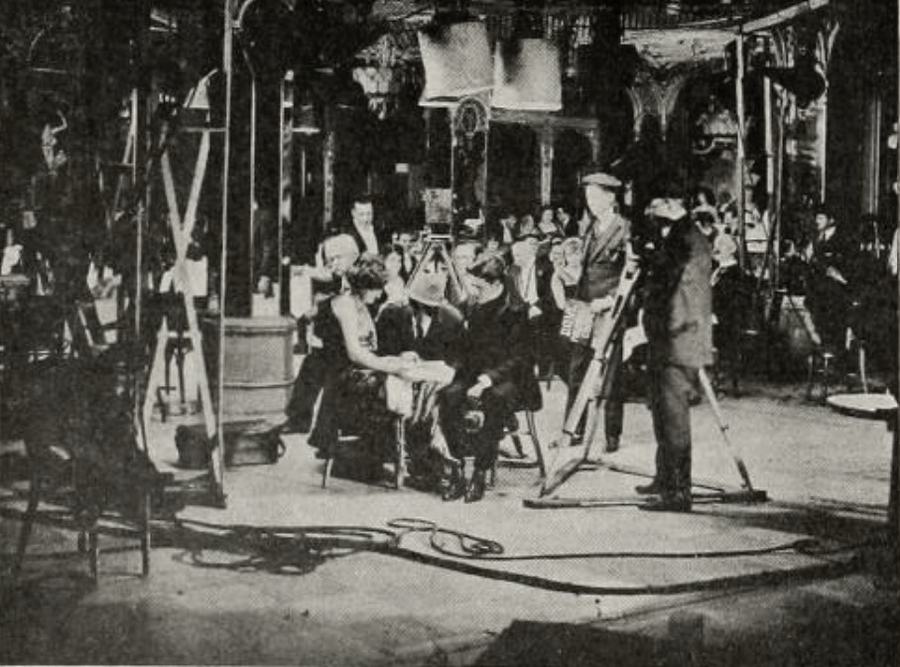
There are silents that whisper, and silents that scream. The Crimson Dove does both within a single reel. Notice how cinematographer George S. Trimble bathes Blanche Davenport’s Adrienne in tungsten halo during the pastoral act—only to scrape her cheekbones with stark Cooper-Hewitt mercury-vapor when the footlights reclaim her in the third. It is the visual equivalent of a heart hollowed by confession.
The narrative hinge—an actress mistaken for a milk-fed maiden—could have slipped into farce. Yet Marion’s scenario refuses winks. Instead, the misunderstanding metastasizes into spiritual siege: the minister’s love becomes a mirror that the heroine shatters with a single shard of truth, and every subsequent frame vibrates with the echo.
Carlyle Blackwell plays Cameron with the stiff spine of someone who has never questioned the Lord’s arithmetic—until desire introduces higher calculus. Watch his pupils dilate when Adrienne, draped in organza, recites “The Song of Solomon” as if it were café society banter. Blackwell’s quivering restraint is a masterclass in silent-era masculinity: no mustache-twirling, only a throat muscle clenching against a celluloid collar.
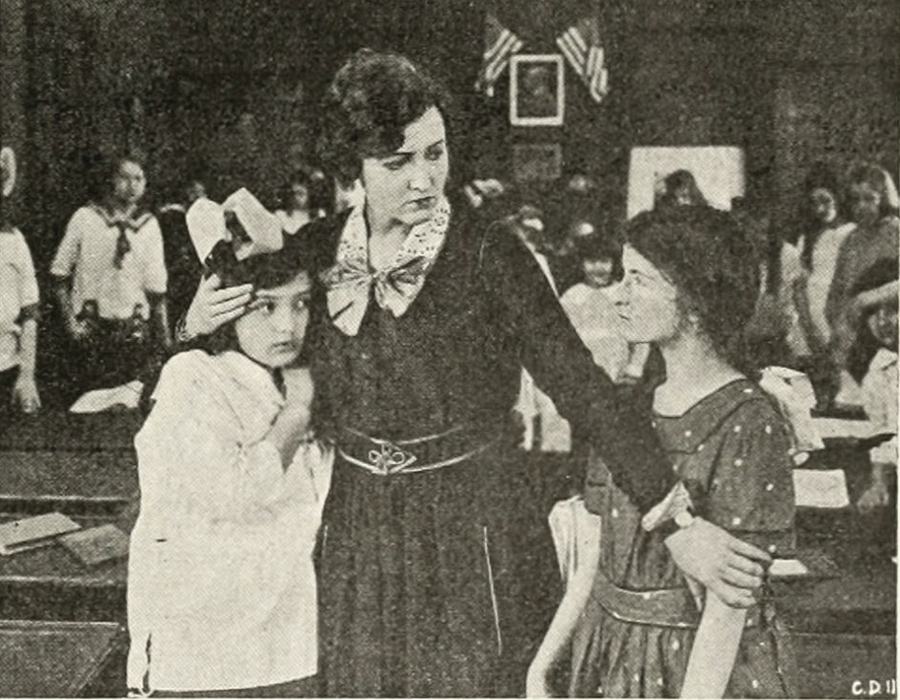
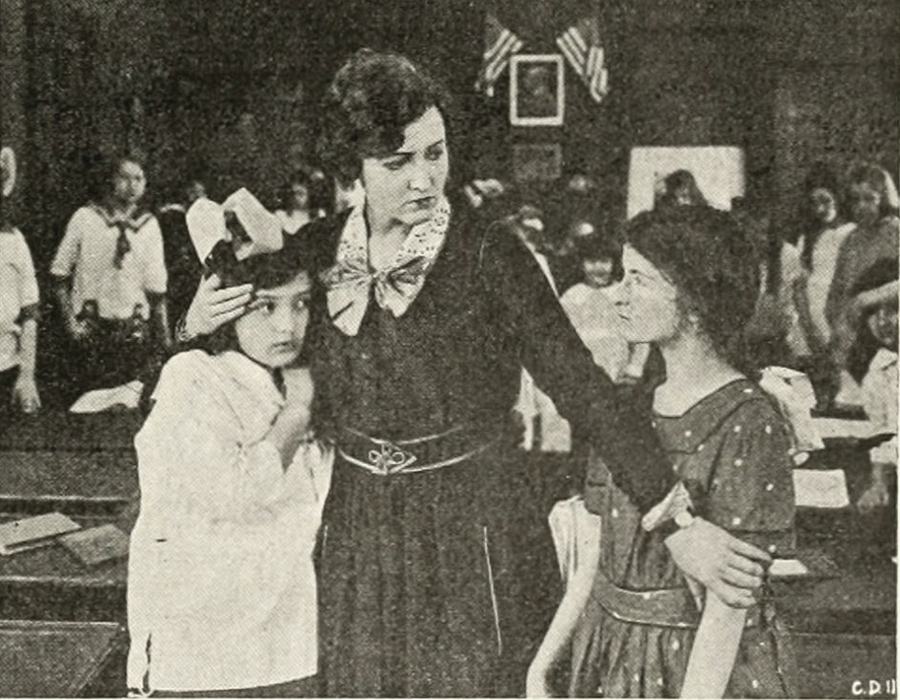
Opposite him, Blanche Davenport pirouettes between registers—coquette, penitent, fierce mother to a classroom of rag-pickers—without ever lapsing into the femme fatale stencil. Her final riverboat entrance, veil stripped by wind, feels like an Annunciation in reverse: the secular world bearing grace to the wilderness.
Special venom must be reserved for June Elvidge’s Faro Kate, a venal Venus who could have sauntered out of a Vengeance Is Mine! reel. Elvidge lets her eyes crawl over Cameron like a measuring tape, calculating soul-weight vs. libido; the resulting combustion justifies the literal conflagration that follows.
Most silents treat churches as set dressing. Here the chapel becomes a tinderbox of doctrine. When the lumber-camp congregation torches it, the sequence rivals any modern disaster set-piece: embers ride updrafts like infernal cherubim, stained-glass saints craze into spiderwebs, and a handmade cross tilts, silhouetted against a crimson sky. The imagery predates and outstrips the cathedral blaze in God, Man and the Devil, achieving a mythic pulse closer to medieval passion plays than to nickelodeon melodrama.
Yet the film refuses easy martyrdom. Cameron’s rescue of Kate’s infant—shot in a single, unforgiving long take—forces the viewer to taste smoke, to feel floorboards buckle. Salvation here is visceral, earned in lungs scarred by pine tar and censure.
Marion, one of the first female power-writers in Hollywood, slyly indicts the sexual double standard without brandishing a protest placard. Note the symmetry: the actress confesses her past and loses the man’s esteem; the minister admits vocational failure and merely changes zip codes. The imbalance is text, not subtext, and it stings precisely because the film withholds a sermon.
Adrienne’s eventual self-conscription to a children’s school reclaims agency through service, not suffering. She does not pine in a garret; she educates the offspring of washerwomen, her chalk screech across slate becoming a new kind of curtain call. The film’s closing tableau—Cameron’s outdoor pulpit framed by cedar stumps, Adrienne’s organ hymn riding the breeze—offers not a patriarchal “you complete me” but a mutual ordination: two sinners preaching in the clearing they hacked from guilt.
Trimble’s camera employs chiaroscuro worthy of La leggenda di Pierrette—faces half-drowned in umbra while eyes glint like chapel candle snuffers. A match-cut replaces Adrienne’s powder puff with the minister’s communion wafer, equating vanity and sacrament in a visual epigram so swift you could sneeze through it.
The tinting strategy deserves scholarship: amber for prairie idyll, viridian for the Broadway bacchanal, blood-red for the camp inferno. These are not mere novelty tints but emotional EQ sliders, calibrated to steer the audience’s endocrine system.
Trade papers of 1917 praised the picture’s “moral fervor,” though some Midwestern exhibitors trimmed the suicide-attempt intertitle, fearing copycats. In New York, the film ran as a double-bill alongside newsreels of the European front; audiences saw in Cameron’s ordeal a parable for boys shipping out to Argonne forests.
Modern viewers will detect pre-echoes of ’Tween Heaven and Earth: the crisis of vocation, the eros/agape collision. Yet The Crimson Dove is leaner, meaner, its redemption wrested rather than bestowed. It also anticipates the social-realist streak of Gatans barn, though it never abdicates its pulpit for pamphleteering.
Archival notes indicate the original release shipped with a cue sheet calling for “Nearer, My God, to Thee” on the camp-fire organ, followed by Mendelssohn during Adrienne’s confession. Contemporary festivals have paired the print with live minimal strings—an approach that risks sentimental overkill. Better to embrace the crackle of nitrate as its own liturgy, to let the lack of synchronized dialogue expose the creaking seats and collective breath of spectators, forming a congregational antiphon far holier than any orchestration.
A 4K restoration by the Library of Congress—funded in part by an anonymous donor who cited the film as his grandmother’s favorite—premiered at Pordenone 2022. The new print reveals textures previously muddied: the crochet on Adrienne’s traveling gloves, the sweat sheen on Cameron’s chisel-cut side-part. Streaming rights remain tangled in the Maxwell Karger estate, but boutique Blu-ray imprint CineNecropolis has slated a region-free release with commentary by historian Shelley Stamp. Seek it out; no YouTube gray-market transfer can rival the tonal gradations unearthed in this edition.
Great art seldom announces itself with trumpets; more often it coos like the dove of the title—easily missed amid cinematic pterodactyls. The Crimson Dove is that coo, a slender sound that reverberates in marrow. It is not flawless; the subplot of Faro Kate’s false accusation resolves with convenient haste, and one could drive a Pilgrim’s wagon through the plot hole of instantaneous paternity consensus. Yet these are quibbles before a conflagration of sincerity.
In an industry currently recycling superheroes like stale communion wafers, here is a film that believes transformation still costs something—that grace is a scalpel, not a spa treatment. Watch it to remember why melodrama earned its suffix: not to mock feeling, but to magnify it until the heart has no hiding place.
Verdict: 9/10 — A crimson feather from the dove that flew too close to the sun—and returned, singed, singing.
IMDb —
1935
Community
Log in to comment.