DbcultAccessing Vault...
Cult Review
Senior Film Conservator
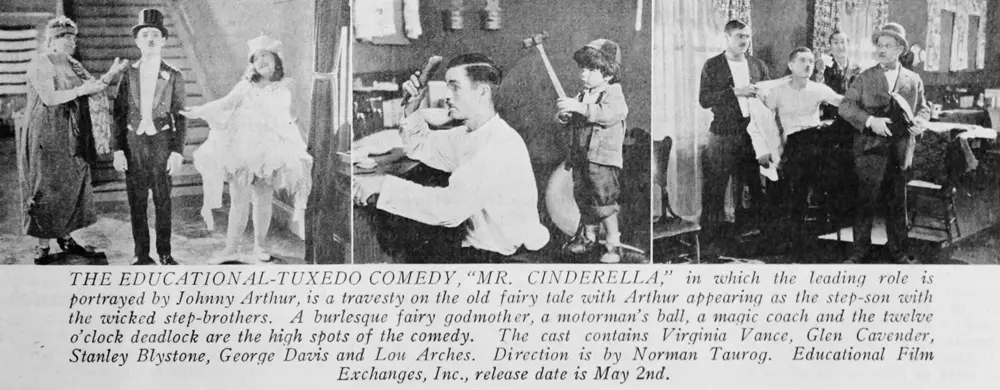
Short answer: yes, but only if you appreciate the specific brand of mean-spirited slapstick that defined the mid-1920s. This isn't a whimsical fairy tale for children; it’s a cynical look at a man on the brink of a nervous breakdown.
This film is for silent comedy enthusiasts who enjoy technical experimentation and the 'loser-hero' archetype. It is absolutely not for those who find domestic bullying uncomfortable or who prefer the polished, sentimental narratives of modern romantic comedies.
Yes, Mr. Cinderella remains a fascinating artifact for its technical ambition and its surprisingly dark tone. While many silent shorts of the era relied on simple chase sequences, this film attempts a psychological layer by framing its magic as a dream induced by a radio broadcast.
The film works because of Johnny Arthur's specific brand of high-strung, physical comedy. Unlike the stoicism of Keaton or the pathos of Chaplin, Arthur plays Johnny with a frantic, desperate energy that feels genuinely modern.
The film fails because its ending is essentially a reset button on a cycle of abuse. There is no growth, only the temporary reprieve of a hallucination, which might leave modern viewers feeling more depressed than amused.
You should watch it if you want to see how early filmmakers utilized practical effects to simulate 'magic' without the benefit of digital compositing.
From the opening frames, director Glen Cavender establishes a world that is visually cramped and emotionally suffocating. Johnny is not just a servant; he is a non-entity. The way George Davis and Lou Archer loom over Johnny Arthur creates a physical disparity that makes the later dream sequence feel earned.
Consider the scene where George forces Johnny to press his clothes. The framing is tight, emphasizing Johnny's domestic imprisonment. When Johnny accidentally burns the suit, the brothers' reaction isn't just anger—it's predatory. They strip him of his own clothes and his identity.
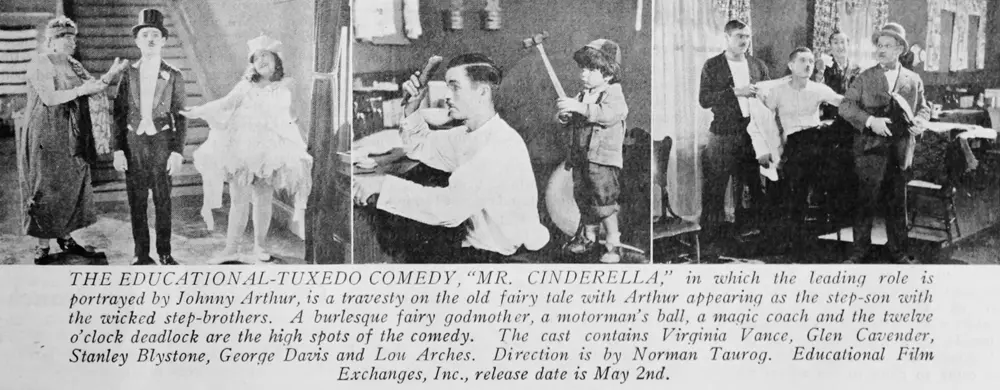
This level of bullying is far more intense than what we see in contemporary shorts like The Agent. In those films, the conflict is often situational. Here, it is deeply personal and rooted in a family dynamic that feels almost pathological.
One of the most striking elements of Mr. Cinderella is the role of the radio. In 1926, radio was the 'magic' of the household, a portal to worlds far beyond the living room. The film uses the radio as a literal catalyst for the supernatural, which is a brilliant bit of contemporary commentary.
When Johnny puts on the headphones—defying his brother’s orders—it is his first act of rebellion. The 'bedtime story' he hears isn't just a plot device; it’s a sedative for his trauma. The transition into the dream sequence is handled with a fluidity that rivals the dream logic found in Sherlock's Home.
The visual gag of the tin cans transforming into a 'flivver' (a Ford Model T) is the film's technical highlight. It’s a low-budget, high-concept transformation that uses stop-motion and clever editing to sell the illusion. It’s gritty magic, consistent with Johnny’s impoverished reality.
Once Johnny reaches the Motorman's Ball, the film shifts from domestic drama to high-energy slapstick. This is where the film finds its rhythm. Johnny Arthur’s performance at the ball is a masterclass in 'out-of-place' comedy. He is dressed to the nines but retains the twitchy reflexes of a man who expects to be hit at any second.
The brawl that breaks out is chaotic and well-choreographed. It serves as Johnny's subconscious wish fulfillment. He isn't just fighting for Virginia; he is fighting the world that has kept him under its thumb. It’s a visceral sequence that provides a much-needed break from the earlier tension.
However, the film never lets the audience get too comfortable. The ticking clock is omnipresent. The tension doesn't come from the threat of being 'found out' by a prince, but from the looming return to a reality where he is a victim. It’s a stressful watch, and that’s a compliment to the pacing.
The sequence where Johnny’s clothes fly off as he races home is the film's most famous moment. It’s a literal stripping away of his temporary power. The way his trousers leave him just as he crosses the threshold is a brutal punchline. It’s not just embarrassing; it’s a return to his 'naked,' vulnerable state before his brothers.
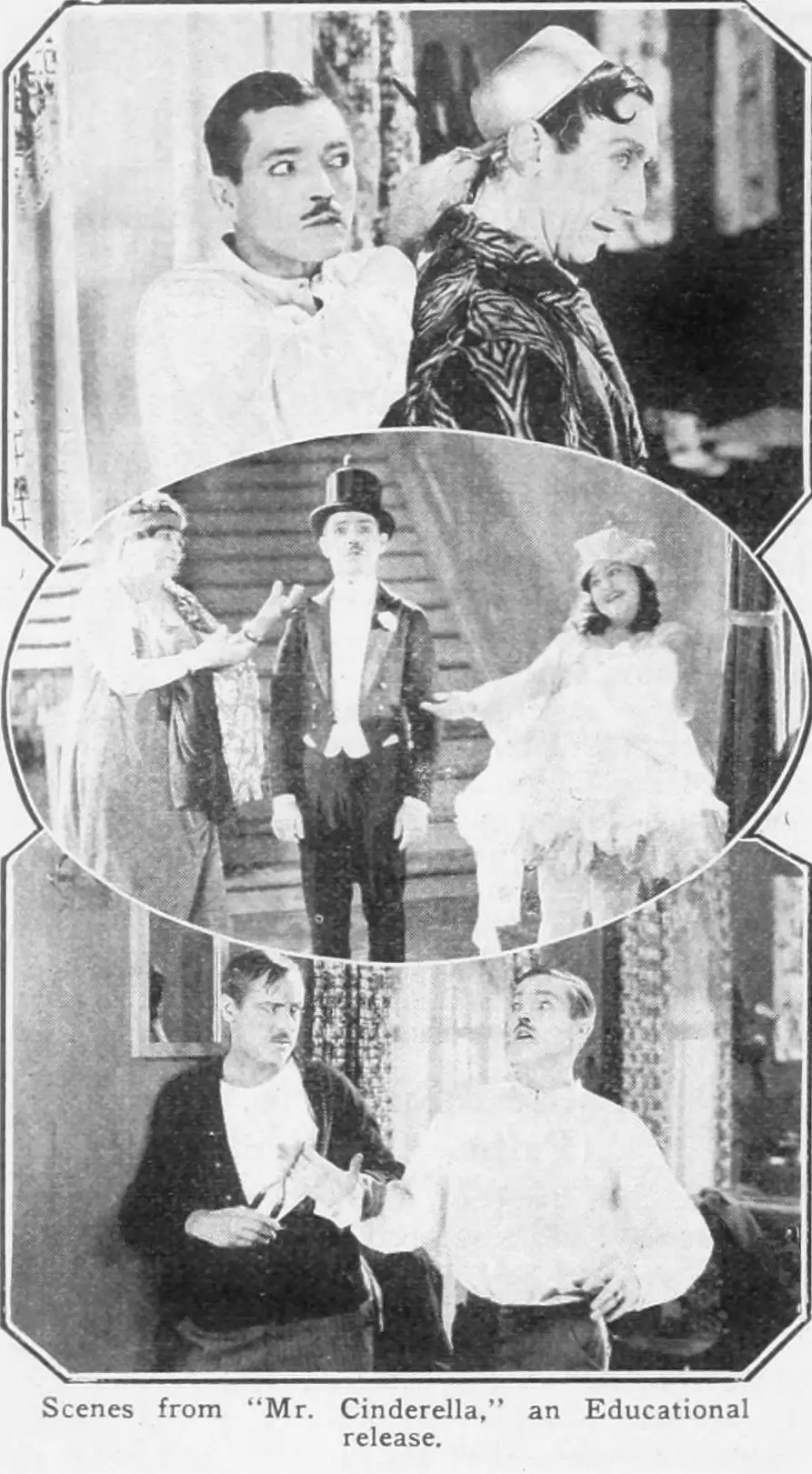
Technically, this sequence is a marvel for 1926. The use of wires and reverse-motion photography creates a sense of supernatural theft. The clothes don't just fall off; they seem to be actively escaping him, as if the dream itself is rejecting his presence.
This stands in stark contrast to the more grounded stakes of Fighting Blood. In that film, the physical struggle is about endurance. In Mr. Cinderella, the struggle is against the very fabric of reality, which seems determined to keep Johnny in his place.
Johnny Arthur’s expressive, high-energy performance keeps the energy high. The film’s use of radio as a framing device is ahead of its time. The practical effects during the transformation and the midnight escape are genuinely impressive for the era.
The brothers are one-dimensional villains with no redeeming qualities. The ending, while realistic to the 'dream' trope, feels like a slap in the face to the audience’s investment in Johnny’s success. The female lead, Virginia Vance, is given very little to do other than look concerned.
Johnny Arthur was a unique presence in the 1920s. He specialized in these 'effeminate' or 'nervous' roles that stood in opposition to the rugged masculinity of the time. In Mr. Cinderella, he uses this to his advantage, making Johnny's victimhood feel visceral rather than just a plot point.
Virginia Vance provides a decent enough foil, but she is underutilized. Her chemistry with Arthur is sweet, but the film is far more interested in the relationship between Johnny and his brothers. Stanley Blystone and George Davis play the villains with a heavy-handedness that works for the silent format but lacks the nuance seen in films like The Pitfall.
Mr. Cinderella is a fascinating, if somewhat cruel, piece of cinema history. It takes a familiar fairy tale and injects it with the gritty reality of the 1920s working class. It’s a film about the power of technology (the radio) to provide a temporary escape from a life of drudgery.
It works. But it’s flawed. The mean-spirited nature of the comedy might turn off some, but for those who can appreciate the technical mastery and the cynical subtext, it’s a essential viewing. It’s a story about a man who dreams of being a king, only to wake up to a punch in the face. And in the world of 1920s slapstick, that’s about as honest as it gets.
Ultimately, this film is a reminder that even in the silent era, comedy was often used to mask a deeper sense of social anxiety. Johnny isn't just a character; he's a surrogate for every person who ever felt small and used a piece of furniture—or a radio—to hide from the world.
IMDb 7.6
1931
Community
Log in to comment.