DbcultAccessing Vault...
Cult Review
Senior Film Conservator
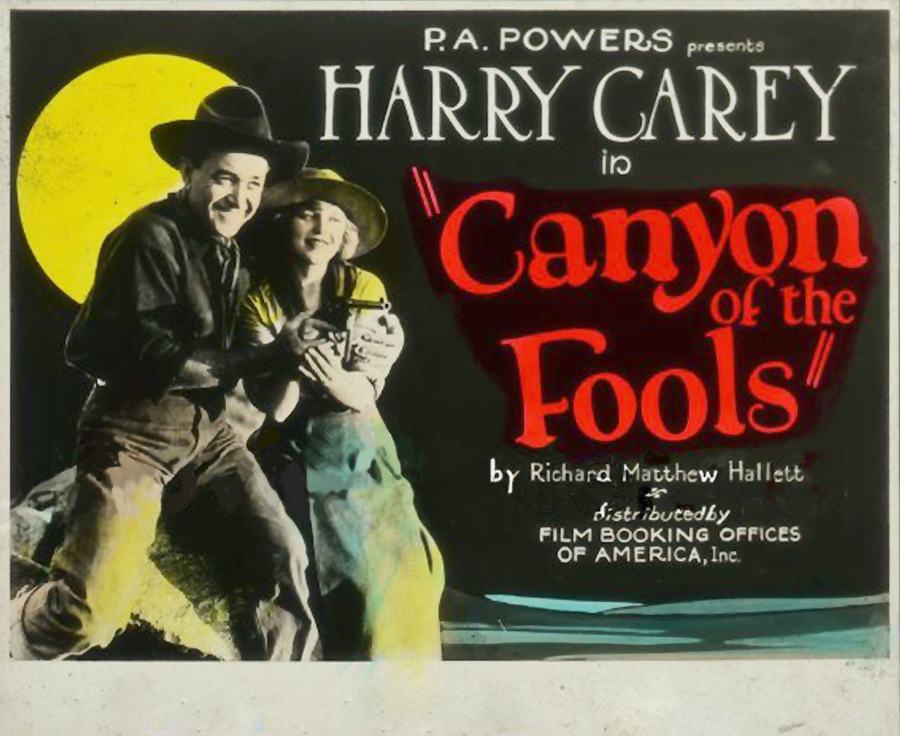
The year 1923 stood as a pivotal meridian in the evolution of the American Western, a time when the genre began to shed its rudimentary nickelodeon skin in favor of a more textured, psychological garments. Canyon of the Fools, directed by Val Paul and starring the indomitable Harry Carey, represents a fascinating intersection of melodrama and frontier grit. Unlike the more polished, almost operatic spectacles found in The Sea Raiders, this film opts for a gritty, terrestrial intimacy that prioritizes character interiority over mere equestrian acrobatics. Harry Carey, an actor whose face seemed etched from the very granite of the Sierras, brings a laconic gravity to the role of Bob, a man whose trek westward is fueled not by the promise of expansion, but by the corrosive hunger for exoneration.
The narrative architecture of Canyon of the Fools is deceptively straightforward, yet it functions as a sophisticated vessel for exploring the precarious nature of identity on the frontier. When Bob encounters May (Marguerite Clayton) on a westbound train, the cinematic language shifts from the kinetic movement of the locomotive to the static, weighted tension of unresolved history. The introduction of Jim Harper (Charles Le Moyne) as May’s fiancé provides the necessary friction. Harper is the antithesis of Carey’s rugged sincerity—a man whose veneer of respectability masks a hollow core of criminality. This dynamic mirrors the thematic concerns found in The Unknown Purple, where the concept of the 'wronged man' seeking restitution becomes a labyrinthine quest for truth in a world governed by deception.
"The mining camp serves as a microcosm of human frailty, where the lust for gold strips away the social niceties of the East, leaving only the raw, atavistic drive for survival and dominance."
The cinematography, though constrained by the technical limitations of its era, exhibits a remarkable command of shadow and space, particularly during the sequences set within the mining camp. The Canyon of the Fools is not merely a geographic location; it is a psychological state. The set design emphasizes the precariousness of the miners' existence, with rickety structures and claustrophobic tunnels that reflect the moral instability of the characters. While Champion by Chance utilized sporting arenas to frame its hero’s struggle, Val Paul utilizes the subterranean darkness of the gold mine to isolate Bob, forcing him to confront his nemesis in a space where law and order are secondary to primal instinct.
Harry Carey’s performance deserves significant scholarly attention. Eschewing the flamboyant histrionics that characterized many of his contemporaries, Carey employs a minimalist approach that anticipates the modern anti-hero. His movements are deliberate, his gaze unwavering. This stoicism provides a necessary anchor for the film’s more melodramatic flourishes. In contrast to the theatricality seen in Das Mädel von Picadilly, 2. Teil, Carey’s Bob feels like a genuine product of the soil—weathered, weary, yet fundamentally unyielding. This groundedness allows the audience to invest in his eventual triumph, not as a fairytale resolution, but as a hard-won victory over the forces of entropy.
The film’s pivotal sequence occurs within the light-starved confines of a mine cave. Here, the gold—the very object of universal desire—is hidden, acting as a siren song for the desperate and the deviant. Bob’s discovery that Jim Harper is the man who framed him is handled with a narrative efficiency that avoids the pitfalls of excessive exposition. The ensuing confrontation is a masterclass in silent-era suspense. The use of practical lighting, or the clever simulation thereof, creates a chiaroscuro effect that heightens the stakes. We see the influence of early German expressionism creeping into the Western aesthetic, a visual strategy also explored in Das Wunder, where the environment itself becomes a character in the drama.
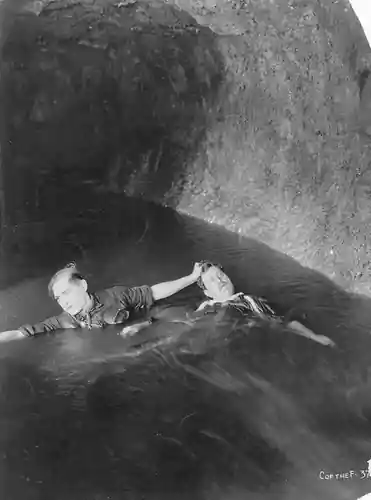
The resolution of Canyon of the Fools offers a satisfying, if somewhat conventional, restoration of justice. The rounding up of the gang and the rescue of May are executed with a rhythmic precision that showcases the editing prowess of the 1920s. However, the film’s true resonance lies in its depiction of the emotional toll of vengeance. When Bob is finally rewarded with May’s love and the gold, it feels less like a windfall and more like a restitution for years of stolen dignity. This thematic weight elevates the film above contemporary works like The Little School Ma'am, which often favored sentimentality over the rugged realism found here.
Analyzing the supporting cast, Jack Curtis and Charles Le Moyne provide formidable foils to Carey’s protagonist. Le Moyne, in particular, imbues Jim Harper with a sniveling cowardice that makes his ultimate downfall immensely gratifying. The presence of Marguerite Clayton as May provides the necessary emotional stakes, though her character is somewhat limited by the period’s gender paradigms. Nevertheless, her chemistry with Carey is palpable, lending a sense of history to their rekindled romance. The film’s pacing is brisk, avoiding the sluggishness that occasionally plagued silent features like La vie de Bohème, and instead maintaining a propulsive energy that leads inevitably toward its cavernous conclusion.
In the broader context of 1920s cinema, Canyon of the Fools serves as a bridge between the simplistic morality plays of the early silent era and the more complex character studies that would follow. It shares a certain DNA with The Buzzard's Shadow in its exploration of the darker impulses of the human psyche, yet it retains a fundamental optimism about the possibility of redemption. The film’s inclusion of a mining camp setting also allows for a commentary on the burgeoning industrialization of the West, a theme that would become a staple of the genre in later decades.
Technically, the film is a testament to the ingenuity of the era’s craftspeople. The set design for the mine interior is particularly noteworthy, creating a sense of scale and danger that feels authentic even to modern eyes. The costume design, though largely utilitarian, effectively distinguishes the various social strata within the mining community. From the ragged attire of the prospectors to the more refined garments of the villainous Harper, every visual element is calibrated to reinforce the film’s central conflict between honesty and deceit. This attention to detail is reminiscent of the meticulous production values found in Beatrice Fairfax Episode 9: Outside the Law.
As the credits would have rolled for a 1923 audience, the takeaway from Canyon of the Fools would have been one of profound satisfaction. It is a film that respects its audience’s intelligence, offering a story that is as much about the landscape of the soul as it is about the landscape of the American West. While it may not possess the experimental bravado of The Messenger or the surrealist undertones of Gyermekszív, it excels in its commitment to a visceral, human-centric narrative. It remains a vital piece of cinematic history, a reminder of a time when the Western was a frontier of artistic exploration.
Ultimately, Canyon of the Fools is a celluloid relic that still pulses with life. It is a story of a man who goes into the darkness to find the light, a narrative arc that is as old as humanity itself. For those seeking to understand the roots of the American cinematic identity, this film is an essential document, a rugged and beautiful testament to the enduring power of the silent screen.
IMDb —
1927
Community
Log in to comment.