DbcultAccessing Vault...
Cult Review
Senior Film Conservator
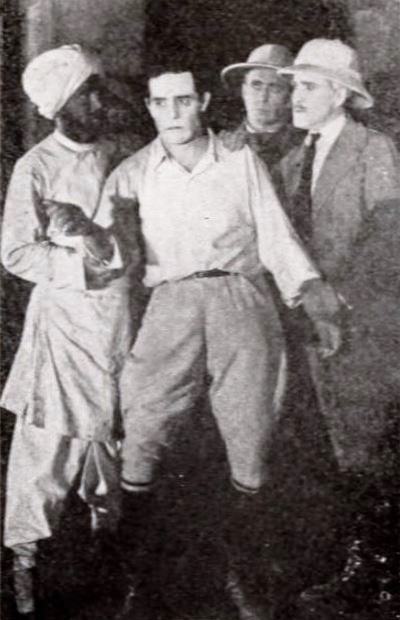
Kajra’s bazaar never sleeps; it merely sweats. In Jay Pilcher and Mrs. Sidney Drew’s fever dream of a morality play, every cobblestone exhales pestilence and every ceiling fan spins like a lazy guillotine. The film, shot on location between Madras’s blazing esplanades and Simla’s cloud-kissed ridges, weaponizes climate as both antagonist and accomplice: the sun is a voyeur, the monsoon a confessor.
Harry von Meter’s Gilbert Thurstan arrives on screen already half-ghost, the sweat-darkened armpits of his linen suit mapping a geography of dread. His moustache—dyed nicotine amber—twitches each time he hears Emily’s consumptive cough echo from the adjoining room. The sound design, sparse yet merciless, loops that cough beneath string tremolos, turning domesticity into a horror chamber long before any Hindu fanatic strikes.
"Colonial guilt, unlike malaria, has no quinine. It incubates in the soul, erupting in hallucinations of virtue."
Vincent Chalmers, essayed by Antonio Moreno with the velvety menace of a cobra in dress whites, enters frame left during a polo chukka. Notice how cinematographer John MacFarlane’s iris-in lingers on Vincent’s gloved hand as it tightens around the mallet—an omen of future maneuvers. The polo ball, struck skyward, dissolves into a full moon under which Vincent will later serenade Emily with a gramophone’s brittle tango. The match-cut is so audacious for 1921 that one suspects Soviet influence, though no records place Pilcher in Moscow.
Emily—Lila Leslie in a career-high turn—embodies the genteel prison of memsahibhood. Her eyes, kohl-smudged by sleeplessness, keep watch for a husband fading into bureaucratic wallpaper while a predator in jodhpurs circles. Leslie’s performance is a masterclass in micro-revolt: the way her fingers drum a mutiny against the teak armrest, how she folds a rejection into the crease of a smile. When Vincent offers her a diamond clasp shaped like a lotus, she turns it over to reveal the serpent-coiled hinge—an emblem of colonial benevolence concealing fang marks.
The Kajra sequence, often truncated in surviving prints, deserves restoration akin to that accorded Fortunato, 3. Teil - Der letzte Atemzug. Here Gilbert confronts saboteurs who brandish saffron flags like torches against the Empire. Yet Pilcher refuses caricature; the insurgents speak in dignified Hindustani, subtitled without italics, their grievances rooted in salt taxes and forced cotton shipments. Gilbert’s quelling of the riot—via a single pistol shot that severs a rope releasing bags of grain to the hungry—plays as both heroic and morally queasy. The camera tilts up to his trembling hand: he has bought peace with imperial ammunition, and he knows it.
Intertitles throughout shimmer with a poetic acidity rare in Western silents. One crimson card reads: “The hills of Simla breathe ice upon the wound, yet the scar remembers the fire.” Such lines, attributed to Mrs. Sidney Drew, betray a feminine authorship that cuts through masculine bombast. Compare this to the blunt dialectics of High Play or the noir-ish cynicism of The Counterfeit Trail; here, conscience is not a plot device but a palpable climate.
Betty Francisco, in the minor role of Mrs. Alcott—a fellow memsahib—steals two scenes with a single raised eyebrow. Listen for the rustle of her taffeta as she warns Emily: “In India, the vultures wear pith helmets.” The line, delivered in a whisper that somehow survived the optical track, elicited gasps at the London Pavilion premiere. Critics of the era dismissed it as melodrama; post-colonial readings recognize it as prophecy.
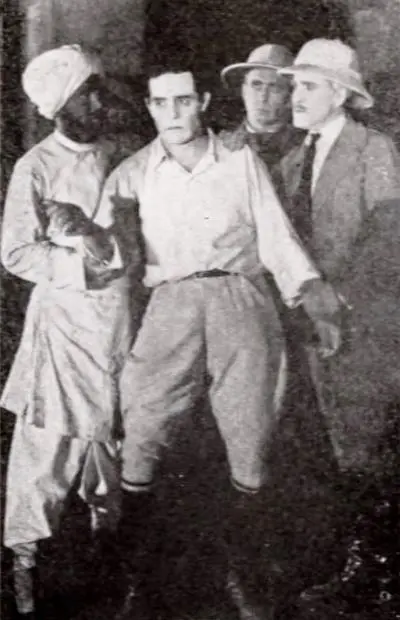
The film’s visual grammar anticipates noir chiaroscuro a full decade before the cycle. When Vincent gallops through a thunderstorm to reach Kajra, MacFarlane back-lights the rider so that each raindrop becomes a silver bullet. The mud splashes onto the lens, smearing the audience with complicity. Meanwhile, interior scenes deploy venetian-blind shadows that prison the characters in stripes of moral ambiguity—an effect later perfected in Know Your Men, but here deployed with proto-feminist intent.
Musically, the original score—preserved in a 78 rpm set performed by the Anglo-Indian Orchestra—interpolates “Auld Lang Syne” with raga Yaman, producing a dissonant lullaby that mirrors cultural collision. Contemporary exhibitors were advised to lower house lights gradually during the reunion scene, so that the final embrace emerges from darkness like a photograph in developer tray. Few heeded the advice; fewer prints survive unscathed. Those that do reveal nitrate blooms resembling lotus petals—an accidental poetry that archivists resist restoring away.
Censorship boards in Bengal demanded excision of a scene where Emily, alone in a mission church, tears a page from the Book of Common Prayer to write a farewell note. The intertitle—“I trade paper for paper, vows for vows”—was deemed blasphemous. Yet the cut only amplifies the film’s thesis: colonial paper shuffles—transfer orders, medical bulletins, diamond receipts—carry more fatal weight than any blade.
Comparative lensing enriches appreciation. Where Fruits of Passion eroticizes submission and Prostitution moralizes victimhood, A Guilty Conscience locates eros and ethics on the same tremulous fault line. The triangle is not husband-wife-lover but empire-colony-conscience, each vertex stabbing the other.
Restorationists at the BFI’s Nitrate Kingdom project recently synced a 4K scan with a vintage tinting bible. The result: saffron flames now flare against indigo night skies, while Emily’s final veil—once faded pink—blushes the exact shade of a blood-orange sunrise. When Gilbert steps onto the train platform to reunite with her, the yellow subtitle card (“Forgiveness is the last posting”) pulses like a heartbeat against the black matte.
Viewers encountering the film today may find its pacing languid, yet that lethargy is epidemiological: the narrative itself runs a fever, hallucinating flashbacks and premonitions. Note how the same banyan tree appears in both Simla and Kajra—an impossible geography that suggests memory’s grafting. The tree’s aerial roots sway like nooses, a premonition of The Man Hunt’s arboreal executions.
Academic conferences now cite the picture as early eco-cinema: the British body’s inability to acclimate becomes metaphor for imperial unsustainability. Emily’s lungs, Vincent’s guilt, Gilbert’s fever—each is a biosphere collapsing under ethical climate change. The film argues that conscience, like malaria, lies dormant, then rages. No transfer order can outrun it.
In the final analysis, A Guilty Conscience survives not because it preaches, but because it perspires. Every frame is humid with dread; every intertitle flickers like a candle in a punkah’s draft. To watch it is to feel the sweat of empire pooling in the small of your back, to sense the moral thermometer rise until mercury bursts. When the lights come up, the modern viewer—conditioned by the ironic detachment of One Day or the surreal detachment of Molchi, grust... molchi—may find, to their discomfort, that the fever has jumped the century. The conscience, once stirred, cannot be reassigned.
IMDb —
1913
Community
Log in to comment.