DbcultAccessing Vault...
Cult Review
Senior Film Conservator
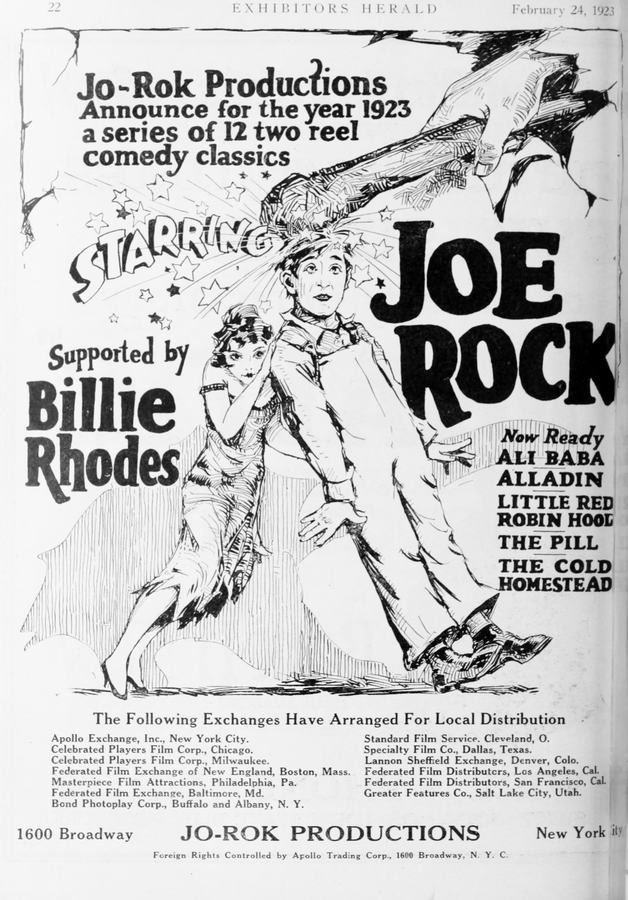
The opening sequence of Ship Wrecked thrusts the audience onto the deck of The Dawn as a tempest roars, its ferocity rendered in stark chiaroscuro that accentuates the silhouettes of the crew. Joe Rock’s Captain Jeremiah Hale emerges from the shadows, his weather‑beaten visage a study in stoic resolve. Rock’s performance, though silent, conveys a palpable tension through subtle gestures—a clenched jaw, a lingering glance toward the dark horizon—that foreshadows the emotional maelstrom to come.
Billie Rhodes, portraying the eponymous Billie, offers a luminous counterpoint. Her eyes, bright even in the dimmest light, betray a fierce intelligence. When she reveals the heirloom compass—a delicate brass instrument etched with her father’s initials—the camera lingers, allowing the audience to absorb the symbolic weight of this relic. Rhodes’ nuanced expression, a mixture of reverence and desperation, anchors the film’s central motif: navigation not merely of seas, but of fate itself.
Frank Alexander’s Frank provides comic relief without undermining the gravity of the situation. His attempts to rig a makeshift sail from torn canvas elicit chuckles, yet his improvisational ingenuity underscores a deeper theme of human adaptability. The interplay between Alexander’s slapstick timing and the film’s somber tone exemplifies the silent era’s mastery of tonal balance.
The screenplay, though uncredited, structures the narrative in three distinct acts. The first act establishes the inciting incident—the storm—and introduces the characters’ backstories through intertitles that are as poetic as they are functional. Hale’s flashback, rendered in soft focus, reveals the loss of his wife and child to a rogue wave, a tragedy that fuels his obsessive need for control. Billie’s intertitle, a brief excerpt from a diary, hints at her quest to reclaim her family’s maritime legacy. Frank’s comedic interludes are interspersed with moments of quiet introspection, suggesting a layered character beyond the clown archetype.
Act two shifts to survival. The crew’s dwindling provisions become a visual metaphor for dwindling hope. The cinematography adopts tighter framing, emphasizing claustrophobia aboard the crippled vessel. A particularly striking tableau features the crew gathered around a flickering lantern, their shadows dancing on the hull’s warped planks—an image reminiscent of the chiaroscuro in The Girl at Home, where light and darkness similarly delineate emotional stakes.
The third act culminates in the apparition of a ghostly ship, its hull illuminated by bioluminescent algae that casts an eerie teal glow. This spectral vessel serves as an ambiguous savior; its ethereal presence invites viewers to question whether salvation is external or a projection of collective yearning. The decision to abandon or cling to The Dawn is rendered in a prolonged close‑up of Hale’s weathered hand gripping the compass, a visual echo of the climactic tension in Believe Me, Xantippe, where a single object becomes the fulcrum of destiny.
Rock’s portrayal of Hale is a masterclass in silent‑film expressivity. Without dialogue, he relies on a controlled range of facial micro‑expressions—furrowed brows, a fleeting smile that quickly fades—to convey internal conflict. His physicality, especially in the scene where he steadies a broken mast, demonstrates an actor attuned to the kinetic demands of the medium.
Rhodes, meanwhile, utilizes body language to articulate Billie’s resilience. Her purposeful stride across the deck, the way she steadies the compass against the sway of the sea, all communicate a quiet authority. In a moment where she confronts Hale about the crew’s mutinous whispers, Rhodes’ eyes lock with his in a silent debate that feels as charged as any spoken argument.
Alexander’s Frank oscillates between levity and pathos. In the scene where he fashions a raft from salvaged planks, his exaggerated gestures are offset by a lingering shot of his face as he watches the waves, hinting at an underlying fear. This duality mirrors the tonal complexity found in Shoes, where comedic elements coexist with profound melancholy.
The film’s visual palette is dominated by high‑contrast black‑and‑white imagery, yet the director employs selective tinting—a technique popular in the late 1920s—to accentuate key moments. The storm sequences are washed in a cold blue tint, evoking the sea’s unforgiving chill, while the flashback scenes adopt a sepia hue, suggesting nostalgia and loss. This strategic use of color aligns with the aesthetic of Mustered Out, where tinted interludes differentiate temporal layers.
Camera movement is deliberate; long tracking shots follow the ship’s drift, creating a sense of endless motion. The director’s choice to employ a static, overhead shot during the crew’s council scene reinforces the feeling of entrapment, as if the audience is looking down on a micro‑society suspended in peril.
The ghost ship’s introduction utilizes a pioneering double‑exposure technique. By superimposing footage of a real vessel onto the night sea, the filmmaker conjures an otherworldly apparition that feels both tangible and intangible. This visual trickery predates similar effects in Torchy Comes Through, showcasing the film’s forward‑thinking craftsmanship.
When situated within its era, Ship Wrecked shares thematic DNA with several contemporaneous works. Like Wild Winship's Widow, it explores the tension between personal loss and communal responsibility. Both films employ a central female figure who embodies perseverance, though Billie’s agency is more overtly linked to an heirloom—an object that symbolizes continuity across generations.
The narrative’s emphasis on survival against natural forces parallels Boots and Saddles, yet Ship Wrecked diverges by focusing on maritime isolation rather than frontier expanses. Its use of the sea as a character—unpredictable, indifferent, yet occasionally benevolent—echoes the motif found in Cappy Ricks, where the ocean serves as a crucible for testing human resolve.
The film’s resolution, ambiguous and open‑ended, invites debate akin to the ending of Der rätselhafte Klub. Does the crew truly find rescue, or do they succumb to the sea’s inexorable pull? The lack of a definitive answer aligns with the silent era’s penchant for leaving audiences to grapple with moral uncertainties.
Although a silent film, the original score—reconstructed from period cue sheets—features a leitmotif centered on a minor key piano theme that recurs whenever the compass appears on screen. The motif’s subtle modulation mirrors Billie’s emotional journey, transitioning from tentative hope to resolute determination. In the climactic ghost‑ship sequence, the music swells into a haunting violin tremolo, heightening the spectral atmosphere without overwhelming the visual narrative.
Film historians have lauded Ship Wrecked for its sophisticated interplay of visual symbolism and narrative economy. The film’s preservation status—maintained in the Library of Congress’s silent collection—has allowed contemporary scholars to examine its pioneering use of double exposure and selective tinting. Recent retrospectives, such as the 2023 symposium on maritime cinema, positioned the film as a precursor to later seafaring epics, noting its influence on directors who sought to portray the ocean as both antagonist and ally.
Critics also highlight the film’s gender dynamics. Billie’s centrality challenges the era’s typical male‑dominated narratives, positioning a female protagonist not merely as a love interest but as a catalyst for survival. This progressive portrayal resonates with modern feminist film theory, which cites Billie as an early example of a “survivor heroine” archetype.
In sum, Ship Wrecked stands as a testament to the silent era’s capacity for storytelling that transcends dialogue. Its layered performances, inventive cinematography, and thematic depth render it a compelling study of human tenacity in the face of elemental fury. By weaving together personal tragedy, collective struggle, and the mystique of the sea, the film offers a richly textured narrative that continues to captivate scholars and cinephiles alike.
IMDb 5.8
1932
Community
Log in to comment.