DbcultAccessing Vault...
Cult Review
Senior Film Conservator
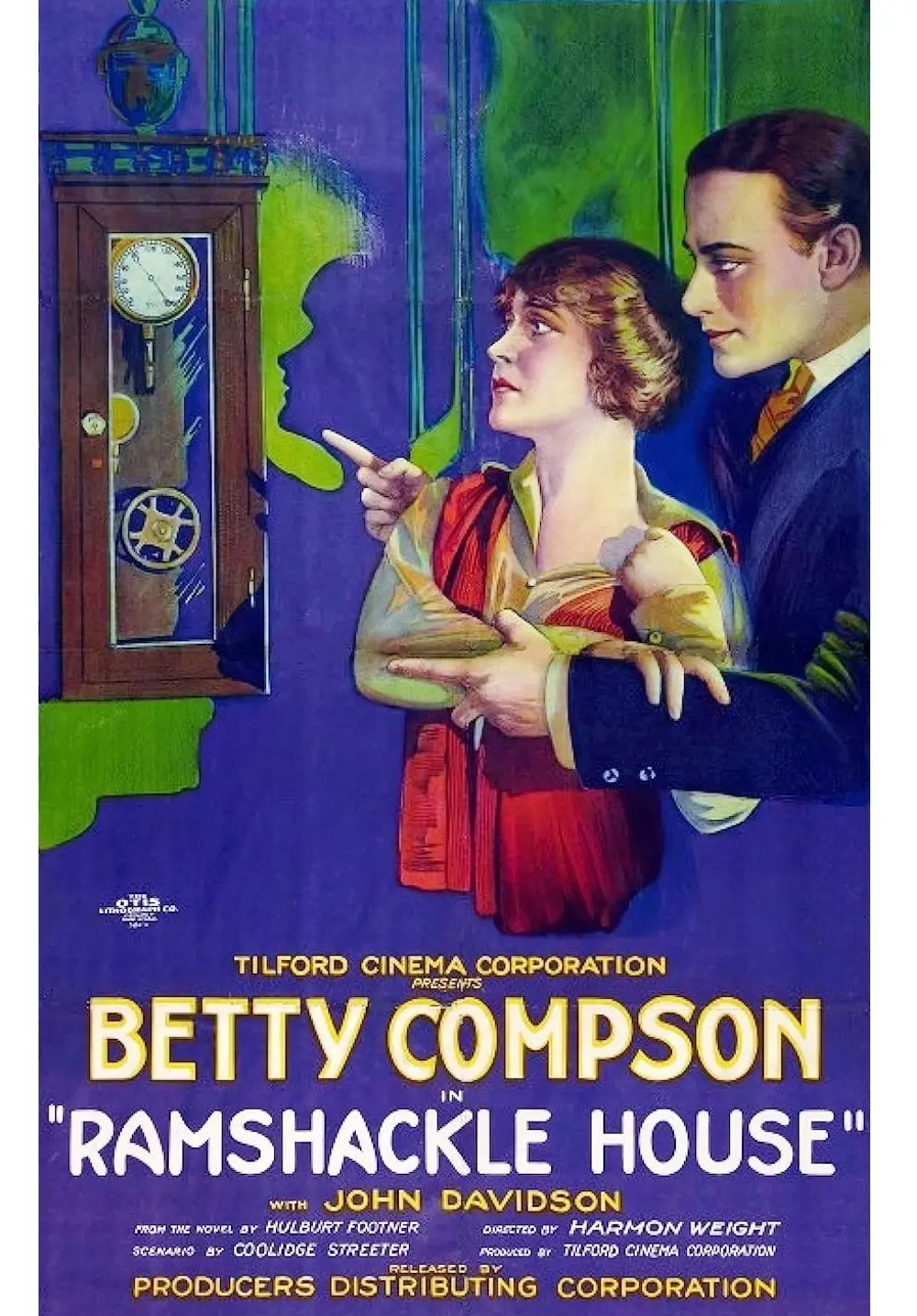
The 1924 silent feature Ramshackle House is not merely a film; it is a humid, claustrophobic immersion into the decaying marrow of the American South. Directed with a keen eye for the atmospheric pressures of the Florida Everglades, this production serves as a stark reminder of how the silent era could evoke a sense of place that modern digital cinema often fails to replicate. The narrative, adapted from the work of Hulbert Footner and Coolidge Streeter, functions as a hybrid of the Southern Gothic and the high-stakes maritime thriller, weaving a tapestry of social rot and individual desperation.
The film opens with a visual thesis on entropy. The Broome estate, the eponymous Ramshackle House, is presented as a character in its own right. Much like the crumbling facades seen in The Honor of His House, the Broome residence symbolizes a social class that has outlived its utility and its wealth. Pen Broome, portrayed with a haunting vulnerability by the ensemble cast, is the beating heart of this ruin. She is a woman defined by her surroundings but not confined by them. Her father, a man whose dignity has been eroded by time and poverty, provides a tragic backdrop to Pen’s burgeoning agency.
When Don Counsell enters the frame, he is not just a man on the run; he is a disruption of the Broomes' stagnant peace. Accused of a murder he did not commit, Don represents the intrusion of the corrupt modern world into the Broomes' archaic sanctuary. The chemistry between the leads is palpable, even through the flickering grain of a century-old print. It is a romance born of necessity and shared marginalization. Unlike the more whimsical depictions of courtship in Be a Little Sport, the bond here is forged in the crucible of survival.
John Davidson’s portrayal of Ernest Riever is a masterclass in the villainy of the leisure class. Riever is not a common thug; he is a man of immense resources and zero morality. His yacht is the antithesis of the Ramshackle House. Where the Broomes' home is open to the elements, decaying naturally, Riever’s vessel is a closed system of control, a floating panopticon where he keeps the true murderer, Spike Talley, as a pet and a prisoner. This dynamic of hidden guilt and public facade mirrors the thematic underpinnings of The City of Masks, where social standing is a cloak for moral turpitude.
"The contrast between the salt-sprayed deck of the yacht and the mud-caked banks of the Florida swamps creates a visual dichotomy that defines the film's moral compass. Riever represents the cold, calculating future, while Pen and Don represent a more primal, honest struggle for existence."
The plot thickens as Riever’s obsession with Pen Broome becomes the catalyst for the film's climax. His desire to possess her is not rooted in love, but in a colonialist impulse to own the last remnants of the old South. He uses Don’s life as leverage, a move that highlights the internecine conflicts of the era's power structures. This is far removed from the more straightforward mysteries of Alias Mary Brown; here, the stakes are existential.
The centerpiece of Ramshackle House is the harrowing sequence in which Don is trapped in the ballast bulkhead. In the history of silent cinema, few scenes manage to evoke such visceral claustrophobia. As the water begins to flow into the steel compartment, the pacing of the editing accelerates, mirroring Don’s frantic heartbeat. It is a sequence that rivals the industrial dread found in Der Mann ohne Namen - 1. Der Millionendieb, utilizing the physical properties of the set to create a genuine sense of peril.
The inclusion of a Seminole man as Pen’s ally is a fascinating, if brief, acknowledgment of the region’s indigenous history. He serves as the bridge between the wild, untamable landscape and the rigid, artificial world of Riever’s yacht. Without his guidance, the rescue would be impossible. This subversion of the 'damsel in distress' trope—where Pen takes the lead in the rescue mission—is a progressive beat for 1924, positioning her as a figure of immense capability and resolve.
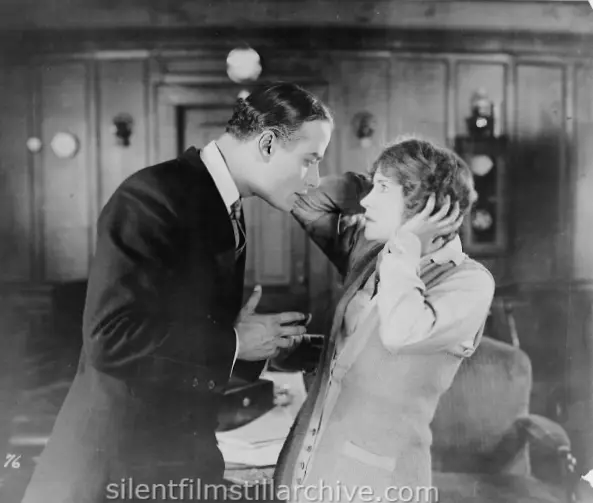
The cinematography throughout the film utilizes the natural light of the Florida coast to create a phantasmagorical atmosphere. The shadows in the Broome estate are deep and ink-like, while the sun-drenched scenes on the water feel overexposed and hostile. This visual language speaks to the characters' internal states: the Broomes are drowning in the shadows of their history, while Don is being scorched by the bright light of a false accusation. The film’s aesthetic density is comparable to the European sensibilities seen in La luz, tríptico de la vida moderna, where light itself becomes a narrative tool.
Josephine Norman and Betty Compson bring a level of gravitas to the production that elevates the material beyond its pulp origins. Their performances are nuanced, avoiding the histrionic gestures that often plague lesser silent films. Instead, they rely on micro-expressions and the stillness of their bodies to convey a sense of impending doom. The supporting cast, including Duke Pelzer and Robert Lowing, provide a sturdy framework for the central drama, creating a believable social ecosystem of detectives, henchmen, and outcasts.
The resolution of Ramshackle House is remarkably bleak for a mid-20s American film. The double-cross by Spike Talley is a cynical turn that suggests there is no honor among thieves or murderers. When Talley denounces Riever, it isn't out of a desire for justice, but out of a self-preservation instinct that has finally overridden his fear of his master. The arrival of the detectives serves as a formal conclusion to the mystery, but the emotional climax belongs to Riever.
Riever’s suicide is a shocking punctuation mark. It is the final act of a man who realizes that his wealth cannot buy him an exit from the labyrinth of his own making. In this moment, the film transcends its genre constraints and becomes a commentary on the fragility of the American Dream. It echoes the tragic weight of The Torch Bearer, where the burden of one's actions becomes too heavy to sustain. Riever’s death is not presented as a triumph for the heroes, but as a hollow end to a hollow man.
Why does Ramshackle House remain relevant? Perhaps it is because the themes of displacement and the corruption of power are perennial. The film’s depiction of Florida as a place of both extreme beauty and extreme danger predates the noir movement by decades, yet it contains all the essential elements: the framed protagonist, the femme fatale (reimagined here as the resilient heroine), and the wealthy antagonist who believes himself above the law. It lacks the comedic levity of Boman på utställningen or the lightheartedness of Somebody Lied, choosing instead to dwell in the murky waters of human morality.
The film’s pacing is a testament to the skill of writers Coolidge Streeter and Hulbert Footner. They manage to balance the slow-burn dread of the first half with the explosive action of the second. The transition from the stagnant air of the estate to the kinetic energy of the yacht is handled with a sophistication that keeps the audience engaged throughout its runtime. It is a work that deserves to be cited alongside The White Masks for its contribution to the early thriller genre.
In conclusion, Ramshackle House is a vital piece of silent cinema history. It captures a specific moment in the American consciousness, where the frontier was closing and the modern world was beginning to exert its cold, industrial influence. Through the story of Pen Broome and Don Counsell, we see a struggle for dignity in a world that has largely forgotten the meaning of the word. It is a film of shadows, water, and the enduring strength of the human spirit against the rising tide of corruption.
Cast: William Black, Josephine Norman, Betty Compson, Duke Pelzer, John Davidson, Robert Lowing, Joey Joey, Henry James.
Writers: Coolidge Streeter, Hulbert Footner.
IMDb 6
1932
Community
Log in to comment.