DbcultAccessing Vault...
Cult Review
Senior Film Conservator
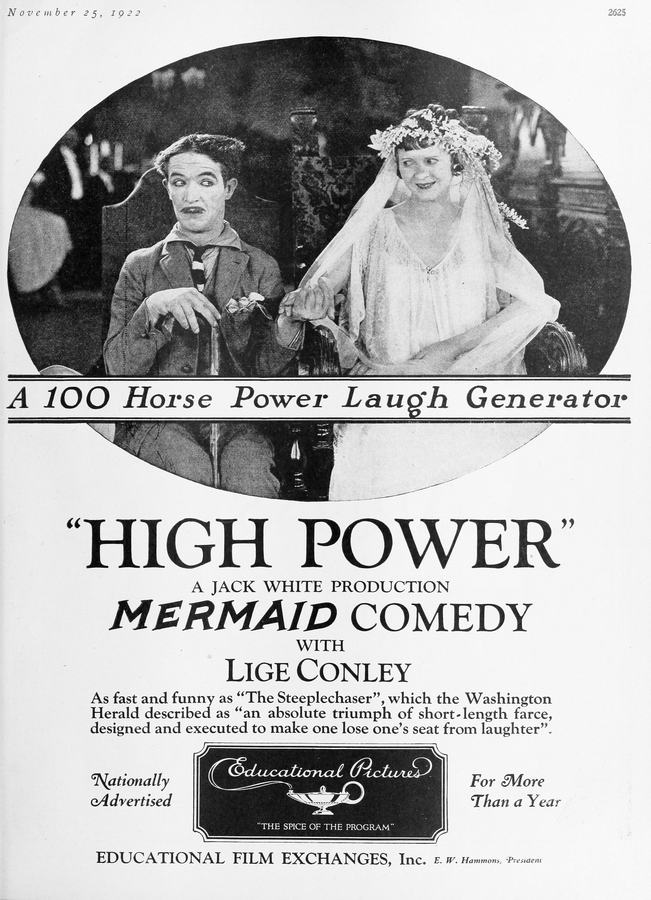
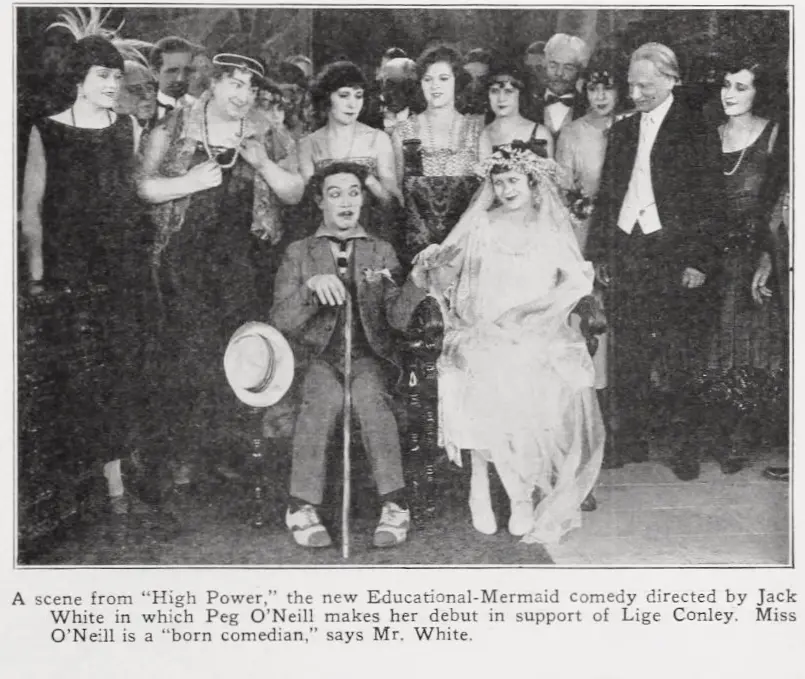
To watch High Power (1923) is to witness the very moment cinema discovered its own pulse. In the early 1920s, the short-form comedy was not merely a filler between features; it was a laboratory of visual experimentation. Starring the irrepressible Lige Conley, this film stands as a testament to the era’s obsession with speed, energy, and the looming shadow of the machine. While many contemporary critics might dismiss such shorts as primitive, a closer inspection reveals a sophisticated understanding of spatial geometry and timing that rivals the best work of the silent giants.
Unlike the pastoral sentimentality found in Quincy Adams Sawyer, 'High Power' thrives on the jagged edges of the city. It is a film of gears, wires, and gravity. The narrative doesn’t just move; it vibrates. Conley, a performer whose physical agility often goes unsung in the shadow of Keaton or Lloyd, displays a unique brand of 'scared-stiff' athleticism. His character is a lightning rod for disaster, a man whose every attempt to master his environment results in a spectacular, albeit hilarious, failure.
Lige Conley’s performance in 'High Power' is a masterclass in controlled frenzy. There is a specific lexical richness to his movement—a syntax of stumbles and a grammar of gasps. He doesn't just fall; he deconstructs the act of falling into a three-act play. In one sequence, his interaction with a mechanical device (the 'high power' of the title) serves as a metaphor for the individual's struggle against the overwhelming tides of technological advancement. It is a theme we see explored with much more gravity in The Devil's Wheel, yet Conley manages to find the existential dread within the gag.
The supporting cast, including the indomitable Sunshine Hart and John J. Richardson, provides the necessary friction. Hart, in particular, possesses a screen presence that is both grounded and terrifyingly mobile. Her interactions with Conley create a comedic tension that is almost palpable. Whereas a film like Heidi relies on the soft focus of innocence, 'High Power' uses the sharp focus of the pratfall to expose the absurdity of social hierarchies.

Visually, 'High Power' is a fascinating artifact. The cinematography captures the soot-stained reality of the 1920s with a clarity that feels surprisingly modern. The use of depth of field, though primitive by today's standards, is utilized effectively to create a sense of impending doom in the background of Conley’s frantic foreground activities. This is not the lush, romanticized imagery of The Mountain Woman; this is the raw, unvarnished aesthetic of the industrial short.
The editing is where the film truly finds its 'high power.' The cuts are sharp, rhythmic, and designed to maximize the impact of every collision. There is a musicality to the pacing that reminds one of A Wee Bit o' Scotch, though the melody here is played on a jackhammer rather than a bagpipe. The film’s ability to sustain such high energy for its duration is a feat of editorial stamina that many full-length features of the time, such as The Black Chancellor, failed to achieve.
When we compare 'High Power' to the more somber offerings of the period, like Die Ahnfrau, the cultural divide becomes apparent. While the European tradition was often mired in gothic gloom and ancestral curses, the American short was obsessed with the present and the future. 'High Power' doesn't care about the past; it cares about the next ten seconds. This immediacy is what makes it so enduringly watchable. It shares a certain 'in-the-moment' desperation with Stranger Than Fiction, yet it channels that desperation into physical comedy rather than narrative twists.
Even in its quieter moments—if they can be called that—the film maintains a sense of unease. The presence of Spencer Bell brings a different comedic texture, one that often reflects the racial dynamics of the era. While modern viewers must navigate these scenes with a critical eye, Bell’s talent for reactive comedy remains undeniable. His performance provides a foil to Conley’s proactive (if misguided) energy, much like the dynamic seen in His Hansom Butler.
Beyond the laughs, 'High Power' is a document of a world in transition. The 1920s were a period of massive economic shifts, and the 'high power' metaphor extends to the feeling of being out of control in a rapidly changing marketplace. In It Isn't Being Done This Season, we see the social consequences of these shifts, but in 'High Power', we see the physical consequences. The protagonist is literally tossed around by forces he cannot comprehend, mirroring the plight of the working class during the post-war industrial boom.
The film’s cynicism is masked by its humor. There is a latent cruelty to the slapstick that aligns it with the darker themes of L'avarizia. However, where the latter film explores greed through a moral lens, 'High Power' explores the absurdity of survival through a physical one. It asks: how much can a human body endure before it breaks? The answer, provided by Conley’s rubber-limbed performance, is apparently quite a lot.
As we look back at 'High Power' from a century’s distance, its importance in the lineage of action-comedy cannot be overstated. It lacks the epic scale of The Four Feathers or the melodramatic weight of A Virgin's Sacrifice, but it possesses a purity of purpose that those films often lack. It is a film that understands its medium perfectly. It knows that cinema is, at its heart, the art of movement.
The character of Peggy O'Neil and the subtle contributions of Violet Oliver remind us of the ensemble effort required to make these 'simple' comedies work. Every reaction shot, every background movement, contributes to the overall sense of a world gone mad. In this regard, 'High Power' is as much a precursor to the screwball comedies of the 1930s as it is a descendant of the circus. It shares the DNA of Miss Nobody in its portrayal of a protagonist adrift, but it replaces the pathos with a high-voltage battery.
In conclusion, 'High Power' is a vital piece of the silent era puzzle. It is a film that demands to be seen not just as a historical curiosity, but as a living, breathing example of visual storytelling at its most primal. It captures the frantic, beautiful, and often terrifying energy of a world waking up to the power of the machine. Like Polly Redhead, it uses a seemingly simple premise to explore the complexities of the human condition, all while making us laugh at our own impending obsolescence. It is, quite simply, electric.
IMDb —
1916
Community
Log in to comment.