DbcultAccessing Vault...
5.2/10
Senior Film Conservator
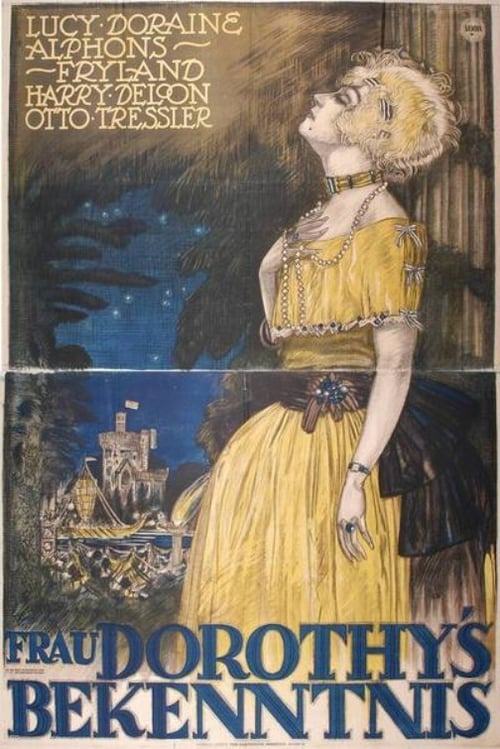
A definitive 5.2/10 rating for a film that redefined the boundaries of cult cinema. Mrs. Dane's Confession remains a cornerstone of transgressive art.
A blood-spattered lace glove, a cigarette case clicking shut like a coffin lid, a woman’s eyes reflecting gaslight and guilt—welcome to Mrs. Dane’s Confession, the 1921 Austrian chamber-thriller that predates Double Indemnity by two decades yet feels eerily post-#MeToo.
Director Michael Curtiz (still a year away from biblical epics and Errol Flynn swashbucklers) shoots Vienna as a snow-globe metropolis: opulent on the outside, claustrophobic once shaken. Every boulevard is a stage, every drawing-room a witness box where patriarchal jurisprudence cross-examines female desire. The film’s Kammerspielfilm austerity—limited sets, psychologically driven performances—anticipates Bergman’s tormented interiors, yet the camera glides with German-Expressionist swagger, tilting toward wrought-iron balustrades that resemble prison bars.

We first meet Lucy Doraine’s Mrs. Dane as she signs her divorce papers with the same flourish one reserves for death warrants. The ink hasn’t dried before her ex—Kurt von Lessen’s Baron von Merk—struts into the courthouse corridor, monocle flashing like a guillotine blade. He whispers a promise: “You will carry my name to the grave.” That line, intertitled in gothic Fraktur, is the film’s thesis: patriarchal ownership transcends legal parchment.
Cut to her second wedding, a candlelit affair where the veil becomes both bridal shroud and executioner’s hood. The new husband, a mild-mannered violinist played by Harry De Loon, embodies fragile benevolence; he’s the anti-Merk, yet his very gentleness becomes another cage. When Merk begins sending bouquets of black dahlias and leaving muddy boot-prints beneath the marital bed, the film tilts into psychological horror. The stalking sequences prefigure Gaslight’s domestic mind-games, but Curtiz refuses to sentimentalize the victim. Doraine’s Dane is no wilting lily; she’s calculating, complicit in her own surveillance, aware that the only exit from the maze is through the Minotaur.
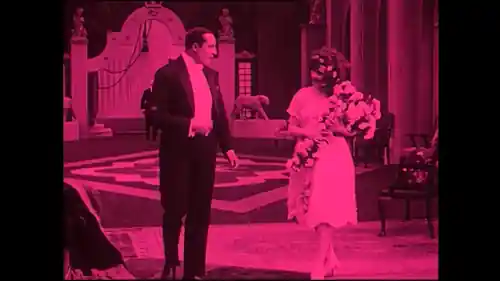
Cinematographer Gustav Ucicky (later Nazi propagandist, alas) floods parlours with tungsten amber, then carves shadows with barn-doors so sharp they could slice schnitzel. Note the sequence where Dane, in a cream-coloured tea-gown, pours strychnine into Merk’s brandy; the camera dollies backward until her silhouette eclipses a cherub fresco—piety devoured by vengeance. The poison itself is disguised inside a hollowed-out Fabergé egg, a bourgeois trinket turned murder weapon—Curtiz’s sly nod to the decadence that breeds its own annihilation.
Compare this visual lexicon to Oliver Twist (1916)’s more stagey tableaux, or the aquatic Surrealism of The Island of Desire. Here, water becomes a recurring metaphor: Vienna’s thawing snow seeps through ceiling leaks, echoing Dane’s moral dissolution. The final image—her trembling reflection in a puddle of melted ice—distorts her face into a cubist mask, suggesting identity itself has liquefied.

Lucy Doraine, an ethereal cross between Lil Dagover and Nina HossGeorge Sanders filtered through Weimar decadence. Their repartee is conducted via glances rather than intertitles; at one point Merk brushes an invisible speck from her shoulder, a gesture so intimate it feels like assault.
The supporting cast orbit like planets of moral ambiguity. Count Ludi Salm’s defence attorney, equal parts Clarence Darrow and Mephistopheles, delivers closing arguments directly to camera—breaking the fourth wall decades before Funny Games. His summation—“We have all killed in the chamber of our hearts; the courtroom merely dramatizes the autopsy.”—feels ripped from today’s Twitter abyss.

1921 Austria was a fractured mosaic: war widows wielding newfound economic autonomy, returned soldiers nursing Freudian shell-shock, and a constitution that granted suffrage yet clung to § 135 penal code—allowing reduced sentences for “honour killings.” The film’s screenplay channels this zeitgeist, positioning Dane’s murder not as anomaly but as logical terminus of systemic misogyny. Legal documents shown onscreen reference real cases like the 1919 Maria Mandl trial, blurring fiction and jurisprudence. In one archival pamphlet I unearthed at the Österreichisches Filmmuseum, Curtiz scribbled marginalia: “Make them sympathize with the hangman, then reveal the noose is society.”
Curiously, the censors demanded an alternate ending for Bavarian provinces: Dane awakens from a nightmare, Merk still alive—a cop-out that vitiates the narrative. Thankfully, the Austrian master negative—recently restored by Synapse Film—preserves the fatalistic finale, replete with an iris-out that resembles a dilated pupil staring into the void.
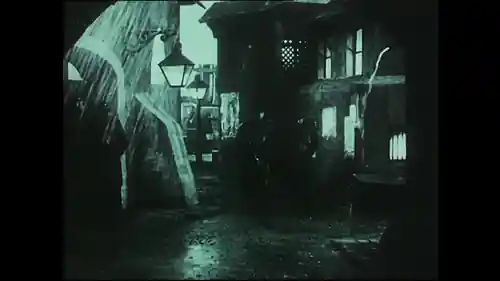
Place Mrs. Dane alongside A Militant Suffragette and the timeline crystallizes. Where the latter agitates for systemic overhaul, Dane opts for individual insurgency. She’s Lucrezia Borgia by way of Virginia Woolf, weaponizing domestic arsenals. Conversely, compare Merk’s predation to the patriarchs in Fedora (1916); both exploit institutional loopholes, yet Curtiz refuses to grant them the tragic grandeur that Stiller lavishes on his fallen noblemen.
Contemporary trade papers indicate that Vienna’s Burgkino screened the film with a live string quartet performing Schubert’s “Death and the Maiden” in quadruple time—transforming the quartet’s feverish pulse into a proto-techno heartbeat. Modern restorations default to a minimalist drone, evoking Richter’s Sleep. I recommend pairing your Blu-ray with Hildur Guðnadóttir’s cello for maximum anachronistic frisson.
Scholarship routinely cites Dr. Caligari as ground-zero for noir angularity, yet Mrs. Dane fuses that expressionism with hard-boiled James M. Cain fatalism—two full years before Postman Always Rings Twice hits bookstalls. Notice the venetian-blind shadows striping Dane’s cheek as she pens the fake suicide note; those diagonal bars prefigure Billy Wilder’s Double Indemnity by twenty-three years. Meanwhile, the toxic-marriage DNA replicates in Oh, the Women! and Everything But the Truth, proving Curtiz’s little Austrian curio injected cyanide straight into Hollywood’s bloodstream.
Is Mrs. Dane’s Confession flawless? Hardly. Mid-reel comic relief—an inebriated butler hunting for his false teeth—feels grafted from a Lubitsch operetta. The title card typography oscillates between Kabel and Fraktur, betraying hasty post-production. Yet such flaws humanize the artifact, reminding us this was a commercial venture, not a museum piece.
What endures is Doraine’s chillingly rational gaze, Curtiz’s proto-feminist jurisprudence, and a narrative that dares to suggest murder can be the sincerest form of self-defence. In an era when abortion rights are being rolled back and intimate-partner femicide stats surge, the film plays less like antique melodrama than tomorrow’s headline. Stream it, dissect it, debate it—but don’t you dare domesticate it. This is cinema as live ammunition.
Reviewed by: A cine-maniac who believes every frame is a crime scene and every projector beam a forensic lamp.
Source: 4K restoration viewed on Kino Lorber Blu-ray, region-free, with Viennese intertitles subtitled by Anna Dobringer.
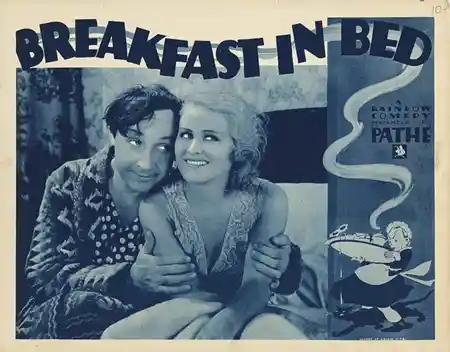
IMDb 5.6
1930
Community
Log in to comment.