DbcultAccessing Vault...
5/10
Senior Film Conservator
A definitive 5/10 rating for a film that redefined the boundaries of cult cinema. Mrs. Plum's Pudding remains a cornerstone of transgressive art.
Picture, if you will, the flicker of nitrate illuminating 1915 audiences who still remembered the scent of kerosene rather than popcorn in picture-palaces. Mrs. Plum's Pudding arrives like a soufflé laced with sly arsenic: outwardly a society romp, inwardly a ledger of mercenary hearts. Al Christie and James Dayton’s scenario weds the pastoral myth of sudden wealth to the urban parable of social climbing, all while Eddie Lyons’s comic timing pirouettes across the frame with vaudevillian elasticity.
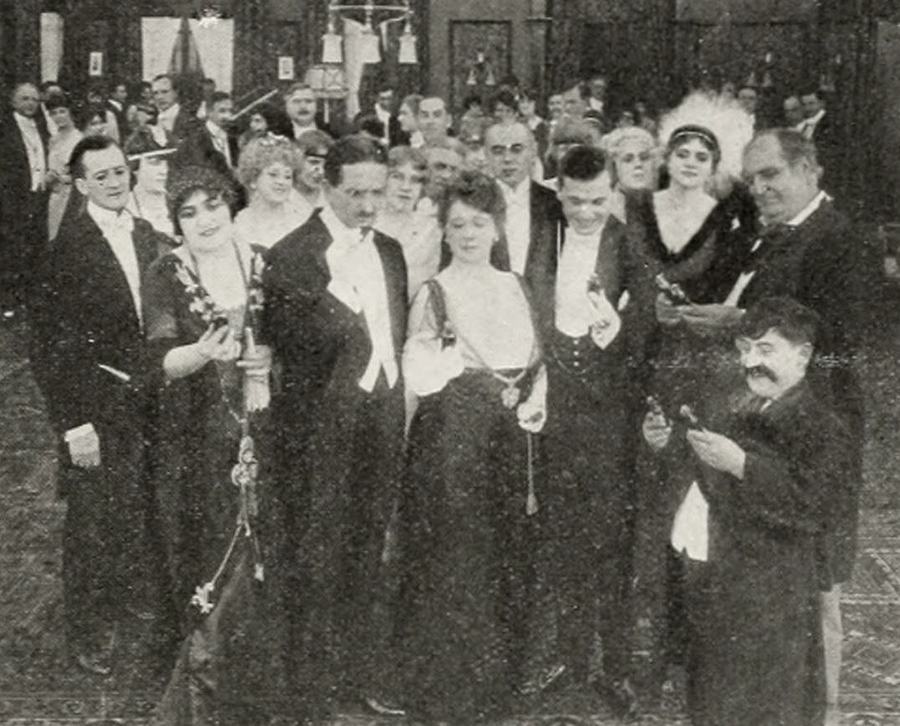
The film’s visual grammar is deceptively brisk. Interiors glow with tungsten sheen—each ballroom tableau crammed with ostrich feathers and gilt chairs that seem to sneer at the nouveau riche. Note the repeated motif of doors: ranch gates, mansion vestibules, railway carriages. Every threshold marks a transaction—oil leases, marriage contracts, forgiveness—underscoring that in this universe intimacy is merely another negotiable commodity.
Marie Tempest, as Mrs. Plum, wields silence like a rapier. A lifted eyebrow, a gloved finger tapping a vanished deed, conveys volumes about widowed resilience. Compare her poised anguish to the volcanic bereavements in Through Fire to Fortune; here loss is not incendiary but sub-zero, a frost that crystallizes resolve rather than melts it.
W. Graham Brown’s Lord Burlington deserves scholarly ink. He embodies the Edwardian parasite—patrician vowels, threadbare cuffs—whose courtship carries the faint whiff of mothballs. Yet the performance resists caricature; watch the tremor in his clasp when Mrs. Plum unmasks her ruse. That micro-gesture admits that even parasites metabolize sincere hunger.
Meanwhile, Eddie Lyons and Violet MacMillan ignite the subplot with pratfall-punctuated ardor. Their moonlit elopement—shot in two brisk setups—feels fresher than the lugubrious carriage rides clogging contemporaneous melodramas. If you crave more combustible chemistry, detour to The Lure of Millions where fortune similarly Cupid-whips lovers, yet lacks the pastoral counterpoint that roots Mrs. Plum's Pudding.
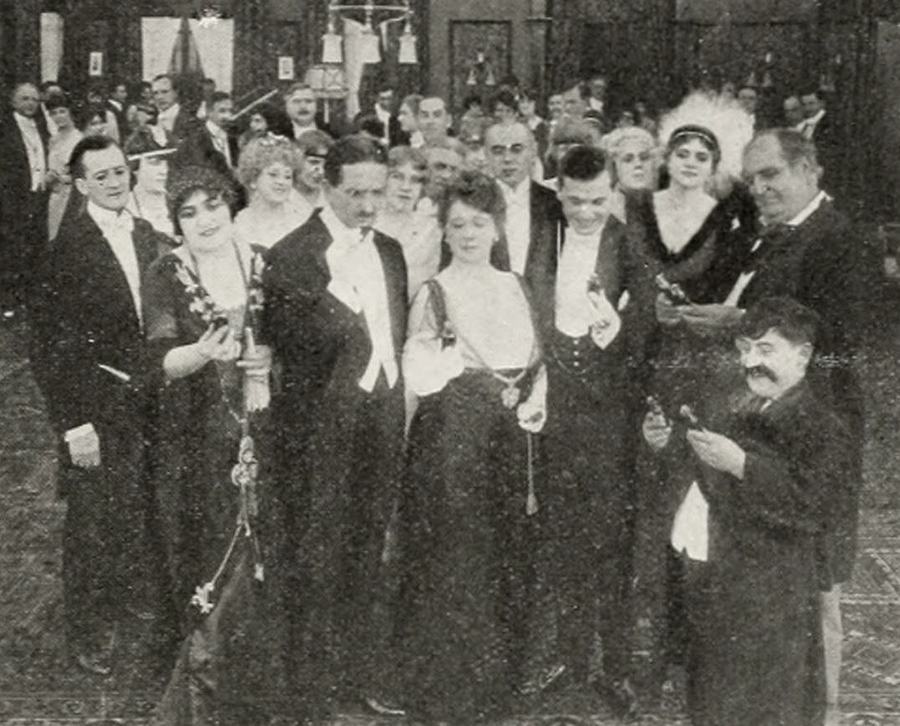
The film whispers a credo modern viewers still gulp like hard cider: capital may giveth, but capital can also taketh away—unless, of course, you retain the original deed, both literal and emotional.
Technically, the picture flaunts early experiments in continuity. Intercutting between ranch vistas (actually a painted flat outside Fort Lee) and ballroom parquet creates dialectics of space reminiscent of Griffith’s penchant for parallel lives, albeit laced with Christie’s gag ethos. Match-action cuts—Burlington’s gloved hand closing a jewel case dissolves to Mrs. Plum’s palm opening an empty safe—serve as punch-line and plot pivot simultaneously.
The title itself deserves decoding. Pudding, that lumpen comfort, becomes a metaphor for wealth that must be stirred lest it congeal. Mrs. Plum stirs, loses the spoon, then recovers it with compound interest. Food iconography recurs: tea trays, wedding cake, a single shriveled apple on the ranch porch. Each edible item stages the tension between nurture and negotiation.
Scholars of gender performativity will feast here. Note how Betty’s flapper-anticipating gait—arms akimbo, skirt hem flashing calves—collides with Mrs. Van Zant’s matronly swish. The generational semaphore anticipates the Jazz Age cataclysms soon to follow. If you track suffragette currents across early cinema, contrast this with the militant zeal of Revolución Orozquista; Mrs. Plum's Pudding stages empowerment through property, not protest.
Critics often deride silent comedies for narrative flimsiness, yet the screenplay’s clockwork is airtight. Every vanished document presages Burlington’s moral bankruptcy; every oil gusher foreshadows emotional eruption. Even peripheral characters—Gus Alexander’s butler, Harry Rattenberry’s tipsy judge—function as thematic tuning forks, vibrating with the same mercenary frequency.
Viewed through today’s lens, the film satirizes influencer culture avant la lettre: status bestowed not by lineage but by visibility, the capacity to trend in drawing-room chatter. One can almost hear the TikTok remix of Burlington’s stuttered proposal.
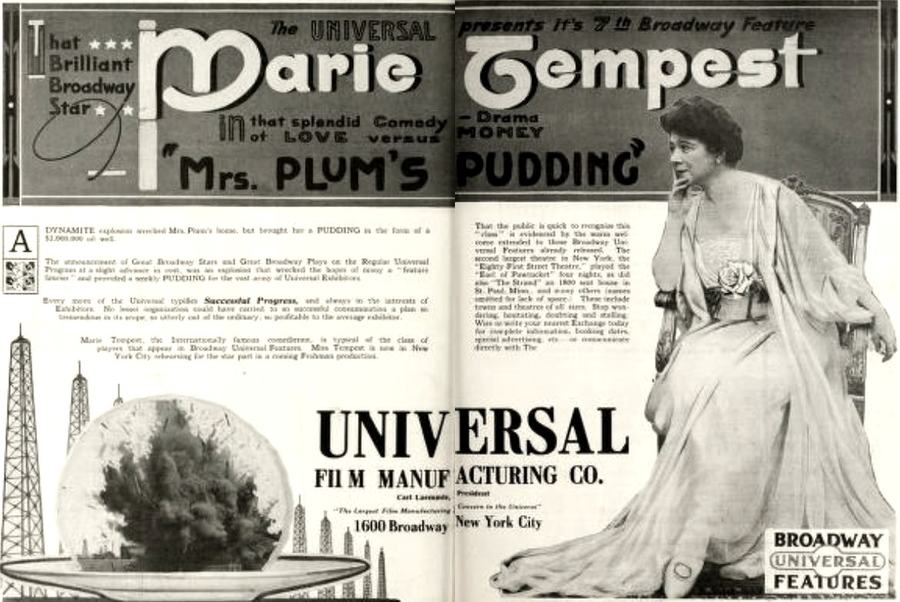
Restoration note: surviving prints derive from a 1923 Kodascope abridgment, yet the rediscovered camera negative at EYE Filmmuseum restores the double wedding tableau—four smiles frozen like champagne-cork targets. The tinting strategy alternates between amber for ranch nostalgia and cerulean for urban artifice, underscoring thematic schisms. Kudos to the digitization team who resisted the urge to over-saturate; blacks remain inky, whites ghostly, allowing yellow intertitles to pop like buttercups on asphalt.
Musically, the film originally toured with a Quintuple Syncopated Rag medley; contemporary festivals often pair it with live klezmer to accentuate the immigrant hustle beneath Anglo veneers. I favor a solo accordion—each squeezebox wheeze echoes the protagonists’ vacillating fortunes.
Comparative litmus: set Mrs. Plum's Pudding beside The Wishing Ring: An Idyll of Old England. Both hinge on talismanic objects (a deed vs. a ring) that realign affections, yet the former tempers whimsy with petroleum pragmatism, whereas the latter drifts into fairy-tale ether. One roots its dénouement in legal sleight-of-hand, the other in serendipity—illustrating American cinema’s early addiction to contract over cosmos.
Box-office receipts, reported by Motion Picture News, pegged earnings at $156,000—robust for a Christie one-reeler, though dwarfed by the million-dollar epics of DeMille. Still, the picture’s afterlife in rural circuits secured its immortality; farmers recognized their own fantasies of gushers and social comeuppance.
Ethical takeaway? The film cautions against mortgaging authenticity for admittance into gilded cages, yet refuses to punish ambition itself. Mrs. Plum ends richer, loved, and wiser—her triumphant revelation that the deed was safe all along feels less like deus-ex-machina than like poetic justice for shrewd stewardship.
Final quiver of praise: notice the last shot—a shared pudding served on wedding china, steam curling like whispered promises. The camera holds, then irises out, suggesting history itself is a recipe stirred by invisible hands. We exit the theater tasting vanilla and venality, a flavor that lingers long after the house lights bloom.
Verdict: essential viewing for anyone mapping the DNA of American screen comedy—its alchemy of slapstick, social satire, and capitalist wish-fulfillment. Stream it, but preferably savor it in a drafty revival house with a single accompanist who knows when to let silence ring. Because sometimes the most eloquent special effect is a widow’s smile once she realizes the world, not she, has been duped.
IMDb 5.6
1923
Community
Log in to comment.