DbcultAccessing Vault...
5.8/10
Senior Film Conservator
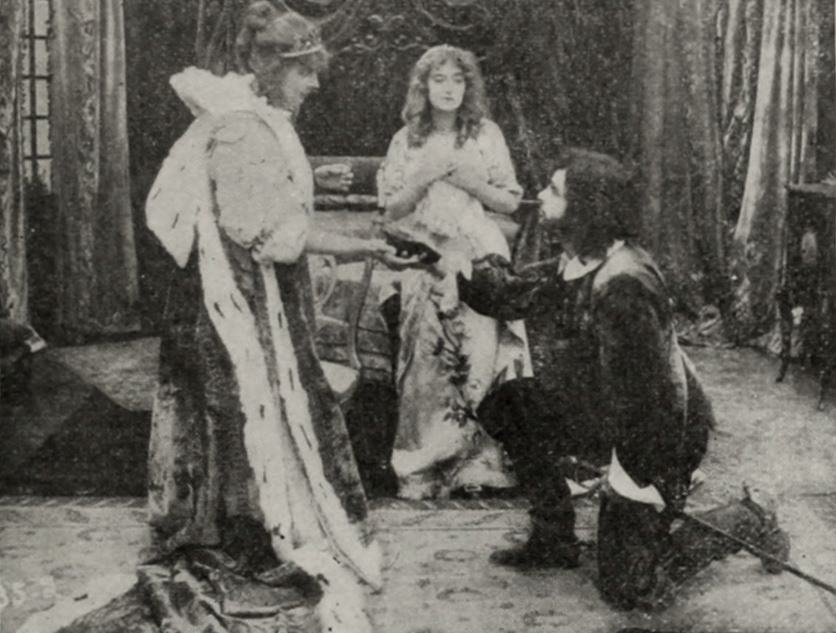
A definitive 5.8/10 rating for a film that redefined the boundaries of cult cinema. The Three Musketeers remains a cornerstone of transgressive art.
In an era brimming with cinematic experimentation and the burgeoning power of visual storytelling, the 1916 adaptation of Alexandre Dumas's immortal novel, The Three Musketeers, stands as a testament to the silent film's capacity for grand adventure and poignant drama. Released amidst the tumultuous backdrop of global conflict, this early rendition, penned for the screen by J.G. Hawks, captures the audacious spirit of D'Artagnan and his legendary companions with a vigor that belies its age. It’s a fascinating glimpse into how a narrative so rich in dialogue and intricate plotting was translated through the expressive power of gesture, tableau, and intertitles, demanding an imaginative engagement from its audience that modern cinema often overlooks.
Dumas's narrative, a tapestry woven with threads of loyalty, romance, and political intrigue, offered fertile ground for early filmmakers. The challenge was immense: how to convey the wit, the camaraderie, and the intricate political machinations without spoken words? The 1916 version tackles this head-on, focusing on the visual spectacle and the palpable tension of D'Artagnan's perilous journey. Edward Kenny, as the impetuous D'Artagnan, embodies the youthful exuberance and burgeoning courage of the Gascon protagonist. His performance, reliant on exaggerated expressions and dynamic physicality, is characteristic of the period yet manages to convey a genuine sense of character progression, from naive country boy to a seasoned hero. The stoic presence of Harvey Clark as Cardinal Richelieu, meanwhile, paints a portrait of cunning and ambition, his every calculated glance a silent threat. Richelieu's insidious plotting, a central pillar of the story, is rendered through a series of dramatic reveals and the palpable distress of Rhea Mitchell's Queen, whose vulnerability is keenly felt.
The core of the plot, D'Artagnan's mission to retrieve the Queen's diamond studs from the Duke of Buckingham, becomes a breathtaking race against time and treacherous adversaries. The film excels in depicting the urgency of this quest, with D'Artagnan battling not just physical obstacles but the relentless machinations of Richelieu. The way his musketeer companions – Athos, Porthos, and Aramis – are sequentially incapacitated, leaving D'Artagnan to face the gravest dangers alone, amplifies the sense of individual heroism. This narrative device, while streamlining the plot for the silent screen, also underscores D'Artagnan’s burgeoning independence and resilience. His capture by the nefarious De Rochfort (played with menacing conviction by Alfred Hollingsworth) and subsequent daring escape by clinging to the ship's chains, is a sequence that, even today, pulses with a primal thrill. It’s a moment that could easily be compared to the high-stakes drama and desperate gambits seen in films like The Tide of Death, where characters face seemingly insurmountable odds with only their wits and courage as their guide.
The political chess game between Richelieu and the Queen, with the King as an unwitting pawn, is meticulously laid out. Richelieu's plan to expose the Queen's perceived infidelity at the grand court ball by forcing her to wear the necklace – now missing its crucial studs – is a masterclass in silent-era villainy. The tension builds towards this climactic reveal, a testament to the filmmakers' understanding of dramatic pacing. When D'Artagnan, against all odds, restores the studs, the Cardinal's meticulously crafted scheme crumbles, leaving him defeated. This moment of triumph for D'Artagnan and the Queen resonates deeply, a victory not just of physical prowess but of moral rectitude against cynical manipulation. The palpable relief of the Queen, portrayed with elegant restraint by Rhea Mitchell, is a powerful silent statement on the emotional stakes involved.
The production values, for 1916, are noteworthy. The sets, though perhaps not as lavish as later Hollywood epics, effectively transport the viewer to 17th-century France. The costumes, particularly those of the Musketeers and the royal court, are meticulously detailed, contributing significantly to the film’s immersive quality. Action sequences, from sword fights to horseback chases, are choreographed with an energy that keeps the narrative propulsion high. While silent film acting often leaned towards the theatrical, the cast here manages to convey a spectrum of emotions without descending into mere pantomime. J.P. Lockney, Dorothy Dalton, and Walt Whitman, portraying the Musketeers and other key figures, contribute to a solid ensemble, each embodying their archetypal roles with conviction. The film's ability to create a sense of peril and adventure with the technical limitations of its time is commendable, relying heavily on dynamic editing and the expressive power of its actors. This emphasis on visual narrative and character-driven stakes can be seen as a precursor to the compelling storytelling found in films like The Fugitive, where the pursuit and escape are central to the dramatic tension.
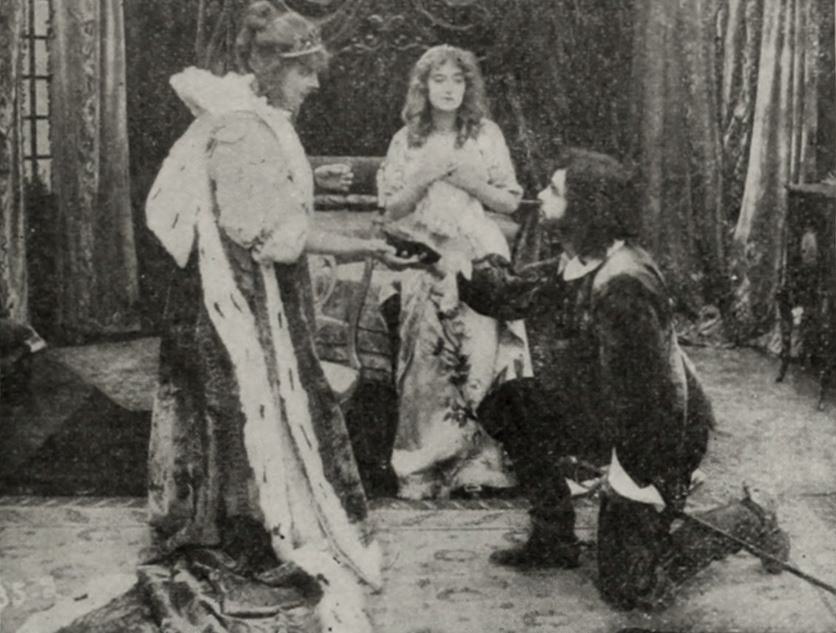
Indeed, the film's success lies in its understanding of the power of visual metaphor and symbolism. The diamond studs themselves become a symbol of honor, loyalty, and the precarious balance of power within the court. Richelieu's machinations, often conducted behind the scenes, parallel the hidden dangers and political games explored in films like Behind Closed Doors, where secrets and subterfuge drive the plot. The visual representation of these intricate schemes, from clandestine meetings to the desperate race against time, is masterfully handled, proving that complex narratives do not always require spoken exposition.
What The Three Musketeers (1916) truly showcases is the timeless appeal of Dumas's story. It's a tale of youthful idealism confronting cynical power, of unwavering loyalty in the face of betrayal, and of love blossoming amidst danger. The film, despite its silent nature, conveys these universal themes with remarkable clarity. The ultimate reunion of D'Artagnan with his comrades, and his reward from his sweetheart, bring a satisfying emotional closure to the adventure, reinforcing the values of friendship and courage that are central to the Musketeer ethos. The film’s narrative precision, even in adapting such a sweeping saga, speaks to a careful approach to storytelling, aiming for a perfect '36' in its execution of key plot points.
The dynamic between the Musketeers and the Cardinal's guards, a constant source of conflict in the novel, is also well-represented. These skirmishes, though often brief, are effective in establishing the perpetual tension and rivalry that define the period. The film’s ability to conjure a world where honor is paramount and danger lurks around every corner is a testament to the collective efforts of the cast and crew. Even the subtle nuances of character, such as the quiet dignity of the Queen or the simmering malevolence of Richelieu, are etched onto the screen through the actors’ command of their craft, a skill honed in an era where every facial muscle and body movement spoke volumes. It’s a form of communication that, much like the subtle warnings in The Warning, relies on visual cues to convey impending danger or emotional states.
Examining The Three Musketeers (1916) today offers more than just an entertaining narrative; it provides a valuable window into the nascent stages of cinematic art. The film, directed by Charles Swickard, showcases techniques that were groundbreaking for its time, laying foundations for the language of film that would evolve dramatically over the subsequent decades. The pacing, though slower than modern sensibilities might expect, allows for a deliberate build-up of tension and character development, characteristics shared by other thoughtful silent dramas of the period. The use of intertitles is artful, providing necessary exposition without overwhelming the visual flow, a delicate balance that many early films struggled to achieve. The performances, particularly by Edward Kenny and Rhea Mitchell, highlight the unique demands of silent acting, where emotion had to be conveyed through gesture and gaze rather than dialogue. This reliance on visual storytelling is a powerful reminder of the medium's foundational strengths, a quality that makes even seemingly simple narratives deeply engaging, much like the visual narratives in The Eagle's Mate or The Green Cloak, which rely on imagery to convey complex relationships and hidden motives.
The film also serves as a benchmark for how historical epics were conceived and executed in the early 20th century. The sheer ambition to bring such a sweeping tale to the screen, with its multiple locations and large cast, speaks to the burgeoning confidence of the film industry. While some aspects might appear quaint to a contemporary audience, the underlying passion for storytelling and the dedication to crafting a compelling visual experience are undeniable. It's a film that, much like a strategic game of Checkers, relies on careful moves and foresight to achieve its dramatic goals. The dramatic tension, particularly in the scenes involving the Cardinal and the Queen, is palpable, a testament to the actors' ability to convey complex emotions through their physicality and facial expressions. The nefarious influence of characters like De Rochfort also brings to mind the insidious power wielded by figures in films such as The Vampires: Hypnotic Eyes, where malevolent forces work behind the scenes.
In its totality, The Three Musketeers (1916) is more than just a historical curiosity; it's a vibrant, engaging piece of cinema that successfully translates the essence of Dumas's masterpiece to the silent screen. It reminds us of a time when imagination was paramount, both for filmmakers and audiences, and when the grand gestures of heroism and villainy captivated without a single spoken word. For enthusiasts of classic literature and early film alike, it offers a compelling watch, demonstrating the enduring power of a story well told, regardless of the technological constraints. It’s a foundational piece, proving that the spirit of adventure and the call of 'All for One, and One for All!' transcends time and medium. This early adaptation, with its blend of drama, action, and heartfelt performances, remains a worthy chapter in the long cinematic history of the Musketeers, a true gem of the silent era.
IMDb 5.1
1935
Community
Log in to comment.