DbcultAccessing Vault...
Cult Review
Senior Film Conservator
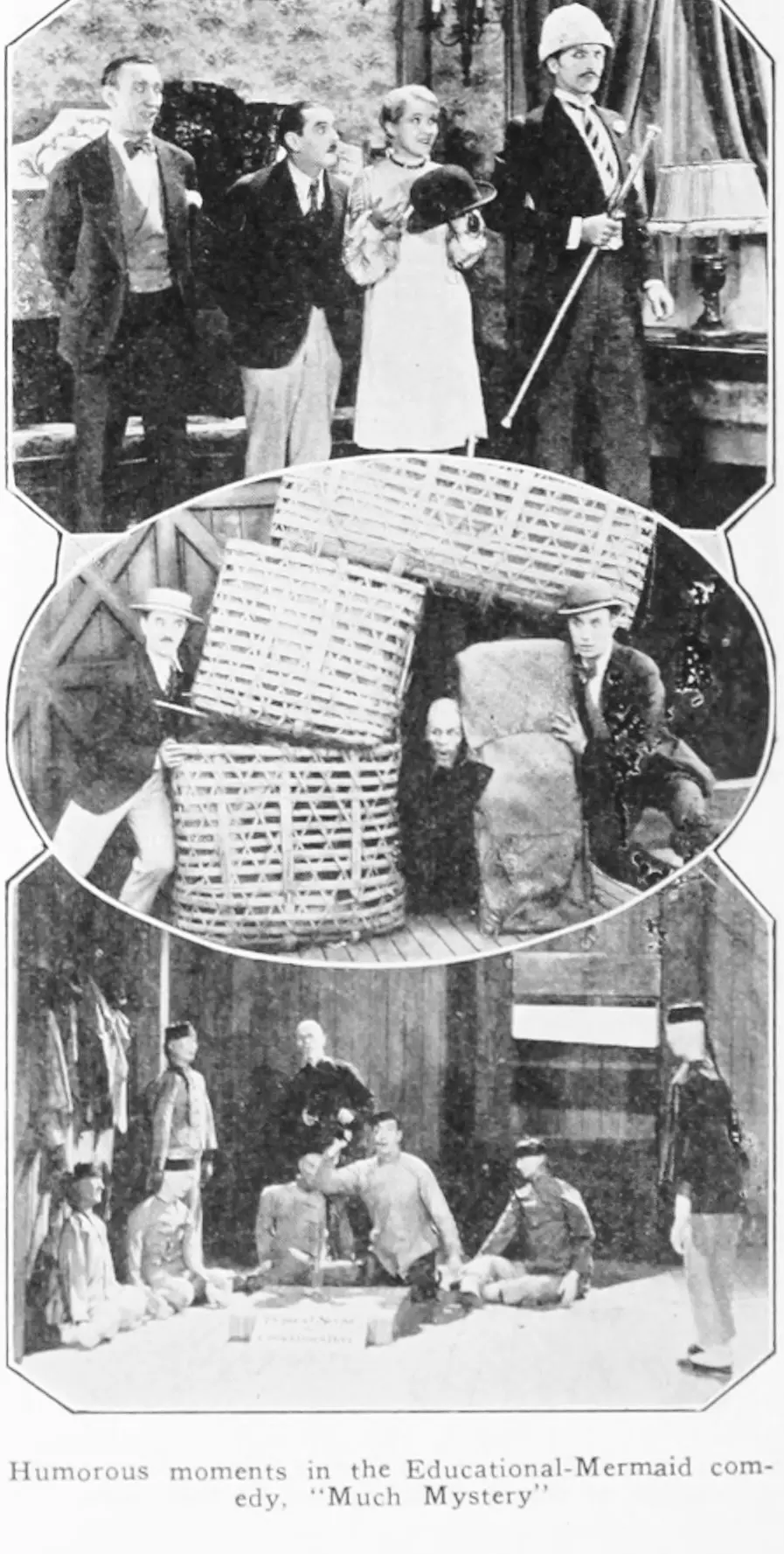
Is Much Mystery worth your time in the modern era? Short answer: No, unless you are a dedicated historian of silent-era slapstick or possess an academic interest in 1920s racial caricatures. This film is a frantic, often baffling artifact that prioritizes physical momentum over narrative logic.
This film is for the silent cinema completist who enjoys the 'Old Dark House' genre and early physical comedy. It is absolutely not for anyone seeking a coherent plot or those who are easily offended by the broad, regressive character tropes common in the late 1920s.
1) This film works because the physical stunt work during the runaway car sequence shows a genuine, reckless commitment to early action filmmaking.
2) This film fails because it relies on mean-spirited racial stereotypes and a disjointed structure that makes the transition from car chase to torture dungeon feel like two different movies stitched together.
3) You should watch it if you want to see a rare example of how 'exotic' horror was marketed as amusement park entertainment in the early 20th century.
Much Mystery begins with a premise that feels surprisingly modern: the commodification of suffering. Lucy Knowles inheriting a prison ship that functions as a tourist trap is a dark concept that a modern director like Ari Aster might turn into a psychological thriller. However, in 1927, this was merely a backdrop for George Davis and Phil Dunham to fall down stairs.
The standout sequence involves a taxi that runs out of gas on a hill. In a display of physics-defying slapstick, the car chases the lawyers down one hill and up another. This isn't the polished choreography of a Buster Keaton film. It feels more dangerous and less controlled. When the car eventually 'coops' them up on the rear bumper, there is a sense of genuine relief that the actors survived the take. It is raw. It is messy. It works.
Compare this to the vehicular antics in The Speeding Venus, and you'll notice that Much Mystery leans much harder into the absurd. The logic of the car following them like a predatory animal is a highlight of the film's first half. It’s a shame the rest of the short can't maintain this level of kinetic energy.
Once the characters reach the ship, the tone shifts dramatically. We move from the bright, open spaces of the hill chase into the cramped, shadow-heavy interiors of the prison vessel. The set design is impressive for a low-budget short, utilizing various 'instruments of torture' to create a sense of genuine unease. The lighting here is surprisingly effective, hinting at the German Expressionist influences that were beginning to seep into American shorts.
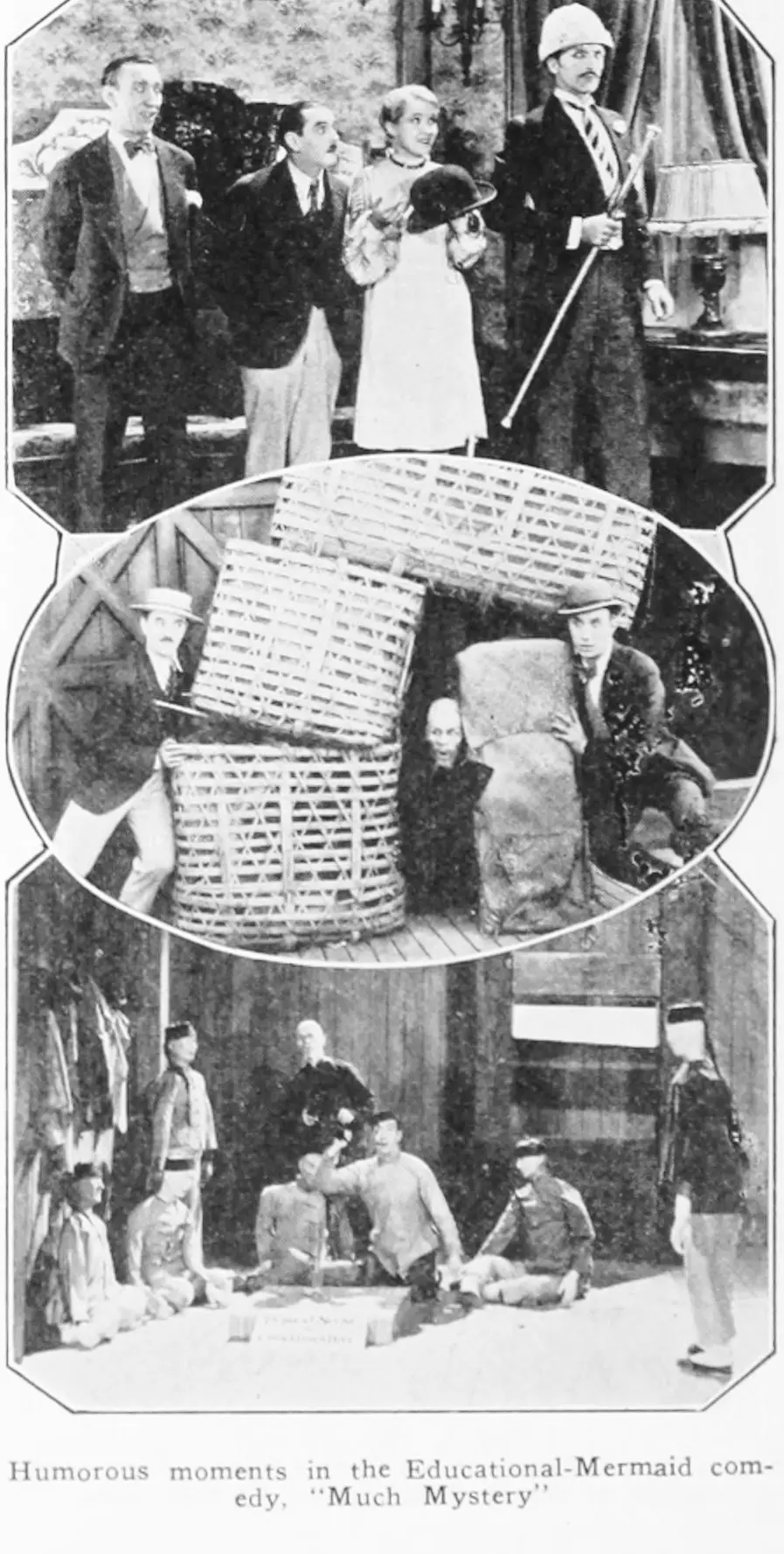
However, the film’s treatment of its characters is where things fall apart. The character of Charlie Bong is a collection of every negative 'Orientalist' trope available in 1927. He is presented as shifty, greedy, and inherently untrustworthy. Similarly, the 'gentleman of color' picked up during the car chase is used entirely for 'scare comedy'—a genre of humor based on the racist assumption that Black characters are naturally more prone to extreme, wide-eyed terror.
These elements make Much Mystery a difficult watch today. While films like A Looney Honeymoon also utilized broad comedy, the specific brand of xenophobia present here feels particularly pointed. It is an uncomfortable reminder of the era's cultural blind spots. It’s a tough pill to swallow. But it’s history.
The pacing of Much Mystery is breathless, which is both a blessing and a curse. At no point are you bored, but at several points, you are confused. The transition from the lawyers being deposited on the gang-plank to them being trapped in the under-deck dungeons happens with such jarring speed that you might think you missed a scene. This 'trapdoor' style of storytelling was common in shorts like Jazz Monkey, but here it feels particularly disjointed.
The acting by George Davis and Phil Dunham is standard fare for the time. They are 'reaction' actors—their primary job is to look startled by things. Dunham, in particular, has a way of using his entire body to express momentum that helps ground the more ridiculous stunts. When he is separated from Davis on the ship, the film attempts a split-narrative structure that is ambitious but ultimately fails because the ship's layout is never clearly established for the viewer.
The cinematography by an uncredited cameraman manages to capture the scale of the ship's interior, but the editing is choppy. One moment a lawyer is looking at a rack, the next he is falling through a floor. There is no geographic consistency. You never know where anyone is. It’s frustrating.
If you are looking for a cohesive story or a laugh-out-loud comedy, Much Mystery is not worth watching. The humor hasn't aged well, and the narrative is too fragmented to offer any real emotional payoff. However, if you are a fan of early horror-comedy tropes and want to see how silent films handled 'haunted house' mechanics on a boat, it serves as a fascinating 20-minute case study.
The film is a relic of a time when the spectacle of a runaway car or a spiked chair was enough to sell a ticket. It lacks the heart of Little Miss Nobody or the visual poetry of The Miracle. It is a product of the assembly line, designed for a quick thrill and an even quicker exit.
Pros:
- High-energy physical comedy that rarely slows down.
- Interesting use of an 'amusement park' setting within a fictional narrative.
- Effective use of shadows and set pieces in the ship’s dungeon.
- A unique glimpse into the 'prison ship' craze of the 1920s.
Cons:
- Deeply offensive racial stereotypes that distract from the comedy.
- The 'mystery' is non-existent; it’s just people falling through holes.
- Choppy editing makes the ship’s layout impossible to follow.
- The ending feels abrupt and unsatisfying.
Much Mystery is a chaotic, messy, and frequently uncomfortable short film. While it contains flashes of the kinetic brilliance found in films like Happy Go Luckies, it is bogged down by the worst impulses of its time. The car chase is worth a look for stunt enthusiasts, but the rest of the film sinks under the weight of its own dated prejudices. It’s a loud, clattering piece of cinema that offers more historical insight than actual entertainment. Watch it once for the history, then leave it in the vault. vault.
IMDb —
1935
Community
Log in to comment.