DbcultAccessing Vault...
Cult Review
Senior Film Conservator
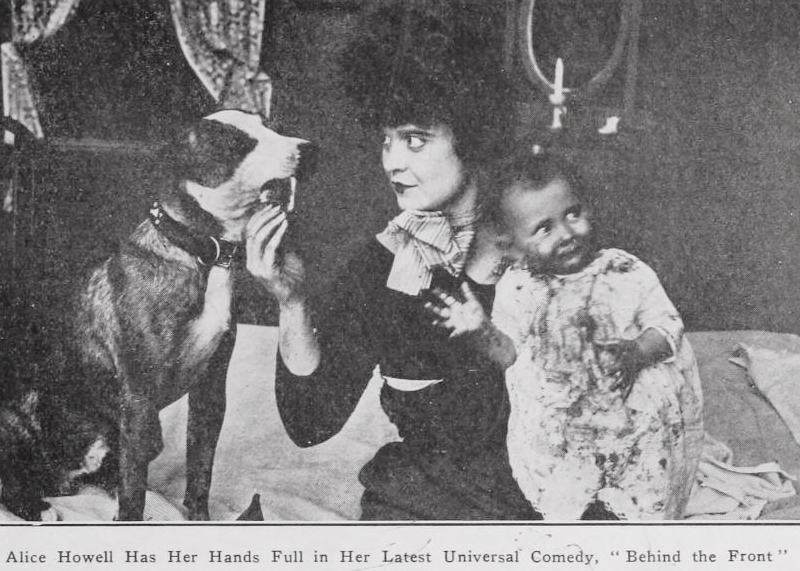
The annals of silent cinema are replete with tales of grand romance, thrilling adventure, and poignant drama, yet some of its most enduring charms lie in the realm of unbridled comedy. Amongst these gems, 1918’s Behind the Front carves out a distinct niche, presenting a spirited and often uproarious narrative centered on Hughie’s bewildering initiation into an army career. This film, a delightful showcase for the comedic talents of Hughie Mack and Alice Howell, transcends its simple premise to offer a fascinating comedic lens on the societal shifts and patriotic fervor that characterized the World War I era. It’s a testament to the power of visual storytelling, where exaggerated gestures and expertly timed gags speak volumes without uttering a single word, inviting audiences into a world where the mundane act of enlistment becomes a grand, farcical spectacle.
At the heart of Behind the Front is Hughie Mack’s performance as Hughie, a character whose very essence embodies the reluctant everyman thrust into extraordinary circumstances. Mack, a formidable presence in early comedies, leverages his physical attributes and expressive face to magnificent effect. His portrayal is not merely a series of pratfalls; it’s a nuanced exploration of a man grappling with a completely alien environment. From the initial bewilderment upon entering the recruitment office to the utter confusion during drill exercises, Mack’s reactions are universally relatable. He doesn't just stumble; he stumbles with a profound sense of injustice, his eyes widening in comical disbelief, his body contorting into postures of utter dismay. This isn't just slapstick for its own sake; it’s slapstick rooted in character, making Hughie’s plight genuinely amusing rather than simply chaotic. The humor derives from the clash between Hughie’s natural inclinations – perhaps a preference for leisure or a civilian’s lack of discipline – and the army’s unyielding demand for conformity. His efforts to march in step, salute correctly, or even just wear his uniform without incident become epic struggles, each failure a new peak of comedic brilliance. Mack’s genius lies in making Hughie’s ineptitude endearing, transforming potential frustration into pure, unadulterated hilarity. His performance anchors the film, providing a consistent source of laughter and a character for whom the audience cannot help but root, despite his endless blunders. This characterization is a hallmark of the era's best comedic actors, who understood that audience engagement came not just from gags, but from the human element beneath them.
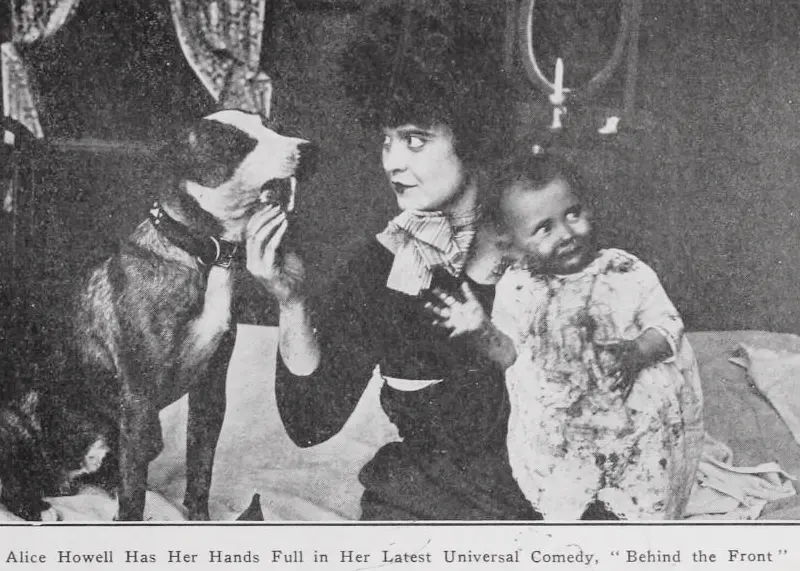
While Hughie Mack commands much of the spotlight, Alice Howell’s presence in Behind the Front is far from peripheral. Howell, known for her distinctive comedic style and expressive physicality, likely serves as a crucial narrative device, whether as a love interest, a supportive family member, or even a fellow civilian caught in the periphery of Hughie's military induction. Her interactions with Hughie would have provided essential emotional beats or further opportunities for comedic friction. Perhaps she is the object of his affection, motivating his attempts at valor, however clumsy. Or perhaps she is a figure of exasperation, observing his antics with a mixture of fondness and bewilderment. In the context of early silent comedies, female characters often served to ground the male lead's wilder impulses or to act as a catalyst for their actions. Howell’s seasoned comedic timing and ability to convey a range of emotions without dialogue would have made her an ideal foil for Mack’s more overt physical comedy. Her character could represent the civilian world Hughie is leaving behind, or the reason he ultimately strives to succeed, however comically. Without her, Hughie's journey might lack a certain human dimension, a point of reference beyond the purely institutional. The dynamic between them, irrespective of its specific nature, would have been a cornerstone of the film's appeal, adding layers to what might otherwise be a straightforward string of gags. This interplay highlights the collaborative nature of silent film comedy, where the chemistry between performers was paramount.
Behind the Front is more than just a series of laughs; it subtly engages with the prevailing sentiments of its era. Released in 1918, during the throes of World War I, the film operates within a complex socio-political landscape. While ostensibly a comedy, it cannot entirely escape the shadow of the ongoing conflict. Instead, it offers a comedic interpretation of the call to arms, perhaps serving as a lighthearted counterpoint to the more somber, patriotic narratives prevalent at the time. The film likely satirizes the often-bureaucratic and sometimes absurd aspects of military induction, presenting the army as a well-oiled, yet ultimately bewildering, machine from the perspective of an ordinary citizen. This gentle satire would have resonated with audiences who, while supportive of the war effort, could still appreciate the humor in the transition from civilian comfort to military rigor. It humanizes the grand concept of national service by focusing on the individual’s often-clumsy adaptation. The film, therefore, functions as a cultural artifact, reflecting how a society grappling with war could still find humor in the everyday struggles of its citizens. Unlike the solemnity often associated with films such as Lest We Forget, which likely grappled with the direct horrors or sacrifices of war, Behind the Front chose to explore the lighter side of the home front's contribution, making the idea of military service accessible and even amusing. It’s a delicate balance, offering patriotism without being overtly propagandistic, and humor without trivializing the gravity of the times. The film’s ability to navigate these waters with such deftness speaks volumes about the sophistication of early comedic filmmaking.
The directorial choices in Behind the Front are pivotal to its success, showcasing a keen understanding of silent film mechanics. The narrative pacing is likely brisk, with a series of quick-fire gags building upon one another, ensuring that the audience's attention never wanes. Visual humor, of course, is paramount. This would manifest in cleverly staged sequences, exaggerated props, and dynamic camerawork that emphasizes the comedic action. The film’s strength would lie in its ability to communicate complex situations and emotional states through purely visual means. Intertitles, sparingly used, would provide necessary exposition or punchlines, but the bulk of the storytelling relies on the actors’ performances and the director's visual ingenuity. The editing would have been crucial, cutting between reactions and actions to maximize comedic impact, a technique that was rapidly evolving in the 1910s. Consider how a film like The Goat, a Buster Keaton vehicle from a few years later, exemplifies the precision and rhythm required for effective silent comedy; Behind the Front operates on similar principles, albeit perhaps with a slightly less acrobatic, more character-driven approach. The construction of each comedic set-piece, from Hughie's attempts to navigate a crowded barracks to his struggles with military equipment, would have been meticulously planned to elicit maximum laughter. The visual language of the film is its primary dialect, spoken through the universal grammar of human folly and resilience, translating seamlessly across cultural and linguistic barriers. This dedication to visual clarity and comedic rhythm is a hallmark of the era, distinguishing it from later, more dialogue-driven forms of cinema.
Behind the Front is more than just an isolated comedic offering; it’s a vibrant thread in the rich tapestry of early 20th-century slapstick. This genre, characterized by its reliance on physical comedy, exaggerated situations, and often absurd premises, captivated audiences worldwide. Films like this one provided much-needed escapism during tumultuous times, offering a communal experience of laughter. The film’s production values, while perhaps modest by today’s standards, would have been typical for the period, focusing on clear storytelling and effective comedic delivery rather than elaborate special effects. The sets, likely depicting barracks, parade grounds, and other military environments, would have been functional yet conducive to comedic action. The costumes, particularly the military uniforms, would have been used not just for authenticity but also as props for gags – ill-fitting, oversized, or constantly getting Hughie into trouble. This film stands as a testament to the ingenuity of early filmmakers who, with limited technology, managed to create enduring works of art and entertainment. Its place within the silent comedy canon is secured by its engaging performances and its ability to tap into universal themes of adaptation and perseverance, all wrapped in a wonderfully humorous package. It reminds us that laughter, in any era, is a powerful and necessary force. The simplicity of its premise belies a sophisticated understanding of comedic timing and audience engagement, a legacy passed down through generations of filmmakers.
While not as universally known as the works of Chaplin or Keaton, Behind the Front, and films like it, are crucial for understanding the full scope of silent cinema’s comedic output. It highlights the vast array of talent beyond the most celebrated names and demonstrates the diverse ways in which filmmakers explored humor during a pivotal period in cinematic history. For contemporary viewers, watching Behind the Front offers a unique window into the past, not just as a historical artifact, but as a genuinely entertaining piece of art. It allows us to appreciate the foundational elements of screen comedy that continue to influence filmmaking today. The film’s themes – the fish-out-of-water scenario, the struggle against authority, the triumph (however small) of the individual spirit – remain timeless and resonant. It’s a reminder that human experiences, from the bewildering to the hilarious, transcend the passage of time and the evolution of technology. The film's enduring appeal lies in its fundamental humanity, its ability to evoke genuine emotion and laughter through the simple yet profound art of silent performance. It’s a film that demands rediscovery, a vibrant piece of cinematic heritage that continues to charm and amuse, proving that some stories, and some laughs, are truly ageless. The meticulous attention to character detail, the unwavering commitment to visual storytelling, and the sheer joy emanating from the performances make Behind the Front a film that deserves its place in the spotlight, offering a rich and rewarding experience for anyone willing to delve into the treasures of the silent era. It is a humble yet potent reminder of cinema's power to connect us to our past, not just through historical record, but through the universal language of laughter. Its legacy, though perhaps understated, is embedded in the very DNA of comedic narrative, influencing countless stories of personal transformation and societal adaptation. This film, far from being a mere relic, continues to speak to the enduring human capacity for humor in the face of life's most unexpected turns, solidifying its status as a foundational piece in the grand narrative of cinematic comedy.
IMDb —
1917
Community
Log in to comment.