DbcultAccessing Vault...
Cult Review
Senior Film Conservator
Is 'Mummy Love' worth watching today? Short answer: yes, but with significant caveats that primarily appeal to a niche audience. This early silent adventure, a product of its nascent cinematic era, offers a fascinating glimpse into filmmaking's formative years, making it a compelling watch for historians and dedicated genre enthusiasts, yet it might prove a challenging experience for modern audiences accustomed to contemporary pacing and narrative sophistication.
This film works because of its surprisingly spirited central performance and its simple, yet effective, narrative drive. It fails because of its inescapable reliance on early cinematic tropes, often shallow character development, and a pacing that can feel glacial by today's standards. You should watch it if you possess a genuine interest in silent film history, appreciate the foundational elements of adventure cinema, or are curious about how early narratives tackled themes of heroism and peril.
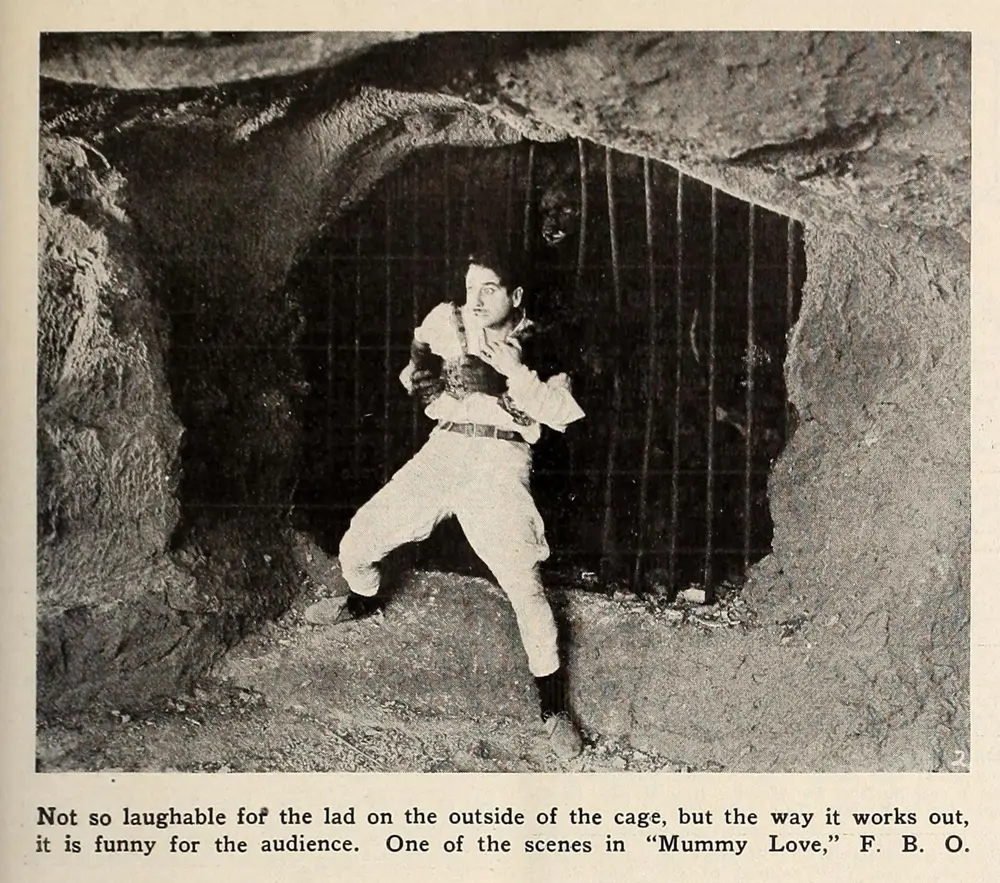
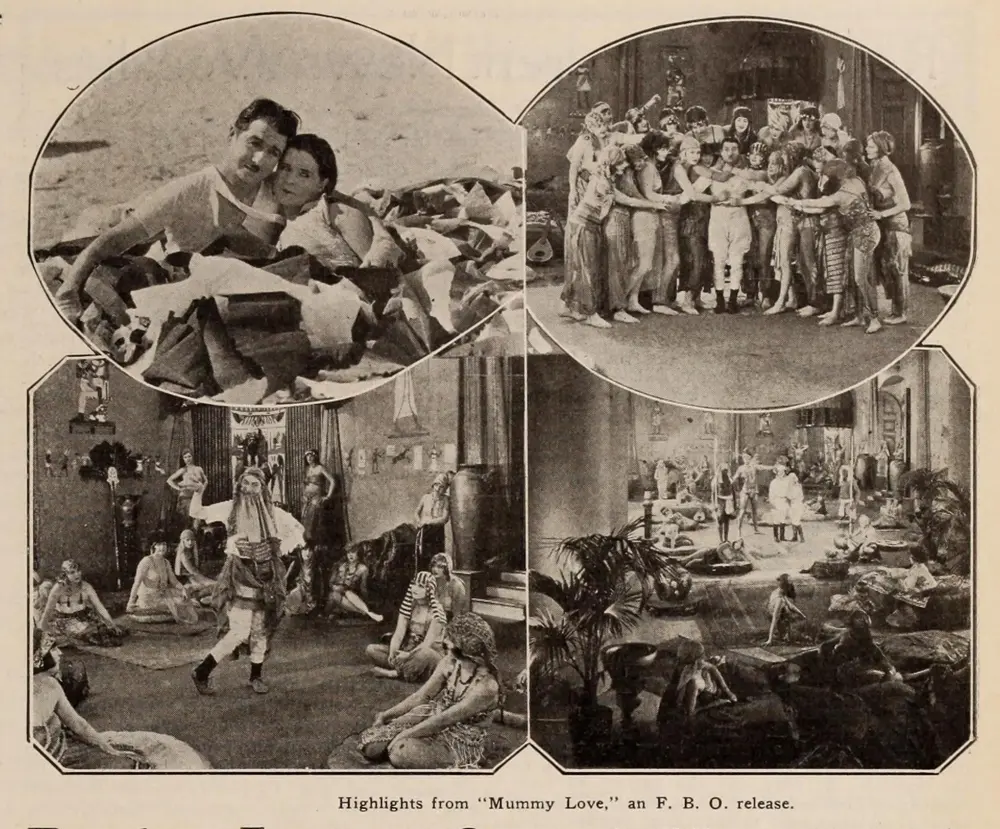
The narrative of 'Mummy Love' unfolds against the romanticized backdrop of Egypt, where a determined explorer, accompanied by his daughter Alice and his astute secretary Neely, seeks a legendary mummy cave. The film’s opening gambit, introducing us to a powerful Sheikh observing the party through a telescope, immediately establishes a voyeuristic tension. This potentate, drawn by Alice’s charm, extends a seemingly hospitable invitation, which quickly devolves into a calculated effort to ensnare her for his harem. The true heart of the story, however, lies in Neely, the secretary, who consistently outmaneuvers the Sheikh, transforming what could be a straightforward abduction into a series of comedic and tense near-misses, culminating in Alice’s eventual liberation. It’s a classic damsel-in-distress setup, yet infused with a refreshing, albeit subtle, agency from an unexpected quarter.
The film’s plot, while simple, serves as a robust framework for its era, prioritizing clear conflict and resolution. It reflects a period when storytelling was often direct, aiming for immediate audience engagement rather than complex psychological depths. This directness is both a strength and, at times, a limitation, as the motivations beyond the Sheikh's initial desire remain largely unexplored.
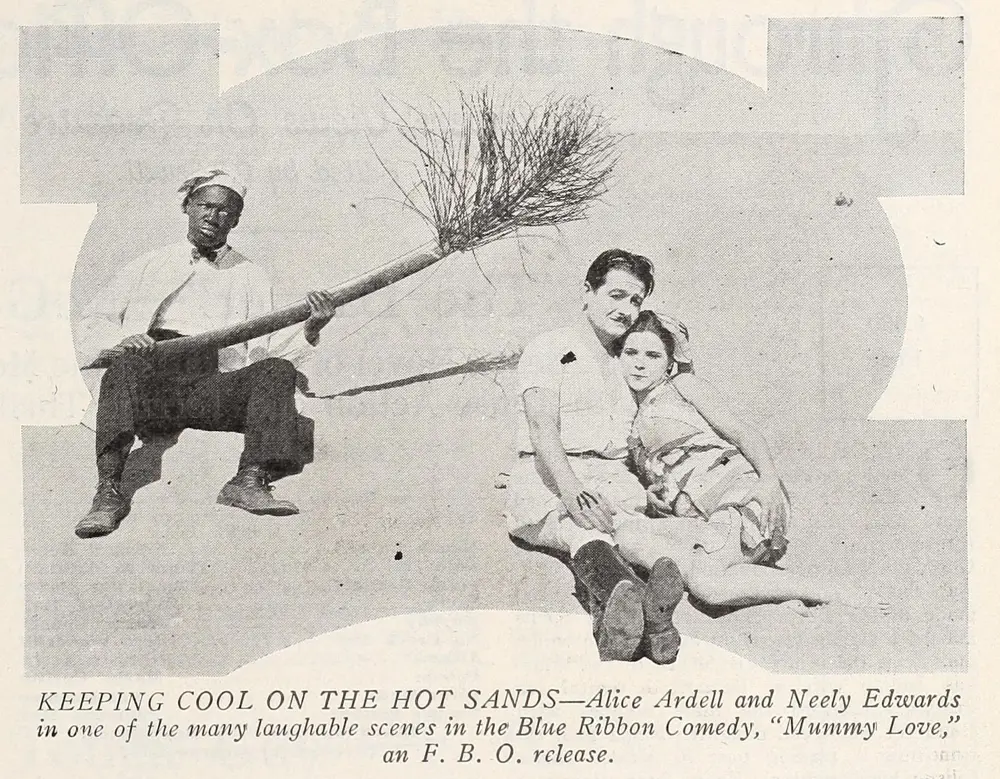
The performances in 'Mummy Love' are, as expected for the era, broad and demonstrative, relying heavily on exaggerated gestures and facial expressions to convey emotion without the benefit of spoken dialogue. Neely Edwards, in the pivotal role of the secretary, is the undeniable standout. Edwards injects a vital dose of energy and wit into the film, elevating what could have been a passive character into an active, intelligent force. His physical comedy, particularly in scenes designed to disrupt the Sheikh’s advances, is genuinely engaging. Consider the moments where he subtly, or not so subtly, trips, distracts, or otherwise creates chaos to divert attention; these are the film's most vibrant sequences. Edwards' ability to convey both cunning and lightheartedness through his movements alone is a masterclass in early silent acting.
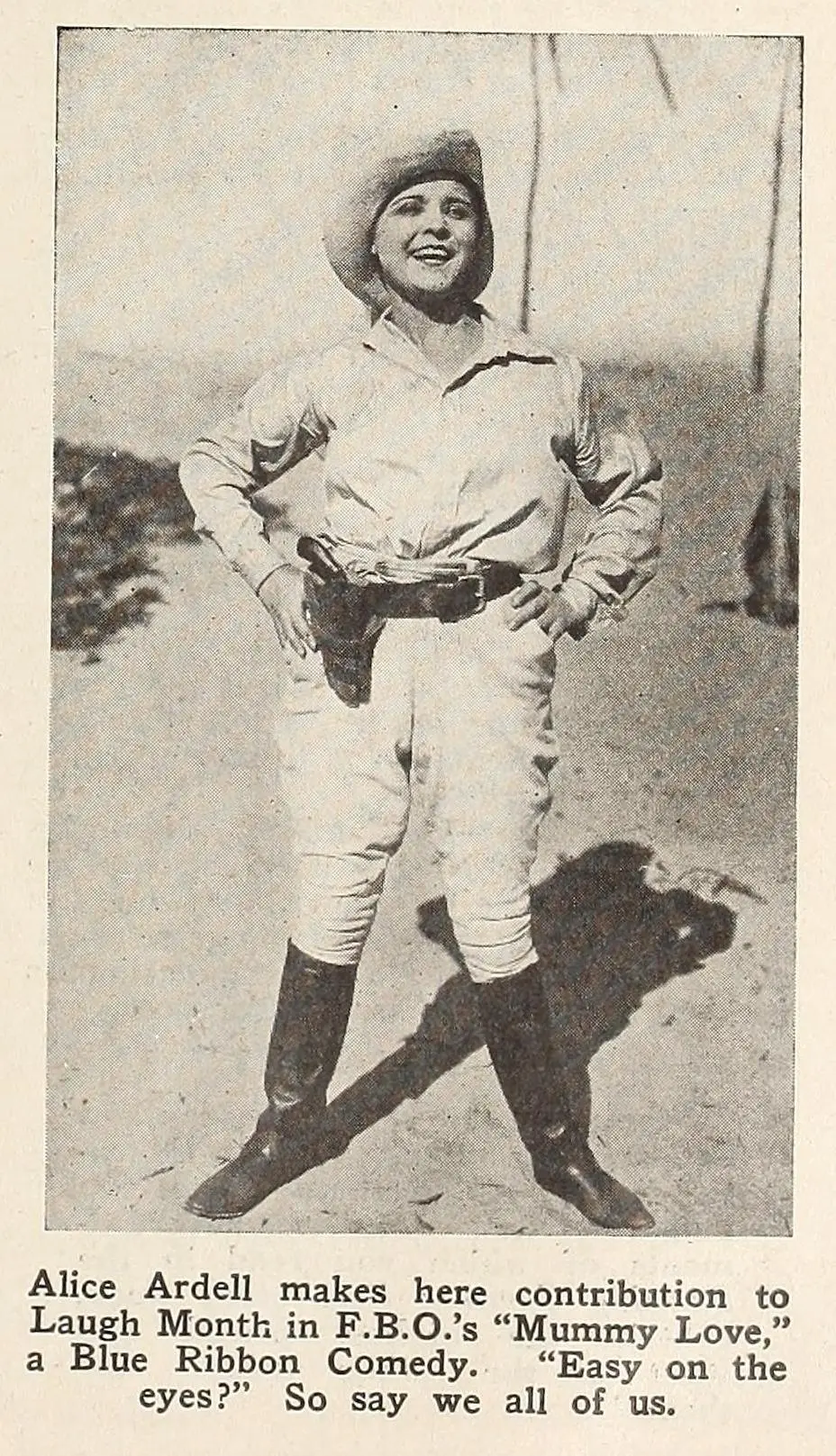
Conversely, Alyce Ardell as Alice, the object of the Sheikh’s desire, delivers a performance that is largely reactive. Her role demands a portrayal of vulnerability and distress, which she manages competently, but without the dynamic spark that Edwards brings. Her wide-eyed expressions of fear and relief are effective for the narrative, but she serves primarily as the catalyst for the secretary's heroism, rather than a fully fleshed-out character in her own right. She is the prize, the motivation, the damsel waiting to be saved.
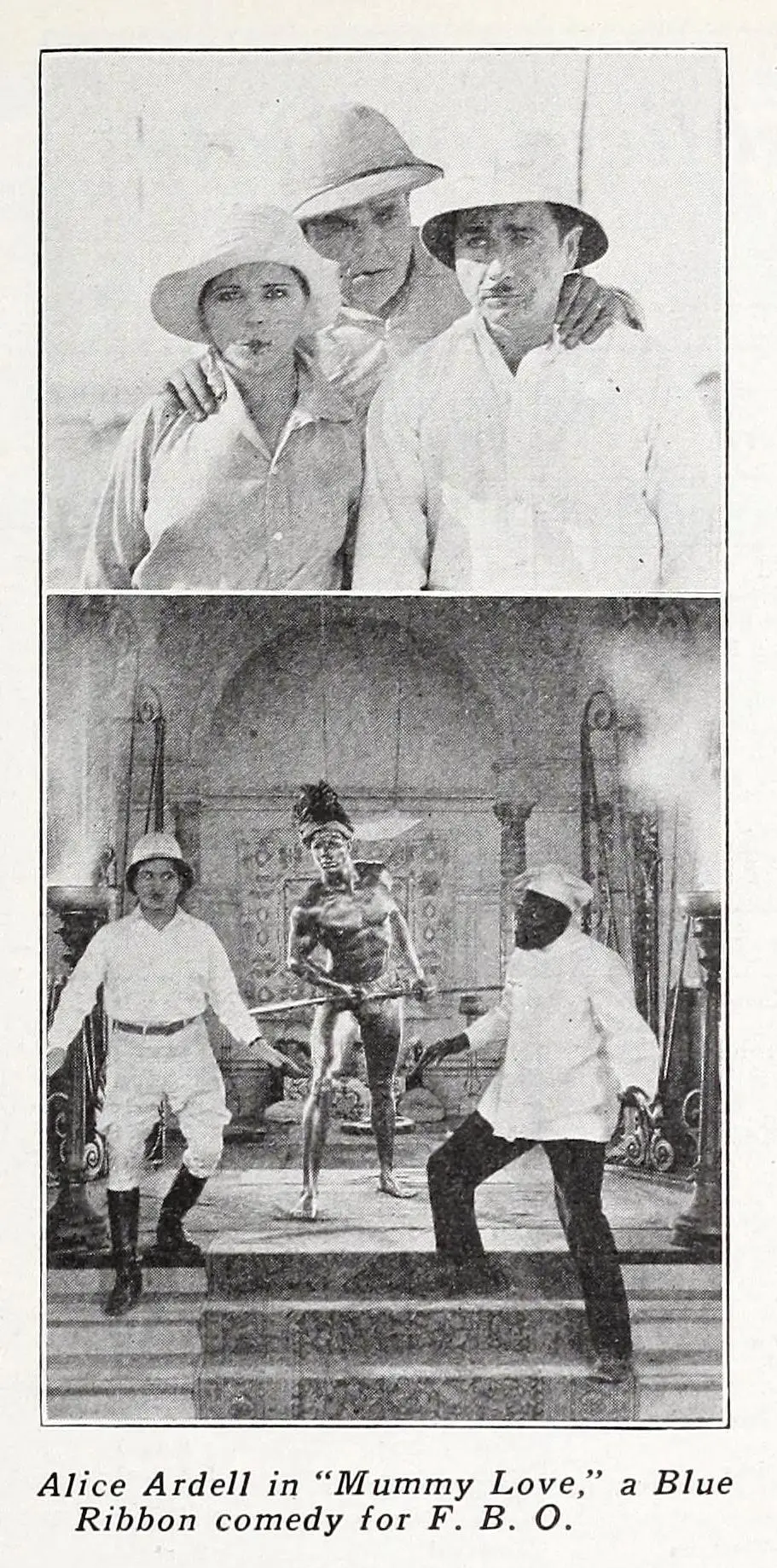
Yorke Sherwood, as the explorer, is somewhat of a background presence, a plot device more than a character, whose obliviousness to the immediate danger facing his daughter often beggars belief, even for a silent film. His character exists to provide a reason for the party to be in Egypt and to highlight Neely's superior awareness and quick thinking. This lack of active involvement from the paternal figure strengthens Neely’s heroic arc, making his eventual triumph all the more pronounced.
The portrayal of the Sheikh, while adhering to common cinematic stereotypes of the era, is delivered with a certain theatrical menace. His expressions of desire and frustration are clear, if not nuanced. This character, unfortunately, embodies a problematic 'exotic other' trope that, while historically significant for understanding early cinema, is jarring to a modern sensibility. His villainy is simplistic, driven by lust and power, reflecting a broader trend in early Western media's depiction of non-Western cultures.
The direction of 'Mummy Love' is functional, a testament to the early stages of narrative filmmaking. The use of the telescope in the opening act is a particularly inspired choice, immediately establishing a sense of unseen threat and foreshadowing the Sheikh's predatory gaze. It’s a simple yet effective visual metaphor for power and surveillance, drawing the audience into the Sheikh's perspective before revealing the protagonists. The cinematography, while lacking the sophisticated artistry of later silent epics, is clear enough to convey the necessary action. Shots are generally static, focusing on the actors' physical performances, with occasional cuts to intertitles to advance the plot or provide dialogue.
The film’s visual language is straightforward, prioritizing clarity over complexity. Close-ups are used sparingly, often to emphasize a character's reaction or a crucial plot point. The staging of scenes within the Sheikh's palace, though constrained by early production limitations, attempts to convey opulence and confinement, creating a palpable sense of the threat Alice faces. While not groundbreaking, the visual storytelling is competent for its time, effectively communicating the narrative beats without relying on spoken words.
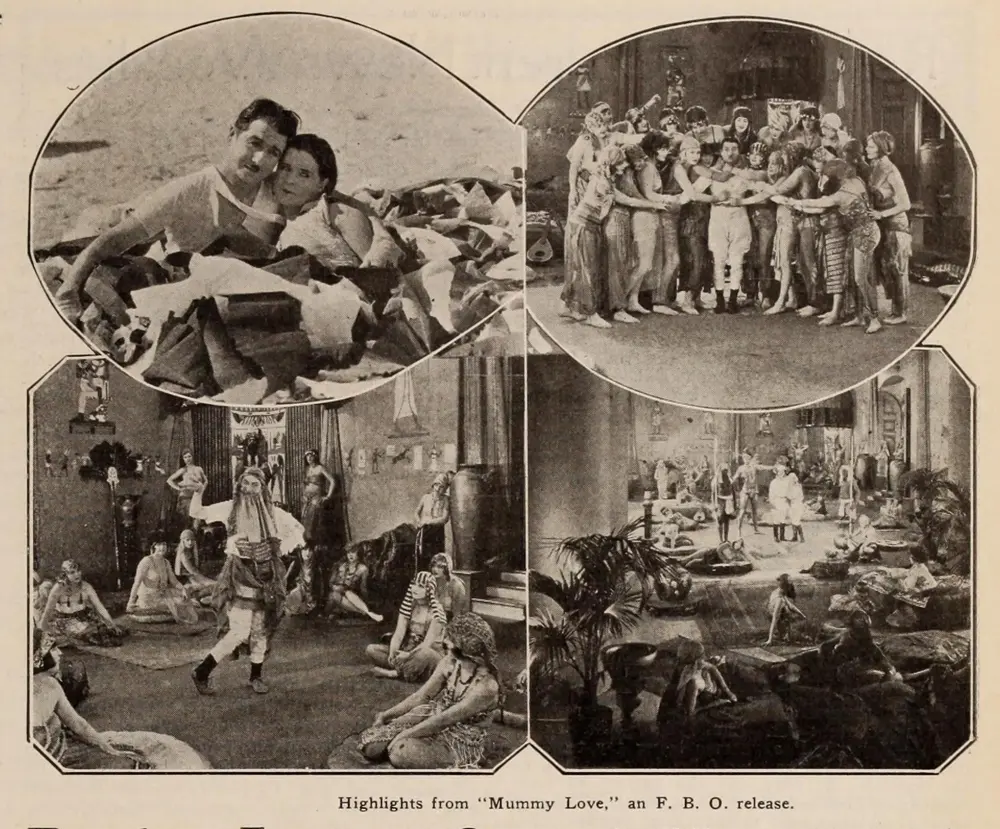
Pacing is where 'Mummy Love' truly shows its age. Modern viewers accustomed to rapid-fire editing and constant narrative propulsion will find the film's rhythm deliberate, almost languid. Scenes are often held for extended periods, allowing the actors to fully emote through movement and expression. While this can offer a unique insight into silent acting techniques, it can also lead to moments of narrative drag. The rescue sequence, for instance, while climactic, feels less like a breathless chase and more like a series of carefully staged comedic interventions, each building on Neely's cleverness rather than raw speed.
The film's tone oscillates between genuine adventure and lighthearted comedy, largely dictated by Neely Edwards' presence. There are moments of genuine tension, particularly when Alice is in immediate peril, but these are frequently diffused by Edwards' antics. This tonal inconsistency isn't necessarily a flaw but rather a characteristic of early cinema grappling with genre conventions, often blending melodrama with physical humor to appeal to a broad audience.
At its core, 'Mummy Love' is a straightforward adventure yarn, but beneath its surface, one can discern faint echoes of thematic relevance. The film, perhaps unintentionally, offers a glimpse into early gender roles and societal expectations. The explorer is somewhat inept, the daughter is passive, and it is the quick-thinking secretary, traditionally a supportive role, who emerges as the true hero. This subversive casting of a male secretary as the primary rescuer, rather than the explorer father, is an interesting, perhaps even progressive, choice for 1918. It quietly challenges the conventional hero archetype, placing competence above established authority.
The 'harem' trope itself, while problematic through a modern lens, was a common exoticized fantasy in early Western media. 'Mummy Love' utilizes it as a clear, easily understood threat, playing on prevalent cultural anxieties and fascinations of the time. It’s a regrettable but unavoidable aspect of the film's historical context, demanding a critical eye from contemporary viewers. The depiction of the Sheikh and his intentions reinforces a colonial gaze, portraying non-Western figures as inherently villainous and driven by primal urges, a common, if offensive, shorthand for danger in early cinema.
One could argue that the film's most striking element isn't its adventure, but its accidental commentary on competence, where traditional patriarchal figures are sidelined by the resourcefulness of an ostensibly secondary character. It’s a subtle yet powerful statement on where true capability can reside. This unexpected hero arc, delivered with such charm by Edwards, is what truly elevates 'Mummy Love' beyond a mere historical curiosity. It suggests a nascent recognition of intelligence and wit as potent weapons, even against overwhelming power.
For general audiences seeking modern entertainment, 'Mummy Love' will likely feel dated and slow. Its appeal is largely academic
IMDb —
1936
Community
Log in to comment.