DbcultAccessing Vault...
Cult Review
Senior Film Conservator

The year 1924 was a watershed moment for global cinema, a period where the visual language of the silent era reached a zenith of expressive maturity. While Hollywood was preoccupied with the sprawling spectacle of Greed, Spanish director José Buchs was busy distilling the venomous social critiques of Nobel laureate José Echegaray into a celluloid nightmare of sycophancy. A fuerza de arrastrarse (By Dint of Crawling) remains a staggering achievement, not merely for its technical proficiency but for its unflinching gaze into the abyss of human ambition.
The film’s central conceit is as uncomfortable today as it was a century ago: the idea that the most effective way to climb the social ladder is through a systematic abandonment of one's spine. Buchs captures this through the performance of Constante Viñas, whose physical presence on screen seems to shrink and expand in direct proportion to the social standing of whoever he is addressing. It is a masterclass in kinesic storytelling. Unlike the rugged individualism seen in The Man Unconquerable, the protagonist here finds power through submission, a paradox that Buchs explores with surgical precision.
The narrative structure is a slow-burn descent. We witness the protagonist navigating the drawing rooms of Madrid, where every bow is a transaction and every compliment is a hidden dagger. The supporting cast, including José Romeu and Modesto Rivas, provides a gallery of caricatures and tragic figures that represent the various strata of a decaying aristocracy. There is a palpable sense of claustrophobia, reminiscent of the environmental tension found in The Storm, though here the tempest is internal and social rather than meteorological.
Buchs, working with the limited technical apparatus of the early 20s, manages to create a visual palette that feels remarkably modern. The use of shadows is particularly striking. The protagonist is often framed in doorways or beneath heavy architectural arches, suggesting a man who is perpetually under the weight of his own choices. This visual density echoes the psychological weight found in Drama na okhote, where the setting itself becomes a character in the unfolding tragedy.
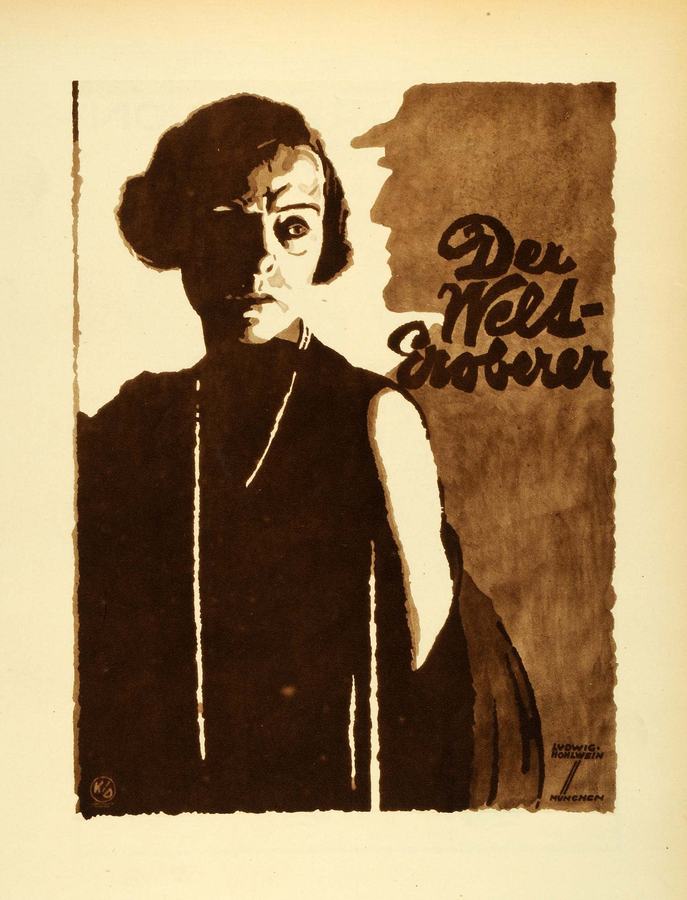
The cinematography by the uncredited masters of the era (often Buchs himself took a heavy hand in the visual composition) utilizes deep focus to show the consequences of the protagonist’s actions in the background while he maintains his servile facade in the foreground. It is a sophisticated technique that highlights the duality of his existence. He is a man divided—one half striving for the light of social acceptance, the other half submerged in the muck of his own moral compromises. This duality is a recurring theme in silent cinema, often seen in works like Der Leibeigene, yet Buchs gives it a uniquely Spanish flavor, rooted in the specific class anxieties of the Restoration period.
The ensemble performance is nothing short of operatic. María Comendador and Amalia de Isaura bring a grounded, almost terrestrial gravity to the domestic scenes, contrasting sharply with the ethereal, often grotesque posturing of the male political figures. José Montenegro and Alfonso Aguilar deliver performances that are etched in vinegar, portraying the 'gatekeepers' of society with a chilling nonchalance. Their interactions with the protagonist are like watching a predator play with its food, unaware that the food is slowly poisoning the predator.
There is a specific scene mid-way through the film—a banquet that turns into a metaphorical trial—that rivals the psychological intensity of In the Python's Den. The tension is not derived from physical threat but from the imminent collapse of social standing. The way Buchs cuts between the judgmental glares of the elite and the sweating, flickering eyes of the protagonist is a masterclass in editing. It’s a rhythmic assault on the viewer’s nerves, proving that silent film never needed sound to scream.
Adapting José Echegaray is no small feat. His plays are dense, rhetorical, and deeply philosophical. Buchs, however, manages to strip away the verbosity while retaining the intellectual marrow. He understands that in cinema, a gesture is worth a thousand monologues. The 'crawling' of the title is translated into a series of visual motifs: the protagonist literally lowering his head, the way he occupies the lower third of the frame, and his constant movement from the shadows into the harsh, judgmental light. It’s a thematic continuity that reminds one of the moral stakes in As a Man Sows.

The writing, credited to both Echegaray and Buchs, maintains a cynical edge that feels surprisingly contemporary. It posits that the social contract is a farce, a mere veil for the exercise of power. This cynicism is a far cry from the more optimistic or simplistic morality plays of the time, such as Flickering Youth. Instead, A fuerza de arrastrarse aligns itself with the darker, more introspective tradition of European realism.
To watch this film in the 21st century is to realize how little the mechanics of ambition have changed. The 'crawling' may have shifted to digital spaces, and the drawing rooms may have been replaced by corporate boardrooms, but the fundamental erosion of the self in pursuit of status remains a universal tragedy. Buchs captures the specific 'Spanishness' of this struggle—the obsession with 'honra' (honor) and the performative nature of public life—yet the film’s message transcends its geographical borders. It shares a thematic kinship with Whom the Gods Would Destroy, highlighting the inevitable fall that follows a hubristic rise.
The film also serves as an important document of 1920s Spanish aesthetics. The costume design, the interior decoration of the palatial homes, and the glimpses of urban Madrid provide a rich tapestry that grounds the high-flown moral drama in a tangible reality. It lacks the escapist whimsy of Hello, Judge, opting instead for a gritty, almost documentary-like observation of the upper classes at play.
One cannot overlook the editing of A fuerza de arrastrarse. Buchs employs a sophisticated use of cross-cutting to contrast the protagonist's public successes with his private degradations. As he receives an accolade in one scene, we cut to the collateral damage his ambition has caused—a broken relationship, a betrayed friend, a lost sense of self. This juxtaposition creates a moral friction that keeps the audience engaged throughout the lengthy runtime. It is as effective as the suspenseful pacing in Trigger Fingers, though the stakes are existential rather than physical.
The use of intertitles is also noteworthy. Rather than mere plot bridges, they often function as philosophical aphorisms, echoing Echegaray's literary voice. They don't just tell us what is happening; they ask us why it is happening. This intellectual engagement is what elevates the film from a standard melodrama to a work of high art. It demands a level of attention and introspection that was rare for the medium at the time, much like the challenging narrative of The Deemster.
Why does a film from 1924 matter today? Because A fuerza de arrastrarse is a mirror. It forces us to confront the 'crawling' we do in our own lives—the small concessions, the polite silences, the tactical sycophancy. Buchs doesn't offer a comfortable resolution. The protagonist's 'success' is the ultimate tragedy, a hollow victory that leaves him standing at the top of a mountain of his own discarded principles. It is a more harrowing ending than the overt tragedies of His Convict Bride or the domestic strife of The Other Man's Wife.
In the pantheon of Spanish cinema, José Buchs is often overshadowed by the later giants like Buñuel or Almodóvar, but A fuerza de arrastrarse proves he was a visionary in his own right. He understood the power of the image to dissect the human soul. He took a theatrical masterpiece and transformed it into a cinematic landmark that remains as sharp as a razor. It is a film that doesn't just ask for your time; it demands your conscience. It is a visceral reminder that while one may climb by dint of crawling, the view from the top is often obscured by the dust of the floor you’ve spent your life licking.
For those who appreciate the dark, the complex, and the visually poetic, this film is an essential watch. It occupies a space between the psychological thriller and the social critique, much like Skinning Skinners, but with a gravitas that is entirely its own. A hundred years later, the crawl continues, and Buchs is still there, camera in hand, documenting every inch of our descent.
IMDb 6.3
1936
Community
Log in to comment.